Tag Archives: Seán Kane

Listen!

This week on the Wednesday Blog, I've decided to write about some of the advice I'm thinking about as I prepare to teach an entirely new age range in this new school year. — Click here to support the Wednesday Blog: https://www.patreon.com/sthosdkane

Some of my friends will talk about their favorite stories or even verses from the Bible. I never really have a favorite, the Song of Songs often comes to mind for the lyrical beauty of the verse, or there’s the Exodus story that captured my imagination as a child, aided by the powerful 1998 animated film The Prince of Egypt. At one point I joked it was the final line in the Book of Revelation merely for it just being the very end of the Scripture. A decade ago, in my New Testament Greek class at Rockhurst I wrote an essay on the original Koine Greek text from Luke’s Gospel where Jesus tells the people that the greatest commandment is to “love the Lord, your God, with all your heart, with all your being, with all your strength, and with all your mind, and your neighbor as yourself.” (quoting here from the English translation that I grew up with the New American Bible approved by the US Council of Catholic Bishops).

These days my own vision of my faith tends to reflect that same line from Luke’s Gospel, yet just as often I keep returning to a story of the Prophet Elijah waiting on the slopes of Mount Horeb to hear a message of Divine inspiration. In succession he feels a “strong, rushing wind” followed by an earthquake, and then a roaring fire. After all of these Elijah heard “a tiny whispering sound,” which he recognized as God’s presence. In all the cacophony of our world and the proclamations of truth with such a clamor that the voice grows hoarse, and the ears ache we often forget the simple beauty of just sitting and listening to nature, to ourselves, and to each other.

In my own experiences, one of the great messages I’ve felt has been “Listen!” uttered in an exclamatory yet soft voice. Nothing more than that, just “Listen!” It’s something that I try to do better today than I have in the past, and going into this new job teaching 10-14 year olds history and geography at one of the local Catholic schools, I am reminded more and more of the need to not only impart what I know about my subjects to my students but to cherish them, and demonstrate my care for them and their needs by listening to them and paying attention to what they need to succeed in my classroom. They will not grow as people if they aren’t given that attention and care by the people responsible for helping them along their way to adulthood.

I don’t remember as much as I’d like from my own middle school years, I’ve been trying to dredge up more of those memories as my work shifts from my home office to my classroom, to better judge my own actions and decisions based on what I loved that my middle school teachers did and on those things that I wish they’d have done better. In my university teaching I’ve endeavored to speak to each student in their own way, to reach them personally and ensure that they are thriving in my classes. My own university memories are far fresher, and continue to be written in fact, which makes that adaptation of the lessons that I was taught far easier. Here though, it’s been nearly 20 years since I started middle school, and so these students who I am now meeting have far less in common with me than I do with my 18 to 22 year old university students.

In my life to date I have often had to adjust my speech and style to be understood by the people around me. These have gone from more drastic shifts like speaking an entirely different language when I’m traveling to more subtle changes in adopting the words being used for one thing or another by the people I’m speaking with. I’m quite conscious of my own speech thanks in large part to my fascination with language and all its intricacies. 

One thing that still troubles me in English, my first language, is reading strings of letters aloud using the letter names rather than just pronouncing words. This is especially troublesome when I have to read my email address to someone over the phone. 99% of the time the person on the other end of the line misses half of the letters in my email address, leading me to prefer to use the NATO phonetic alphabet in this instance, yet for some people that doesn’t help in the slightest. Using the same vowel sound in the names of most of our letters the “ee” as I’d write it phonetically in English just doesn’t help. For one thing, we use that letter “e” yet when that letter is spoken in a regular word it rarely is pronounced “e.” So, as much as I try to ease communication with the people around me, I feel let down by the very language I speak.

In a more general fashion though we tend to not fully listen to each other for all the things each of us have to think and worry about on a given day. I get it too; I’ve got three jobs right now and a dissertation near finished. Yet I know how wonderful it feels when the people around me listen to me, so why would I not extend that same joy to the people who I’m with on a daily basis? One of my favorite aspects of that film The Prince of Egypt is that when Moses hears God’s voice in the burning bush the voice he hears is a variation on his own voice played by the actor Val Kilmer. We ought to listen to one another because that’ll give us enough pause to listen in general. There is so much there for us to hear.

And I dearly hope that we can grow out of what Carl Sagan called “our adolescence as a species,” as humans. Deep down, I do believe a lot of the problems and cataclysms we seem to be marching lock-step towards would be avoided if we just stopped and listened to each other.

In the Field

This week on the Wednesday Blog, how the pandemic made permanent somethings that were once reserved for fieldwork. — Click here to support the Wednesday Blog: https://www.patreon.com/sthosdkane

I never drank much water throughout the day in elementary school because our breaks were few and far between, and I didn’t want to have the discomfort of needing to leave the classroom on a regular basis. I followed much the same model through my high school years and into my time as an undergraduate, only really bringing water or tea with me to class when I was sick or if I was having lunch in the back of the room (I was a triple major, double minor for most of my college years after all). 

Things began to change when I moved to London and found myself in a sort of limbo between feeling like a resident and constantly being on the move from one place to another in that city. Having classes in different buildings several blocks apart; I started getting bottled water here and there. It wasn’t until I started my doctorate at Binghamton that I got a reusable water bottle to carry around with me from my office to my classes and just in general daily use. With the start of the pandemic a few months later, it became ever clearer that drinking more water than I’d traditionally done would help offer some protection from COVID-19, and all the other illnesses that I tended to catch seasonally from colds to the flu to occasional stomach bugs.

Today then, unless I’m home where I still drink out of a glass, I’m always carrying a bottle of water. This is something that I first really learned about over the summers when I was little when my parents and I would go out to a dude ranch in Pike National Forest. On our daily rides into the mountains everyone was encouraged to carry water. I usually carried an old fashioned round canteen, a style that I kept using by and large through my scouting years. It’s only been around the advent of the pandemic that I’ve stopped relying on hallway water fountains or vending machines and instead always carrying my own water with me.

This speaks to me of a normalization of things that once were reserved for fieldwork, travel, or moments when domestic answers to big questions weren’t as helpful. In the last few years, I’ve begun to buy more shoes of different styles, snow boots which inspired the hiking boots that I bought at first for a trip to the high desert of the Colorado Plateau and now wear when necessary, on muddy and icy days. I see it in how gym shoes and athletic clothing is now fairly ubiquitous as everyday wear. 

The boundaries which our society developed between compartmentalized situations and uses have slowly worn down, we’ve become less formal in many respects. All of this sped up with the pandemic when our domestic and public lives intersected in a time of work from home. These boundaries were helpful, I for one want to keep my work at my desk and save time every day to spend beyond its confines, yet there is also so much we can learn about ourselves if we allow the compartments of our lives to intersect and inspire each other.These days, it’s hard for me to leave home in the morning without my travel bottle in hand, filled to the brim, ready to go for the first bit of the day. I drink a lot of water now and have seen many of my allergy-related illnesses that I’ve experienced diminish in ferocity. Cheers!

Context is Key

This week on the Wednesday Blog, I want to air a pet peeve of mine about stories taken out of context. — Click here to support the Wednesday Blog: https://www.patreon.com/sthosdkane

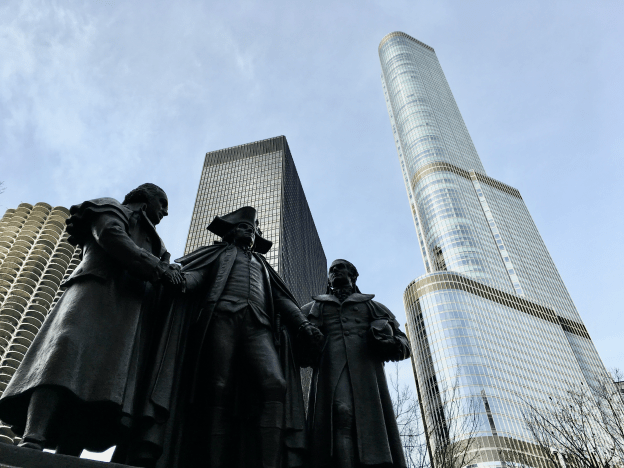
In late December 2017, during one of my family’s regular Christmas trips back to Chicago, my Dad and I were walking along Wacker Drive (upper, not lower) past the Herald Square Monument on the northwest corner of Wabash and Wacker. The monument depicts George Washington with two of the principal financial backers of the Continental Army during the Revolutionary War, Robert Morris and Haym Salomon. I took a picture of the monument with the Trump Tower looming in the background, a pairing of two presidents who in many ways could not be more different in character from one another. My Dad suggested I should learn more about the monument before posting my picture and get the full context of why it’s there in the first place.

As it turns out, the inscription on the monument’s base “The Government of the United States which gives to bigotry no sanction, to persecution no assistance, requires only that they who live under its protection should demean themselves as good citizens in giving it on all occasions their effectual support,” was what made my picture seem so poignant in the first place, and likely had the same effect on many pocket photographers who had walked by in the years since 2016 with their smart phones at the ready to capture the world as they saw it.

That inscription, I learned later that day when we returned to our hotel, was from a letter President Washington sent to the Jewish congregation of the Turo Synagogue in Newport, Rhode Island affirming their religious liberty and emancipation from any separate law code contrary to the custom in most western countries at the time. The context fit the story I was hoping to tell with my picture, yet I was appreciative of the advice to learn more about that monument before making a statement of my own with its picture.

I have many pet peeves, most of which I don’t talk about out of respect for everyone else. I’d rather be known as someone who has positive things to say rather than a complainer, and in those moments when I find myself overly melancholic or acting in a “woe is me” manner, I tend to annoy myself a fair bit. So, it takes a lot for me to want to say anything terribly negative, yet this matter of context is key to something that does bother me. I am annoyed when stories are taken out of the context in which they were created. 

This usually doesn’t happen with novels or movies or TV shows, except now with the deluge of memes using images and moments from these stories to express emotions. I do see this trend played out more in music where the original story of a song might not be as familiar to the people listening to it, yet they sing the words all the same. Context provides so much more color and energy to a story that turns it from a linear narrative with a beginning, middle, and end into a vibrant world crafted by a storyteller that began as a mere idea in their mind.

Pulling a story out of its original context robs the listener of a chance to appreciate the whole depth of the yarn being spun, to see every last fiber of that tapestry being brought together in a great work of art that is inspired by the ideas of its creator. When we break ourselves off from the context of life, we lose a great deal of the beauty of the Cosmos around us. This is why we can sit back and do too little to help our planet as the climate crisis grows ever dire day by day. Last week, several researchers from the University of Copenhagen’s Niels Bohr Institute reported their findings that the Atlantic’s currents could stop moving this century, as soon as 2025, due to rising sea temperatures; earlier in the week the National Weather Service also reported that water temperatures over 100ºF (38ºC) were recorded for the first time off the Florida coast. The currents feed the very life we have evolved to depend on and to be an integral part of. By focusing just on our own story, we have lost the context of the greater world of stories that ours inhabits.

Here in the Midwestern United States the weather tends to move in cycles with some wet years followed by some dry years. In my adult life we’ve seen three wet cycles so far, with heavy flooding on the Missouri River around the years 2011, 2015, and 2019. Since 2019 we’ve been in a drier spell, with some seasonal thunderstorms but not the great floods of years past; yet these last two summers the Midwest has been inundated with flood after flood, striking different regions at different times. Over the 4th of July weekend, there were rainfalls in Chicago that dropped as much as 8.96 inches (22.76 cm) of rain on the western Chicago suburbs of Berwyn and Cicero. A few weeks later on 14 July, Kansas City experienced a storm line that produced minimal tornadoes, what we’re more used to here, but instead a line of storms over 40 miles (64 km) long from north to south which produced winds reaching at least 75 if not 80 mph (120.7–128.7 km/h) winds that brought down trees throughout Kansas City, knocking out power lines and leaving much of the metro in the dark. 

I for one am used to thunderstorms, they’re quite exciting to be frank, yet this one scared me more than any other I’ve watched from the safety of a well-built house. What scared me most was that the windswept rains reminded me of video I’d seen of the Category 1 hurricanes that hit the East Coast every Fall. To me, this proved that the story I’d been hearing my whole life about the weather here in the Midwest was truly changing, that it was not a couple of bad years followed by a return to milder weather. The baking summer heat that followed that Friday afternoon storm, which last week left portions of Kansas City reading heat indices of over 120ºF (49ºC), was the flip side of the same story we heard in December when the extreme Arctic cold winds that swept down from Canada and locked much of the continent in an ice box settled on Kansas City. That weekend we were treating our garage like an air lock, closing the interior house door and making sure everyone who was going outside had all their skin covered before opening the garage door to the -30ºF (–34ºC) blistering wind to go shovel out our driveway of snow and lay down kitty litter (our preferred road salt) to try and break up some of the ice that had formed.

Without the full context, we cannot see the future we are creating for all life on Earth. Visitors to my favorite place on Earth, Chicago’s Field Museum, will likely go see their fossil halls, an exhibit now called Evolving Planet, in order to see the famed dinosaurs––and especially SUE the Tyrannosaurus Rex––who live in those galleries. I love going in there for many reasons, which if I haven’t written about before on the Wednesday Blog, I’ll be sure to write about the next time I visit. Yet, the Evolving Planet exhibit ends with a counter showing the number of species that have on average gone extinct over the course of any given day. The later in the day you leave that exhibit, the higher the number is. In all our other problems, and especially in all our distractions, we forget that we need all the other life that evolved on this planet with us. We forget that their stories are important to understanding our own.I know a great deal more about the history of the Turo Synagogue after stumbling into Sam Aronow’s Jewish History series on YouTube just before Christmas in 2021. Learning other peoples’ histories allows us to have a better appreciation for the entire tapestry of humanity. For me, it presented a greater sense of respect in President Washington’s words engraved in the base of the Herald Square Monument at the corner of Wacker and Wabash. That context only strengthens the story of our national experiment at citizen-led representative government, now nearing its 250th anniversary.

“Oppenheimer” and Sound

"Oppenheimer" and Sound Wednesday Blog by Seán Thomas Kane

This Monday, I went to see the new Christopher Nolan film about the life and work of J. Robert Oppenheimer, the leader of the team that invented the atomic bomb. —— Click here to support the Wednesday Blog: https://www.patreon.com/sthosdkane

This Monday, I went to see the new Christopher Nolan film about the life and work of J. Robert Oppenheimer, the leader of the team that invented the atomic bomb.

I have grown up in the shadow of the twentieth century; I was born near the beginning of its last decade and to a degree always knew much of the broad strokes of the century’s history in the United States. The first decade of my life was a time of optimism and hope, the Cold War had just ended a year before I arrived, life seemed to be good, and to me everything was a wonder to behold. I knew the story of how we got to that point, the broad strokes of American history more broadly and of the history of my home city of Chicago more particularly from as far back as I can remember thinking of such things. I knew a world where the threat of nuclear war was a thing in the past, a nightmare that never came to pass now that the Soviet Union had fallen, and America & the rest of humanity had survived the long nightmare of the Cold War.

In many ways, Christopher Nolan’s new film Oppenheimer tells that story that I grew up knowing, of American determination to overcome seemingly insurmountable obstacles with a can-do attitude that won this country its independence, the good guys our Civil War, and a transcontinental union of states that promised liberty, democracy, and peace to all who lived within it. In the years since of course I’ve learned the hard truths of this country’s history, all the people whose lives, hopes, and dreams were thrown by the wayside in the name of our national progress. I still believe in the dream of that progress, ever the optimist, yet that optimism is tempered by the realism that life in this country has never been fair or equitable for all of us. 

For all of the tropes of the great man that the film Oppenheimer plays with, it still tells a story of one man and his colleagues, his fellow theoreticians, engineers, and scientists working in a moment pushed along by the uniformed protectors of that progress to use their brilliance to craft something that could harness the pure energy of the Cosmos to be the ultimate weapon to end what was then the ultimate war imaginable.

Christopher Nolan is famous for his use of sound to tell his stories. Of all his films, the one that before Oppenheimer which touched me the most was Interstellar, which used the minimalist score composed by Hans Zimmer to describe what it might be like for humans to soar past our solar system and to far distant stars at sub-light speeds with little chance yet an enduring hope of returning home to the ones they loved ever again. I watched Interstellar on a transatlantic flight in January 2016 on the way back to London where I was then living from Chicago-O’Hare. That flight was entirely at night, thanks to the long winter nights in the Northern Hemisphere, and so for a few hours before we landed just before dawn at Heathrow, my entire world was Interstellar, which left my jet lagged mind far more confused than usual the rest of the day in my flat.

Zimmer’s score for Interstellar, in particular the great theme “No Time for Caution” pulses with the clockwork rhythm of time itself, a telling motif for a film all about the complexities of spacetime that a non-expert such as myself can hope to understand yet often fall short of grasping. In Oppenheimer there are rhythmic, chronic beats, there is a great pulse that underscores the most pivotal moments of the film, yet where Nolan uses sound itself, less so music, contributes to a compelling, and all-consuming story of the beginning of something with great promises of both wonders and terrors alike.

One of my new favorite music YouTubers talking about what makes Interstellar’s music so good.

I watched Oppenheimer in IMAX, though not on 70 mm film as no such cinemas within a 400 mile radius of Kansas City are showing it on anything but digital prints. Sitting where I was on the right-hand aisle, I perhaps got more of the sound from that side than the left, or the perfect sound that one would find in the center of the room; and in my humble opinion, most cinemas have their sound far too loud in general nowadays anyway. Yet I still felt awed by the way that the sound consumed everything else that I could feel, see, and yes hear when it fitted the story. This matched the great silences, not lead-ins to a horror jump scare, but meditations on the numinous echoes of something approaching the divine in the power wielded by that American Prometheus as Dr. Oppenheimer has been called.

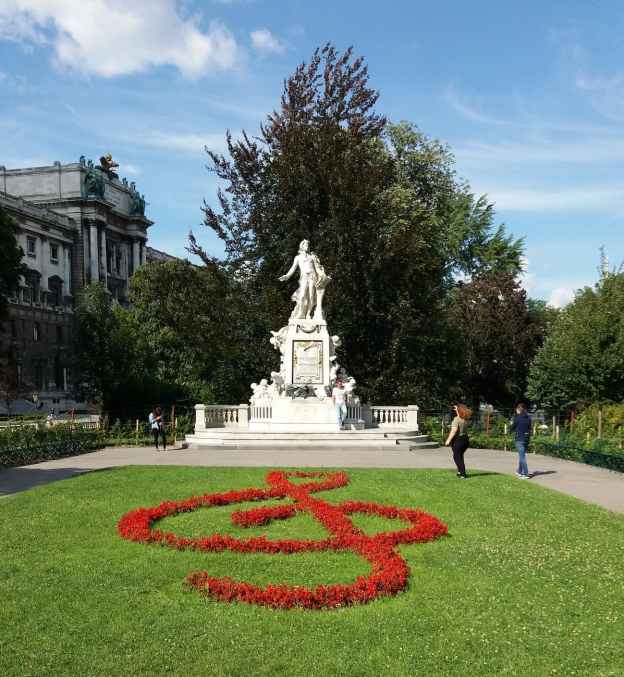
In the Summer of 2016, a few months after that flight into the world of Interstellar, I traveled to Vienna, one of the most beautiful cities I’ve ever visited, and the first stop I made after arriving in the Innere Stadt was at the Haus der Musik, the second music museum I’d visited during my time in Europe after the Finnish Sibeliusmuseum in Turku. Yet unlike the Finns, this Viennese institution included an entire floor dedicated just to sound, the Klangsmuseum, where sound was visualized using colors on the walls. I began to connect ripples I’d seen all my life in water with the sounds I heard that day, which has proven useful. As I’ve gotten older, and my love for music to concentrate during the day has led me to use in-ear headphones more and more, my hearing has probably taken a slight dampening, leading to me not necessarily hearing less overall but instead noticing the vibrations of sound more and actually feeling sound in my body while I’m hearing it.

So, for me sound is not just something I experience with one sense, my hearing, but with my sense of touch as well. It’s one of the things that a live concert can give the listener that a recording can’t always provide. Whenever I hear a familiar opera in a theatre, I am usually struck a little unexpecting at the physical sound the timpani makes during the overture, and the way the sets creak and reflect sound back towards the singers and out to us the audience. I have learned how to judge without particular precision how far away a lightning strike is by listening for the gap before the thunderclap and the length that thunder echoes about the world around me as well as within me when it’s a particularly close one.

The world that Dr. Oppenheimer created felt removed for much of my life, for the man who said of himself “Now I am become Death, the destroyer of worlds” created a means of mass destruction which after 1945 has never been used in war. For much of my life, the threat of nuclear weapons seemed to be something consigned to a past when our ideologies kept us apart, spurred our distinct methods of innovation, and made enemies out of onetime uneasy allies. Yet today, as other powers rise to a level of strength and aggression that they could challenge the record of nuclear weapons, I’ve found myself worried about it in recent years for the first time in my life. I’ve found in my professional experience that it takes several attempts for a lesson to settle into the learner’s mind, it took me three tries to learn both Latin and Irish to really understand both languages and how they work. All this made Oppenheimer less a film about an event firmly in the past, something perfect to borrow a grammatical term for things that have happened and are in the past, but more something which tells an imperfect story of events with continuing resonances in the soundscape of our world today.

I may have grown up in the shadow of the twentieth century, yet I and my generation will have a great effect on the events of the twenty-first. I hope that we can learn the lessons of the century that came before us, and use Dr. Oppenheimer’s achievements not to create deterrents through the threat of mutually assured destruction but to establish human cooperation out of our mutual interest in surviving to live in a future to come.

Personalizing Language

Personalizing Language Wednesday Blog by Seán Thomas Kane

This week, adding onto last week's release about my work as a translator, I'm discussing my view on how language ought to be personalized. — Click here to support the Wednesday Blog: https://www.patreon.com/sthosdkane

This week, adding onto last week’s release about my work as a translator, I’m discussing my view on how language ought to be personalized.

About this time every year I’ve been releasing a blog post about my interest in and continued study of the Irish language. In past years I’ve talked about how I came into this period of studying Irish knowing bits and pieces of it, but without the comfort of speaking or reading it regularly, and later how I appreciate the meaning of how the structure of Irish gets its ideas across. This year, I want to talk about how I feel my own personal use of the Irish language has taken on its own form, or idiolect, and why that’s the case.

A few weeks ago, I found several books on the regional variations in Irish through my university’s e-book catalog. It struck me that these linguists had found such common generalizations of Irish sounds when spoken, or rather attempted, by native English speakers who don’t have much experience with Irish itself. The frequent “ch” sound as in leathanach, or page, gets hardened from a ch to a k, while the slightly less frequent “dh” in dha, or two things, gets turned from a dh into a g. The best way I can describe this dh sound is it sounds to me like a French r that’s rolled further back in the throat.

I read these examples of Anglicizations of Irish phonetics and could see, or rather hear, where they were coming from. Yet in my own case I’ve always tended to either make these sounds as we’re taught in class, or to soften them, with the ch becoming a h and the dh joining the other sound spelled “dh” as something along the lines of a ya. I suppose the authors of that book were using native speakers of Hiberno-English as their test subjects, something that I am not. I speak American English, more specifically a blending of the western end of Inland Northern American English (aka Great Lakes English) and Midland American English. Plus, when it comes to other languages I’m most often exposed to, French and Spanish, I’ve found a good deal of the phonetics of those languages to be rather easy to adopt. So, my own idiolect, my own way of speaking Irish would be a tad different from the norm because I don’t speak the expected standard of English.

Going forward, I wonder if it would be more helpful, should I ever get the opportunity to teach Irish here in the United States, if I adopted some of these slightly easier to pronounce sounds and taught those, alongside the traditional Irish ones, would that change the ways my students spoke the language? It’s certainly possible, yet on the other hand like how I adapted Irish to fit the comforts of my own speech perhaps they would find ways to make the language their own as well.

At the end of the day, these ch and dh sounds are two of many that make Irish its own, that give it the spirit and the character that keeps it true to its origins and history. I for one love that I’ve figured out how to make these sounds, and how to speak this language to an intermediate level now as an adult. It means a lot to me to speak the language of so many of my ancestors, to keep that vehicle for thoughts, ideas, and stories alive.

Lost in Translation

This week, I talk about my experiences as a translator. — Click here to support the Wednesday Blog: https://www.patreon.com/sthosdkane

Over the last three years I have consistently worked in the background of my dissertation research and all the other things I’m doing, including this blog, on translating one of my dissertation’s most important primary sources from Middle French into Modern English. That book, André Thevet’s Les Singularitez de la France Antarctique was initially published in 1557 and then translated into English only 11 years later in 1568 by a man named Thomas Hacket. However, since 1568 Hacket’s translation has been the only one that English-speaking readers wanting to explore Thevet’s Singularites have had available to them. 

There are some partial translations out there, most notably Roger Schlesinger and Arthur Stabler’s 1986 book André Thevet’s North America: A Sixteenth-Century View, yet Hacket’s remains the only full translation into English. So, not only is the work I’ve been doing helpful for my own research, yet it is also groundbreaking in reopening that dusty door that leads into Thevet’s life and work for a great many English-speaking readers and scholars. It’s my hope that people find my translation of The Singularites of France Antarctique both useful and fascinating to read, as it offers a window into a worldview that in some cases makes sense while in others appears far out of place in our own world.

I have always had a fascination with and love for languages. As long as I can remember I’ve had memories, and many of those memories are of long hours engrossed in one language or another, like many of my relatives taking watches apart to see how they work I often do the same with language, learning how each grammar and mode of thinking developed in a common lineage and dialogue with its neighbors and relations. My own language studies began with Latin, which I first tried to learn 20 years ago as a 10 year old, though it wasn’t for another four years until I started high school at St. James Academy that I really began to understand what I was looking at. Around the same time, I also started studying Irish in the evenings at the Irish Center of Kansas City. Both languages are ones that I still study, and enjoy reading, speaking, and writing. 

In the years since, I’ve learned French to a level that when I’m there I can go about my life in France without using English. Translating Thevet’s Singularites has really helped with that, as three years of intense reading of his Singularites really gave me a strong impression on how French, albeit in an older form, works. One of the big differences with my translation of the Singularites is that I took a lot of time to consult page-by-page several modern Portuguese translations of his work published in 1978 by Eugenio Amado and in 2018 by Estêvão Pinto. Thanks to their common Latin heritage, and to the general use of Spanish around me for much of my life, I find reading Portuguese and Spanish to not be very difficult at all. 

There are languages out there which I can read, and to a degree write in, but cannot speak very well. Portuguese and Spanish fall into this group, as does Ancient and Modern Greek. I studied Classical and Koine Greek, two ancient variants, in high school and college at Rockhurst, yet I just don’t have the training or experience with either forms of Greek to be as comfortable or confident in Greek as I’d like. Eventually, I do want to spend the time to learn Ancient Greek as well as Biblical Hebrew, yes at some point I’d like to study the Bible in the way that I’ve studied the works of the humanists from the fifteenth and sixteenth centuries.

I’ve also here and there studied Bulgarian, Mandarin Chinese, Māori, and Egyptian Hieroglyphs. Again, all of these came out of pure curiosity on my part, and while I’m unable to speak the first three or properly read the latter, I do know a thing or two about each. Thanks to my work with Bulgarian, I can read the Cyrillic alphabet, and I do remember a few things, though I haven’t used any of it in quite a while. During the opening ceremony of the Beijing Winter Olympics last year, I ran through what I could remember from my Mandarin Chinese class in the Spring semester of 2017, and found that I still had the pronouns, some verbs, and a handful of nouns, which was more than I expected. In past years I’ve found I can make out text in various Polynesian languages because of the time I spent in 2014 and 2015 learning about how Māori works. Egyptian Hieroglyphs are another animal. I found my curiosity with Ancient Egypt reignited in the Summer of 2019, and pursued the task of learning how to read this most ancient of script with a passion. I can make out some characters, and I remember a fair bit about how the various forms of the Ancient Egyptian language fit in with its Coptic descendants.

Last week, I found myself reading about the Coptic language and its various dialects. I was most interested in how older pharaonic Egyptian place names and terms had survived the millennia into the Coptic that persists today in Egypt and among the Coptic diaspora. It struck me how because the Coptic alphabet is modeled after Greek, I could read most Coptic words, and where there were unfamiliar letters all I needed to do was look to the Demotic script used alongside the more formal Hieroglyphs, and I’d find the source of those letters. Each of these languages are vehicles for the perspective of a particular people at a particular time and place in the long human story. They allow us to get closer to understanding how other people see their own world, and their place in it.

Thevet often referred to his own people as “Christians” and less frequently as “our Europe.” He lived at a time when the older idea of Christendom––comprising of Syriac, Greek, and Latin churches that traced their roots back to classical antiquity––began to fade away with the triple influences of the collapse of the last vestiges of the Roman Empire in Constantinople, the Protestant Reformations, and the beginning of the First Age of Exploration. This Christendom steadily became known in the sixteenth century as Europe, and eventually with the establishment and flourishing of transoceanic European settler colonies as the West. Reading Thevet’s works, looking through his eyes, I now understand how he saw his own world at least a little better.

The Potential of America

The Potential of America Wednesday Blog by Seán Thomas Kane

This week, the Wednesday Blog is coming out a day early in honor of our Independence Day. — Click here to support the Wednesday Blog: https://www.patreon.com/sthosdkane

I am certainly not an expert on the American Revolution, though I am a recipient of its fruits, my life one small result of its effects. The revolution echoed a time in our past when people of all classes in thirteen of the British colonies along the East Coast took up arms to defend what they saw as their inalienable rights against the forces of an overbearing imperial power. The union that came out of the revolutionary generation between those colonies, then independent states, and now federally united in one country is a testament to the marriage of idealism and realism in politics which proclaims that all of us can participate in our government, and moreover have a right and a duty to do so.

Our history has seen this country’s fortunes ebb and flow between prosperity and adversity. There are times when the United States has seen its great successes echo optimism and others when our internal divisions, sown from even before the Revolution, find division among us yet again. In the last twenty years we’ve seen ourselves into a deep abyss in which our factions and parties have driven us further apart from one another than we have seen in a good while. Bad news sells far better than good news. Many of our stories, both ancient and modern, have told of how fear is a quick and easy source of power and strength. Yet at the end that fear will only last for so long, and those who sought to use it will be left powerless and afraid.

I’m saddened this Fourth of July to look at our country and see just how forlorn our dreams have become amid the churning fury of all our rage. There are many victims in our country, victims whose lives over generations were torn apart by the greed, vice, and rage of others who sought power over them. I’m saddened to see how the symbols of all the hope and aspiration that this country represents are being used today by those who seek to exclude many of us from this country’s full bounty.

America truly is a country of near limitless possibility. We have so much potential as a country made up of an infinite diversity of people in infinite measures whose common roots only stretch back a few generations. Lin Manuel Miranda put it well in his musical Hamilton when he called this country a “great unfinished symphony” for there is so much about our culture that remains unwritten, in our future compared to other older societies. We certainly share a common heritage with those older societies, yet by our own geographic isolation and breadth we Americans have forged our own path divergent from that heritage.

I believe that so many of the problems we face today are born out of deep mistrust leading us to refuse to talk with one another, let alone listen to one another. Amid all the troubles of the present moment a bright future awaits us for my generation and Generation Z behind us are proving to be more active in our civic life, more willing to go out and vote, more concerned for the future than prior generations have as a whole seemed to be. There are proposals out there to reform society in order to fix many of the great problems that continue to plague us, reforms that probably could work, if only they were considered by those in power.So, on this Independence Day, I invite you to not only look to the past, to the Revolution and the Founding Fathers, but to look to the future as well, to all that we may yet accomplish in this young century.

Living Memory

This week, a consideration of how memories survive as stories. — Click here to support the Wednesday Blog: https://www.patreon.com/sthosdkane

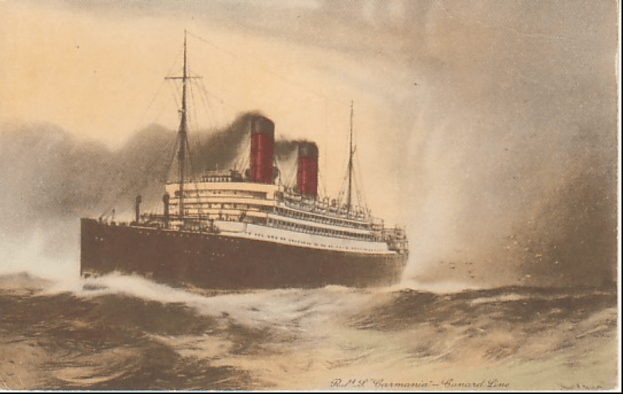
The Header Image on this Week’s Post is of the RMS Carmania, which carried my great-grandfather to America in April 1914.

A few weeks ago, when I visited Mount Carmel Bluffs and the Motherhouse of the Sisters of Charity of the Blessed Virgin Mary (known more commonly as the BVMs) in Dubuque, Iowa I was struck at how even though it had been 8 years since my last visit and 14 years since the last time I was there for a family funeral, the memory of those relatives, my great-aunt Sr. Therese Kane in particular, still lived on in the sisters who came up to us throughout the day telling stories of times now long past and all the people they knew who lived in those moments. It had been so long since I’d seen Sr. Therese that it felt strange to still call her “Sister” as we all did in the Kane family when she lived.

That visit to Dubuque was in honor of Sister and my grandfather’s cousin, Sr. Mary Jo Keane, who died in April only a few weeks after having moved into her community’s retirement facility called Mount Carmel Bluffs. At her wake I noted to the attending sisters, relatives, and friends that she was one of the very last in my family who knew her parents’ generation who came to Chicago from County Mayo in the first half of the last century. Moreover, she was the very last person living who attended my great-grandfather Kane’s funeral in 1941, the last one who could tell some of the stories she heard as a child of life in Mayo at the end of centuries of colonial rule.

At Sister’s funeral lunch in 2009 I remember hearing Sr. Mary Jo, my grandfather, and their cousin Fr. Bill McNulty telling these stories about their parents, some of which I had never heard before then, of how hard it was for them to come to America, and of the trouble they faced in Ireland that led to their immigration. Some of these stories were still in the air at Sr. Mary Jo’s funeral lunch, told by my cousin Rosemary, yet as that first generation born in America leaves us so too their stories begin to fade away.

In the last week I slowly began to acknowledge the news of the lost submersible Titan which left St. John’s in Newfoundland for the wreck of the RMS Titanic and upon its descent beneath the surface was never seen again. At first, I acknowledged it was happening yet didn’t pay the story much heed, yet as my parents began to give it more attention and talk about it over dinner, I slowly started paying attention more. The Titan‘s mission to take tourists down to the remains of the Titanic 2.5 miles (3.8 km) beneath the surface of the North Atlantic is as much an act of nostalgia as any pilgrimage or historical tour can be. For $250,000 passengers were brought to the ocean floor to see the great ship as it rests slowly decaying away with the passage of time. I’ll admit the idea of seeing it for myself is intriguing, though even before the Titan was reported lost at sea, I doubt I’d ever take that opportunity to visit the Titanic.

One disaster resulted from fascination in another disaster. The sinking of the Titanic is a curious event for me because it is just on the horizon of what I consider recent events to my own life. Many of the last survivors––who themselves were old enough to remember the event––died around the time I was born, 80 years after the ship sank into the cold North Atlantic. What’s more, the generation of young immigrants in their 20s and 30s who left Ireland for America at the time of its sinking included my Kane great-grandparents who arrived in this country in 1914 and 1920 respectively. The Titanic followed the same course that my great-grandfather’s ship the RMS Carmania sailed between Cobh (then called Queenstown) and New York two years later in April 1914, and there is a point in my mind where it’s clear that had circumstances been different, had he sailed at age 20 instead of age 22, he very well could’ve been on the Titanic.

It’s always been strange to me to talk with people for whom recent memory is far shorter. When I started teaching at Binghamton University I expected my students, all New Yorkers, would have more vivid memories of 9/11 or perhaps had families who were directly involved, yet these students could tell me little about it, saying they were either too young or had not been born yet when the attacks took place 22 years ago. I think to my own early childhood, to my understanding of world events as the happened right before my birth in December 1992, and I at least have known a fair deal about events like the 1992 Presidential Election or the Fall of the Soviet Union in August 1991 for most of my life. I thank an insatiable curiosity and old Saturday Night Live re-runs for much of what I know about those events. Still, for most of my childhood memories of people who lived in the nineteenth century persisted, and so for me my great-grandfather Thomas Kane, who died 51 years before I was born, feels today closer than might be expected of someone who was born 100 years before me.

On Monday night this week I found myself diving deep down rabbit holes reading about Titanic survivors. It’s rather morbid to say that someone’s sole distinction is that they’re the last Titanic survivor of a certain demographic, that’s certainly something I’d have trouble being proud of. My reading led me to the story of an Englishwoman named Millvina Dean, who was a 9-week old infant at the time of the sinking, who was on her way to Kansas City with her parents to start a new life here on the prairies. 

The Washington Post reported in 1997 on the completion of her long voyage when “85 years after setting out for Kansas City” she finally arrived here to meet cousins long separated by the waters of the Atlantic. The article in question mentioned where her uncle who the Dean family was planning on staying with lived, on Harrison Street, leading me to old city directories to see where on Harrison. The most likely address is at the corner of Harrison St. and Armour Blvd. on the eastern side of Midtown near where many of my maternal Donnelly relatives lived in the 1910s. Ms. Dean herself died in May 2009, I remember reading about her death when it happened; and on the centenary of the sinking of the Titanic, I noticed the date come and go. There was a story that weekend on CBS This Morning, yet for me the main emotion was a strange feeling of an event which had always been there in the edge of memory of the people I knew fading ever further into the distance, less a lived event that my relatives read about in the papers when it happened and more a historical event.

In time all our lives will reach that threshold, our memories recorded will survive as relics of people, places, and moments long past, and those that were only spoken or thought yet never written down will fade away. There is so much I wish I knew about the immigrant generation in my family, I’ve seen pictures, heard stories, been told I look like my great-grandfather Kane in a striking way, yet beyond those things I’ve never really known them. We are fortunate in our time to have so many audio and video recordings of our world, to an extent that our memories will hopefully survive long after we are all gone. The democratization of these technologies is a gift, it means that when future generations want to yearn for the early 21st century they will have the cornucopia of our recorded memories to relive. For older generations, we are left with visions of the past defined by movies, talking and silent alike, which the New York Times columnist Maureen Dowd wrote about this week, her own father almost boarded the Titanic on his Atlantic Crossing from Ireland. Like the French anthropologist Claude Lévi-Strauss seeking the most remote of peoples in Brazil, to get an idea of what first contact was like in 1500, we are left with less recognition of the spirit behind these historical events the further they move away from us, until in a tragic ending to our story they are ancient history to us.

How Reading James Joyce Prepared Me for my Doctorate

How Reading James Joyce Helped Prepare me for my Doctorate Wednesday Blog by Seán Thomas Kane

This week, in honor of Bloomsday, how reading Joyce helped prepare me for my doctorate. — Click here to support the Wednesday Blog: https://www.patreon.com/sthosdkane

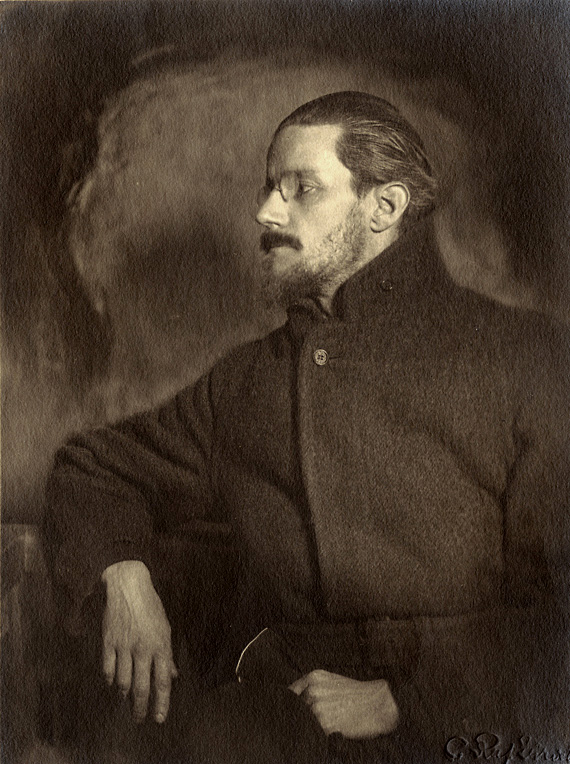
Last Friday was the annual commemoration of Bloomsday. 16 June 1904 was the date when all of the action in James Joyce’s 1922 episodic novel Ulysses takes place. Bloomsday is named for the main character, the sometimes hapless Leopold Bloom who fits perfectly into the wider scope of Irish main characters who may want things to go one way but often find their life taking ever weirder and sometimes darker turns. It reminds me of An Béal Bocht.

I’ll fully admit, I’ve never read Ulysses through the entire way before. I’ve seen the stage adaptation that they used to put on that the Irish Center of Kansas City a handful of times and have participated here and there in the day-long reading of Ulysses at the same cultural center, but to date I’ve never actually sat down and tried to read this work from cover to cover. For one thing, Ulysses evades expectations of literary formalities and standards. For another, a fair bit of the text really only makes sense when read aloud. And finally, because of several scenes it was banned here in the United States for a while, a nod to the puritan roots of our American culture.

So, on Friday I went over to Rainy Day Books, the finest local bookstore I’ve stepped foot in, located just across the border in Fairway, Kansas, to buy a copy of Ulysses for myself. My goal on Friday was to record an Instagram reel of me reading my favorite passage from the novel, a scene with an ever increasingly ridiculous list of foreign dignitaries attending the Ascot Gold Cup, which took place on the same day as the story at large. Yet, the eccentricity of Ulysses befuddled me enough that I ended up choosing a different passage from Part II’s Episode 12, “Cyclops” in which an ancient hero wearing a leather belt adorned with the portraits of a series of Irish heroes is described. Again, this series of Irish heroes steadily becomes more ridiculous as it goes on. As a matter of fact, I’ll read this passage for you now:

Joyce’s Ulysses makes far more sense when read aloud than if read silently, a style of reading that was pioneered in the 5th century CE by none other than St. Augustine of Hippo no less. It’s a far older style of literature that way, something which gives it an air of antiquity that I for one appreciate a great deal. This is also something that I find regular among my primary sources for my dissertation, books which were written for a very different audience who lived 450 years ago in France. In my case, I often find reading those aloud gives me the greatest clarity of what they’re actually trying to say. My translation of André Thevet’s 1557 book The Singularities of France Antarctique is one such book that is best read in full voice, and I have a feeling when I go through and edit my translation that I’ll have to soften some of the eccentricities of my initial interpretation of Thevet’s text, or at least that’s what I’ve been finding as I incorporate it into my dissertation.I find Joyce’s writing daunting, a proper challenge, yet still something that is immensely relatable to my own way of thinking about writing. I love his fluid use of adjectives to describe his characters, they bring even the most marginal of figures to life in a way that echoes down the last century to the present moment. Now, 119 years after Leopold Bloom’s eventful day in Dublin, and 101 years after Joyce’s first edition was published in one volume under the title of Ulysses, there’s a connection to that story which continues to live on for me.

Classics

This week I'm discussing what the word "classical" means to me in musical as well as historical and political terms. — Click here to support the Wednesday Blog: https://www.patreon.com/sthosdkane

During my high school years in Kansas City, I would often listen to either NPR or 1660 AM, the local classical music station, on my 30 minute drive south to St. James Academy. In those years I continued to embrace Classical Music, especially opera, as an art form that remains a particular passion of mine, even to the point of several ill-fated attempts at composing.

Still, it strikes me that our term classical has a rather complicated set of meanings and uses. In the musical sense, it’s used to refer to the most highbrow of our genres, the rare musical tradition that still sees performances of music composed within the last 400 years rather than the decade-based music that usually makes the Pop and Rock charts. Classical Music tends to embrace the trappings of old European and American elite while also providing a gateway for the rest of us to enter that refined space and hear the radiant melodies and harmonies that have been the soundtrack for generations.

I began to explore Classical Music in my middle school years, like many Americans my introduction to this wide scope of music was through jazz and Gershwin’s blending of the classical and jazz orchestras. I’ve been wanting to write a blog post all about my appreciation for Gershwin’s music, though my continuing uncertainty regarding copyright law has kept me from ever publishing it or trying to record a podcast version of it. From Gershwin I jumped backwards to Mozart, Beethoven, and the other big names before settling both in the Baroque world with Lully and in the realm of the Romantics with the likes of Johann Strauss II, Verdi, Wagner, and Mahler. Today, I still love the music from all of those composers, yet I’m also drawn to more recent works written by the likes of Debussy, film music that fits in the 20th Century late Romantic tradition embodied by Prokofiev and the German film composer Gottfried Huppertz, who longtime Wednesday Blog readers and listeners will remember is the composer of the score for Fritz Lang’s 1926 science fiction film Metropolis

In the last couple of years, I’ve returned to my first unwitting introduction to classical music through the film music of the likes of John Williams and Elmer Bernstein and found myself drawn to electronic-classical compositions of Vangelis, which inspired the theme for the Wednesday Blog, and the choral classical-crossover albums of Christopher Tin and 2022’s The Moons Symphony written by Amanda Lee Falkenberg. I’ll gladly spend an afternoon listening to Jerry Goldsmith’s themes for the various Star Trek series and Mr. Williams’s compositions for Star Wars as much as I’ll choose to hear a Mozart piano concerto or Bernard Lallement’s Missa Gallica.

I’ve long thought that classical music saw its greatest innovation in the last century when its venue diversified from the concert hall alone to include the sweeping compositions that breathe life into films. Film music to me fits in the long tradition of ballet music. This comes out of the great silent film tradition of a century ago which reached its zenith in the late 1920s with epics like the original Ben-Hur and Phantom of the Opera films as well as with Metropolis and the other great German expressionist films. Sound film took some of the storytelling need off of the music as now the characters on screen could too be heard, yet the power of music in film was already clear. I relish the chance to hear the Kansas City Symphony perform a concert of film music, because even when it’s disassociated from the pictures that score was originally created to accompany that score often holds up on its own as a concert piece.

It is interesting then to consider that within the world of Classical Music the term “classical” generally only refers to a short span of musical composition within the long history of the wider “classical” genre. The Classical Period in music matches up with the Neo-Classical Period in art, architecture, and literature that ran from around 1750 to 1820. This period includes great composers like Gluck, Haydn, Mozart, Beethoven, and Schubert, all of whom worked in Vienna the beating heart of Europe’s music industry in this period. Yet by this definition the word classical implies a separation from the present, clear limits to its scale and span, and an air of antiquity.

In many other contexts the term classical refers to the far older Classical Antiquity of European History, the centuries during the height of Greek and later Roman civilization from around the 8th century BCE to the 5th century CE. When I write about the classics in my work, I am most often referring to people and ideas conceived during this 13-century long span of time. The classical fathers of Western philosophy––Socrates, Plato, and Aristotle––continue to be required reading in modern philosophy studies, while Aristotle and Pliny the Elder have a foundational role in my own discipline in the History of Natural History. Those two, Aristotle and Pliny, were central influences for the naturalists who defined the Americas in the sixteenth century, people like the focus of my dissertation André Thevet, as well as Gonzalo Fernández de Oviedo and José de Acosta who both wrote natural histories of the Spanish Americas, and Conrad Gessner & Carolus Clusius whose works were written about distant worlds from the comfort of their own homes back in Europe.

Classical is a tricky word because it can be interpreted as something which is removed from common life. It stands apart from popular things because of its high status. I’m often struck by the adoption of mannerisms and norms from the classical music world in popular music, there was one concert I attended nearly a decade ago where the musicians on stage went from dancing in circles playing their violins to suddenly, briskly, taking chairs and sitting in a neat orchestral row in them as though playing the part yet ever with a wink and a nod about it. There has been a general loosening of expectations and normalities in our culture, a sort of reaction to the manners of past generations. I tend to see our present moment as responding to the norms of the 1980s and 1990s, politically we are in a period of unstable transition from the Reagan Conservativism and Clinton centrism of the 80s and 90s, though that needle continues to move forward in time and it does feel now that American conservativism and liberalism now seems to be working in response to the policies of the Bush and Obama Administrations as our youngest generation of voters now were born after the Millennium. I’m happy to see more classical musicians on social media releasing short videos of their performances, rehearsals, and daily practice for all to see. That’s one way for the classical to remain vibrant in the present moment. Still, it worries me that today in 2023 classical and jazz tend to be the exception in popular performance compared to pop, rock, and country.