
Tag Archives: Seán mac Tómas Ó Catháin

Donald Trump and the slow death of American Federalism

US flag

Today the world was flabbergasted and disgusted with our President once again. This time it was not due to his bullish techniques for getting in the front of a group picture, nor his obscene rudeness towards our closest European allies, nor even his disregard for the basic fundamental principles that all humans deserve equal treatment and rights. Far from that, today Donald Trump decided, for whatever reason, to do away with the safety mechanism that would at least temper the oncoming tide of climate change and preserve the planet that we’ve called home for millions of years. But that does not seem to matter to Donald Trump, the human epitome of ego.

He does not seem to care that withdrawing from the Paris Climate Deal will have disastrous effects for all humanity for generations to come. All he cares about is that “America receive a fair deal.” He is a businessman who has never had to deal with the realities of the world; he is a man who has never been fit to serve as President, and frankly is even less fit to do so today.

Climate change is a very real and present danger to humanity, to all of us living on Earth. We have developed our civilisations, our industries, our technologies in a manner that until recently has had a careless attitude. We have raped the Earth of its natural riches, leaving its soils forever changed, its seas void of so much vibrancy and life, and its air thick and soupy with the fumes of our industrial might.

Eventually, in the long run, humanity will inevitably outgrow this our nest, but until that day comes in the future we are stuck here. For the time that we have left on Earth we must do our best to maintain it, to keep it fresh and clean. Anyone who has maintained their own house without the help of servants will know what it means to keep the house in order. Judging from his biography, and his attitude towards the rest of humanity, I doubt Donald Trump has ever been in our shoes.

I have found myself on a daily basis pronouncing my embarrassment at the President’s actions to friends both overseas and here within our borders. My shame at seeing that most self-serving of men occupying the People’s House is far beyond anything I have ever experienced.

Setting aside the climate for one moment, though to be honest that is nigh impossible to do, as everything else is reliant on the climate’s continued health and survival, there is one other more directly American issue at hand here. For the past four months, Donald Trump has done pretty much what he promised to do, to bring stark change to Washington; but the changes that have come about in his time in office have been hardly positive. For one thing the long standing norms of the American body politick are finding themselves being forcibly changed, in many respects against their will. States like California, New York, Massachusetts, and Illinois, long considered key supporters of federalism, in comparison with the likes of Texas, Arizona, Kansas, and most of the South, are now finding their long held faith in Washington to be suddenly, and dramatically unfounded.

What Donald Trump has done is nothing short of contribute to the process of nailing together the coffin of federalism in the United States. Our country has always been an odd fit, some parts more willing than others to play along with the idea of federalism. Trump, a New Yorker, has played into the hands of the anti-federalist extremists on both the left and right, particularly the Tea Party Republicans in Congress and in the respective State Capitols around the country. When the State governments choose to ignore the needs of all their constituents, instead focusing on the demands of a few, we the citizens look to the Federal Government to back us up and defend our rights. Yet now both a majority of State Governments and the Federal Government are controlled by the same faction within the Republican Party that has cried foul at the regulations set up by big government to ensure the continued prosperity of a majority of Americans.

Their self-serving agenda has seen that this country elect one of the least qualified Presidents in its history, and that this country’s legislative electoral process be so mangled that they the small-government “we serve ourselves” far-right Republicans will be mathematically guaranteed to win for many elections to come. Now the rest of us who are not being served by this narrow-mindedness amongst those in power are left to look to the lowest levels of our government, to our cities, for protection and aid. Cities like New York, Chicago, D.C., Boston, San Francisco, Los Angeles, Seattle, Portland, and Kansas City are our last refuge in this our darkest hour. For the time being, while the current faction of Republicans remains in charge of the rest of our government, we must rely on our big-city mayors and our city councils to do what they can to ensure our cities remain safe for American democracy and multiculturalism.

As a European American male, I am a part of the least threatened demographic in the country, yet as an American I am a part of the most threatened demographic of all; for when one American’s inalienable rights are threatened, then the rights of all the rest of us are threatened as well. The day when we return to saying otherwise is the day when we, the United States of America, the nation of immigrants, of opportunity, of possibility, will be the day when we lose our national spirit.
The Pope and the President

Embed from Getty Images

Today a rather oddly stacked meeting took place in the splendid halls of the Apostolic Palace in the Vatican. It was a meeting between two men who could not have possibly been more ideologically or culturally opposed to each other. Yet there they were, Pope Francis and President Trump standing side-by-side. Their meeting was a diplomatic affair, in part to appease the conservative Catholic base that had aided Trump in winning the presidency in November 2016.

I was unsurprised when a few weeks ago the news broke that Trump would be visiting Pope Francis in the Vatican, after all every American president since Eisenhower had made a visit to the Holy See to meet with every pontiff since Pope Saint John XXIII. Yet I found myself hoping, even praying, that Pope Francis would bend traditional diplomatic protocol ever so slightly and arrange for his meeting with the new president not in the splendour of the Apostolic Palace where all the temporal power and wealth of the Church is to be found. Rather, I hoped the Holy Father would invite the President to meet him in one of the Vatican’s charitable centres, perhaps in the homeless shelter that Pope Francis opened in January of this year, or in one of the city-state’s soup kitchens.

If there is one trait that the current United States President does not understand, let alone practice, it is humility. During his visit to the Eternal City he should take the time to visit the Basilica of Saint Lawrence outside the Walls (San Lorenzo fuori le Mura). It was here in the third century that Saint Lawrence, a martyr of the Early Church, was buried. When asked by the Prefect of Rome to hand over all the riches of the Church to the Imperial Treasury, Lawrence responded by gathering all of the poor and destitute who had benefited from the Church’s charity and brought them together to line the street leading to the centre of the old Christian Quarter.

When the Prefect returned, Lawrence announced that he had gathered the riches of the Church together in one place for the Prefect to view. Lawrence then led the Prefect down the street, showing him the great mass of people before him, announcing, “These are the riches of the Church.” For his efforts, Saint Lawrence was grilled alive, yet his message rings just as resoundingly now as it did eighteen centuries ago.

Donald Trump is a fairly successful man. He’s done well for himself crafting a business empire based primarily on his name brand. Yet his brand of gaudy luxury cannot compare to that which is truly worthwhile in life. I have found that as much as wealth, power, and prestige can bring me happiness in the short term, it does not bring me long-term fulfilment. I have found some other qualities, love, charity, compassion, and a general sense of goodwill to be the true key to happiness.

I have seen what power can do to people, and know all to well that I want as little as possible to do with it. All I want in life is to be with the people I love, to see that they fare well, and to ensure that the generations to come have a better life than I could possibly imagine. While having some wealth can certainly contribute to this, enough to ensure that in the confines of our economic system my family will not have to worry, that money ought to always be of secondary importance to all of us. We need money to live, but we should not live for money. Unfortunately for him, and for the rest of us it seems that President Trump has yet to figure that out.

Embed from Getty Images

The Constancy of the Modern

Embed from Getty Images

If we can learn anything from history, it is that our story has always been acted out and subsequently recorded by people, not unlike us. Each successive generation has done their part to immortalise their greatest tales through stories, both oral and written, into the collective memory of society. As time has passed, each generation of historians has endeavoured to best tell these stories of their predecessors in a way which their own generation can well understand. To the historians of the Renaissance, the millennium immediately proceeding their own time quickly gained the pejorative name the Dark Ages, while its architecture was equally appallingly disparaged as Gothic.

To the Renaissance and subsequent Enlightenment historians, the time to hearken back to with all glory was that of Classical Antiquity, of Greece and Rome. The intervening millennium in between the Fall of Rome in 476 CE and the rebirth of classical learning in the Italian city-states in the late fifteenth century was merely a setback in the onward march of human progress. It was a setback defined by religious fervour and superstition, when science was equated to wizardry and the light of literacy confined to only a select class of clerics and aristocrats.

Each generation of historians has strived to understand the past both in the light of their own times and in the understanding of how those in the past understood themselves. Yet for the analytical nature of the study of history in our present scientifically-centred age to be properly propped up, contemporary historians must continue to classify and divide history into particular periods, places, and categories. Political history must remain distinct from cultural history and social history, while the aforementioned Renaissance must somehow be understood as different from the Medieval period that came before it.

What is most striking is the division of the discipline into broad spans of time, particularly concerning European history. One has a choice of diving deep into the past with Ancient history, a concentration primarily focused upon the Mediterranean world from the earliest communities to the fall of the Western Roman Empire in 476 CE. Or perhaps one would prefer to study Medieval History, focusing on Europe during the ten centuries between the aforementioned fall of the Western Roman Empire and the eventual fall of the Eastern Roman Empire in 1453.

Or, if that does not suit one’s fancy, one could try one’s hand at Early Modern History, covering the period of time between the turn of the sixteenth century to the French Revolution. While modern, this period still has its fair share of the medieval about it to make it more remote. Then there are the modernists, those whose focus is squarely on recent European history, the stuff that has happened since the fall of the Ancien Régime in 1792 and the rise of modern European liberal democracy through the nineteenth and twentieth centuries.

What this model of understanding European history is founded on is the old Renaissance understanding that Europe will always be dominated by the legacy of Rome; therefore all European history must be understood in relation to the glories of the Roman Empire. The medieval is a giant leap backwards in the ruins of the once great imperial edifice, while the rise of modernity marks the return of European society to its former Roman glory. The other thing that this model is focused on is we modern man. Since it was first devised in the seventeenth century, this understanding of history has always held modernity as the pinnacle of human achievement, at least to that point.

The term modern itself comes from the Late Latin modernus, an adjectival modification of the Classical Latin adverb modo, meaning “just now.” Modernus in turn developed into the Middle French moderne by the fourteenth century, indicating that something similar to our understanding of the present time as modern was in use as early as what we would now call the Late Middle Ages. True, to my generation devices like the digital tablet, electric car, or the ability to make videocalls are decidedly modern, our grandparents could equally have said the same fifty years ago for the television, jet airplane, and IBM 7080 computer were equally modern to their own time. Likewise for our great-grandparents the very idea of a subway, car, or airplane on its own was incredibly modern.

The way I see it, the term modern is the hour hand on the clock of time; it is the pointer that marks where we are on the cycle that is human history. Just as Edward III was a modern monarch for his own time so too Elizabeth II is for ours. Likewise, while Geoffrey Chaucer may well have been seen as a modern writer for his day and age, working into the late hours of the night in his rooms within the edifice of London’s Aldgate, so too someone like me is all too modern for my own time. Though I write so often about the past, and do my best to draw connections between what has been and what is present, I cannot help but understand the people, places, and things that have already come and gone through the lens of my own times, of my modernity.

Therefore to define ourselves as modern is not to make us anymore unique than our predecessors. Rather, to do so we not only continue on the legacies of their respective modernities, and write our own story, always utilising this most constant of chronological labels.

“We care for our own kind.”

IsolationismWith a rise in nationalism worldwide, we have also seen a rise in isolationism from both the extreme right and extreme left. In my view, nationalism and isolationism are blood brothers, and will always go hand-in-hand. In fact, the only way in which an isolationist nationalist government would ever consider interacting with its neighbours would be either through coercion or full force of arms. This is the world that was seemingly far better known in a time now past, a time when it was far more likely for the likes of Germany, France, and Britain to go to war with each other rather than sit around the negotiating table and work out their differences peacefully. Today, in Western Europe and North America we have known this sort of negotiated peace since 1945. It is a peace that has led to my father and I never having had to go to war, unlike the generations before us.
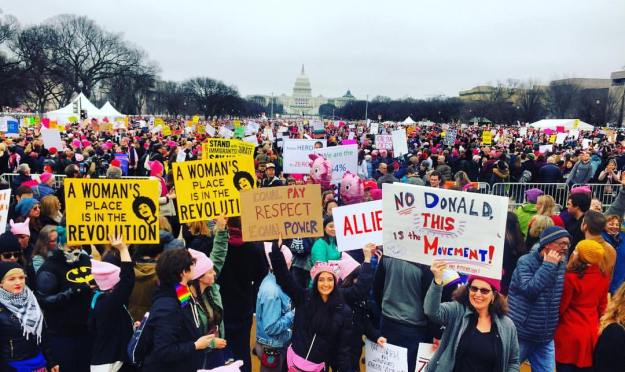
While the political structure established in the wake of the Second World War and expanded with the fall of the communist states in Eastern Europe, has led to unforeseen stability, prosperity, and international goodwill amongst its participants, the trials of the 2000s and 2010s have shaken that stability to its core. From the War on Terror launched by the United States in response to the Attacks of September 11th to the Great Recession, faith in liberal democracy and in capitalism are at an all time low.

I can’t blame those who do not trust the current political and economic systems, after all at least economically capitalism is structured to benefit most those with the most capital, leaving the rest to try and catch up. But when catching up to the wealthy is increasingly nigh impossible, it is understandable that some would be left dissatisfied with the system.

There is one effect of all this pain and negativity being felt around the world that can only have disastrous consequences for us all. I was reminded recently of an old saying, “We take care of our own kind” that one might have heard in generations past. With this comes the idea that we should stick to the social, political, religious, and ethnic groups to which we belong, that I as a middle class Irish American Catholic Democrat should not have anything to do with anyone who is not like me.

This is isolationism in its purest form, isolationism not on a national level but on a local house-by-house level. It means that I should sever all ties with my best friends, who are from Bulgaria, Finland, Venezuela, and Ecuador. It means that my neighbourhood, which is pretty well mixed between Protestants, Catholics, and Jews ought to be sorted out, and that each of us be given our own couple of streets to live on. It means that as a Democrat I should stay as far away from any Republicans, and that we should keep to ourselves so as to ensure we do not step on each other’s toes and cause any trouble.

I’ll be frank; I can’t possibly do any of that. I respect, admire, and in a way love my friends too much to send them packing, and my neighbourhood is better off because of its religious diversity. Furthermore, having seen the divisiveness of the 2016 election, I know all to well that if we Democrats do not talk with our Republican relatives, friends, and neighbours that we will not be able to heal the wounds of division that have wrecked our country so horribly.

But considering those words, “We take care of our own kind,” I am left thinking even more; and you know what, I think I can actually agree with this. It’s best to only care for people like you; it’s best to only be friends with people like yourself. The most optimal way to live one’s life is to solely live it with likeminded people around. After all, that way there won’t be nearly as much conflict within social groups. So yes, I’ll take care of my own kind, after all I’m human, and it is my duty as a human to care for the rest of humanity.

Isolation, and its bedfellow nationalism, serve no real purpose, and in the end are self-cannibalising; because isolationists forget that we do share that one common bond, our humanity, through which we can never fully cast each other asunder. So, let’s take better care of each other and get over that idea that our differences are bigger than what brings us together.

What is citizenship?

16179019_10210642139022398_8265398912556879037_o

Photo: Cole Gibson

In our present time of political upheaval around the globe, the central questions of any political society are once more in the foreground. Central to these is the question of what it truly means to be part of a political society, to play one’s part in this comedy we call politics. In most constitutional countries today, the citizen, the most basic piece in the larger puzzle that is the body politick, fulfils this role. What does it mean to be a citizen, and furthermore, what is citizenship, the state of being a citizen? Citizenship is an old concept, one that can be traced back to the earliest polities, from the Ancient Greek πόλις to the varying degrees of Roman citizen, through concepts of medieval subjecthood, to the Renaissance and modern understandings of citizenship within the Westphalian empires and nation-states that have been the norm in the West since the mid-seventeenth century.

Today our definitions of citizenship are primarily two-fold, founded upon both ius sanguinis and ius soli. Jus sanguinis is the understanding that one’s legal status as a citizen is based solely upon one’s ancestry, one’s blood. As an American citizen who has at times, and will certainly again, prefer to live overseas in the U.K., should any of my future children be born beyond the borders of the United States, they will automatically be United States citizens, having inherited that citizenship from me, their father. However, should they be born in the United Kingdom, the children of a permanent resident of that country, they will have also inherited British citizenship through ius soli, having been born on British soil.

These two sub-classifications of citizenship are straightforward enough, and reasonable means to define what makes a person a citizen. Yet a citizen is not just an individual who happens to have either been born in one country, born to a parent from a country, or who has resided in a particular country for an extended period of time. A citizen is also an active participant in their government. The chief way a citizen can partake in politics, can wield the power that comes with their citizenship, is through voting. Without the right to vote, citizenship is but a muted title, a lame duck of a word.

Here in the United States, the most fundamental definition of who can vote simply considers age and time spent in a particular state. In most cases, an American citizen can vote in their state if they are 18 years of age and have resided in that state for at least 90 days. Yet politicians who see their only hope of maintaining power resides in further limiting who amongst the citizenry can vote have begun to pass legislation restricting voting rights from a wide swath of citizens. In Missouri, a citizen must present a state issued ID card when arriving at their voting precinct, yet that state issued ID card can only be granted to the citizen by the state if that citizen can a.) prove their citizenship, and b.) prove their residency. In order to prove one’s citizenship, one either must present a valid birth or naturalisation certificate, or a valid U.S. Passport to the D.M.V. Furthermore; one must prove that one does live at one’s legal voting address. The latter can be arranged, through the presentation of a utility or car bill, or even a bank statement, yet the former is far more complicated to find, particularly if the citizen in question was born in another state.

These laws have been written to “combat voter fraud”, yet there has been hardly any such voter fraud anywhere in the United States in the past twenty years. What these entirely unnecessary laws do accomplish is to restrict voting rights to a select few, to a smaller portion of the population. This is one of many symptoms of our ailing democracy, of our democracy that is sickened and addicted to the power of the almighty dollar. The same politicians that have instituted these voter suppression laws are also the ones who stand to gain the most from having a smaller electorate. Their political power rests squarely on the broad shoulders of their own special interests, cemented through bribery and intimidation alike. This is why sensible gun control legislation has not passed in Congress, despite the string of mass shootings and domestic terror attacks that have plagued this country. This is why the United States does not lead the nations of the world in combatting climate change, in keeping to the standards set in the Paris Climate Agreement. This is why an entire generation of Americans are left in severe debt and often unable to find work upon earning their Bachelor’s degrees. This is why the House Republicans voted to take federal health insurance from 20 million Americans. The voice of the citizen has been overwhelmed by the voice of the special interest.

Our democracy is under threat of becoming a plutocratic oligarchy, a nation governed by a class solely defined by their wealth. Sure, any American can make it to the top, but so long as that American is of European descent, and is willing to do anything it takes to earn more money. The dignity of the citizen is being replaced by the pessimistic wolfish piracy of an unscrupulous few that never outgrew their days of playground bullying. We the citizens should continue to make ourselves heard, we must continue to protest, to march, to call our elected officials, to tweet them, to write to them, to visit their offices and make ourselves heard. But most importantly, come Election Day, we must go out and vote! Without our voting rights were are not citizens but merely voiceless sheep being led about at the whims of a small few.

If our democracies are going to make it through this present time of political upheaval, we the citizens of those democracies must ensure that our voices are not silenced, not muffled by the wealthy and powerful. A person who has nothing to their name, not even a penny, should still have the right to vote; after all that person is a citizen of the country they were born in. Whether we like it or not, we are all subject to the ebbs and flows of the political process. It is up to us to ensure we control that tide, lest it sweep over us and leave us for dead.

Reflection on a Year Overseas

London – Eleven months and eleven days ago I moved from Kansas City, Missouri, USA to London, England. Eleven months and eleven days ago I left home and went on a great adventure that has forever changed the way I see myself, and the world. In the past I have said that one of the best ways to begin to know oneself is to understand the places from whence one comes. And, while time away has given me a greater appreciation for all the trappings and comfort of home, it has also given me the chance to explore some of the places from whence my own ancestors came: particularly in Ireland, in England, and in Finland.

As a historian, but perhaps more importantly as an American, this was a rare opportunity that very few of my fellow countrymen could ever hope to achieve. On the last Friday of May 2016, I quite possibly became the first descendant of my third great-grandparents, Juho Heikki and Anna Sophia Kuivaniemi, to return to their hometown of Rauma, Finland since 1879. On the other hand, I followed in the footsteps of my grandparents and was able to walk the roads and visit the town of Newport, County Mayo where my grandfather’s parents were born, and visit the nearby cemetery at Burrishoole Friary where the ancestors of so many of my relatives are buried. So many names from America are carved into those tombstones, yet here on the shores of Clew Bay they are in their original setting.

Yet perhaps most importantly over the past year I have had my beliefs, my understandings, my very philosophy of life and nature challenged time and again by friends and colleagues alike. I am eternally grateful to them all for those discussions, for those opportunities to think anew, opportunities which one day will lead me to act anew. Those beliefs, those views of mine which held water remain, while others have been left by the wayside, abandoned after much debate and discussion. I hope I am all the wiser for the people that I have met, and the great friendships that have been forged. We come from such different corners of the world, with different backgrounds, different views, different languages, yet respect abounds amongst us far more than contempt.

Next week I will at long last be returning home, to Kansas City, Missouri, in the heartland of the United States. I will return to the heat and humidity, and the allergies. Yet I will also be returning to my family, to many friends old and young. I am excited to be coming home once again, and looking forward to being surrounded by all those familiar things, sights, sounds, and smells. I did not realise it until I had been away, that even the softest sensory detail can be missed. Whether it be the sound of the wind whirling through the branches of the trees, or the familiar voices on NPR’s All Things Considered set to the backdrop of Kansas City at sunset, its streets filled with cars heading to and fro. In London I found that on winter nights, when the sky was clear and the street lamps glowed in a distinctly mechanical way, I missed hearing the familiar voice of Kai Ryssdal on Marketplace coming over the radio as I’d often hear at a similar time of night back home.

Yet I return to a country on edge, a country that has seen so much anguish, so much anger, and so much fear over the last year. The signs have been about for a while now. Since President Obama was elected in 2008 nearly every racist, closeted or not, has come out of the woodwork and ensured that the rest of us would have to hear their nonsensical cacophony rattling on. We could ignore racism as the rantings of the mad if it were not for the reality that words plant seeds, seeds sprout actions. Once again, around the world bigotry seems to be in fashion like it was in the 1920s and 1930s. There is always someone available for people to hate or fear. As Woody Allen put it in a recent interview with Catherine Shoard of The Guardian,

It’s in the nature of people to have someone to scapegoat. If there were no Jews in the world they would take it out on blacks. If no blacks, they’d move over to Catholics. No Catholics? Something else. Finally, if everyone is exactly the same, the left-handed people would start killing the right-handed people. You just need an other [on whom] to vent your hostility and frustration.

I know that bigotry has been around for a long time, and probably will still be around long after I’m dead, but I honestly did not really experience it until when I was at least around thirteen or fourteen. I remember some of the boys at school using the word Jew as an insult, which didn’t make sense to me, as I had always gotten along well with my Jewish friends and neighbours. I also never really had anything against African Americans, but after years of hearing from my classmates and friends that “Troost was dangerous,” I was less willing to go to the African American neighbourhoods east of Troost Avenue in Kansas City, MO. Subconsciously or not, I was accepting a racist ideology that I consciously abhorred.

Perhaps the best example of my reaction to bigotry comes from a strange experience that I had when I was fourteen, where an individual who I was working with at the time told me to my face, “I don’t like Catholics” knowing very well that I was a Catholic. I was shocked by this, not necessarily because he was saying that he didn’t like me because of my religion, but more so because his dislike for Catholics simply didn’t make any sense. Over the years as I have been exposed to a variety of opinions and ideas, and I have found myself adopting some similar views, whether it be a dislike for one particular nationality, or religion, or political philosophy, or a preference for a particular country over another. Yet each of these blanket opinions have been swiftly overturned as soon as I have met someone who fits into one of those categories.

How can I say that I hate someone or fear someone simply based upon their nationality, religion, politics, or even based upon the colour of their skin? It makes no sense. Bigotry of all kinds makes absolutely no sense!

I am proud of who I am. I am proud to be Seán Thomas Kane, or Seán mac Tómas Ó Catháin as it is in Irish. I am proud to have been born in Chicagoland, and to have lived most of my life in Kansas City. I am proud to be my parents’ son, and my grandparents’ grandchild, a nephew of my aunts and uncles, a cousin of my cousins, godson of my godparents, and a friend to all my friends. I am proud to be of Irish, English, Welsh, Finnish, Swedish, and Flemish descent. I am proud to be an American citizen. I am proud to have been a resident of the City of London for the past eleven months and eleven days. I am proud to be a historian, a writer, a filmmaker, an occasional musician and sketch artist. I am proud to be a Catholic.

But beyond all of these categories and more within which I fit, I am most proud, and most humbled to be human. We are all unique, we are all different, yes, as the crowd shouted up to Brian, “We are all individuals!” But most important of all is that we are all human. If we consider less what separates us and more what we have in common then surely we will be nicer to each other, and have better lives. If those in my country screaming against immigrants, African Americans, Muslims, Latinos, and all others considered what they have in common with the rest of us then surely they would think twice about their words and actions.

I am not proposing any sort of edifiable change, any sort of reform for our prisons, our city planning, our law codes, or our schools, all that will come next. What I am proposing is the essential necessity for any reform to happen. We must have a change of heart. We are all human.