Tag Archives: Seán Thomas Kane

How to Plan for a Half-Transcontinental Road Trip

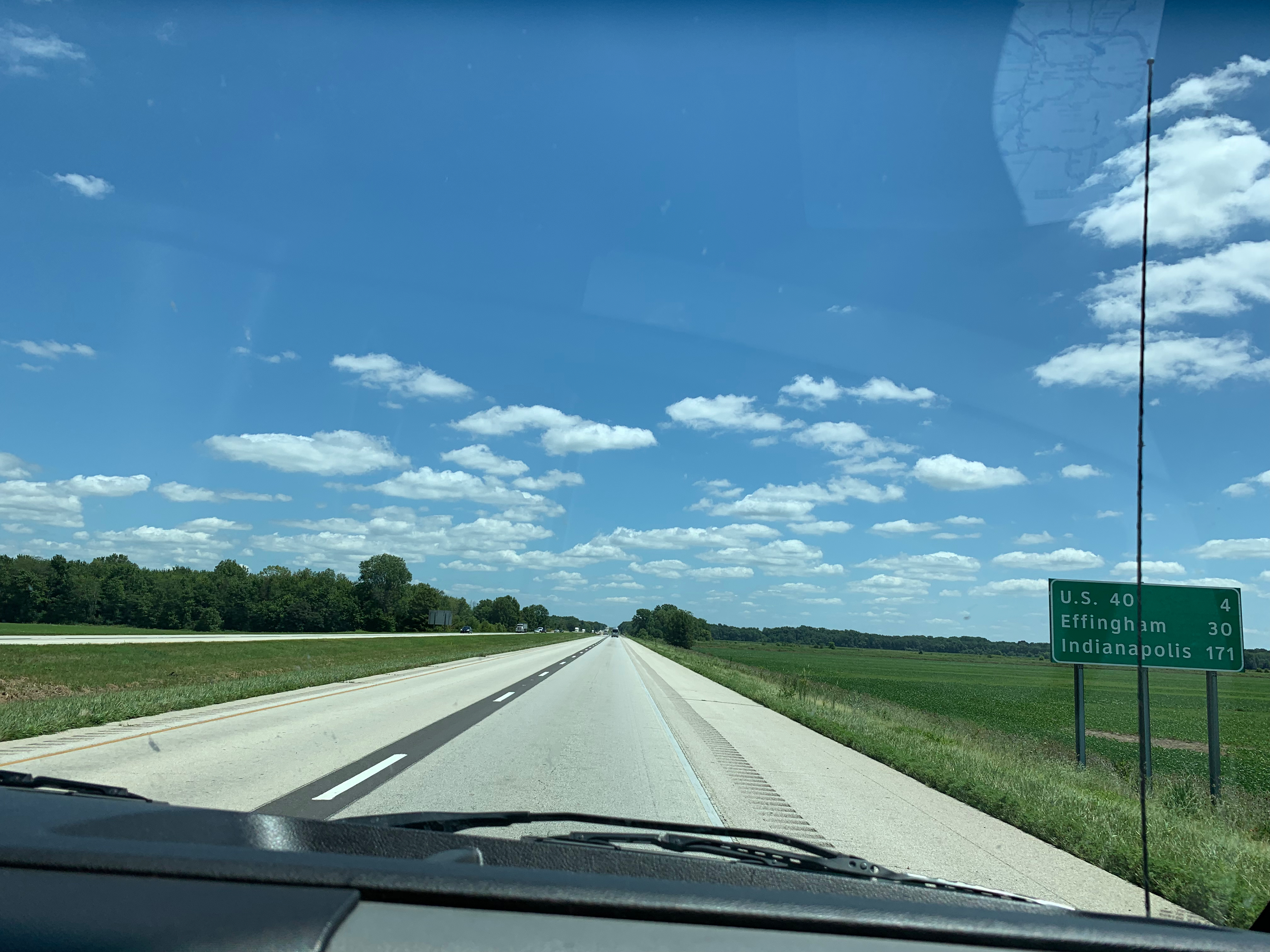
All “on the road” pictures were taken not while driving.

Growing up, road trips were a fairly common phenomenon. My parents and I would usually drive at least once a year between Chicago and Kansas City, and vice versa after we moved from the Windy City to the City of Fountains. In the 2000s we’d fairly often make the 3.5 to 4 hour drive east from Kansas City to St. Louis, and every summer in the first half of the 2000s we would drive across the Great Plains for a weeklong vacation at a dude ranch up in the Colorado Rockies. Road trips, then, were a pretty regular sort of thing to do.

However, in the last decade or so, our adventures beyond Kansas City have tended to be less on the highway and more on the rails or in the skies. It got to a point that the few road trips I’d end up doing would be rare instances that would increasingly become frustrating for how long they seemed to take. So, in February 2019 when I got accepted into the History PhD program at SUNY Binghamton in the rolling hills of New York’s Southern Tier, I knew immediately looking at the map that I’d have to make at least a couple road trips just to get there and back again.

Endurance

The thing is, as long as a 7.5 to 8 hour drive to Chicago or a 9 to 10 hour drive to Denver might seem, any drive to Binghamton was going to steamroll past those regional drives. Binghamton is 1,000 miles (1,609 km) as the crow flies from Kansas City, and on the road, the trip can be anywhere from 1,100 miles (1,770 km) to 1,500 miles (2,414 km) in length. This usually means that in full the drive itself will take between 18 and 21 hours, which itself requires an overnight stop. For me, when I was first sketching out how I was going to make these long drives, it was clear from the first moment that this was no small undertaking.

A transcontinental drive on any continent is something to be proud of. It requires a lot of planning, a good knowledge of your own endurance, of your car’s capabilities, and of the regions you’re going to be driving through. At the time of writing, it’s only just becoming possible to make such a drive in an electric car, meaning that most such road trips are going to be producing their own carbon footprint. I haven’t calculated exactly how much CO2 I’ve produced so far on these, but that is one big problem with road tripping that I’d like to resolve. Beyond the things you can control, before going on any such road trip you have to bear in mind the road conditions themselves.

In the next few days, the Biden-Harris Administration is supposed to be announcing a $2 trillion infrastructure plan as a part of their American Rescue Plan. The plan covers a wide range of different initiatives, all of which badly need more funding. Road repair is one such initiative, and trust me when I say the roads in many parts of the US that I’ve driven through need help. There are a number of places along the routes I use between Kansas City and Binghamton that have been so badly potholed and worn down that you have to be constantly vigilant for trouble. There’s even a stretch of I-88 in New York (not the same interstate as the tollway in Illinois) that has permanent signage warning drivers “Rough Road” ahead. Whoever is driving at any given moment can’t take their eyes off the road for a second, because you never know what could happen next.

Weather
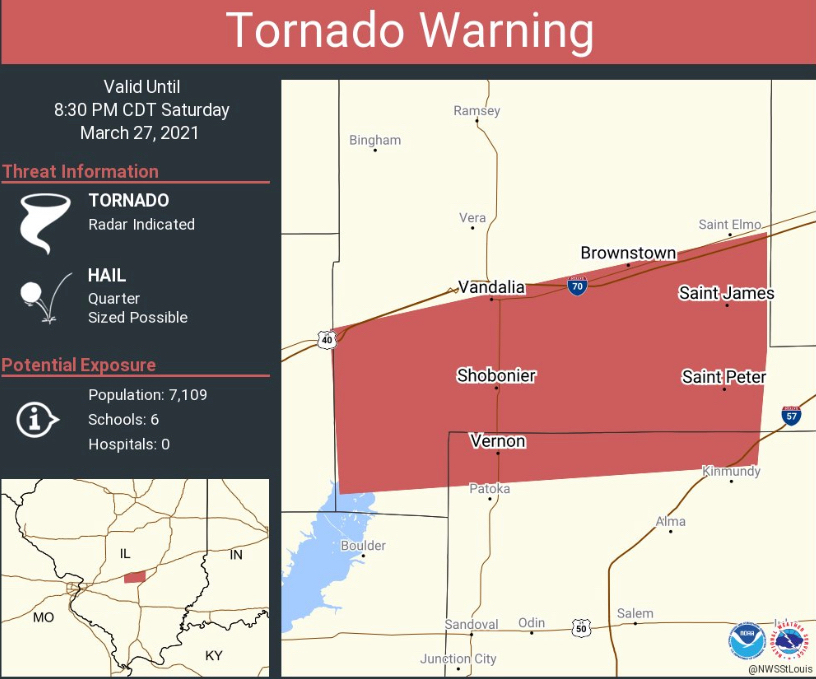
The most recent storm I encountered on the long drive west.

Another big issue to keep in mind is the weather. I usually will start monitoring weather forecasts in a couple of key cities I usually go through about a week before my planned departure date. Covering all the possible routes, these cities are Binghamton, NY; Erie, PA; Scranton, PA; Harrisburg, PA; Pittsburgh, PA; Columbus, OH; Indianapolis, IN; Chicago, IL; St. Louis, MO; and Kansas City, MO.

In the winter months (October to April) if there’s any chance of lake effect snow along Lakes Erie and Michigan, I’ll reroute further south, staying on I-70 after Columbus and eventually taking the Pennsylvania Turnpike to Harrisburg, PA before turning north on I-81 towards Binghamton. If there’s also really bad snow in the Appalachians in Pennsylvania, and lake effect snow in Chicago, Cleveland, or Erie, I might end up postponing the trip for a day or two to let the weather calm down again. In January 2020, midway through my long drive east I got caught up in a whiteout blizzard on US-22 east of Pittsburgh (you can read more about that here) in the predawn hours of that Sunday morning.

Snow and ice are worse problems for driving than rain is during the rest of the year. I’ve been lucky a couple of times. In August 2020 I had a near miss of a big derecho that wrecked widespread damage across Iowa, Illinois, and Indiana. I could actually see it off in the distance in my rear-view mirror when I was getting dinner in Indianapolis. And on day 1 of this most recent long drive west, 27 March 2021, I was less lucky with my timing, and drove right into a powerful thunderstorm with reported tornado activity between Mulberry Grove and Highland, IL.

As terrifying as the January 2002 blizzard in the Pennsylvania mountains was, this thunderstorm was worse. I made it out okay, with only 15 minutes added onto the total drive time, but to quote my favorite Lando Calrissian line from Return of the Jedi, “that was too close.”1 It was reminiscent of my first time doing a cross-country drive in August 2009 when on the way back from Dubuque, IA I was at the wheel when my parents and I hit a powerful late-summer thunderstorm an hour east of Des Moines. We ended up pulling over in Altoona, IA at a Culver’s until the storm passed.

Entertainment

When I was still too young to drive, and kept my place in the back seat of whichever car my parents owned at the time, I often found various ways to keep myself entertained. Among those that I haven’t carried over into my current long drives are watching movies on DVD. We had a screen and DVD player that could be strapped to the back of the front passenger seat’s head rest with velcro. As a driver, it’s not safe to be looking at much of anything besides the road. As I’ve gotten older I’ve found that I tend to get motion sickness whenever I try to read in the car, so on the rare occasions when I’m a passenger these days, that’s out of the question. Instead, the tried and true classic remains satellite radio, music, and audiobooks.

Generally, my first choice will be to listen to a good long audiobook, something that will keep me awake the entire way, a true page-turner. In the first two years of these drives to and from Binghamton, I’d listen to a lot of Star Wars books on Audible, which were usually action packed and entertaining enough to keep me going. On the most recent pair of drives (January and March 2021), I’ve been listening to President Obama’s new memoir A Promised Land. It’s a really fascinating book to listen to, narrated by the guy himself even, but as much as I enjoy hearing about economic or foreign policy (and I’m not being sarcastic there), after a couple hours on this most recent drive I noticed I was starting to get tired of it. So, at that point I’d switch over to what I call my “stay awake” playlists: a good combination of ABBA, Elton John, and more recently Hamilton.

I first compiled that particular playlist in the preparation for a 2 am departure from Binghamton to make a 5 am flight out of Wilkes Barre/Scranton Airport an hour south of Bing in NE Pennsylvania. It’s been especially helpful on the nighttime legs of my long drives, and formed much of the soundtrack for the last 2 hours of Day 1 of my most recent Long Drive West, and a good portion of the predawn hour of the drive on Day 2. On other occasions, like a shorter road trip I took in my first couple weeks after moving to Binghamton in August 2019, I’ll switch to satellite radio and listen to NPR, the BBC World Service, or maybe catch the Cubs, Royals, or Sporting KC if they’re on. As much as I want to listen to whatever it is I’m playing, the primary goal of that audio is to keep me awake and going. And, if all else fails, and I know it’s a good time, I’ll call my parents or a couple of really close friends to chat for 15 or 20 minutes.

Conclusion

Looking ahead, I anticipate I’ll continue to make these long drives at least until I’ve finished my PhD in Binghamton and to wherever my next job takes me. The COVID Pandemic has only heightened the need for these road trips, with most other modes of travel not really being as safe as I’d like in the last year or so. My original plan when I left for Binghamton in 2019 was to make these long drives at most four times per year: on either end of each semester in January, May, August, and December. The main reason for driving rather than flying or taking Amtrak is that I need the car on either end. In the future I’d gladly fly, make the trip in 4 to 8 hours instead of 18 to 21, or even take Amtrak once they’ve resumed dining car services on their transcontinental lines.

Moreover, I really want to help reduce my own carbon footprint, eventually replacing my 2014 Mazda 3 with an electric car, maybe in about 4 or 5 years. By then though, hopefully I’ll be in a situation where either I’ll be working here in Kansas City again and won’t need to drive cross-country to see my family, or I’ll be in a city with a strong enough public transit system that I won’t need to worry about having the car in one place or another like I do now.

All of that said, these road trips are fun. They’re adventures pure and simple. I never really know what’s going to happen on the road or on the stops I make along the way. In November 2019, I reached what I’d call a pretty special milestone when I drove my Mazda to within sight of the New York skyline and the Atlantic Ocean beyond. I cheered, I, a guy from flyover country, from the middle of the continent, had driven to the ocean. One of these days, I’ll complete the entire transcontinental drive, make it to the Golden Gate, and maybe even drive down the Pacific Coast Highway. On its own, the bragging rights involved, to be able to say that I’ve driven the same car from Atlantic to Pacific will be worth the trip.
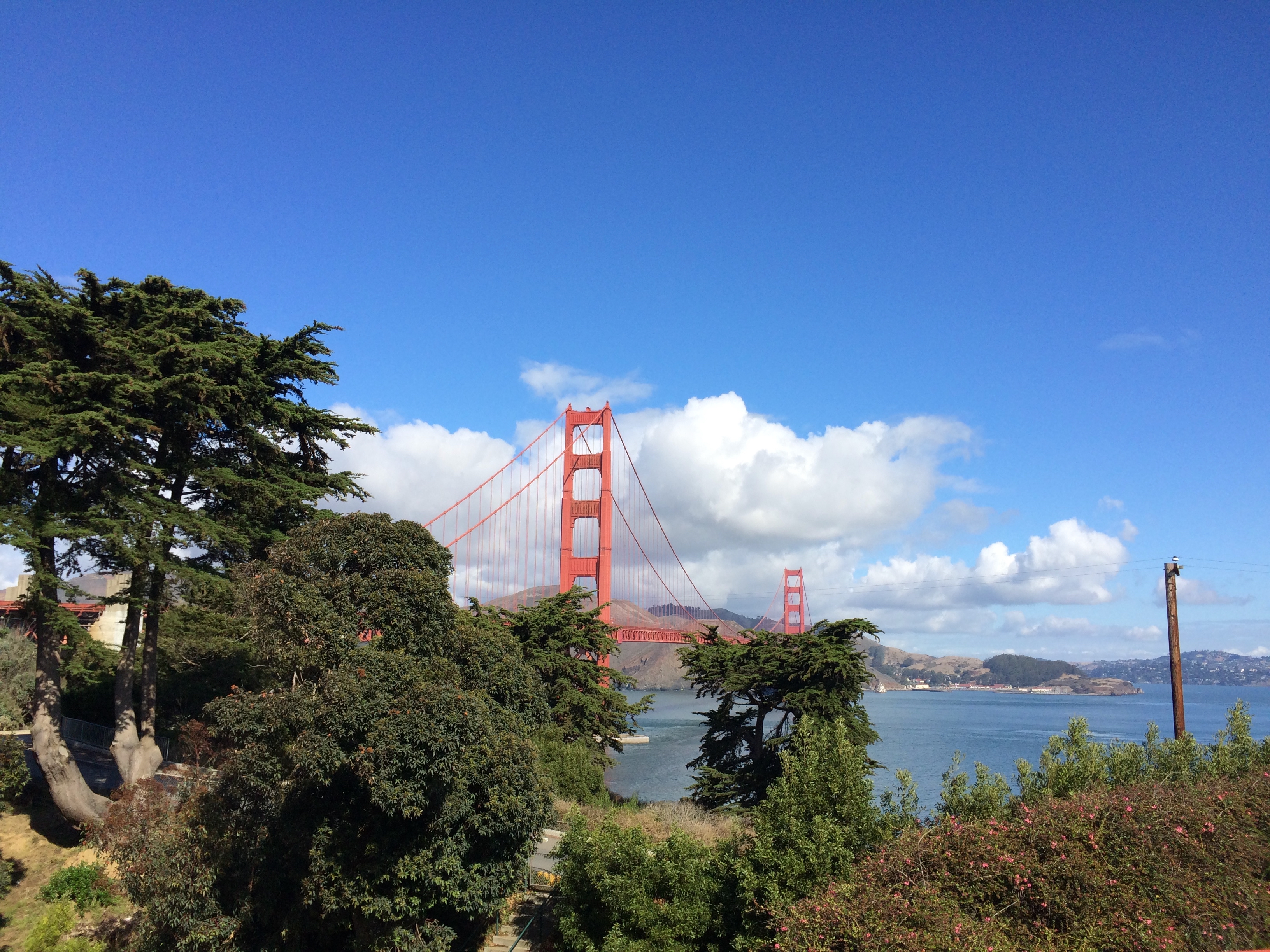
From my 2016 trip (flying) to San Francisco. One of these days, I’ll drive there.

Notes

1 Someone should really make a GIF of that particular line. I’ve been looking for one for a couple years now.


Corrections

Amended 1 April 2021 to reflect a more accurate dollar amount for the Administration’s Infrastructure Bill.

Understanding Others and Communicating Well

This may not necessarily be a post that will be on a topic that’s familiar to most of you, the 30 or so people who occasionally read these posts, but it’s something that’s important to me. The ability to communicate well, and efficiently, is paramount. It’s ultimately going to be key to solving all of our problems, to making life better for everyone. I truly believe if we could, or rather would, actually sit down and talk with someone we have a disagreement with, chances are we’d find enough common ground to begin sorting our problems out.

But this post isn’t about solving humanity’s big problems, and I’m going to try to refrain from my usual upbeat optimistic conclusions that I’ve noticed I tend to write. Because this evening I want to write about a topic I’ve been interested in for nearly 20 years, one that I’ve struggled with and studied, and am only now really feeling like I’ve confidently mastered: Latin.

Latin is a language that I’ve been fascinated by for a very long time. In part, I’ll admit it’s an attraction to the prestige it embodies: the language of the Romans, and of my Church. It’s been a constant piece of the intellectual and cultural fabric of European and now Atlantic civilization (that’s another idea I’m working on) for millennia. It’s also a highly logical language, a systematic language governed by a set of rules that, once explained, make pretty good sense. Moreover, it’s the ancestor of a number of humanity’s most widely spoken languages, and has directly influenced many, many others, including English. It’s taken three tries now, but I’ve made sense of the language well enough now to feel confident not just repeating the declensions and conjugations that I’ve memorized, but understanding the intricacies of their meaning, and in so doing, to have a better idea at understanding how Latin works.

Latin has also come to reflect the people who have written in it and spoken it over the generations, particularly in their preferences in word order and writing. I’ve often thought, considering that word order isn’t as important in Latin, after all the word endings provide the meaning, couldn’t a native Irish speaker go ahead and speak Latin using a verb, subject, object order and be decently-well understood just as much as a speaker using the classical Ciceronian order of subject, object, verb? Yet there’s one thing that does survive from the ancient world in faint traces that was revived later than other customs in written Latin, something that is still not universally adopted: the macron.

Macrons: the flat line over a vowel sometimes seen in Latin writing, as well as the first family of France, is something that I believe to be fundamental in properly understanding Latin. Sure, my medievalist friends will say, it wasn’t used in Medieval Latin, so we (Medieval and Renaissance historians & scholars, myself included) don’t need to memorize the macrons. But for me, it’s the macrons that have been one of the best tools to help me make sense of Latin. It’s answered the question for me of how a Latin speaker might differentiate between līber, “a child” (pronounced like Lee) and liber, “a book” (li pronounced like literature). It helps me make sense of the difference between a 1st declension nominative singular noun (the subject form) and a 1st declension ablative singular noun (a slightly more complicated form).1 The macron makes everything clear.

This is a good explanation from a far better Latin scholar than me about the use of macrons (the apex).

Without the macron, the meaning of a sentence can be understood, but with much more difficulty. This particular idea makes perfect sense to me because of my work with my primary ancestral language, Irish. In Irish, there are two types of vowels, long and short. The long vowels are represented by a fada over the vowel, essentially an acute accent (accent aigu en français). This is how an Irish speaker knows when reading my name that they’re in fact reading about a guy named Seán and not something that’s old (sean). The presence of the fada isn’t just to make the language look cool (which it also does), but it has a very real impact on the pronunciation and meaning of the word as a whole.

I think it’s best not to think of Irish vowels with fada or Latin vowels with macrons as just variant forms of those vowels but instead as entirely different vowels all together. The á in Seán is an entirely different sound, and thus ought to be seen as an entirely different letter to the a in sean. In the same way, that ī in līber is a different character, and a different sound from the i in liber.

We don’t have these same written variations of our vowels in English. We just have the 5 vowels, occasionally 6, which are supposed to represent all of the vowel sounds that English uses, in all national and regional Englishes around the globe, and in all of their local varieties. In my own accent, I can count at least 3 different sounds that each of the vowels represent. Granted, English wasn’t always like this, macrons were also used in Old English, and through generations of linguistic change, immigration, and English’s constant adoption of foreign words the language has become the exceedingly complicated, often irregular form of communication it is today. Not only is my English influenced by the most basic form of the language studied and spoken here in North America, but there’s also hints of Irish in there as well as the strong British, German, and Nordic influences in my English from all those immigrants who settled in my home region, the American Midwest, in the 19th and 20th centuries, including some of my other ancestors from England, Finland, Flanders, Sweden, and Wales.2

In English, we’ve chosen complexity in spelling as it relates to the spoken language over a 1-to-1 matching of the written language with the spoken language. Why? My best guess is it’s to preserve the unity of English. This keeps it so that all English speakers are generally spelling their words in the same way, between the two main written forms of English (UK & Commonwealth, and US English). For the most part, it’s worked for English, and I wouldn’t recommend moving away from the current model for the exact reasons why it exists; more on that at a later date.

But returning to Latin, if students trying to learn this language, famous for its now generally unspoken nature, really want to give themselves a good chance of succeeding in learning it, then those of us familiar with Latin, whether as students or as teachers, should embrace the macron even more than it already is, and use it throughout all our written Latin. Up until recently, it was challenging especially on computers with English keyboards to type any sort of accented vowels or consonants, but the technology has advanced enough that it’s readily possible today for most keyboards to make things work. On my Mac, I can hold down any of the vowel keys until a box pops up on the screen indicating each accent that can be put on that vowel. I then just have to choose them by number. So, for līber, when it comes to the ī, all I have to do is hold down the i key and press 4, et voilà, I’ve got myself an ī. We should do ourselves, and Latin itself, a favor, after all the easier we make learning this language, the more likely people are going to want to keep learning it.

I like Latin, it’s orderly, and when it’s explained well it can make a lot of sense. All of my Latin teachers to date have done a wonderful job explaining it, sometimes though it takes a bit more maturity to make sense of things. In general, I think we tend to have trouble in the English-speaking world understanding grammar. Let’s face it, our own language has so many contradictions that often English speakers don’t even really understand the rules of English grammar all that well. One of these days, I want to write a little book, a libellus in Latin, that can provide at least what I see as some of the more important rules in English, that’ll allow English to make more sense for the average speaker.

Today though, in my Latin studies (Wheelock, Ch. 20), I learned to my delight that the word frūctus means both fruit and profit. Frankly, those two make sense together, after all what are profits but the fruits of our labors. For the rare admirer of Star Trek out there who might be reading this, it came to mind that if I ever get the chance to write for them on a future Trek TV show involving the Ferengi of DS9 fame, I’d want to have a particularly smart-ass human academic offer a Ferengi a bowl of fruit (frūctus), after all the sole goal in the life of a Ferengi is the acquisition of profit (frūctus). A Latin pun set in an imagined version of the 24th or 25th century CE somewhere out in Space. I wonder what Cicero would make of it?


1 For the sake of the narrative flow, the ablative basically is the form that distinguishes a myriad of ways a noun relates to the rest of the sentence not covered by the nominative (subject), genitive (possessive), dative (indirect object), and accusative (direct object). I’m going to let the Latin teacher who runs the Latin Tutorial channel on YouTube explain it in this playlist:

2 What can I say, I’m an American.

CORRECTION: 18 March 2021, added pronunciations of līber and liber.

The Luxury of Stress, or the Adrenaline Rush of Fear

2020 began for me with a long drive east: Kansas City to Pittsburgh to New York. I drove the first leg in 15 hours, arriving just before midnight on a Friday, and spent the next day wandering through the Carnegie Museums of Art and Natural History in Downtown Pittsburgh, which was the main reason for that particular stopover. That Sunday however was characteristic of how the year that this would become. I woke up around 4 am on Sunday, early enough that I hoped I could be in Manhattan for lunch. As I made a quick donut stop near Pittsburgh Airport, I checked the travel updates for the Pennsylvania Turnpike, and was shocked to discover that it was blocked in both directions just east of Pittsburgh due to a fatal multi-vehicle accident that had happened about an hour before. So, realizing that I’d have to take an alternate route, I plugged one into the navigation system in my car and made my way into one of the most eventful days of driving in my lifetime.

The route on that snowy Sunday morning in January

For the first 3 hours of the 6 that I’d have to drive that day, I was largely on US-22, a smaller rural highway, which heads east out of Pittsburgh across Pennsylvania toward the Jersey Shore. Normally I prefer to stick to the interstates for the lack of stoplights, and at that hour of the night for the lack of traffic. In this instance though I quickly found myself crawling my way across the Appalachians in a blizzard with next to no visibility. I passed semitrucks that were sliding backwards down the inclines on this normally reasonable, yet now snow-packed, highway. I’m pretty sure I passed a plow or two even, continuing onward, only really able to see where I was going thanks to the car’s navigation. Only after 7:30 am or so did the snow clear and I was able to enjoy an otherwise uneventful drive to the long-term parking garage that I frequent near Newark Airport when I drive to New York City.

Like the rest of 2020, thus far, I was nearly stressed to my limit in the early hours of that morning. This year has been one for the record books, a right old annus horibilis to borrow a term from the Queen. At the same time that I was dodging stuck semis in the Pennsylvania mountains, this country’s leaders were saber-rattling and threatening war with Iran. We were lucky to have missed that cataclysmic fiasco of a war, though I doubt we’ll know the full details of how we missed it for a few years to come. Since then we’ve seen the rise of the greatest pandemic in a century, a near economic depression, irate armed citizens occupying government buildings over their economic and social fears, the murders of many other citizens of this country by authorities, and the largest protests this country has seen in a long time. Throughout all of this, the response of those in charge hasn’t helped to ease tensions one bit, both publicly and privately for a great many of us.

Yet unlike that early morning in January, I now feel like I have the luxury to think about it, and to stress about it. That morning, I did not have that luxury, or perhaps I had too strong of a fear-driven adrenaline rush to stress about it. After all, if I thought too hard about how terrifying of a situation I was in, I would’ve made a mistake and gone off the side of the road, not knowing what that’d bring: a field, a hill, a house, the edge of one of the mountains? If I’d let my stress take over then, I can’t be sure I’d be able to write this today. Yet in the months since I’ve been largely secluded from the world, first in my apartment in Binghamton, NY, and for the last two months in my parents’ house in Kansas City, MO. Like all of us, I’ve had a lot of extra time on my hands to think, to consider how I want my life to go forward, and to stress and worry about our world, and how it’ll either improve or wreck our future.

The stress has certainly got to me, and there have been more occasions than usual of late where I’ve had real trouble working through it. It’s left me irritable, quick to anger, and generally in a sour temper. I could probably take all this sour stress and make one of those sourdough starters that so many people started doing this Spring. I’ve always found it hard to hear the memories and feel the emotions of the best days of my life over the obnoxious clamoring of the worst memories. Lately it’s been harder than ever, but I’ve tried my best to cherish the best moments of my life and my time at home. 

This past weekend in particular had so many wonderful moments. On Friday, the executives at my Mom’s company decided to give all of their employees Juneteenth off. So, that morning for the first time in at least 21 years my parents and I together went to the Zoo. When I was little, I loved going to the Brookfield Zoo near our home in suburban Chicagoland with them and have cherished those memories ever since. Now, after living in Kansas City for 21 years, we finally went as a family to the Kansas City Zoo, a place that I usually visit at least once a week on my own when I’m home. We didn’t see everything we wanted to see, but we left truly happy. 

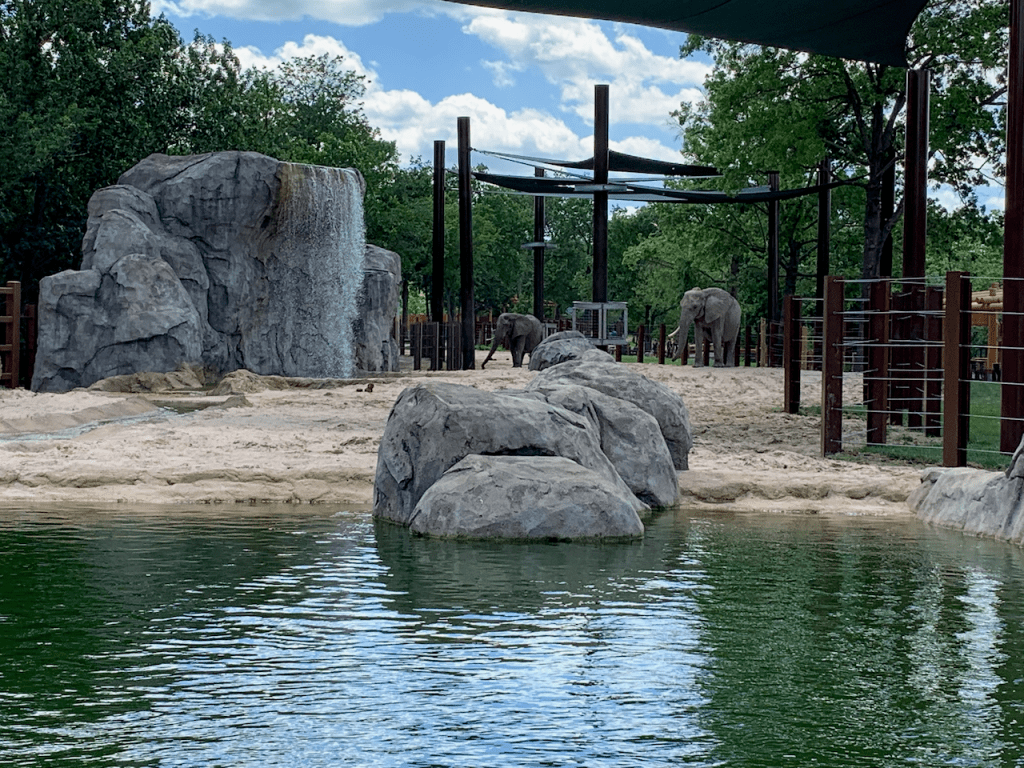
The Kansas City Zoo’s new Elephant Expedition Enclosure. The photo is my own.

Later that evening after dinner we drove up to my alma mater Rockhurst University at 52nd & Troost and took part in the Juneteenth Prayer Service that stretched for 10 miles all along Troost. This was a prayer service like no other, less silent meditation, or communal rosary, and more a celebration of the hope that our community on both sides of the dividing line feels that change is in the air. I sat there on a stone wall for an hour and watched as countless cars drove by, their drivers honking their horns, people waving, children singing from the back windows.

On Saturday we went to one of my aunt’s houses for a small backyard gathering. I always treasure the times that I have with my family, the whole crowd. Just sitting there with people whose company I enjoy, people who I’ve known my whole life, and experiencing the madness of our current world from the perspectives of their stories, jokes, and worries made everything seem better for a little bit. Sunday was similar, Father’s Day, a quiet celebration this year at home with my parents. My Mom and I made brunch for the three of us, brioche French toast and eggs, before spending the afternoon watching soccer and reading June’s National Geographic. This was followed by a quiet small gathering in Roanoke Park.

I was reminded of all of this, and in particular of that terrifying snowy morning on US-22 east of Pittsburgh on Sunday evening when we watched last year’s release A Beautiful Day in the Neighborhood, starring Tom Hanks as Mr. Rogers. In part, the film’s Pittsburgh setting triggered those memories, and my thoughts on that January Saturday evening that I’d live in Pittsburgh if I got a job there, and how much fun I had at the Carnegie Museums. Yet more than that, the kindness which Mr. Rogers exuded in his life and work reminded me that this stress doesn’t have to be permanent, and that the best of memories should be the ones I treasure. I can still vaguely remember seeing him on WTTW in Chicago in the ’90s, and even a little bit on KCPT after we moved here to KC at the turn of the millennium. At the time I don’t really remember knowing what to make of the guy. Yet today, as an adult with far more responsibility to my community, our future, and to myself, I feel like if I were to try to learn from anyone in my own work as an educator, it’d be him.

“Travels in Time Across Europe” is now available!

20664675_10213778819047319_3800166070242915045_n

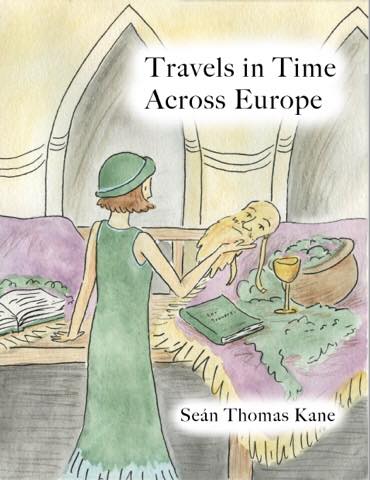
I am happy to announce that my latest book Travels in Time Across Europe is now available for purchase on Amazon in both paperback and Kindle formats! You can purchase yours today by clicking on the book cover at the top of this article or by clicking here.

An Equal and Opposite Reaction

21733868_10214068171760956_1726168460_oOne of the fundamental maxims of physics is that “For every action there is an equal and opposite reaction.” For everything that is said or done something of equal vigour must be in order. By this logic then, for every fascist, far-right, or white supremacist threat to American society and we the American people there must also be an equal reaction by the far-left, by the Anti-Fascists as they have deemed themselves. Yet what good does the threat of violent action do? What is the point of bringing one’s guns to an anti-fascist protest? What is the point of eradicating the memory of all who have had some dirt upon their hands, who committed evils in their lives?
This moment, at the closing years of the second decade of the twenty-first century, is a moment of immense change, of tribulation not unfamiliar to our predecessors from a century prior. We are living through the waning hours of a period of unprecedented social change and extraordinary wealth for many in our society. We have witnessed a plethora of forces at work in their efforts to bend our society to their aims. Some have sought to bend the law in order to further their own wealth and prosperity to the detriment of others. Still more have fought against those egotists in the defence of the common good and the wellbeing of all.

Now, as we look ahead towards the last months of 2017 and the new year 2018 we are beginning to recognise as a society how uncertain our future is. We are realising that our children will probably not be better off than ourselves, that our generation as well will probably fall in economic standing in a way unseen in the past century. It is natural to react to this with fear, to curse the political, economic, and social systems that led us to this moment. But in our present culture we celebrate fear, overreaction, and anger far too much. We have accepted extreme behaviour on television as normal, and in so doing have accepted that same extremism into our own lives.

We have reached a moment in our history when both the right and left are afraid; afraid of losing what they have; afraid of each other. We have reached a moment when the politics of fear have duped millions into electing a man entirely unfit for the duties to which he is oath-bound to serve. We have reached a moment when lies are far louder than truths and accepted as real by sections of society.

We have reached a point where at long last the old Confederate sympathies are being brought into the light of day as racist echoes of a failed rebellion from 150 years ago. Yet the zeal of the most outspoken on the far-left has created its equal reaction to the zeal of the far-right. Both now have sizeable factions at their rallies who are armed, ready to fight.

Extremism in any form is unnatural and unhealthy. Yet in the current moment in American history it is the extremes of our society that are the most vocal. I cannot deny that our political system is flawed, it absolutely is. I cannot also deny that American capitalism favours the rich, that is how the playbook has been written. I would be an idiot to ignore that our society is rigged against anyone who is not male and of European descent, there is a racial hierarchy in this country that has existed since the colonial era. But I would be blind to also deny that we can change things for the better. We can fix our corrupted political system, we can rewrite the codes that govern our capitalism, we can stand up everyday for the rights of all in this country and day by day continue to chip away at those old biases. But we cannot do these things while we are taken hostage by the far-right and far-left of our society. We cannot fully achieve the great work of our society while our society is a hostage to the militant few willing to kill their fellow Americans in defence of their extreme convictions.

We must continue to march, to protest, to organise, and to vote. We must carry on the good work that our predecessors undertook in generations past. We can make this country a better place for our children and grandchildren and great-grandchildren to live in. But we must walk the middle road of moderation to do so.

We must understand the full consequences of our actions, we must learn from our history so that we do not make the same mistakes again. There are many who are opposed to the removal of the Confederate monuments because that is “erasing our history.” I disagree. By removing those monuments to a rebellious movement in our history, we are forcing the book closed on that chapter that has yet to settle. After all, we still see the way in which Americans continue to threaten one another with violence at the slightest hint of progressive reform. To make our society better for the next generations we must rid ourselves of this disease of extremism. We must show those who want violence that through peaceful debate we can achieve far greater things.

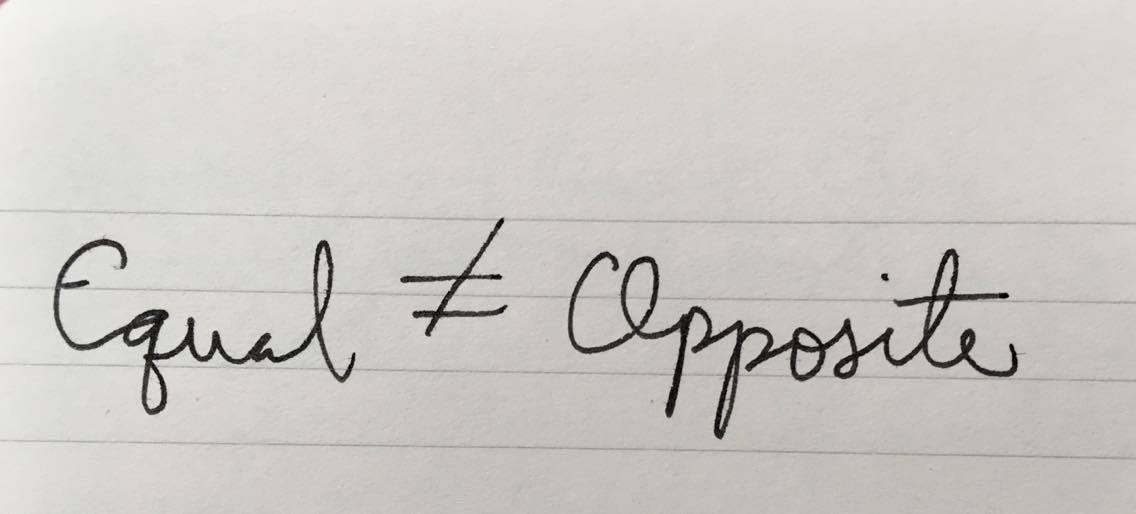
“For every action there is an equal and opposite reaction.” When the far-left responds to the far-right’s threats of violence with equal threats the far-left only continues that same cycle of violence. Consider that maxim again: “For every action there is an equal and opposite reaction.” Threats of violence may well be equal on both sides, but the threat of violence on the left is not opposite to the threat of violence to the right. It is not the positive to the right’s negative. Only peaceful protest, nonviolent refusal to play by their rules of violence can achieve that. Through peace and nonviolence we find our equal and opposite reaction. Let’s try it for once. You never know, it might just work.

“The Adventures of Horatio Woosencraft” is on its way!

Horatio Woosencraft front cover

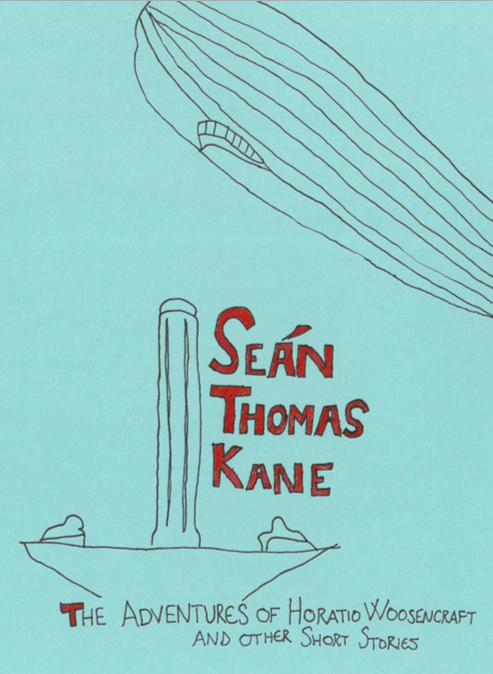
I am overjoyed to announce that you will be able to purchase copies of my first fiction book The Adventures of Horatio Woosencraft and Other Short Stories beginning this Friday, 18 August 2017 on Amazon! The book will be available in both paperback and Kindle editions.

In the meantime, I’ll be wrapping up work on Travels in Time Across Europe and preparing to record the companion audiobook (yes, you’ll have a chance to hear my strange accent for hours on end [it makes good listening for long road-trips, transoceanic flights, and extended waits in line at the DMV, doctor’s office, and on your commute home]).

Introducing “The Adventures of Horatio Woosencraft and Other Short Stories”

Horatio Woosencraft front cover

After a decade of writing, I have decided to release a collection of my short stories, composed between 2008 and 2017. I am happy to announce it will be available for purchase on Amazon starting in late August 2017 in paperback form to readers in Europe, and in the United States as well as to a global audience digitally on Kindle.

From the fictional Welsh immigrant detective Horatio Woosencraft who solves mysteries in an alternate-reality Kansas City to the glamour and adventure of the massive airship Phaëton and bewildering confusion of the characters in Abducted and Abandoned, this volume is sure to please. I have included my epic poem Caffydd, a tale of love and the daily struggle against evil with deep theological undertones in this volume as well. While it does not reflect my current theology quite as closely as it did when I wrote it in 2010, Caffydd still serves as a fascinating read, a vision of what might be.

Beyond the stories, this book includes many, many of the stories and ideas, the metaphors and hyperboles that I thought of through out my high school and undergraduate years. It reflects my interests in history, theology, linguistics, and the great Classical, Victorian, and Edwardian works of fiction that fill out my library.

The Adventures of Horatio Woosencraft and Other Stories will be available for sale in both paperback and Kindle formats on Amazon later this month, just in time for Halloween, any Autumn birthdays, and Christmas. Keep an eye on my website, Twitter, and the Adventures of Horatio Woosencraft and Other Stories Facebook page for further updates on the book.

Nolan’s “Dunkirk” – An Abstract Tribute

dunkirk-christopher-nolan-trailer-images-75

Credit: Christopher Nolan [found at Cinemavine.com])

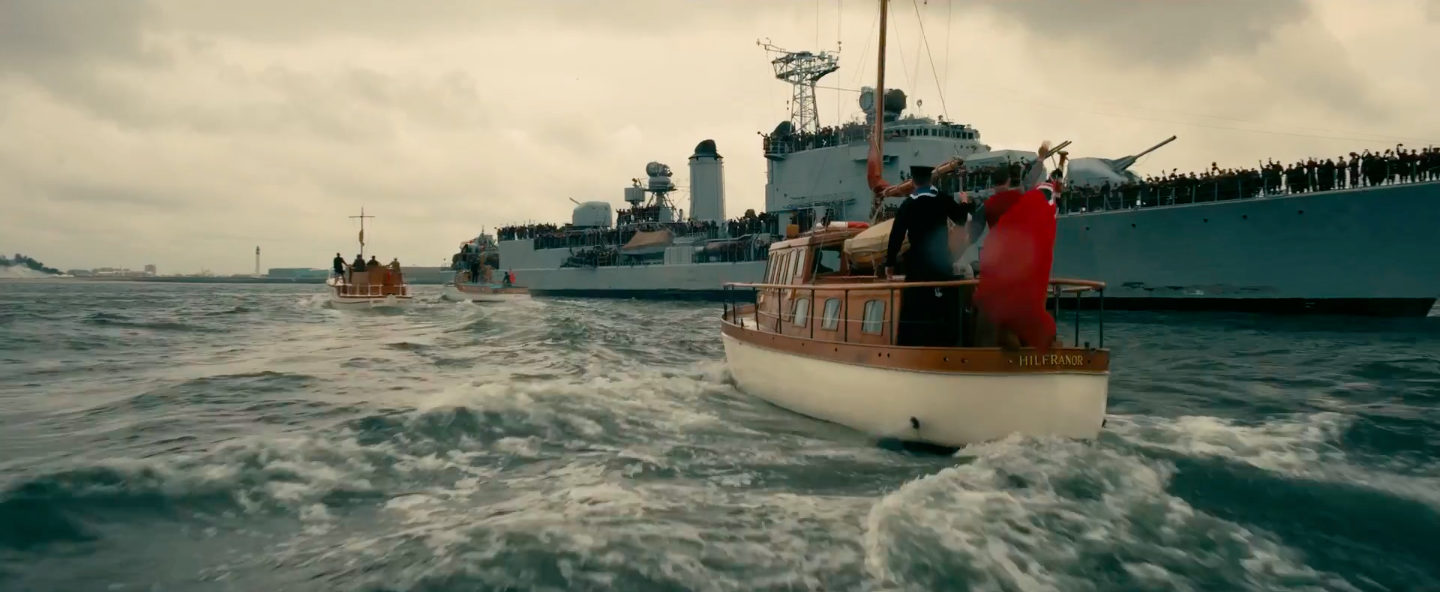
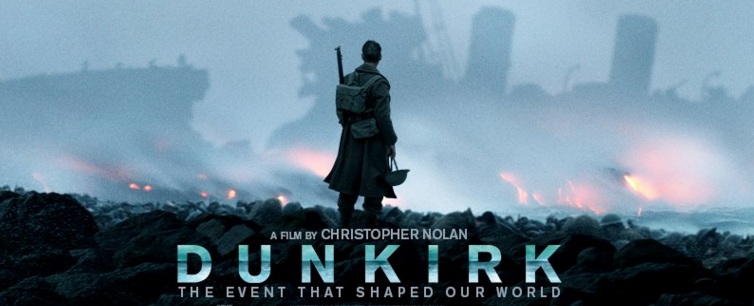
What I found especially gripping about Christopher Nolan’s latest film, a retelling of the Miracle at Dunkirk, was that each of the individual people in the story were not the main character. That role was filled by the seemingly indomitable human spirit, and will to survive and struggle ever onwards. Dunkirk might well be one of the most defining moments of the Twentieth Century for Britain, and quite possibly as well a crucial turning point for the whole world.

The film follows three main groups: the soldiers on the beaches, the sailors both civil and naval crossing the Channel, and the RAF in the air trying to keep the fighters and bombers of the Luftwaffe from wrecking further havoc to the men stuck at Dunkirk and the ships trying to ferry them to the safety of home, a mere 26 miles away. Though the plot is not in itself chronological, it nevertheless helps tie together each disparate group, connecting their experiences in a spiritual fashion as each come ever closer to the film’s climax.

For British and Commonwealth viewers this film will certainly reinforce that Dunkirk Spirit, that steely determination that even in the darkest of hours Britain and her sister countries will never surrender. I became quite emotional when, after witnessing the sense of doom the soldiers on the shore felt for a good hour, the hodgepodged fleet of little ships arrived in the waters off of Dunkirk. This moment, though one of the darkest hours in British history is also equally one of the most inspiring to have transpired in that island nation’s long story.

For American viewers this film should give us pause. In our present hour of immense internal divisions, of political unrest and civil discontent we should consider what it would mean for us as one people to come together for a cause we all knew to be necessary for the continued survival of our country and the liberty it’s Constitution assures. In this hour of great uncertainty we should be looking not to what divides us but what can unite us.

Hans Zimmer’s score is a welcome change from his usual set of loud brass, excessive strings, and choirs primarily singing “Ah” for far too many measures. While loud, this score adds to the energy of the film, and in a musical sense is largely understated. The music helps bring the viewer into the picture, onto the beach, aboard the small boats and naval ships, and in the cockpits of the Spitfires high above in the air. I really appreciated the echoes of Elgar’s Nimrod that played over the final scene as Britain and her forces came to rest aground again and prepare for the inevitable Battle of Britain to come.

Overall, I thoroughly enjoyed this film, and just a few minutes prior to sitting down to write this review I told my writing partner Noel that I have to go back and see this again soon. Dunkirk is a film that triggers both the conscious and sub-conscious, that calls upon one’s entire emotional and physical self. It is one of a number of films that are to me the new “talkies”; they address not only our visual and aural senses, but our emotional senses as well. I have a feeling there will be many more films like Dunkirk to come.

dunkirk-movie-trailer-christopher-nolan-screencaps-

Optimism and Belief

Cloud-line

In my life, there have been two things standing as constants: optimism and belief. I have embraced these two guiding principles, and striven in due course to live a better life as a part of the wider human community through them. For me, my faith as a Catholic and as a Christian is an inherently positive one; it is a faith in Resurrection, in Union with the Divine Essence, in the fulfilment of the circle and restoration of humanity to paradise.

Yet to allow this faith to persist I have found myself inherently optimistic, always expecting the best from people, and looking at even the darkest of situations with the hope that is required to believe in something greater than Reality. True, this is blind faith, something entirely counter to the principles of our scientific age, yet in the end is not blind faith equally necessary in a scientific setting? After all, we have yet to learn all that there is to know about nature, our sciences are as of yet unfinished in amassing the totality of reality. Therefore, if we are to accept science as an effective and prosperous measure of nature, then we must also accept that that measure is man-made and limited in its scope.

I see those things measured by science each and every day, and I am in awe of their wonder. I see how the Sun rises in the east and sets in the west, how the stars circle in the sky as the year passes. I hear the wind bristling through the leaves of the trees, and across the tall grass prairies. I have known what it means to be caught on the beach at high tide, and to be at the mercy of the awesome tempestuous power of lightning. Past generations might well have worshiped these forces of nature, seen them as gods like Zeus, Taranis, or Ukko, yet I see them as terrestrial, as natural, as real. The true force, the veritable essence to be worshiped is far greater than even the rolling thunder or bristling lightning.

In these circumstances I am reminded of the American hymn How Great Thou Art, yet in the smallest of moments too I am reminded of God’s coming to Elijah on the softest breath of wind in the cave. Divinity and the essence that made all that we know and love is so far beyond our own understanding, yet in that realisation I find my peace.

Often it can be said that I find my belief renewed through music, through that purest, most mellifluous of sound. Some of the most sacred moments of my life, the most moving moments in the story of my belief have come in moments of music, from operas like Mozart’s Die Zauberflöte to the Pilgrim’s Chorus in Wagner’s Tannhäuser to great orchestral outbursts of emotion as in Stravinsky’s Firebird and most all of Mahler’s symphonies; yet equally spiritually potent for me are the more recently composed naturalistic Mass settings that I sang with the Rockhurst University Chorus while an undergraduate student there from 2011 to 2015. Music has long been said to be the Voice of the Heavens, and certainly it has appeared to be so to me.

Yet what I find the most fulfilling to my belief in the Divine is humanity. In the Christian tradition we believe that humanity was “Created in the Image and Likeness of God.” For me, this means that our souls particularly were made in the Divine Image, but that our bodies also have Divine inspiration. When I see humanity, with all our faults, all our problems, all our pain and anguish, I can’t help but be swept off my feet in grief. Yet at the end of the day I always remember the old adage echoed by Little Orphan Annie, “Tomorrow will be a brighter day.”

I believe that one day that will come true, that one day all will be sorted out in our capitals, our courts, our executive palaces. I believe that one day we will march through our cities, not in protest or in anger, not out of anguish or to alleviate our suffering, but because we are celebrating that most essential characteristic of our humanity: liberty. I believe that someday all humanity will walk together, singing in unison, a multitude of voices, of languages, of cultures and creeds making one song. I believe in optimism, and I am optimistic about my belief.

Designing Cities for People

St Paul's at Sunset - April 2016

St Paul’s at Sunset

In older standards of measurement, the imperial mile (1.609 km) was not the longest measurement of distance available; the league filled that role instead. As I have understood it, one league is equal to the distance a person can walk in one hour. For me, that is around three miles, thus making 1 league equal to a decent distance for a nice morning stroll. In 2016 when I was undertaking my first Master’s degree, this one in International Relations and Democratic Politics, at the University of Westminster, I would occasionally decide to walk the league from the university on Regent Street back to my flat in the shadow of Fenchurch Street station on the eastern edge of the old Roman city.

The walk was quite pleasant, a stroll first down from the university to Oxford Circus, then eastwards along Oxford Street to Holborn, and then down High Holborn across the Holborn Viaduct and past the Old Bailey at Newgate, past St Paul’s and onto Cheapside, crossing in front of the Royal Exchange and Bank of England before continuing down Lombard Street and onto Fenchurch Street. At Fenchurch Street station, I would descend a short flight of steps leading towards St Olave’s Hart Street and under the station viaduct itself past the city walls and into my building on Minories.

What made this a nice walk was that I was able to see so much of the capital, everything from the imperial Edwardian grandeur of Regent Street to the new skyscrapers that are being built across the Square Mile to the east. It was an opportunity to experience London as so many had done so before, to get to know the metropolis by foot. In London this is something that can fairly easily be done, one can walk around the capital if one wants to. Sure, most of the suburbs are out of reach for the pedestrian, but with the well established system of underground and suburban railways, as well with the very thorough bus network, London is a city that a person can easily live in without owning a car, let alone riding in one on a daily basis.

When I moved back to Kansas City at the end of August 2016, I thought I would try at keeping up my walking, to walk the same ten miles each day. Yet that didn’t happen. Far from it, I found Kansas City to a.) be built largely for cars, and b.) with a climate far more harsh than the one I had known in London. As a result, not only did I not walk nearly as much as I had wanted, but I found myself hardly walking at all beyond going out of my parents’ house to get into the car and drive somewhere.

While my own lack of fortitude certainly is to blame in part for this sudden drop in my exercise, I also have to lay blame on the city planners here in Kansas City. This city, like so many others in the United States and Canada were designed, or re-designed, for motorists. In fact, it is illegal for a human being to walk in the street in Kansas City, Missouri; if you’re human, you have to stay to the sidewalks (pavements). The rest of the street is reserved for cars, buses, bicycles, vans, and trucks. We have built this city and so many others like it without the human touch that has made cities so universally human in nature.

For thousands of years, our ancestors have lived in cities that were not unlike the Central London; they were just big enough that an able-bodied person could walk from one end to another in about an hour. Cities were built with walking in mind, with the understanding that all of the basic necessities that a city offers should be within walking distance of each citizen’s home. Smaller medieval cities like Besançon in France, Canterbury in England, or Galway in Ireland are prime examples of this sort of pedestrian-focused urban planning.

“In fact, it is illegal for a human being to walk in the street in Kansas City, Missouri”

Here in the United States too there are some attempts at returning to this older model of having residential and commercial establishments within the same general area. Here in Greater Kansas City there are some newer developments that aspire to this goal. Two in particular that I visited this last Friday stand out to me as examples of how to undertake this task, and how not to do so. The latest pieces in the Town Center shopping complex, Park Place is an excellent example of such a development.

A set of winding, narrower streets lined by three and four story buildings, its street level fronts are filled with shops, restaurants, and some offices, while the upper levels are largely residential. In this way, one can live in a compact community, within which one does not necessarily need a car to get around. I first was able to experience Park Place two years ago when walking a 5K through the Town Center area. At that time Park Place was still under construction, yet even as a construction site it seemed vastly out of place when compared to its neighbours in the most arch-suburban of American counties, Johnson County, Kansas. What particularly makes Park Place odd, and in the end stunted in its growth and feasibility is that one has to have a car to access it. Sure, one could live within Park Place as a pedestrian, but going beyond its towering confines on foot can be a perilous exercise with traffic on the surrounding avenues averaging a speed of around 45 mph (72 km/h).

What Park Place does well is its compactness, including both commercial and residential in the same area. Another, equally new development a few miles south of Park Place ignores this principle of traditional urban planning, setting the residential aside from the commercial. This particular development is the fascinatingly misplaced Prairiefire complex on 135th Street in Leawood, Kansas. Another physically enormous complex, Prairiefire’s crown jewel is the Museum at Prairiefire, billed as Kansas City’s Natural History Museum, and an affiliate with the American Museum of Natural History in New York. While the Prairiefire Museum’s architecture is aesthetically beautiful, its size is much like the rest of the Prairiefire development: lacking long-term thinking.

My biggest problem with Prairiefire is the way in which its residential development is divided from its commercial sector by a massive concrete parking garage. Prairiefire was designed by a suburbanite intending to create their image of a compact urban community, albeit without ever having stepped foot inside of a traditional compact city. By splitting the residential from the commercial, they make it far less amenable to residents to take advantage of the shops, restaurants, and entertainment in the commercial side of the property. What’s more, the Museum at Prairiefire itself is deeply flawed in that it is not built with the ability to expand in mind. The current structure is small, built more like a community arts centre and less like a great temple dedicated to nature.

Our over-reliance on cars here in the United States is flawed at the utmost degree. Should there be a major energy crisis in the near future, the vast majority of our cities and states will find themselves paralysed, unable to function owing to the lack of oil to fuel our cars. Developments like Park Place and Prariefire might be able to last for longer, owing to their relative compactness compared to the more traditional suburban sprawl, yet their isolation amidst the sea of suburbia will soon find these two developments in the same situation as the traditional suburban developments.

Our cities must first and foremost be self-reliant; we must be able to grow our own food, and use our own renewable energy sources to power all aspects of our lives. Yet along side this if we are going to build smart, self-sufficient cities, we must build them more compactly, with ourselves in mind. Just consider, if you are suddenly without your car, and don’t have the option of taking public transport, how will you get around? You could certainly walk around your city, but that prospect is only truly viable if said city is designed for walking.

Today, I generally prefer using metric to the more traditional imperial standards of measurement, yet that most old-fashioned of imperial measures, the league, is one that should be maintained. It keeps us humans at the centre, and reminds us of our own physical limitations and abilities. When we consistently push ourselves far beyond those abilities, we endanger the stability of our societies, making any potential crisis even more disastrous.