Tag Archives: Seasons

Seasonal Confusion

This week on the Wednesday Blog, I have a bone to pick with the weather. — Click here to support the Wednesday Blog: https://www.patreon.com/sthosdkane

This week on the Wednesday Blog, I have a bone to pick with the weather.


I wouldn’t be a good Midwesterner, nor even a good human being, if I didn’t always have the weather as a fall back conversation topic. There’s always something going on out there to comment on. This week I’m befuddled by the sudden shifting of the moment from a prolonged summertime heat that lasted throughout September to a sudden crisp Fall chill which made the date, now in the second week of this month, all the clearer to me.

My own human surprise at the sudden change of weather might best be described with a mechanical being, in this case the idea that Star Trek‘s android Lieutenant Commander Data had a functioning internal chronometer that kept him accurate to the nanosecond. Yet that chronometer could be turned off if he wanted, though before that was suggested to him, Data hadn’t ever considered the possibility. I’ve had my odd week where I’ve lost track of time, whether due to sickness or exhaustion. So, to come to this week and be caught unaware that the warm days of Summer are truly behind us when they seemed interminable in Kansas City struck me harder to believe than I expected.

In my current situation this means that I’m closer now to Thanksgiving than the start of this Fall Semester when I began my new and current job teaching middle schoolers. It also means that the late Fall deadlines that I have for written submissions are indeed closer than they may have initially appeared. We passed by the usual markers of the changing of the seasons, and I recognized them as I watched them go by; yet I think because I haven’t spent a full year in Kansas City since 2019 I found myself unassuming when the hot days continued even as the Sun began to set sooner over the Great Plains to our west, venturing ever as it does each day towards the Rockies, Deserts, and Pacific beyond.

On Monday, my photo app reminded me that 4 years ago this week I made my first trip home after the big move east to Binghamton, and in the pictures featuring my beloved and dearly missed dog Noel in my arms I’m wearing the same sort of woolen sweater I’d usually don when indoors throughout the Winter. So, even in that moment when my seasonal expectations were still attuned to Kansas City’s climate, by now I’d be far colder than I am today.

It’s curious considering that I was told to expect earlier winters when I was in Binghamton, yet even there I only began to don my winter coat by about the first week of October. It seems reasonable to assume then that all of this is due to changes in our climate, a topic I’ve written about a great deal in this blog of late. What strikes me the most about 2023 has been the stability of our climate over most of the past four months. My suspicion long term is that the extreme heat we experienced in the late Summer, which drove my students indoors for recess for a week, and the extreme cold we felt around Christmas last year will become our new normal. I hope then, that we can adjust properly to this new normal, both in our energy use and in our ways of living throughout the changing seasons. I grew up knowing Winter to be long, cold, and snowy, Spring to be stormy, Summer to be long, hot, and dry, and Fall to be of crisp with occasional storms. Now though, the frosts of Winter “come pale, meager, and cold” to quote Henry Purcell’s The Fairie Queen, for far longer in a mirror to the lengthening Summer heat. Should I be fortunate enough to have children, my lived wisdom of the seasons may prove useless to them in their own brave new world. Certainly, the moderation which brought my ancestors to this middle bit of the North American continent is fast fading from view.

My seasonal confusion is in part born out of how fast my life is moving at this moment, juggling three jobs and trying to maintain my research all at the same time. Still, as I feel the crisp air filter in while writing this, I am eager to see another Fall arrive like all the others I’ve known.
Ash Wednesday

Today is Ash Wednesday, the start of Lent. Some thoughts about that. Click here to support the Wednesday Blog: https://www.patreon.com/sthosdkane

In past years when I’ve written columns and devotionals around this time of year recognizing the beginning of Lent, they’ve been on some levels joking (I once referred to this season as the past tense of to lend) while on others they’ve been overly serious and solemn. There’s certainly room for both angles. This year, I feel a little less strongly moved by the whole experience, yes, I know we’re approaching a time of great meaning and purpose, yet in my mind that’s overwhelmed by the onset of what hopefully will be better Spring weather this week. 

As I’ve gotten older, I’ve found that the passing of the seasons impresses me differently than it used to. When I was first learning the names of the months and seasons in school, I noticed the changes quite profoundly. The first of each month was a moment of regard. Today though, month by month passes as one after another in a parade ever blending with its compatriots into one great cyclical mass of the year. I notice today more so the changing of the weather than I do the months or even the seasons. I notice the waves of warm air coming out of the southwest fighting against the cold air pushing down from the northwest. I notice now how each passing rain and snow leads either towards the warmth of summer or the cold of winter. For me the year is far more a day-by-day affair now than anything else.

So, where does that leave the liturgical year, the cycles around which my faith orbits? Honestly, I’m not sure. Perhaps because I had the opportunity to attend Catholic schools for much of my life the Catholic feast days and holidays stood out to me more at one time than they do now. The highest holy days, the Easter Triduum, Christmas, and of course the Irish feast days of Saints Patrick, Brigid, and Columcille stand out the most for me today, days when I can imagine my present moment lining up neatly with memories of my past and of the generations who came before me.

If Ash Wednesday has any potency for me today it’s in its reminder that we’re all mortal, and yes, at some point our lives are going to end. It’s a reminder of our limits, in body if possibly not in mind. I’ll go to Mass and get the ashes on my forehead as I’ve done for as long as I can remember, and yes, I’ll do the Catholic fasting (one large meal with two small meals, no meat), and I’ll likely be a bit grumpy about the whole affair. Ash Wednesday is a reminder of our lives on this Pale Blue Dot, to blend Carl Sagan’s humanism with Catholic theology. We’re all a part of this our home planet, forever tied to it, no matter how far we and our descendants might travel from its surface.A holy day like Ash Wednesday is a reminder of our worldliness, and how that world which we cherish and which we have helped build is as fragile, as mortal as we are. The ashes of the palm branches from last year’s Palm Sunday are from this same world that we are. It’s an honesty that can’t be beat or diluted, we are who we are. That’s what I’ve got this week.

Winter

Photo by Pixabay on Pexels.com

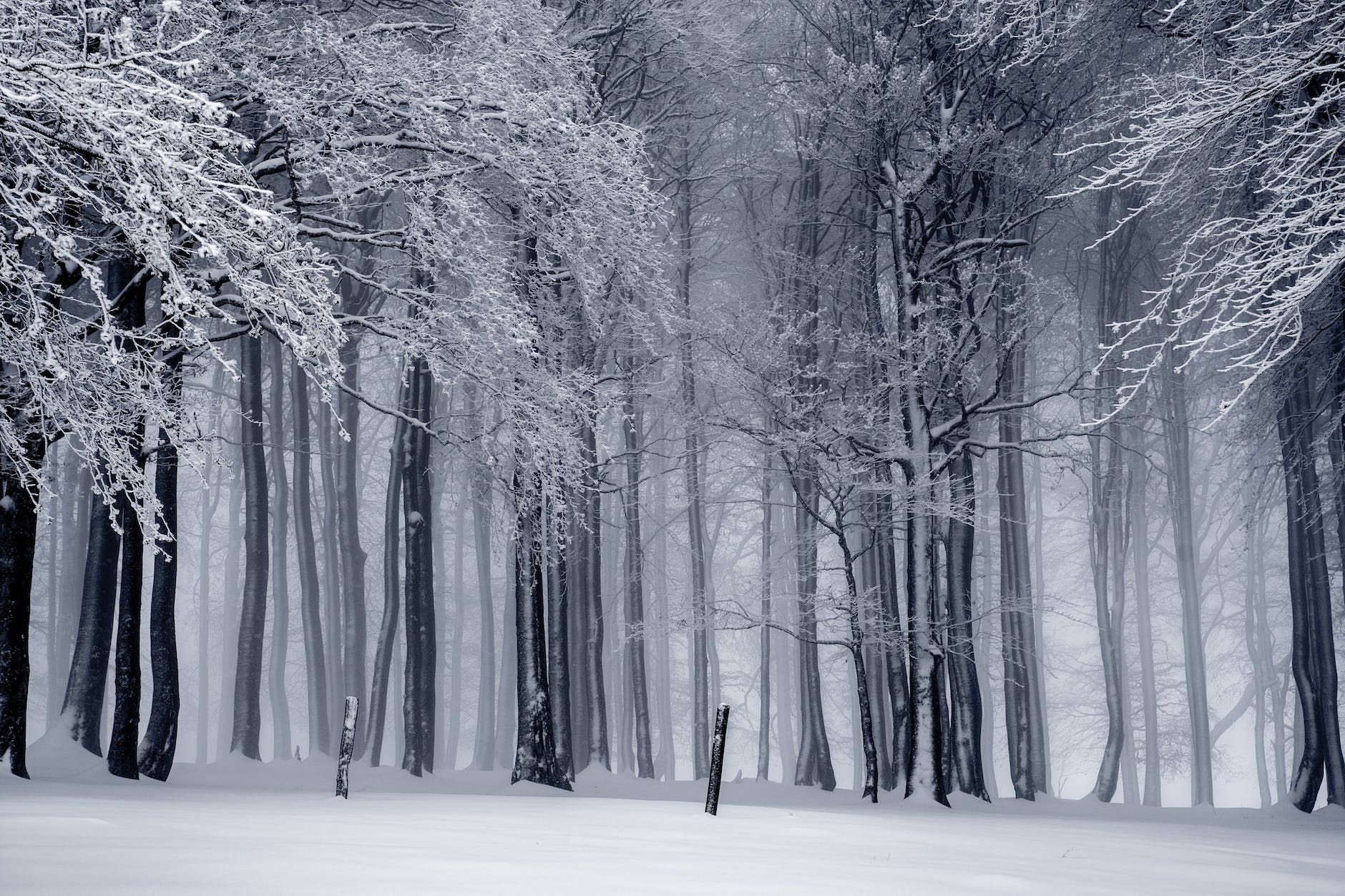
I was born on a snowy day in December 1992 in the Chicago suburbs, and over the past 30 years my life has been marked by the cyclical changes between warm and cold months. The winters often stand out more than the summers, perhaps because winter snow is always more of an event than a really scorching hot day in July. As I’ve gotten older, I’ve come to wish for snow less and less, certainly the incentive of a snow day is mostly absent now but also snow means I’m responsible for shoveling my sidewalks and driveway, something which I’ll do but don’t wish for.

In the last few days, we haven’t had any accumulation, the ground is still too warm, but the flakes falling on my head have been enough of a warning of things to come. Last year it occurred to me that there’s a pattern to how the seasons change and how the weather gets colder over the fall months. Late Summer here in North America is often stormy with the Atlantic hurricane season at its height and changing temperatures causing seasonal rains and occasionally thunderstorms across the continent. Each successive rain has its own small change on the overall temperature, first it’ll be steamy and hot after a rain in August, then as September progresses there’s a cool spell after each rain, until finally in October there’s that climactic storm that pushes the temperature enough that once the cool spell ends the temperature doesn’t rise again to its summer highs, instead settling now into a much cooler Winter low.

Here in Binghamton that final storm that did the trick was the remnants of Hurricane Nichole which reached this valley on Friday morning bringing moderate to heavy rains from the south that sat over this valley for much of the day. That evening the skies remained too cloudy for stargazing up at my usual Friday haunt, the Kopernik Observatory, and since the clouds have only faintly parted to reveal radiant sunshine. It took until Sunday afternoon for the temperature to fall enough for the steady flickering rain to freeze and become first sleet and then snow. Winter’s arrival is likely to be for the season now, it got this cold a few weeks ago before warm winds blew in from the southwest convincing me to lose my sweaters for a day in favor of my short sleeved shirts, but that last gasp of warmth wasn’t going to last.

There are things about Winter that I admire and look forward to. The conviviality of Summer is replaced by the twinkling celebrations in the long dark nights around Christmas and New Year’s, born from ancient mystery and ritual yet vibrant in its modernity. For the moment I’m still getting used to the Sun setting around 4:30 pm, still grumbling about it. The darkness of our Winter nights is bearable because we always know it’s temporary, the long summer days will eventually return, and with them all the nostalgia fueled memories of the glories of summers now past.

Allergies

The view at my university this time week.

When I returned to Binghamton after a trip home at the beginning of October, I was stunned to see the leaves had changed over that weekend that I was away. The deep green of late summer had been overcome on the trees by the creeping wave of red, gold, and orange that danced down from the highest elevations and into the Susquehanna Valley until the forests surrounding this valley became a sea of radiant color. It’s the first Fall that I’ve spent here where the leaves have changed so early, let alone so fully before winter’s wind inevitably blows in from the north and strips the trees of their leaves for the season.

All my life, I’ve enjoyed the chance to live in circumstances that kept me somewhat removed from the natural world around me. I’ve grown up in air-conditioned houses in the warm months and well-heated houses in the cold months. I’ve been able to escape from Winter’s grasp and travel to warmer places, as in last Fall’s trip to San Diego for the Sixteenth Century Society Conference, which this year is being held in the far less tropical climate of Minneapolis. As such my expectations of how my body would react to different temperatures and circumstances has been transformed by my own upbringing far more secluded from nature.

So, for the couple of weeks every Spring and Fall when my Dad would insist we open the windows in our house and turn off the A/C, I’d find myself in a new form of agony as with the open air flowing through my normally secluded indoor spaces I had no refuge from my seasonal allergies. They honestly felt worse when I was younger than they do today, even though now as I write this, I am feeling their effects well and truly. By living apart from the whims of nature, I was not acclimated to it. All this made my seasonal allergies all the worse.

Often the two biggest weekends on the Kansas City Irish community’s social calendar, St. Patrick’s Day & Irish Fest, are also two weekends when my allergies rise to their worst levels. In part that’s because they fall right at the changing of the seasons, Irish Fest at the end of Summer at the beginning of September and St. Pat’s because it’s right at the end of Winter and beginning of Spring. In the last few years, I’ve learned a great deal from living in an apartment without any built-in air conditioning, and from having to self-medicate when my allergies return, and as such I’d say they’re not as bad as they ever were during my teenage years.

Yet amid all the sniffling and sneezing there is a lesson to be found here. We are foolish to think we can truly divorce ourselves from Nature, from the very complex web of life of which we are an intrinsic part. We need to recognize that our bodies are going to change with the seasons. And in our time where travel is far easier than ever before, where you could be on the far side of the planet in an entirely different environment in a matter of hours, we need to recognize that our bodies will need time to catch up with their new surroundings. I’ve often wondered during my many trips in Britain and Ireland if it’s possible that I as the descendant of immigrants from those two islands might have some built in genetic strength when it comes to the allergens native to those two places? That statement could be entirely false, after all I’m not someone who studies this sort of stuff, but it’s still something I’ve often wondered. The climates in my own hometowns of Chicago and Kansas City are nothing like those of Ireland or Britain, leading me to wonder if my own biological predispositions to certain places hasn’t kept pace with my own family’s migrations from Europe to North America. It remains a question of mine.

Winter’s chill is fast approaching. This morning I pulled out one of my thickest Irish wool sweaters and may even put on a pair of wool socks to keep the chill to a minimum. I could turn up the heater in my apartment from 65ºF where it’s currently set to around 68ºF but putting on extra layers is more cost efficient. Like my Dad has done throughout my life, now as an adult I’m open to the idea of keeping the heater off for as long as possible and opening the windows if the weather suggests it. With our climate changing overall, and often warming, it’s been suggested that by the middle of the century Kansas City’s climate will be more like that of Dallas today. This means perhaps milder winters but far hotter summers. I may be cold now, but I know in 7 to 8 months I’m going to be sweating again as the summer heat returns. And when it does return, I’m sure my body will react in ways that annoy me, like the stomach aches I get when I eat chocolate when it’s either too hot or too humid, a relatively new thing for me in the last few years. We’ve created that new world for ourselves, a world where the old web of life is reworked to fit a warmer planet. It leaves me wondering how my seasonal allergies will change, or will they like the weather in recent years become only more extreme?

Galileo, Galileo

Photo by Juan Martin Lopez on Pexels.com

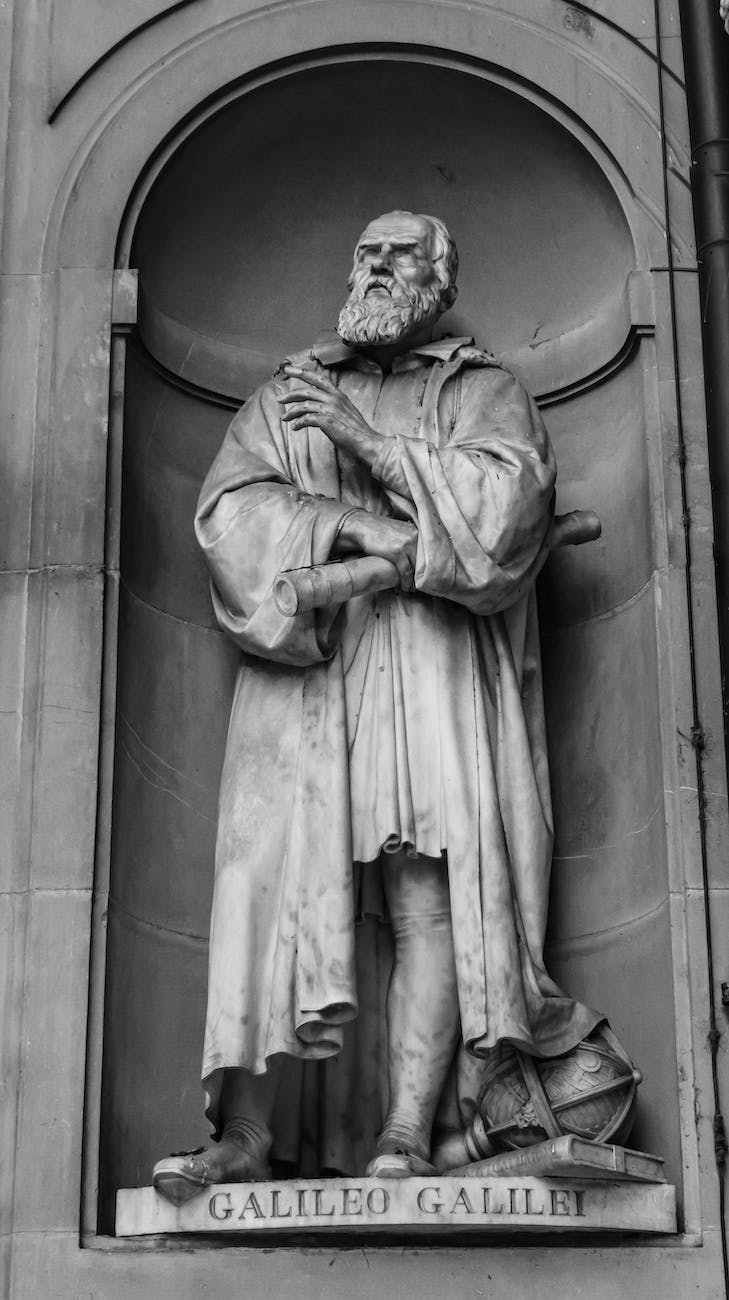
If there are any reasons why I find myself drawn to Galileo, this distant Italian astronomer who lived 400 years ago it’s that we have two things in common: we’re both stubborn and occasionally grumpy. I’ve known the basics of Galileo’s story for most of my life; he was an astronomer who was born in Florence and worked in the Venetian Republic at the University of Padua who was one of the first to use a telescope to look out into the night sky, making him the first to observe the Galilean moons of Jupiter, collectively named today for the man himself. His support of Copernicus’s heliocentric model––that the Earth revolves around the Sun––contributed to his falling out with the Papacy and his eventual arrest and trial by the Roman Inquisition who put him under house arrest for the last few decades of his life.

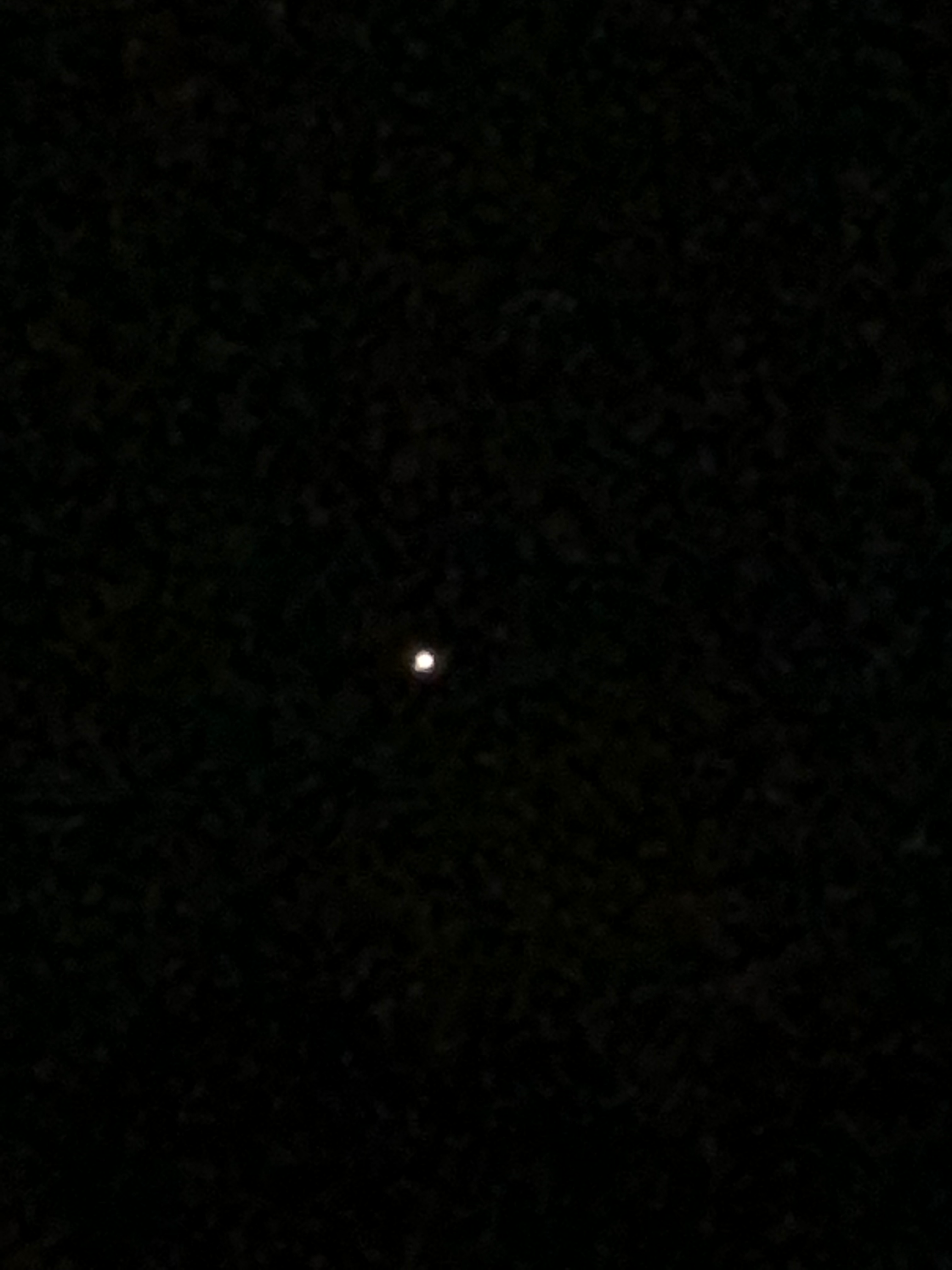
Of course, the real story isn’t quite that simple, after all many of his opponents agreed in principle with what he was arguing, they just didn’t like how he argued it. Still, Galileo’s contributions to science and to human knowledge of our cosmos overall are undeniable. In the last few weeks, I’ve thought about Galileo quite a bit as Jupiter has come the closest to Earth in its orbit for the first time in decades. I got a good look at Jupiter both through a telescope and with my own eyes on Friday night a few weeks ago up at the Kopernik Observatory and even was able to take a better-quality picture of it than I’ve gotten before with my phone.

Jupiter as seen with an iPhone camera on the 4th Friday in September at the Kopernik Observatory in Vestal, NY. Photo: Seán Kane.

I see in Galileo an inspiration of sorts because of the things he did. He was able to prove that the Moon wasn’t perfectly spherical by observing the shadows of the crater walls (what he called mountains) on the lunar surface. Using those shadows, the effects of the lunar geography, Galileo could prove the existence of something he otherwise wouldn’t have been able to see. It’s like how when it rains the best way to actually see the raindrops falling on your head is to look at them with a dark background like a tree or a darker-colored house. Otherwise, the water droplets will blend in with the ambient colors surrounding them. Likewise, we can see the Moon and the planets because it’s the light of our Sun shining on them that is reaching us here. The Moon doesn’t light itself up, nope, nor does the Earth, rather it’s the Sun that naturally does the job.

Here lies an interesting development in this story: the Sun lights up the Earth during the day, but the Earth is now still lit up at night. Only a few generations ago our ancestors figured out how to use electricity to light up our lives and turn the darkness of night into something new entirely. As long as I can remember I’ve been fascinated by this idea, that even at night some places are well lit. I wonder today if our cities might even be built with night in mind, if there’s more artistry in the architecture when the buildings are lit up by electricity rather than by the Sun’s rays? Certainly, we have more control over how our buildings are lit in this context rather than during the daytime. One of my favorite ways to experience a museum is after dark when all the lighting being done has been devised by an exhibit designer trying to control all aspects of how the exhibit is lit through their own lighting patterns. The British Museum does a really awe-inspiring job with lighting the Parthenon Marbles in such a way that their great shadows climb up the walls of their room making them seem even larger-than-life than they already are.

Still, in Galileo’s day before electric lighting they could see more of the night sky. It’s a sign of the world that we live in that it wasn’t until my 28th year that I actually saw the band of the Milky Way up in the night sky. Even in my youth growing up on the farm on the western edge of the Kansas City metro I never saw it. I think seeing the night sky in all its splendor gives us a chance to reconnect with our past before our industrialized modern world, to reconnect with the lights that illuminated our ancestor’s nights and memories. I’ve talked before here about how profound it seemed to me to be able to see light from Vega that had left that star when I was a child, well the same is true for seeing the same moons of Jupiter that Galileo first saw in 1610 from his telescope in Padua.

As winter approaches here in the Northern Hemisphere we’ll get to see a lot more of the night sky. The days are already here when the sun is setting in Binghamton during dinner time. The fall chill is in the air. It amazes me that October is already upon us, after all it feels like we were just in August; but then again, I probably say the same thing a few times every year. When I was little and first learning the names of the months in school, I remember being given worksheets that included pictures for each month to personify that time the better to remember it by. March was shown as a lion, April as a storm cloud, and May as a flower. In the Fall, September was a tree having reached its fullest bloom after the summer heat, and October was a collection of fallen leaves surrounding a Jack-o-Lantern.

I wonder how Galileo would’ve personified those months, or if he even would’ve thought of doing that? The month of my birth, December, is often associated with the beginning of the Holidays, in my tradition of Christmas specifically. Yet it’s also often thought of as the beginning of winter even though the worst of the winter cold and snows don’t come until January. Yet the seasons here in North America are different than those in Europe; in fact, I found that our months and seasons make more sense in Britain than they do in America where the weather changes at a more expected time than its fluctuations here in America allow. In my Midwestern home I’ve experienced Halloweens in the snow and Halloweens in summer conditions. In my year living in London though, admittedly now a heat island, when it got cold in October it stayed cold until March.

How different then is our world from Galileo’s? How much has our industry and development changed the world we live in? And how different will the world be at the end of this century from the world I knew as a child at the end of the last century? These are all questions I’m going to leave you with today.

Christmas and the Passing of the Seasons

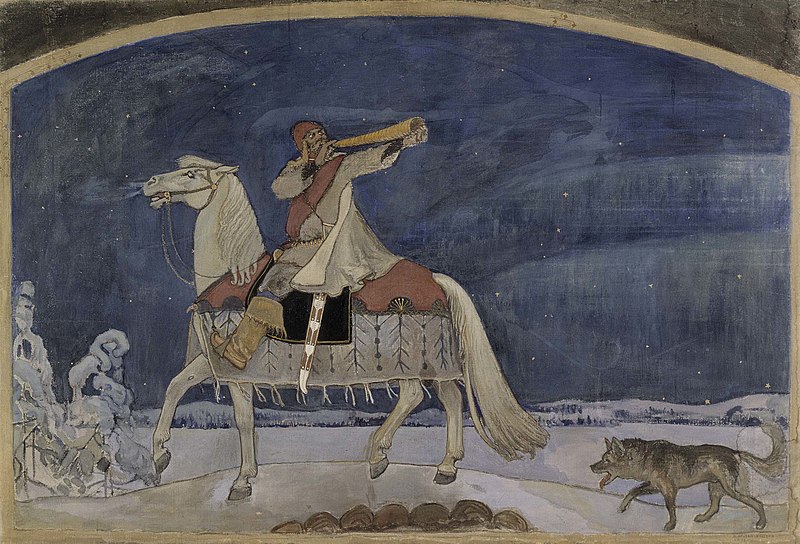
Akseli Gallen-Kallela, Kullervo Sets Off for War, 1901, tempera, 89 x 128 cm, Ateneum, Helsinki, Finland.

Christmas and the Passing of the Seasons Wednesday Blog by Seán Thomas Kane

This week I'm discussing what Christmas has meant to me throughout my life, and how it fits into the mythos of the seasons overall.

I think the general feelings I get at different times of the year were instilled very early on. I remember in first grade being told that if the weather in March came in “like a lion” it would surely go out “like a lamb,” meaning if the month started with bad weather, snow, ice, or even thunderstorms in a warmer year, then we’d end up with a quiet end to that month. Likewise, I can’t remember quite when I first heard it, that the Winter Sun always shines with the wolf’s teeth. This to say that as bright and warm as the Sun’s rays appear in Winter, you’ll still feel the biting cold of Winter if you go outside in that time of the year.

To me, Christmas has always been a bright light on a wine-dark sea, a moment of celebration, of seeing family and friends, of hearing the triumphant hymns at Midnight Mass and reaffirming how much we all really do care for each other. Christmas has its traditions, both sacred and secular: not only is Midnight Mass, now often celebrated at 21:00 or 22:00 on Christmas Eve a part of the schedule, but so too traditionally are the big family parties, unwrapping gifts on Christmas morning next to our tree, and watching any number of Christmas specials, especially Charlie Brown, and occasionally Die Hard too. The week before Christmas always includes my birthday, the 20th, which has its own traditions and things I look forward to every year.

Yet as I get older, now in the last year of my twenties, I can understand what C.S. Lewis meant in The Last Battle when he said that the eldest Pevensie sibling, Susan, didn’t return to Narnia because she had grown up and didn’t believe in it anymore. I still believe in the fact that there’s something special at Christmas, even if I’m more the skeptic about any sort of “Sanity Claus”, as Chico Marx put it, but it doesn’t have the same impact on me as it did when I was a wide-eyed child. Last Christmas … (I’ll give you a minute to sing that Wham! song) … Last Christmas, our first during the COVID pandemic, my parents and I decided to take a firmly defiant stance: we were going to go all out with the decorating and try to force the point that it was Christmas as much as possible, lest we remember we wouldn’t be going to any services or hosting any big family parties. It ended up being a melancholy affair, sure there were wonderful moments, but by and large I found myself longing for Christmases of yore when we’d be so exhausted come bedtime on Christmas night that we’d drift off into wonderful dreams, perhaps “visions of sugar-plums” dancing in our heads.

This year though, now in our second year of the pandemic if anything the three of us are exhausted by it all. The constant fear of infection, the usual work-induced weariness, and life in general. 2021 has been a hard year. We’ve struggled through it, through every season as the calendar rolls along, but I think it’s fair to say 2021, like 2020, is a year we’ll be happy to leave. This Christmas feels like Christmas, just as my birthday this week felt like my birthday usually does, but with a shrug instead of a smile. Winter even seems harder to tolerate this year. 

I was in high school when I first saw a Finnish painting that to me spoke of the nature of Winter. It shows a horseman mounted, wearing a slightly medieval garb, turning around to look up into the stars that carpet the purple night sky, illuminated as much by the snow below as the lights in the heavens above. In his hand he holds a hunting horn, which he blows to announce his ride onward as his trusty hound follows behind. The image there, of the rider in the snow beneath the stars in the purplish Winter’s night sky always seemed to speak to me of Winter, meagre and cold, yet suggestive of some magic that might exist in those long dark nights. 

It was only later, when I visited Finland for the first time in May 2016 that I learned that this painting, first created in 1901, is one by Akseli Gallen-Kallela (1865-1931), called Kullervo Sets Off for War. It depicts Kullervo, a tragic character from the Kalevala, the Finnish national epic compiled by Elias Lönnrot in the 19th century. The story behind the painting, while different from how I imagined it, reminds me nevertheless of the mystery of Winter, the unknown quality that those long dark nights hold, and the stories I’ve heard and come up with myself to give character, voice, and song to what might otherwise be a quiet, dark, and lonely time for us all.

For those of you who celebrate it, I wish you a most Merry Christmas, and for all the rest of you, Happy Holidays.