
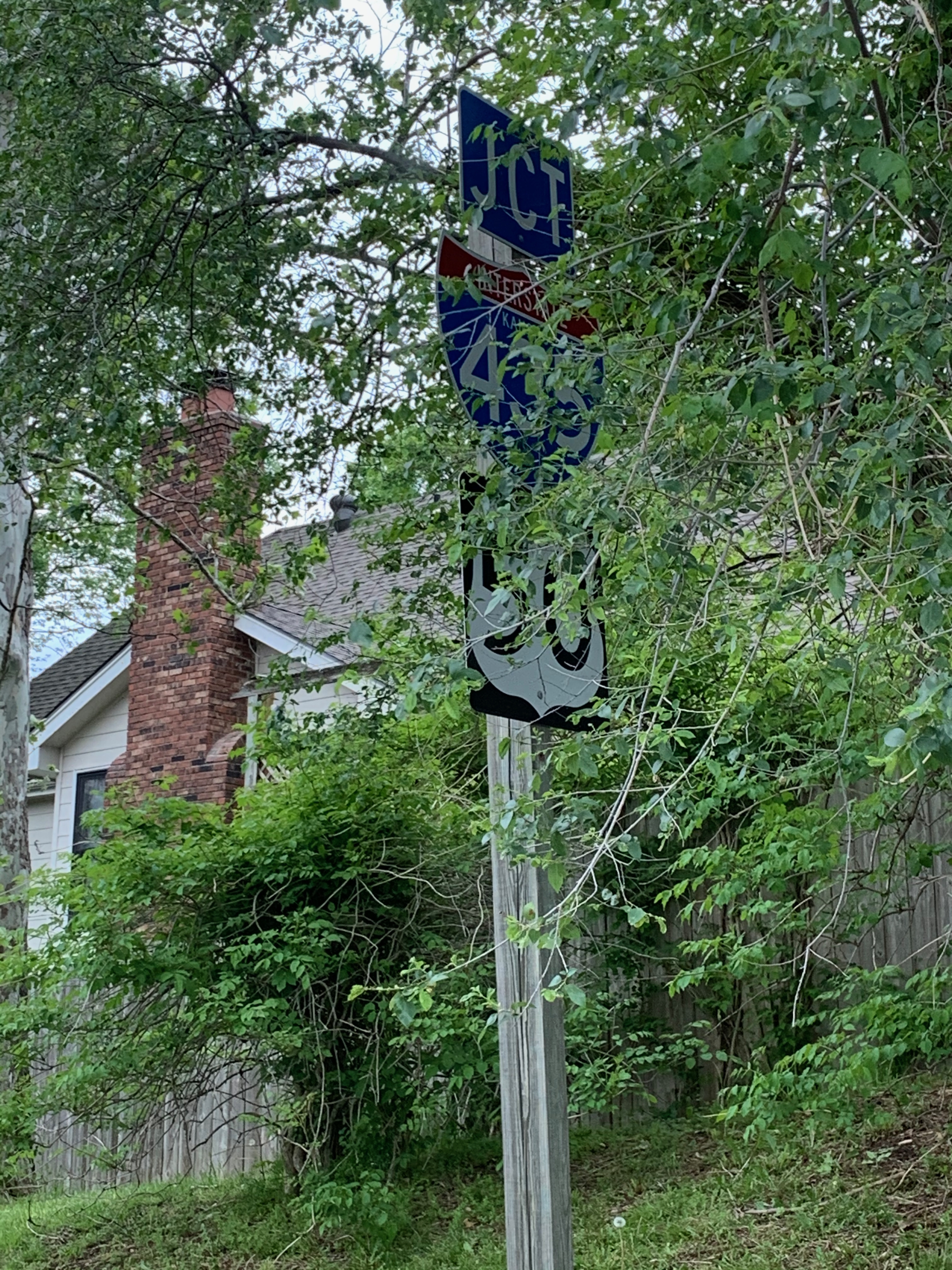
Yesterday evening, my parents and I drove out into my old high school stomping grounds in Lenexa and Overland Park, in the southwestern suburbs of Kansas City. My Dad had to return a truck part to a shop he frequents in Lenexa, and seeing as we were out there around dinner time, we decided to stick around and go to a restaurant in that part of town. It still feels strange sitting down inside restaurants again after a year of staying away. But it’s comforting to return to something that was so normal before COVID now as the crisis seems to at last be receding here in Kansas City.
What struck me the most about the experience of yesterday’s errands in Johnson County was actually getting an opportunity to just sit back and watch as people went to and fro around us. After all, this was one rare occasion when I wasn’t driving, instead taking my old childhood spot in the back seat of my Mom’s car, which gave me a great vantage point to just look around as we were driving on I-435 and along the streets and avenues. Seeing the myriad of vehicles all moving at different yet interdependent speeds seemed almost elegant to me, like a ballet of sorts. Yet I was especially struck in that moment by getting a chance to really stop and look at the highway signs themselves not for the sake of navigation or anything else particularly utilitarian, but just out of curiosity.
Here in the US, we have a couple different types of highways. At the top are the federal interstate highways, our controlled-access thoroughfares, essentially the same as motorways in Britain, Autoroutes in Francophone Europe and the parts of Québec I’ve been to, or the Autobahn in Germany. To date, I will say the best highways I’ve ever been on as a passenger was the highway between Helsinki and Turku in Finland. Below the interstates are the older US highways, federally designated roads that predate the creation of the interstate highways in the 1950s. I always found it fun growing up that my elementary school and parish church, St. Pat’s in Kansas City, KS was on US-24, the same highway that the road up to the top of Pikes Peak begins at. Below the US highways are state highways. In some cases, like with NY-17, these can be freeways like interstate highways. In others, like with much of NY-7, they tend to be official designations of older roads that predate the auto industry.
Because state highways are designated by each individual state, that means that their signage gets to be much more distinct than the federal highways. There is a standard look for state highways if the state government can’t come up with something themselves, basically a white oval or circle with the highway number in the middle, but most states choose interesting alternatives. New York’s for example are in a quasi-hexagonal shape, that I’m guessing was the original shape of their state highway signs in general. Colorado’s are done up in the colors of the state flag. And Kansas’s, which got me to write about this topic, put the highway number in the middle of a sunflower on a black field.
In my high school years, I used to drive twice a day, every day, up and down K-7 (Kansas Highway 7) between western Kansas City, KS and western Lenexa, KS where my alma mater, St. James Academy, is located. At the time, I noticed the distinctive signage, but it never really meant much to me. Yesterday however, seeing it again and really looking at it, I realized how much I’d come to like it. There’s something about that Kansas sunflower highway sign that feels as homely to me as California’s rounded sign seems a bit exotic. Seeing the sunflower again yesterday brought a smile to my face, thinking about how much I’ve come to like it.
While I’m on the topic of state highways, I do want to make one big suggestion. The way in which we refer to our different highways in this country is really inconsistent. I’m often confused when I’m in the Northeast, not being a local, trying to figure out what people are referring to when it comes to highway names. For me, having grown up in Kansas, state highways are “[State Name] [Highway Number]”, so K-7 (Kansas 7) or NY-17 (New York 17). US Highways in turn are US-X, so US-71 or US-11, and interstates are I-X, so I-70 or I-35. In some cases, like in my original hometown of Chicagoland, highways are actually named, and there I’d rather use the names. I may write another post about that in future, so in those cases while the highway may be I-55, I’ve always just called it the Stevenson.
All that said, when I moved to New York, I was constantly confused when locals would offer me directions in large part because every highway was just called “Route X,” so Interstate 81 is Route 81, US 11 is Route 11, and New York 26 is Route 26. There are other examples, around Binghamton NY-17 is still being upgraded to interstate standards, resigned as I-86, so whereas I call it I-86, most locals I’ve talked to still call it Route 17. Despite the NY plates on my car, it’s one way that I think I still stand out not being a New Yorker.
 Wednesday Blog by Seán Thomas Kane