

Tag Archives: Skepticism

A macaw

On Skepticism

This week, I express my dismay at how fast time seems to be moving for me of late and how it reflects the existence of various sources of knowledge in our world.—Click here to support the Wednesday Blog: https://www.patreon.com/sthosdkane—Sources:%5B1%5D Ada Palmer, Inventing the Renaissance: The Myth of a Golden Age, (University of Chicago Press, 2025), 603.[2] If this word epistemology leaves you confused, have no fear, for my own benefit as well I wrote a blog post explaining this word alongside two of its compatriots. “Three Ologies,” Wednesday Blog 6.6 (podcast 5.6).


This week, I express my dismay at how fast time seems to be moving for me of late and how it reflects the existence of various sources of knowledge in our world.


I first noticed the passage of time on my tenth birthday, that is to say I remember remarking on how from that day on for the rest of my life, I would no longer be counting my years in single digits. I remember distinctly the feeling of surprise at this, a sense that I could never go back to my earliest years. That was especially poignant for me as those first six years lived in the Chicago suburbs held a nostalgic glow in my memory then as they do now. In those early years I felt that time moved slowly; I remember once as a kid I fretted over a 3 minute cooking timer, worrying that I would be unable to stand there and watch the flame over which I was cooking eggs for a full 3 minutes. Today that sounds silly, yet I believe it is vital to remember how I felt all those years ago lest I lose my empathy with my past self or anyone else I may encounter with similar concerns over things I see as minute.

Soon after my tenth birthday, I found a new method of getting through things that I found tedious or even odious to endure. I realized that if I tricked myself into enjoying the moment that the tedium would pass by quicker than if I wallowed in my annoyance and misery. Perhaps there was a degree of pessimism in this realization: that the good moments don’t seem to last as long as the bad ones in my recollection of things, or that it’s in fact easier to remember the bad more than the good. This is something I’ve been struggling with lately, that when I find my thoughts sinking to these depths of my greatest uncertainty and grief that I need to remind myself of all the good in my life. Time seems to move faster today than it did before. The days fly by more than linger, and there’s always something new or old that I need to do. I’ve long thrived on work, a trait I inherited from my parents. Often my happiest days are those spent dedicated to a specific task; those days are made happy by my sense of accomplishment once the task has progressed or even is done. I’ve learned to accept that good things won’t often be finished in a day. I’ll push myself instead to do as much as I feel I can do in the span of a day and see where that leaves me when I go to bed at night. With the new introduction to my dissertation this meant that it took me 9 days to write all 105 pages of it. This is one of those times where I feel that I’m on a roll and in my writer’s paradise when I can write and write and write and not run out of ideas to commit to paper.

Yet I worry about that quicker passage of time because I feel that there are less things that I’m able to do in a given day than I would like. I sacrifice rest sometimes in order to see a project to completion, or I choose to try and find a balance between my work and the rest of my life only to see one side, or another overwhelm its counterpart leaving me feeling unfulfilled when I retire for the night. I do worry that the time I’m afforded is limited, and that I’m not going to do everything I want to undertake. There are plenty of things I want to write, so much I want to say, yet so little time in a given day to say it. I’m still young, just a few weeks over halfway to my 33rd birthday. I have this lingering feeling that there’s so much that I want to do with the life I have and an indeterminate amount of time with which to do those things. Am I content with what I’ve done with my life so far? Yes. Is there so much more I want to do? Absolutely.

I suspect this shock at time moving faster is my own realization of my mortality. Everything has a beginning and an end, the mystery lies in not knowing either terminus directly. How many of us can remember our own birth? I certainly can’t. By the same token we can’t necessarily interview the dead after they’ve shuffled off this mortal coil because, in the words of Dr. McCoy, they’re dead. Thus, we remain doubters of our own mortality, our limits. I often hear older friends talk about how the young feel invincible and immortal and make mistakes which reinforce that sentiment of invincibility all while, if they’re particularly bold or just unlucky, asserting their mortality with a sudden abandon. Our doubts are aimed at established sources of knowledge, authorities to whom we feel no particular duty to abide even if we begrudgingly accept their precepts out of bare necessity. I see enough people every day ignore pedestrian crossing lights even though they are there on the city’s authority to protect us pedestrians when crossing the streets that we’ve abdicated to vehicles. It usually leaves me at least frustrated at the ignorance of the driver, at most even angry when I’ve gotten close to being hit by such an ignoramus.

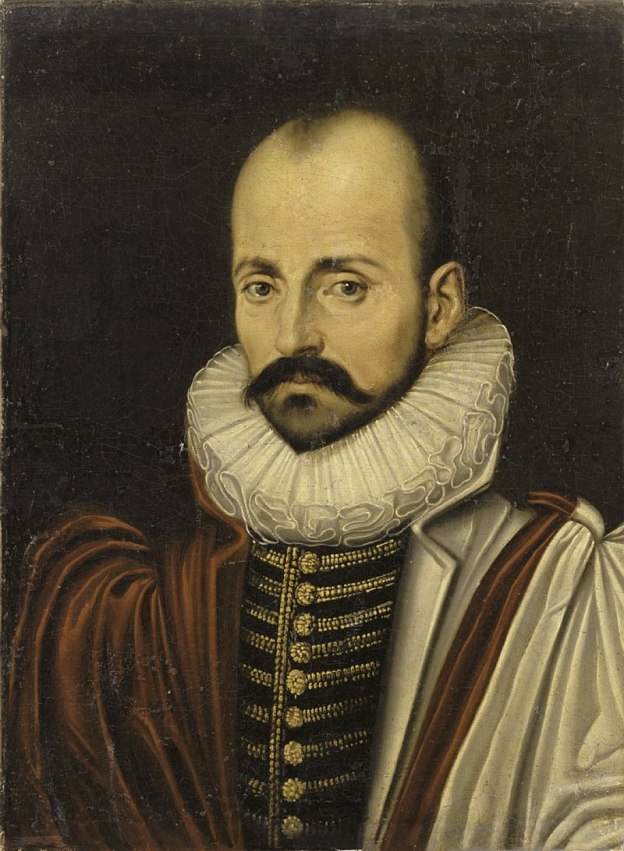
Skepticism is a significant marker in Renaissance studies as a transitional element from the classically inspired scholarship of the fifteenth and sixteenth centuries into the empirical knowledge-making that traditionally we’ve said was emblematic of the Scientific Revolution. I have many colleagues who are working now on disproving the existence of that Scientific Revolution; I admire that cause and yearn to read what they’re writing even though one of my stock courses to teach is called “the Scientific Revolution: 1500-1800.” Ada Palmer calls Michel de Montaigne, in some ways the inspiration for my Wednesday Blog, “the avatar of this moment” when skepticism became a driving force in Renaissance thought.[1] I argue in my dissertation that the American experience drove the course of skeptical thought in the Renaissance; all the things which André Thevet called singular in the Americas represented a dramatic break from classical standards of knowledge which required a new epistemology to explain them.[2] The key here is that we should never be complacent that our current knowledge is all there is to know, after all a well-lived life is a life spent learning. I’m skeptical about many things and have a drive to continue learning, to continue exploring. Curiosity hasn’t killed this cat yet.[3]I find then that my time is best spent in pursuit of this knowledge, and as much as one can learn alone in the solitude of their study reading and thinking quietly to oneself like a monk, it is far better to learn in communion with others. Since the pandemic began, I’ve grown particularly fond of Zoom lectures, webinars, and workshops as much for the expertise on show as for the community they build. Even if we only communicate through these digital media I still look forward to seeing these people, to experiencing that one part of life with them. We learn so that we might have richer experiences of our own lives, so that we might find comfort in our knowledge, so that we might, in Bill Nye’s words, “change the world.” In the time that I have afforded to me I want to learn more than anything else, to learn about the people around me, about our common heritage, about what our future may hold, and about myself. If I can do that, then when I am “no more, cease to be, expired and gone to meet my maker, become a stiff, bereft of life and resting in peace” I’ll be content in my leave-taking. Hopefully unlike the dead parrot they won’t nail me to my perch like Bentham’s auto-icon which greets knowledge-seekers in the South Cloisters of University College London, though that could be a rather humorous way to go.


[1] Ada Palmer, Inventing the Renaissance: The Myth of a Golden Age, (University of Chicago Press, 2025), 603.

[2] If this word epistemology leaves you confused, have no fear, for my own benefit as well I wrote a blog post explaining this word alongside two of its compatriots. “Three Ologies,” Wednesday Blog 6.6.

[3] Meow.

On the Cannibals

This week on the Wednesday Blog, looking back to a Renaissance philosopher to try and make sense of the present. — Click here to support the Wednesday Blog: https://www.patreon.com/sthosdkane

This week on the Wednesday Blog, looking back to a Renaissance philosopher to try and make sense of the present.


I was in my 8th grade year when Hamas took control of Gaza, and throughout my childhood as much as my own country was at war in Afghanistan and Iraq in what our government called the “War on Terror,” I knew of Israel and Palestine as a set of nations that had been in some state of war since the foundation of the State of Israel in 1948. To hear then last week that Hamas had attacked Israel, starting a new war at the end of the Jewish high holy days filled me with a grief I thought had been lost in the jaded and bruised reactions of my conscience after decades of hearing of atrocities here at home and abroad. At one point in my life, I thought of war as a sort of grand adventure, of the glory that men like Theodore Roosevelt and Winston Churchill looked to in combat. I never chose to serve, nor would I have likely been allowed to because of my health, though as I grew up, I found the very idea of war, let alone the idea of taking another person’s life to be anathema and horrific to behold.

The Catholic Church has a theory of just war, which argues that in the case of most need, when no other option is available that war is the only solution available to a good and morally upright people. I for one have trouble with this theory, though I do see how it could make sense. I’d rather negotiate for as long as possible, try to find common ground with a potential enemy in the same way that I try to speak to those I interact with on a daily basis in their own language. Yet sometimes it does come down to this question of whether after all the negotiating and the impasses that have resulted if fighting is justified?

In 1580, the French humanistic philosopher Michel de Montaigne, the first great essayist, published in his first volume of Essays one such document titled “Des cannibales,” or in English “On the Cannibals.” In it, Montaigne spoke about a Tupinambá man from Brazil who he met in Rouen, the great port in Normandy where most of France’s trade with Brazil was based. Montaigne described how the Tupinambá became famous in his time for their cannibalism, rituals which were an intrinsic part of their culture that made them seem alien to his own, and dreadful in their otherworldliness.

Yet Montaigne saw also in the Tupinambá something of a reflection of his own world. 1580 saw France embroiled in the Wars of Religion, which lasted nearly 40 years and cost the French people a great many lives across several generations. Montaigne retired from public life in the civil service in part out of disgust for how the course of French history had gone, disgust that Frenchmen were not just killing fellow Frenchmen but torturing them and bringing ruin onto their families and communities all in the name of religion.

Religion is a tricky thing in human cultures. Most religions today are intended to give their believers a guide to living a good and true life; the greatest commandment which Jesus offers in the Gospels is to “love the Lord, your God, with all your heart, with all your being, with all your strength, and with all your mind, and your neighbor as yourself.” (Luke 10:27, NAB) I’m a practicing Roman Catholic, as a priest once said to me “I’m practicing, I’m still learning how to do it right,” and at the end of the day the best any of us can do is try to be good people, to make something positive and impactful of our lives, even if it is only a small impact on our immediate friends and families. I am religious for many reasons which perhaps someday I will write about here. 

Yet I am also a skeptic, much like Montaigne whose essays reflect this uncertainty about life, humanity, and established norms. Montaigne’s skepticism reflected the empiricism that was born in the following decades of the Scientific Revolution and flowered 150 years later during the earliest stirrings of the Enlightenment as much as it came from the humanism of his own time during the Renaissance. Montaigne challenged his readers, his fellow Frenchmen amid their own bloodletting, to save their cries of barbarity for the Tupinambá lest they also “call that barbarism which is not common to them” at the same time. Montaigne thought it more barbarous to “eat men alive than feed upon them when dead.” The way in which this war is being prosecuted by Hamas, while they hold clear grievances, loses any sense of moral justice when, as Montaigne charged his countrymen, they “mangle by tortures and torments a body full of lively sense, wresting him in pieces.” The horrors of this war then, in all their wanton cruelty, show this twisted version of the human character in its fullest expression.

When I thought more about the war after it began last week, and as I thought of what I could write about it, about the renewal of this long simmering conflict in lands thought to be holy by three of our species’s largest religions, I was drawn to Montaigne’s words again, especially after reading reports from a journalist friend about the killings of infants and children by Hamas still defenseless in the earliest verses of their song.

What worries me is this idea of religious war, fighting “under pretense of piety and religion” in Montaigne’s words, remains in my own Catholicism. I know there are some who adopt the image and iconography of the Crusaders of old to battle against what they see as the wickedness and snares of evil, desecrations against what they hold most dear. Theirs is a faith limited to only a few, a scarce number that will surely only grow within their own families. When one says, to quote Handel’s Messiah “if God be for us, who can be against us?” it is very hard to argue, let alone change the mind of those who see God on their side. That is a faith limited to only the most elect, denying the promises of salvation to “our neighbors and fellow citizens” who instead receive scorn at the least, torture, death, and dismemberment at the worst.

I worry about how large this war will become. It is not like the other sudden conflicts that Israel has found itself in throughout its young history as a modern nation-state. This is a war fought against a terrorist organization with clear backing from another power in the region. Will that power leave the shadows or be attacked directly by Israel to stop the flow of weapons and funds that at time of writing is likely going to Hamas? And if so, how far will the Israeli Defence Force go to defeat Hamas before they lose their own moral standing? This is why I do not care for the idea of just war; taken too far with too much emotion driving one’s judgement a just war can quickly become unjust and the warriors fighting in the defense of their own kind could resort to brutality like their foes “that exceeds them in all kinds of barbarism.” So, in the last week when I’ve been at Mass, when I’ve led my classes at my Catholic school in prayer, my thoughts have been on the victims of this war, the fighters who see their actions as their best and only recourse, and on the faint glimmer of hope that peace will someday return to the Israeli and Palestinian peoples. In an age when terror is as potent a weapon as any other, I hope those able to see an end to this war will find a way to start talking with each other again. Until then, just as Montaigne wrote 443 years ago, so too today we find ourselves “not sorry we note the barbarous horror of such an action, but grieved, that prying so narrowly into their faults, we are so blinded in our own.”


The translation of Montaigne’s Essays used here is based off of John Florio’s 1603 first English edition of the Essayes, or Morall, Politike, and Militaire Discourses of Lord Michell de Montaigne published in London.