Tag Archives: Sloths

On Translation

This week, how I take nuance and particularity into account in my efforts as a translator.—Click here to support the Wednesday Blog: https://www.patreon.com/sthosdkane


This week, how I take nuance and particularity into account in my efforts as a translator.


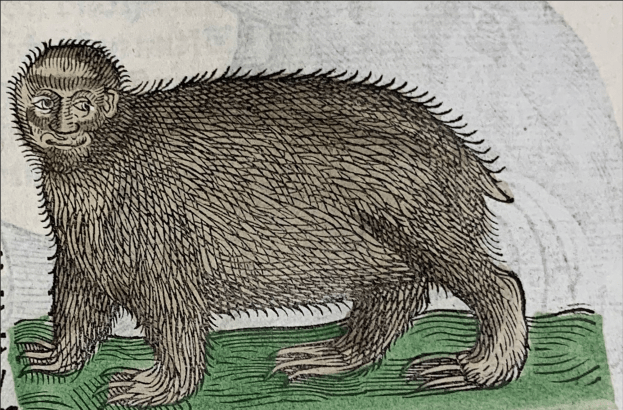
When I chose to study André Thevet (1516–1590) and the three-toed sloth in August 2019 I did so because I already knew French and the need to learn a new language was less pressing than if I’d chosen to study another source in the history of natural history. I chose Thevet because it was practical, and I chose the sloth because the thought of being a sloth historian made me laugh. From the first day working on Thevet, I found that my understanding of his books was heightened when I took the time to type out my own translations of his text. Thevet wrote in Middle French that is native to the middle decades of the sixteenth century. I arrived at this project very familiar with Early Modern English, the contemporary form of this language to Thevet’s time, as my history master’s thesis delt with sources in that chronological variety of English from Thevet’s generation and the one just before. I’ve never had much trouble understanding the most prolific author of Early Modern English literature, Shakespeare, but I think I’ve had a tolerance for varieties in speech that’s allowed for me to try to think beyond my own millennial Midwestern metropolitan American English and be willing to understand the likes of Shakespeare from a young age.

So, when I began translating passages from Thevet’s Singularitez de la France Antarctique for my own professional use in my dissertation, I decided that as long as I was translating that book I might as well translate it with the intention of sharing Thevet’s words beyond the scholarly analysis and critique which lie at the heart of my work as a historian. This first draft is built around the 1558 French edition published by Christophe Plantin (c. 1520–1589) in Antwerp and contains footnotes drawn from the 1878 French edition by Paul Gaffarel published in Paris, two Brazilian Portuguese translations by Sergio Amado (1978) and Estêvão Pinto (1944, using the 2018 reprint), and the partial 1986 English translation by Arthur Stabler and Roger Schlesinger which contains only Thevet’s North American chapters.

I finished the first draft of this translation in Summer 2023 and am now looking ahead toward the second draft which is the next stage of the project, and I hope the last one before I feel confident in formally writing to the publishing editors whose press sales agents I’ve spoken with about this project at conferences over the last two years. The second draft will consist of two main stages. First, I will cross-reference my translation and the 1558 Antwerp edition on which it is primarily based with the 1557 first and 1558 second editions published in Paris by Maurice de la Porte, two Venetian editions translated into Italian by Giuseppe Horologgi and published by Gabriel Giolito de’ Ferrari (c. 1508–1578) in 1561 and 1584, and the 1568 full English translation by Thomas Hacket published in London by Henry Bynneman. Second, I will seek to make my translation more understandable for a 21st century English-speaking reader while endeavoring to preserve Thevet’s particular mannerisms and voice, a writing style with which I’ve become quite familiar in the last 6 years to the point that I can now confirm at least two French translated manuscripts in the Bibliothèque nationale’s collections in Paris are verifiably written by Thevet. He had a way of writing that’s unmistakable.

These two competing axes create a binary star system around which my translation revolves. On the one hand, I want to be true to the original text, to preserve the author’s voice and something of their spirit which remains in those words. On the other hand, I need to make my efforts readable for my own contemporaries. Thevet and his contemporaries are notorious for long run-on sentences that would make Hemingway shake his head in earnest frustration. Where do I break up a long sentence while preserving its overall integrity? Furthermore, at what point should I decided to remove the bracketed notations of page breaks in the original text? There the 1558 Antwerp edition is most fully evident as its pagination has several quirks that make it stand out from the 1557 & 1558 Paris editions. At this point, Plantin published books with folio numbers rather than page numbers, so the first two pages were in fact folios 1 recto (1r) and 1 verso (1v). These names refer to the custom that scribes traditionally started writing on the back side of the vellum (recto in Latin) and then flipped the skin over once ready to continue writing on the verso, or opposite side. In several instances the folio numbers actually decrease in the book, notably in Thevet’s chapter on the sloth, which makes the footnotes on that core element of my research particularly confusing if you’re paying close enough attention. So, in summation the inclusion of the page breaks with the folio numbers keeps my translation grounded in Plantin’s edition, however that may break up the text in an uncomfortable way for some readers.

Ultimately, I am not the author of this book, merely a herald relaying it on for our time. My voice is there in the handful of introductory chapters I’ve written to go along with this book. These chapters describe Thevet as a reader of travel literature and place his accounts of the Americas beyond what he himself saw in Brazil in the context of their French and Spanish sources. I see my efforts in this as a means of introducing the reader to Thevet, a man who today exists on the furthest margins of the popular imagination of the First Age of Exploration in the English-speaking world. Thevet remains present in academic circles, there were at least four papers presented at this weekend’s annual meeting of the Renaissance Society of America in Boston which discussed Thevet, mine included. I hope this book will be useful to fellow academics and perhaps will entice curious readers to learn more about this man who I’ve spent the last 6 years of my life getting to know.I find myself drawn as much to the effort of a translator as I do to the work of a historian these days. We live in such a fractious time when reasoned debate and earnest discourse is riddled with dangers and seemingly improbable to undertake. I feel as though I’m constantly translating my thoughts and character for others to understand me. It’s why I enjoyed my time in Boston because that city has a large enough Irish American population that when I’d tell my name to a cashier to put on a carry-out order they’d actually spell it in the proper Irish manner; this never happens in Kansas City. That said, I felt that I had to translate my expectations and personal limits to be able to live even for just a few days in a city as expensive as Boston where I was often paying double what I’d normally pay at home in restaurants. In translating I recognize that each of us think in slightly different ways and see the world in which we all live in just as unfamiliar terms to one another. Difference enhances our common humanity and elevates our manner to something greater than ourselves.
Doctoral Study

Photo by Ricardo Esquivel on Pexels.com

I was 27 when I arrived here in Binghamton at the start of August 2019. I made a big move out here, with immense help from my parents, and set up shop in a good-sized one bedroom apartment that’s remained my sanctuary in this part of the country ever since. I’d wanted to continue my education up to the PhD since my high school days, and it’s a plan I’ve stuck with through thick and thin. After a false start in my first attempt to apply to PhD programs in 2016, which led to two wonderful years working on a second master’s in History at the University of Missouri-Kansas City (UMKC), I applied again, now far better positioned for a PhD program and ended up here through the good graces and friendly insight of several people to whom I’m quite grateful.

Arriving in Binghamton though I found the place very cold and quite lonely. In recent months I’ve begun to think more and more about getting rid of some of my social media accounts only to then remember that Facebook, Instagram, and Twitter were some of my greatest lines of communication with friends and family back home in Kansas City and elsewhere around the globe throughout these last three years. That first semester was tough, very tough, and while the second semester seemed to get off to a good start it was marked by the sudden arrival of the Coronavirus Pandemic and the end of my expectations for these years in Binghamton. 

I spent about half of 2020 and 2021 at home in Kansas City, surrounded by family and finding more and more things to love about my adopted hometown with each passing day. When I was in Binghamton it was to work, in Fall 2020 to complete my coursework and in Spring 2021 to prepare for my Comprehensive Exam and Dissertation Prospectus defense. I still did a good deal of the prospectus work at home rather than here, though the memories of those snowy early months of 2021 reading for the comps here at this desk where I am now always come to mind when I’m in this room.

As the Pandemic began to lessen in Fall 2021 and into the start of this year, I found myself in Binghamton at a more regular pace. There was something nice about that, sure I wanted to be home with my family, but I also felt like I was getting a part of the college experience of going away for a few years to study that was reminiscent of the year I spent working on my first MA at the University of Westminster in London. I started to venture further afield in the Northeast again, traveling to Boston, New York, Philadelphia, Baltimore, and Washington again. When I first decided to come here one of the things, I decided was I’d take the opportunity of being in the Northeast to see as much of this region as possible.

2022 saw another transition, I wasn’t in one of the newer cohorts in my department anymore. Now, in Fall 2022 I’m one of the senior graduate students. It’s a weird thing to consider, seeing as it felt like 2020 and 2021 evaded the usual social life of the history graduate students here, thanks to the ongoing pandemic. I also began to look more seriously at my future, applying for jobs in cities across this country, and even looking again at some professorships, something I doubted for a while would be an option for me. If there’s anything about life that I’ve learned over the past three years spent here, it’s that you always need to have things beyond your work to look forward to. Whether that be a long walk in the woods on the weekends or a day trip to somewhere nearby, or even the latest episode of your favorite show in the evenings. Doing this job without having a life beyond it is draining. 

For me the best times here in Binghamton were in Fall 2021 and Spring 2022 when I truly began to feel like I had a place here that I’d made my own. I was confident in my work, happy with how my TA duties were going, and really enjoying my free time as I began to spend my Friday evenings up at the Kopernik Observatory and Sundays at the Newman House, the Catholic chapel just off campus. I was constantly reading for fun as well, something I’d lost in 2020, even falling behind with the monthly issues of my favorite magazines National Geographic and Smithsonian. There were many weeknights I’d spend out having dinner alone reading natural history, science fiction, anthropology, and astronomy books. 

It’s interesting looking back on myself from six years ago when I was in London, the months that summer when I decided I wanted to get back into history after a year studying political science. My motivations were to earn a job working at one of the great museums I’d spent countless hours in during that year in the British capital. While I studied for my MA in International Relations and Democratic Politics, I was still spending my free time looking at Greek and Roman statuary and wandering the halls of Hampton Court or watching the hours of history documentaries on BBC 4 in the evenings. And now that I’m back in History as much as I do appreciate and love what I do, I find my free time taken up by science documentaries and books.

It’s important if you do want to get your PhD in the humanities and social sciences to figure out why it is you want to do this before you start. Have a plan in mind, have a big research question in mind, and focus your attentions onto that question. My own story has many twists and turns from an interest in my early 20s in democratic politics to a brief dalliance with late republican Roman history before settling into the world of English Catholics during the Reformation. I ended up where I am today because of another series of events that led me to moving from the English Reformation to the French Reformation, and from studying education to natural history. So, here I am, a historian of the development of the natural history of Brazil between 1550 and 1590, specifically focusing on three-toed sloths. In a way there are echoes of all the work I’ve done to date in what I’m doing now, thus as particular as this topic is it makes sense in the course of my life as a scholar.

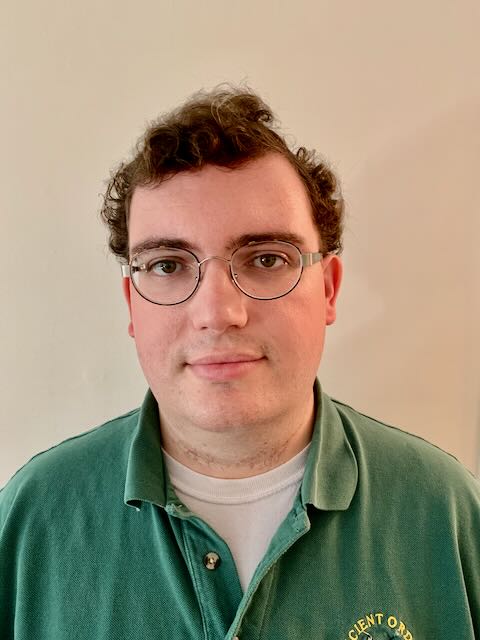
A month from now will be my 30th birthday, a weird thing to write let alone say aloud. My twenties have been a time of exploration of both the world around me and of myself. When I look at my photo on my Binghamton ID card, the best way to describe my appearance would be grumpy yet optimistic. Just as I was a decade ago, a sophomore in college, so now I am today, looking ahead to the next decade with excited anticipation of what it’ll bring, and hopeful that all the work I’ve done in this decade will find its reward in the next.

Me upon arrival in Binghamton, August 2019.

S’Wonderful

Georges Guétary (L) and Gene Kelly (R) singing “S’Wonderful” in 1951’s An American in Paris with Oscar Levant (C) between them.
This week, I wonder about the word wonder.

Have you ever thought about the words you use to show appreciation for something? Or better yet, have you ever considered what the words you use to show excitement mean? You might say a very modern “cool,” or a more traditional “good,” or a Midwestern “neat,” or a more midcentury “groovy.” There could be a “dude” thrown in there if that’s your style, or you could go even further and offer an “awesome” or a “fantastic,” or Mr. Spock’s own measured “fascinating” into the mix. There’s one such exclamation that bears some consideration, one that is “wonderful” to behold.

What does it mean when something is wonderful? What does it mean to be full of wonder? Growing up I knew the word wonder from the Age of Empires series of computer games where a player could win the game by building a wonder and keeping it standing for 2,000 years in the game’s time (10 minutes in our own reckoning). I always wanted to build wonders in those games but was never quite good enough a player as a child to get to that point. 

There are other uses of the word wonder that come to mind like the German Wunderkind, or Wonder-Child, whose abilities outmatch all others. Or there’s the 2016 Sir Elton John album Wonderful Crazy Night that I got to see him promote and perform on the night when I was in the audience at the Graham Norton Show in London. Wonder is a flexible word because of how lofty an idea it evokes. There are wonderous things out there that are worldly, like the blueberry danishes at McLain’s Bakery in Kansas City, and there are wonders unimaginable to behold like the visions of previously unimaginable beauty seen by the James Webb Space Telescope in recent months.

Yes, I was there.

In the last couple years, I’ve come across the word wonder more and more in my work. It is one of the best English translations of the French word singularité which appears frequently in my primary sources, a word which can be translated as both “individuality [and] uniqueness” as well as a “peculiarity [or an] oddity.” Une singularité is a wonderous thing because it defies expectations. The wonders beheld by the European explorers who arrived on the Atlantic shores of these continents five centuries ago opened their eyes to visions they could not previously have imagined. They became “marvelous possessions” as the literary scholar Stephen Greenblatt described in a landmark study of the First Age of Exploration. 

In my own specialization the 3-toed sloth was a wonder to behold for all these very reasons. It was a mammal that did not seem to provide any usefulness to the humans who lived around it. Nor did it seem to contribute to its own ecosystem by hunting or foraging beyond whatever it could slowly grasp in its own favorite tree. What’s more an especially wonderous claim was made by one of the leading sloth writers of the day, a Frenchman named André Thevet (1506–1590) that claimed because there was no eyewitness evidence of the sloth eating or drinking that had been proven by a European then the animal must be one of only a very small number, if not a true singularité in that it could “live only on air.”

Another place where the word wonder appears is in religion. In Exodus 3 where Moses encounters God at the Burning Bush, God says that when the Pharoah of Egypt does not heed God’s command to let the Hebrews go that God “will stretch out [God’s] hand and strike Egypt” “with wonderous deeds.” (Exodus 3:20 NAB) These same wonders were then performed by Moses and his brother Aaron to assert God’s will that their people should be freed (Exodus 11:10), leading to a transformation in the relationship between the Egyptians and the Hebrews from master and slave to former oppressor and the defiant.

To be wonderous is to be unfathomable, to be terrifying in power and incomprehensibility. The other great nearly religious experience where I’ve heard the word wonder used is in those moments of joy when words fail, and song takes over. I’m of course talking about falling in love, and of that great Gershwin song “S’Wonderful,” which I first heard in the 1951 Gene Kelly film An American in Paris sung by the Pittsburgh native song and dance man himself alongside the French cabaret singer and actor Georges Guétary. It’s one of those songs that I know by heart, having played the film’s album enough times and seen it quite a few at that. One of these days I’ll sing it for myself.

National Mall

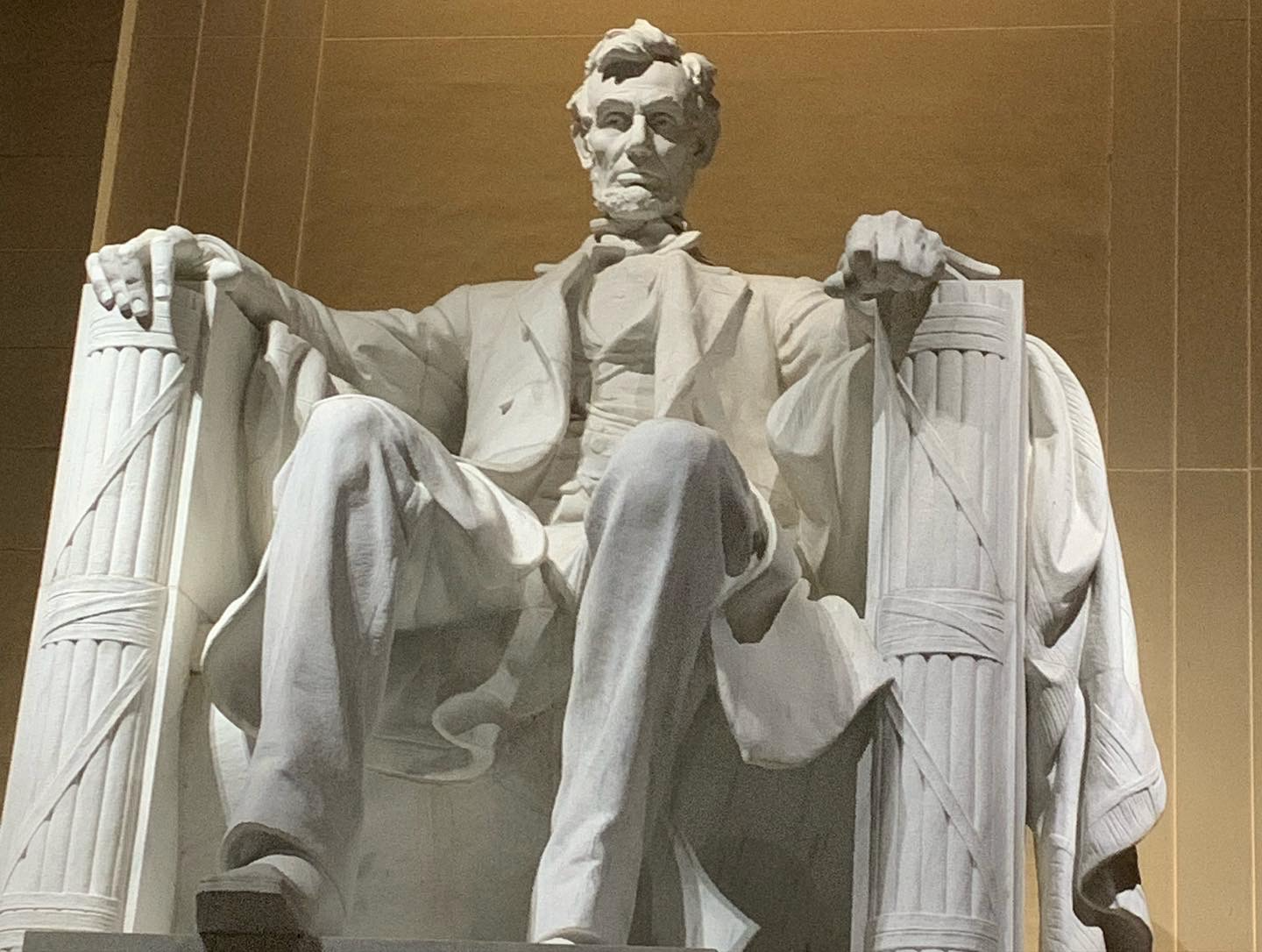
Mr. Lincoln
This week, I want to tell you about a trip I took last weekend to Washington, D.C. Links: The Smithsonian's Futures Exhibit: https://aib.si.edu/futures/ The Planetary Society's Sailing the Light documentary premiere live stream: https://youtu.be/NnKsHlV1NhA

Of all the cities in the east, Washington remains my favorite. It’s place at the emotional heart of our republic, the center of the Union that my lifelong hero President Lincoln fought to preserve, makes me yet another Mr. Smith every time I return to the capital. This week I made such a trip back to some of my favorite museums, some powerful monuments, and some good weather after months of cold and snow in Upstate New York. I decided that I wanted to make my trip a bit of an adventure and chose to drive down from Binghamton rather than fly, an easier option. This led me to an occasionally tense journey down Interstates 81 and 83 through Pennsylvania and Maryland to the BWI Amtrak station where I decided to leave my car for the weekend, figuring it’d be better to not try to drive and park in the District if possible.

Arriving in D.C. on the Acela, currently this country’s fastest passenger train, something the train nerd in me specifically chose to do, I had a similar arrival to Jimmy Stewart’s Mr. Smith at Union Station, its high vaulted ceilings designed by Chicago’s own Daniel Burnham over a century ago. Unlike Smith I didn’t see the capitol dome from the station, instead looking downward trying to find the nearest metro station to get to my hotel.

Seeing the monuments at night is always a special treat. As elegant as they are in the daytime, and some like the Vietnam Memorial are better seen under the Sun, there’s a special artistry in seeing the work of sculptors and architects illuminated with floodlights. That’s how I saw the Washington, Lincoln, and MLK Memorials, lit up solemnly. Mr. Lincoln and Dr. King looked as though they were great titans of antiquity in the glow of their memorials’ lights. 

At this time in our history, Lincoln’s struggle to save the Union and end slavery in this country once and for all seems all the more present. In the week since my last post (episode for those listening) the Russian military has invaded Ukraine. I alluded to those threats last week, but now threats have become a living nightmare for the Ukrainian people and a great storm cloud over the rest of Europe that threatens to engulf all of humanity. How do we embrace the true and righteous words of Mr. Lincoln to do the right thing and feel no evil towards others, even those like President Putin who have so brutally attacked their neighbors? I don’t have an answer to that question yet, nor am I certain that I ever will. But today’s feast, Ash Wednesday for us Catholics, fits well into this narrative as an annual reminder “Remember you are dust, and to dust you shall return.”

I spent a good deal of time on Saturday in several of the Smithsonian museums, returning to the Natural History Museum that I visited in July to double check a label for a sloth for my dissertation, and revisiting an old favorite in the Asian Art Museum. I also visited the American History Museum for the first time in over a decade and enjoyed it quite a bit more. The previous time in 2011 it seemed to be sparse in actual history, yet this time I could notice the nuance in the stories it told in the objects on display in what little space it had available.

The most insightful museum visit though was to the Futures exhibit currently housed in the Arts and Industries Building on the south side of the Mall next to the Smithsonian Castle. This exhibit, which asks visitors to imagine how our future could be a sign of human life improving offered a much needed antidote to the troubles of the world. There were examples of carbon-neutral and renewable building techniques and materials, electric cars, air taxis, and hyperloops. There was a new model of a space suit that was far less bulky than those used by astronauts today and a model of Light Sail 2, a spacecraft sent into orbit by the Planetary Society, a space advocacy organization of which I’m proud to say that I’m a member. There is no one future but many for us to choose from. It’s up to us to determine how we want our future to be written, to be designed, to be imagined.

The National Mall is the emotional heart of this country. It speaks to me of generations of memory, passion, and possibility. On this trip as well though I could imagine myself there in the future, introducing the next generation and later generations to come to that heart, to the ideals and hopes and dreams of this republic. Now at the end of my 20s, my visits to the capital mean something different to me than they did in the last decade. They represent my own future, its infinite possibilities, and how I might be able to do my part, however small it may be, to influence and improve upon our experiences.