Tag Archives: Social Media

On Social Media

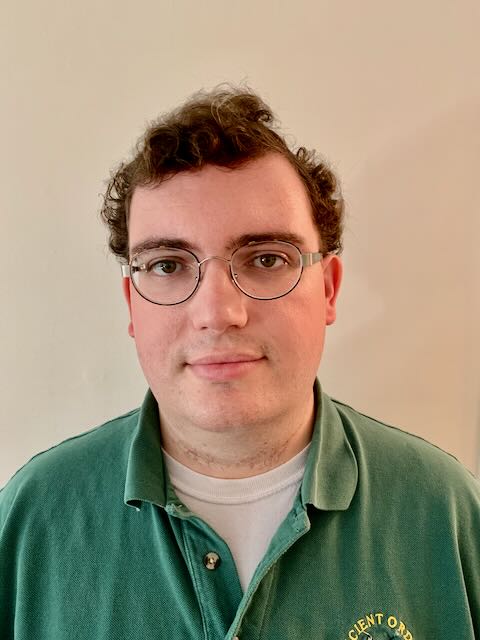
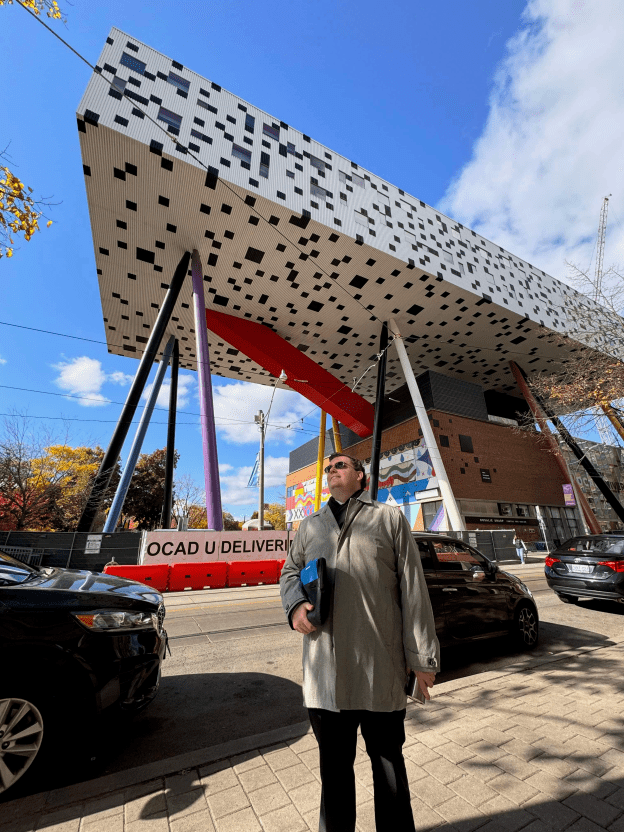
This week, some thoughts on the divestment of our social media attention and why I choose to use different platforms for different sorts of messages. — Click here to support the Wednesday Blog: https://www.patreon.com/sthosdkane Photo of the author by Hariprasad Ashwene, 2024.


This week, some thoughts on the divestment of our social media attention and why I choose to use different platforms for different sorts of messages.


I’ve been an active social media user since May 2008 when I created my Facebook account at the young age of 15 years old. I remember not being sure what to expect from Facebook when I opened my account, yet my Mom opened her own account at the same time as me and we jumped into it together. I see the big turning point in my time on Facebook as 9 October 2016, the night of the 2nd Presidential Debate that year. Leading up to 2016 I’d gotten a reputation among many friends that was voiced by my London flatmates in 2015 that if they wanted to get an idea of what was going on they’d look at my Facebook to see what news stories I’d posted that day. Yet after that second debate, I noticed a significant drop off of people who were interacting with my posts about the news, and in the years since the overall interaction level hasn’t picked up again since even as I’ve connected with more people on that website.

Today I have 10 social media accounts on Facebook, Twitter,[1] Instagram, LinkedIn, Reddit, YouTube, Mastodon, Threads, Snapchat, and BlueSky. I also have 8 professional accounts of a similar vein to social media on Research Gate, Academia.edu, the Knowledge Commons, BE Press, and on the fora hosted by the Linnean Society, History of Science Society, and the American Historical Association. Traditionally, my professional and personal social media activity was shared on the same accounts; I’d post about the Cubs and my research on Twitter, a longtime home of academia online, yet in the past year I’ve begun to rework things a bit. Today, I use BlueSky for my professional social networking within academia. 

Facebook feels like the daily broadsheet of my online presence; it’s my original foray into social media and where I have 17 years of posts up and online. Yet today Instagram is where I am most active socially. There’s been a notable migration of my fellow millennials away from Facebook toward Instagram in the last decade, and whereas readership of my Facebook is restricted to my Facebook friends only I’ve allowed my Instagram profile to remain open to the public. This probably caused me some trouble when I was teaching the middle schoolers in the Fall 2023 semester, and today many of them still regularly view my Instagram stories. What I decided to do was rather than censor myself and limit their access to my Instagram, I would instead take a more curatorial role and be mindful of what I shared on my Instagram stories, making sure it was appropriate and thought-provoking for them. My Snapchat account is the most limited of all my social media accounts: I only accept connection requests from relatives and a very small number of friends there. I still occasionally browse Reddit, especially the Star Trek subreddits, but in the last 6 months I found it was becoming less enjoyable to read and today I only really open that app when I need to do something but am not in the mood to read a book or a magazine. Meanwhile, I’ve only recently begun feeling comfortable posting comments to YouTube videos, I had a handful of very bad experiences doing this in my early years of public comment fora on sites like that of the Kansas City Star and Trip Advisor where I learned quickly that a lot of people take the anonymity of the Internet as permission to be uncivil.[2] As with any place for public comment whether online or in the real world, I try to keep to the principle of only saying something if I feel it’ll contribute to the conversation.

As for the newcomers: like many others I opened a Mastodon account in 2022, and like many others I quickly found Mastodon to be unnecessarily confusing and haven’t opened the app in at least a year. Threads holds some potential in my mind, though like Mastodon I barely use it. I opened my BlueSky account in November 2024 when I was at the History of Science Society conference in Mérida described in Season 4 of the Wednesday Blog, and began connecting with other academics. I decided from Day 1 to cultivate my Blue Sky account as a purely professional account without any hobbies or personal anecdotes. This has limited how much I use the app, though I do use it on occasion.

On the topic of the Wednesday Blog I have an automatic distribution set up with Facebook, LinkedIn, and Threads, and I manually post each week’s blog post on Instagram and Twitter. Because this isn’t necessarily an academic venture I don’t promote this publication on Blue Sky. There’s also a Wednesday Blog Patreon, which you can join for $5 per month!

One of the big conversations of today is whether to close our social media accounts as the corporations who own these sites are increasingly accepting the problems they cause in our society, in the lived world, yet have dropped the mask of caring and continue their play for greater profits bare-faced and defiant in exposing themselves. In the aftermath of the 2024 Presidential Election I saw an immediate flood of false information appear on my Twitter account, which I wouldn’t have noticed if it didn’t appear among the silent notifications that I get daily over that app from the Kansas City office of the National Weather Service, and the handful of academics and other people I follow who are still on Twitter. With the recent announcement by Meta––the owners of Facebook, Instagram, and Threads––that they would cease their work with third-party fact checkers so as not to upset the new President caused a flood of comments about people dropping their profiles on Meta’s social media sites in protest. I haven’t seen as much false information on there yet, thought I expect it will appear.

I for one have considered shutting down most of my social media profiles off and on since 2016, because I understand and generally agree with all my friends and relatives who’ve done just that. Yet while I see a tremendous utility in these social media sites in allowing me to stay in touch with friends and relatives near and far, I see a far better reason to keep these accounts active: I will not be intimidated into silence by their shifting interest in the public good. I often hear the response to the suggestion that we can still have a reasoned debate between people who disagree being that it’s just not possible with how polarized we are today. That polarization is in large part thanks to social media for pushing forward the loudest and most outrageous voices of today just as the yellow journalists of a century ago did the same.

I had many a Facebook argument in my first decade on the platform, and in some cases, they were the primary way that I ended up interacting with people who I knew from school, college, or beyond on the site. I established a simple rule for comments on my profile: I will only delete a comment, “unfriend” someone, or block another account if they intentionally insult myself or someone else who they are communicating with in the comments on my profile. To date I’ve only blocked two other users. I believe we ought to respect differences of opinion when they are based in fact & reason and that as much as social media has been a tool of disinformation so too we can use it to inform and counter the outright lies being spread on these sites.

Social media truly shrank the globe for me and myriad others. Before I began using Facebook in 2008 while I would watch news broadcasts from beyond the U.S., particularly from the BBC on PBS and BBC America, I still was mostly reliant on handwritten and typed letters being sent by air mail to communicate with anyone beyond this country. Now, I keep in regular communication with friends & relatives on every permanently inhabited continent. I’ve been fortunate to stay in touch with some dear friends of mine who I haven’t seen in nearly a decade or more because of how our lives have led us apart; that contact has been sustained and fulfilled through social media.

Let me conclude with a note of data security. I would rather keep all of my social media accounts active because the risk present in someone else or a bot recreating an account in my name is great enough that I don’t want to risk it. I’ve cultivated this garden, and now I don’t want to see it wither. I’d rather use the tools owned by these corporations that actively support forces, ideas, and people who I disagree with in order to circumvent their power over me. I know that their websites aren’t necessary for me to live, even if they’ve grown to become such an ordinary part of my daily life. Yet I continue to use them as an act of self-expression standing for the ideals that I believe in: curiosity, honesty, hope, and optimism.


[1] I still won’t call it X.

[2] I went through a few different words here first.

Doctoral Study

Photo by Ricardo Esquivel on Pexels.com

I was 27 when I arrived here in Binghamton at the start of August 2019. I made a big move out here, with immense help from my parents, and set up shop in a good-sized one bedroom apartment that’s remained my sanctuary in this part of the country ever since. I’d wanted to continue my education up to the PhD since my high school days, and it’s a plan I’ve stuck with through thick and thin. After a false start in my first attempt to apply to PhD programs in 2016, which led to two wonderful years working on a second master’s in History at the University of Missouri-Kansas City (UMKC), I applied again, now far better positioned for a PhD program and ended up here through the good graces and friendly insight of several people to whom I’m quite grateful.

Arriving in Binghamton though I found the place very cold and quite lonely. In recent months I’ve begun to think more and more about getting rid of some of my social media accounts only to then remember that Facebook, Instagram, and Twitter were some of my greatest lines of communication with friends and family back home in Kansas City and elsewhere around the globe throughout these last three years. That first semester was tough, very tough, and while the second semester seemed to get off to a good start it was marked by the sudden arrival of the Coronavirus Pandemic and the end of my expectations for these years in Binghamton. 

I spent about half of 2020 and 2021 at home in Kansas City, surrounded by family and finding more and more things to love about my adopted hometown with each passing day. When I was in Binghamton it was to work, in Fall 2020 to complete my coursework and in Spring 2021 to prepare for my Comprehensive Exam and Dissertation Prospectus defense. I still did a good deal of the prospectus work at home rather than here, though the memories of those snowy early months of 2021 reading for the comps here at this desk where I am now always come to mind when I’m in this room.

As the Pandemic began to lessen in Fall 2021 and into the start of this year, I found myself in Binghamton at a more regular pace. There was something nice about that, sure I wanted to be home with my family, but I also felt like I was getting a part of the college experience of going away for a few years to study that was reminiscent of the year I spent working on my first MA at the University of Westminster in London. I started to venture further afield in the Northeast again, traveling to Boston, New York, Philadelphia, Baltimore, and Washington again. When I first decided to come here one of the things, I decided was I’d take the opportunity of being in the Northeast to see as much of this region as possible.

2022 saw another transition, I wasn’t in one of the newer cohorts in my department anymore. Now, in Fall 2022 I’m one of the senior graduate students. It’s a weird thing to consider, seeing as it felt like 2020 and 2021 evaded the usual social life of the history graduate students here, thanks to the ongoing pandemic. I also began to look more seriously at my future, applying for jobs in cities across this country, and even looking again at some professorships, something I doubted for a while would be an option for me. If there’s anything about life that I’ve learned over the past three years spent here, it’s that you always need to have things beyond your work to look forward to. Whether that be a long walk in the woods on the weekends or a day trip to somewhere nearby, or even the latest episode of your favorite show in the evenings. Doing this job without having a life beyond it is draining. 

For me the best times here in Binghamton were in Fall 2021 and Spring 2022 when I truly began to feel like I had a place here that I’d made my own. I was confident in my work, happy with how my TA duties were going, and really enjoying my free time as I began to spend my Friday evenings up at the Kopernik Observatory and Sundays at the Newman House, the Catholic chapel just off campus. I was constantly reading for fun as well, something I’d lost in 2020, even falling behind with the monthly issues of my favorite magazines National Geographic and Smithsonian. There were many weeknights I’d spend out having dinner alone reading natural history, science fiction, anthropology, and astronomy books. 

It’s interesting looking back on myself from six years ago when I was in London, the months that summer when I decided I wanted to get back into history after a year studying political science. My motivations were to earn a job working at one of the great museums I’d spent countless hours in during that year in the British capital. While I studied for my MA in International Relations and Democratic Politics, I was still spending my free time looking at Greek and Roman statuary and wandering the halls of Hampton Court or watching the hours of history documentaries on BBC 4 in the evenings. And now that I’m back in History as much as I do appreciate and love what I do, I find my free time taken up by science documentaries and books.

It’s important if you do want to get your PhD in the humanities and social sciences to figure out why it is you want to do this before you start. Have a plan in mind, have a big research question in mind, and focus your attentions onto that question. My own story has many twists and turns from an interest in my early 20s in democratic politics to a brief dalliance with late republican Roman history before settling into the world of English Catholics during the Reformation. I ended up where I am today because of another series of events that led me to moving from the English Reformation to the French Reformation, and from studying education to natural history. So, here I am, a historian of the development of the natural history of Brazil between 1550 and 1590, specifically focusing on three-toed sloths. In a way there are echoes of all the work I’ve done to date in what I’m doing now, thus as particular as this topic is it makes sense in the course of my life as a scholar.

A month from now will be my 30th birthday, a weird thing to write let alone say aloud. My twenties have been a time of exploration of both the world around me and of myself. When I look at my photo on my Binghamton ID card, the best way to describe my appearance would be grumpy yet optimistic. Just as I was a decade ago, a sophomore in college, so now I am today, looking ahead to the next decade with excited anticipation of what it’ll bring, and hopeful that all the work I’ve done in this decade will find its reward in the next.

Me upon arrival in Binghamton, August 2019.

The Syntax of Internet Culture

Photo by fauxels on Pexels.com

The Syntax of Internet Culture Wednesday Blog by Seán Thomas Kane

This week, some things I've noticed about how people communicate online.

I’ve had access to computers for as long as I can remember. My parents work in the tech world, so naturally I was probably one of the first people in my class to have an email address. I still remember that first email I sent, it was to my Aunt Jennie in Kansas City. Even then at the spry young age of 3 or 4 I was already growing into an expected typical Midwesterner: I asked her about the weather where she was. Over the years my access to the internet have only increased to the point where today it is ubiquitous. I’m rarely, if ever, away from a data signal, and any simple question I have can be easily answered by a quick question to Siri or a Google search.

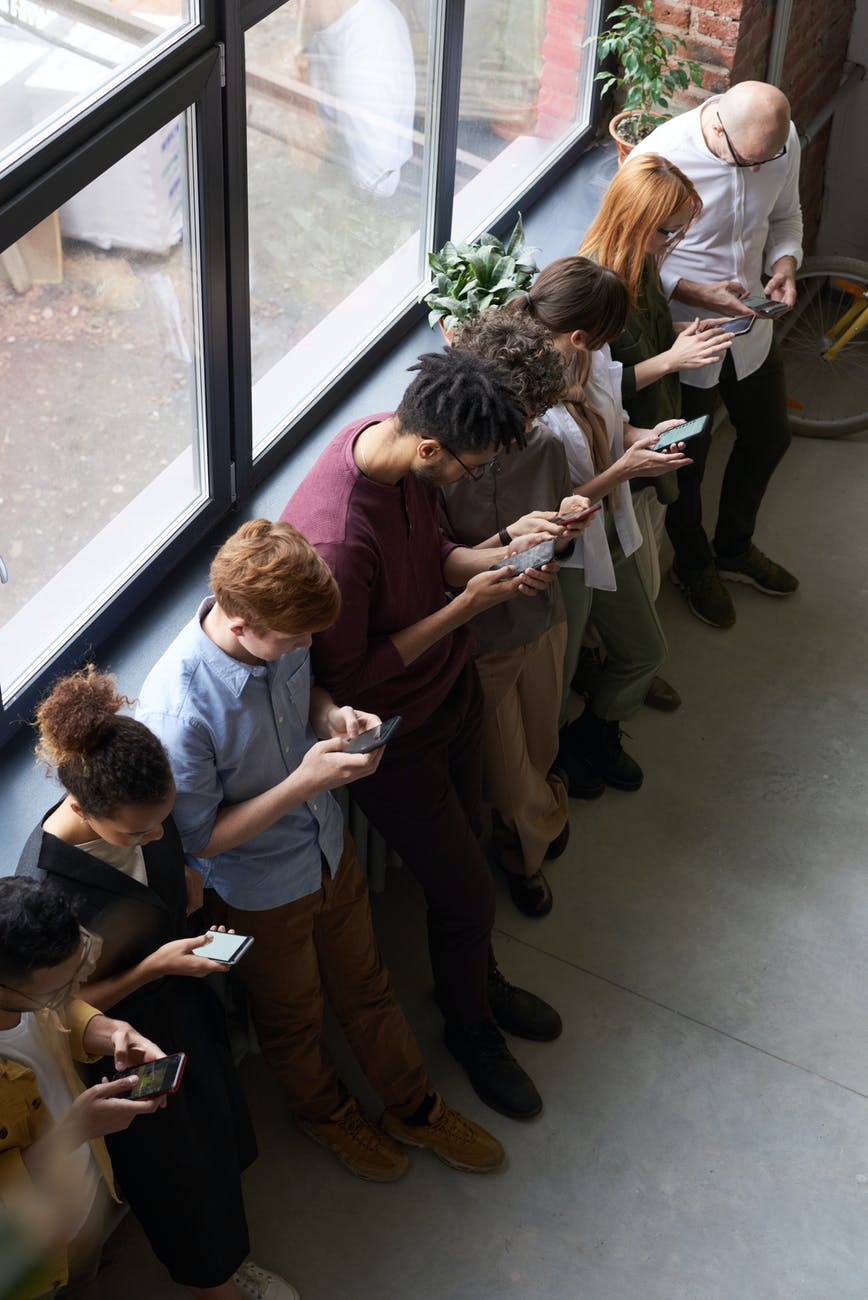
The amount of technology in our lives today is sometimes scary. The fact that it surrounds us at all times, in all places makes us all the more dependent on it. What’s more, it’s changed the way we talk, the way we solve problems, and quite possibly the way we think too. In the last couple years, the majority of my time online has shifted from being spent reading long-form articles on the New York Times, the BBC, and such to watching videos, both long and short, on platforms like YouTube and Instagram. In the early years of YouTube, content on that platform tended to be much more diffuse with different creators crafting different sorts of videos in their own style, yet as that frontier continues to be settled YouTube videos have become more standardized. There’s the catchy title that’s supposed to get the algorithm to convince you to watch the video. There’s the introduction, the body, and the conclusion, demonstrating how so much YouTube content is essentially an extension of the essay. 

And of course, there’s the sponsored content thrown in there for good measure. I admire quite a few of these YouTubers and have a handful that I’ll watch on a regular basis. I even tried publishing short history videos on YouTube a few years ago, they’re still out there, but I found the work needed to get those videos out simply was too much for my production abilities and schedule. This podcast has ended up being a happy medium for me, something that I can write, record, edit, and release in a couple hours on a weekday afternoon. Of any transformational aspect of our current time, YouTube and podcasts and the democratization of knowledge that they embody have to be some of the most critical aspects.

Then there are the shorter videos, pure mind-numbing entertainment. I tend to have a soft spot for cat and dog videos on Instagram, many of which were originally made for Tik Tok, one platform I continue to avoid. There seem to be a few usual tropes and themes that run through all of these, identical music, identical storylines, say a cat or a dog doing something silly. Then there are the videos that try to express situational emotions, that take the subtext of life and turn it into a loud and proud declaration of what the person on camera is thinking or more often feeling. I feel that these sorts of videos are an outgrowth of memes that I’ve seen on Facebook in particular for over a decade now. Memes that often include the horrendously poorly worded phrase “be like…” as one example. If anything marks out the syntax, the sentence structure, of English internet culture most clearly it’s the disregard for grammar and the fluidity of English. On the one hand it has a tendency to annoy me, yet on the other hand I recognize that this is likely the development of new forms of English that will be how this language is expressed and used as our current century continues. After all, my own English is the product of both generations of immigrant interpretations of this language and official dictates of varying degrees of linguistic validity.

The one great problem with internet culture is how much content is processed and released at any given moment. After the tenth video using the same song to varying degrees of effectiveness, I get even more annoyed than I already was at the whole conversation underway. This Sunday and Monday for example I only lasted half an hour scrolling through Twitter and Instagram before I was annoyed at all the memes trying to interpret excessively diffuse meanings from Will Smith’s altercation with Chris Rock at the Oscars. That’s the beauty of more traditional forms of media: they limit how many voices are speaking at once. As anyone who has sat through endless Zoom calls over the last two years will know the signal connecting everyone attending can only pick up 1 voice at a time, and as much as we want to believe we can multitask that’s simply not the case.

I’ve thought about dropping some of my social media accounts. I’ve been on Facebook, Twitter, and Reddit for a decade now, and on Instagram for almost that long. I recognize the ability of social media to distract from work and more importantly from living my own life rather than watching other people and their pets do silly things online. I still see some utility in social media though, it’s the primary way that I promote this blog and podcast, I still have thoughtful conversations every so often over news articles or essays that I’ll post online with other intelligent people. There have even been opportunities I’ve taken because I saw an announcement or some other listing online. But compared to the overwhelming cacophony of the internet, and to the things that really make me happy, I’ve come to the conclusion that I’d be happy if I did drop some of my social media accounts.

In short, our ability to communicate without boundaries has expanded far faster than any guidelines for how to do so safely and civilly have been able to be set in place. There is so much potential in the internet, we just have to recognize that like with everything else we need to keep that space tidy, and that we need to find a balance so we can live full and fruitful lives while enjoying the benefits of this greatest creation of our global world.

Going “Viral”

Late last week moving into Labor Day weekend I realized later than most at SUNY Binghamton that we not only had the long weekend off but also Tuesday and Wednesday for Rosh Hashanah, the Jewish New Year. I guess I didn’t expect we’d be in class for two weeks and then suddenly out for nearly an entire week. In any case, I knew I wanted to make the most out of the extended break, so I decided I was going to go on at least a couple day trips around the Southern Tier of New York and the Finger Lakes just to the north of here.

On Saturday then, feeling frustrated by staying too long in my apartment on such a beautiful day I got in the car and decided to drive up towards Ithaca following what I knew of the local geography and state highway system without plugging directions into my car’s navigation system. I eventually made it to the shores of Cayuga Lake, and proceeded to drive north up the western shore of the lake thinking I’d try reaching the top and take the interstates back down to Binghamton.

After Saturday, I’d hoped I could get out again on Monday or Tuesday and take another multi-hour drive, give myself some time to see the beautiful scenery of this part of the country, and enjoy a few hours of a good podcast or audiobook. I ended up staying in Binghamton on Sunday and Monday, wanting to avoid most of the holiday weekend crowds, with the goal of waking up on Tuesday and getting on the road early with no destination in particular in mind.

Still, after spending the morning in my apartment doing some much needed cleaning I finally got on the road around 13:00 EDT. This time I did set a route into the navigation system to a town I’d wanted to visit since the first time I drove by the signs on I-86 pointing to it when I moved here in August 2019: Watkins Glen. The drive was scenic and uneventful, lots of small towns and country roads. I listened to Stephen Fry’s book Heroes, his retelling of the Labors of Heracles took up the entire afternoon’s drive.

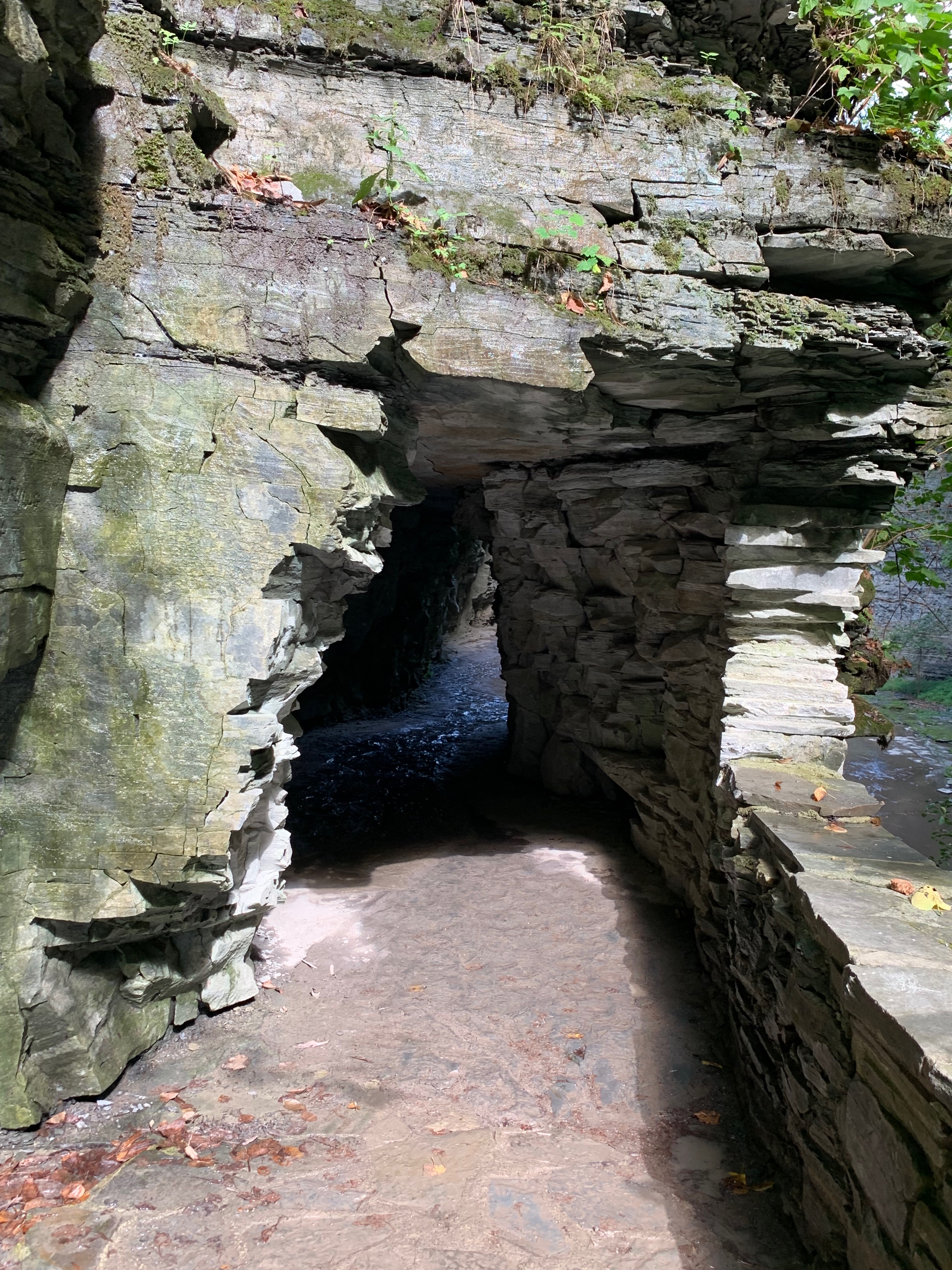
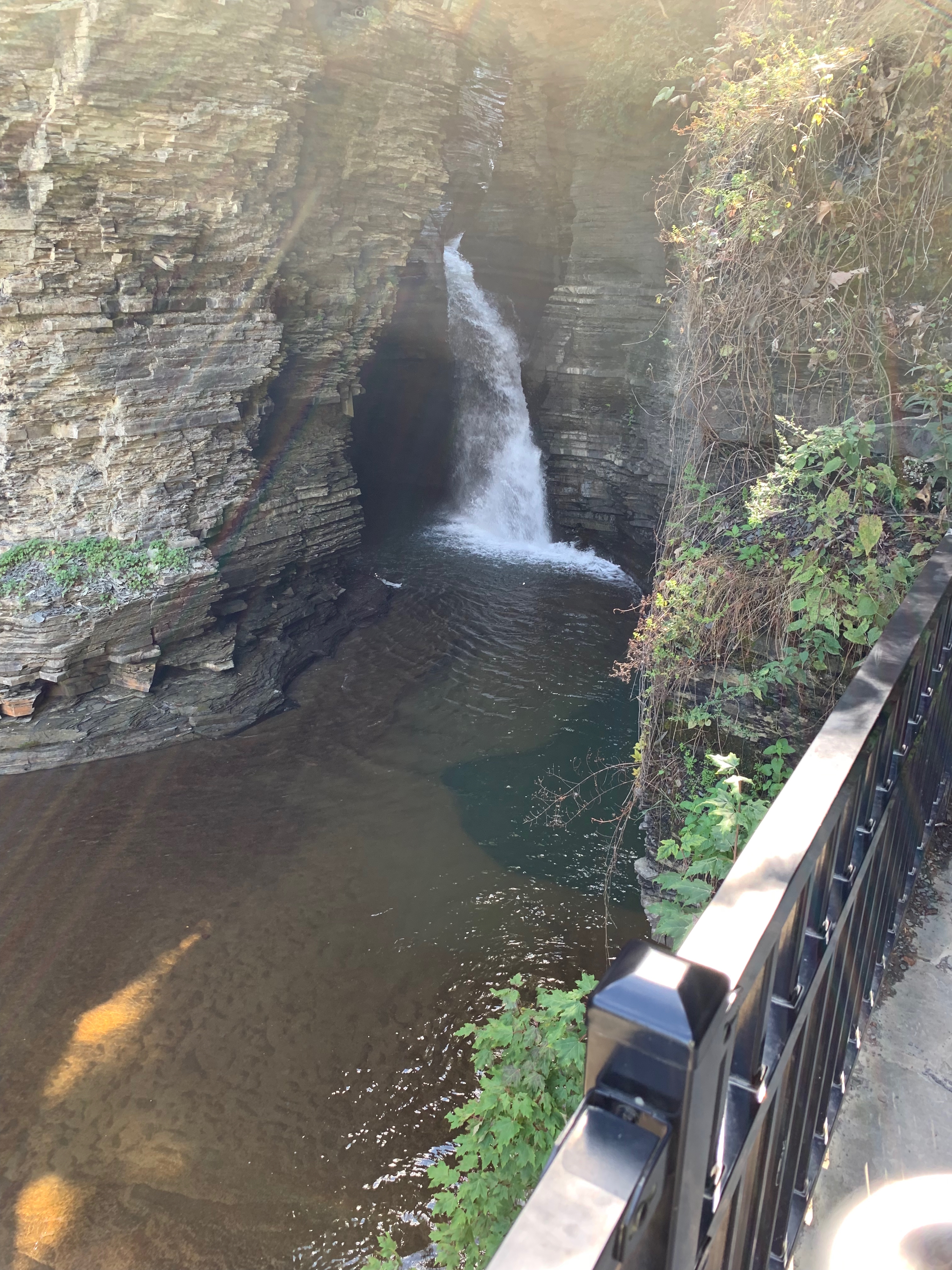
When I arrived in Watkins Glen I quickly found a parking spot across the street from Watkins Glen State Park, my destination for the day, and made my way into the park’s main gate. Watkins Glen is home to one of a number of spectacular waterfalls that mark the furthest reach of the glaciers that dug the Finger Lakes into the New York landscape during the last Ice Age, only unlike Taughannock Falls outside of Ithaca the gorge that lies at the heart of Watkins Glen State Park is far narrower and honestly an impressive feat of engineering by the people who made it a tourist attraction at the turn of the last century.

I decided to take the Gorge Trail and see where it led. Running at 1.5 mi (2.4 km) the Gorge Trail is the main attraction of the park. Its high narrow walls make the place seem otherworldly, like something that might be fitting among the tales of the Greek heroes retold in Stephen Fry’s books. It was awe-inspiring and a little frightening at the same time. The trail is made up of an elongated stairway rising up the gorge to its conclusion at a set of 150 stone steps leading to the Upper Entrance to the park called Jacob’s Ladder. I hiked the entire route from the main entrance up to the top of Jacob’s Ladder. Along the way I was dazzled by the amazing power of all the ice and water that carved out that gorge over millions of years.

This was my favorite part of the Gorge Trail.

In the first half of the hike I took a fair number of pictures and videos that I figured I’d post onto my Instagram and Facebook after I’d left the park. I didn’t stop to look at what I’d captured, as much as I want to take pictures and videos of these places I visit, more than anything else I want to experience those places in the moment that I’m there. Selfies in particular are rare among my pictures; I care less about showing that I’m somewhere than showing the people who happen to see my pictures what I got to see.

After hiking back down to the main entrance on the far easier 1.1 mi (1.8 km) long North Rim Trail with a friendly couple from the Binghamton area I got back in the car and drove back to Binghamton, figuring I’d look at those pictures once I was back in my apartment and could really focus on them alone. 90 minutes later once I was back at my desk I looked through them, picked out 4 videos and a handful of photos and initially posted them to Instagram. One video that I chose to be the first of the lot, the cover picture as I see it, ended up getting posted to Instagram as a reel. I think at the time I intended it to go up as a longer video file that I could share onto my Instagram story and it’d play automatically instead of just showing a preview frame like videos uploaded as regular Instagram posts tend to do.

I posted everything and turned to Facebook, making a fairly similar update for my family and friends who tend to follow me on that platform. Yet as the videos were uploading to Facebook I kept noticing my phone lighting up with updates from Instagram at a dizzying pace. In the first 3 minutes that reel I’d posted had gotten 40 “likes.” I texted one of my best friends (and a frequent reader of this site) to tell her what was happening, and in the process of typing and sending the message another 45 “likes” appeared. In the next minute the total number rose from 85 to 280.

As I went into the notification settings in the Instagram app to see if I could reset things so my phone battery wouldn’t be drained too quickly by so many updates so quickly the number of “likes” rose over 300. By the time I finally went to bed around 23:00 the total was at 350. At the time of writing this post that number stands at 368.

Normally a post of mine might top out at around 40 “likes” that are often from the same people. Occasionally the things I post on Facebook will top out around 100 similar reactions, as Facebook now has more than just the like button, but nothing in my experience with social media can compare with the reaction to that Instagram reel of a pan shot across the gorge at a particular placid spot. I know for the people who are actively trying to get lots of reactions and “likes” to their social media posts that the 368 that mine received might seem insignificant, but to me it’s something to write home about.

I don’t particularly expect people to view the things I post on social media. I think it’s interesting that this particular reel has a lower than average reaction from my usual viewers. As far as I’m concerned even though this Instagram reel went as close to viral as anything I’ve ever posted on the internet, I see it as a happy accident, something that speaks more so to what the video showed than anything about me personally. Sure some of the people who “liked” that reel might subscribe to my Instagram account and follow future things I post, but either way it’s not something that’s going to change how I use that platform or social media in general. If anything the speed at which the “like” count on that reel grew seemed funny to me in the moment.

In any case if I were to try to use Instagram to promote the really important things that I make, my writing, I’d need at least 10,000 followers to activate the feature that’d allow me to add links to outside webpages to my Instagram stories. It’s one reason why I think this blog has such a steadily low readership: the place where the majority of my audience interacts with me is also a place where I can’t promote this blog or anything else I write lest I direct my audience to the “link in bio.”

Social media can serve a good purpose in my life: it’s a way that a small fish like me can make myself known for the things I do. It can have a lot of downsides too, the amount of spam subscriptions I see on my Instagram account can be gobsmacking. I’ve also got some pretty sour memories of experiences with Facebook from my high school years as well that lurk in the background, but now in my late 20s as much as I may notice what the trolls might have to say, for now I’ve been lucky not to have been harassed enough to spoil the utility of the platform for me.