This week, an odd sort of sorrow that explains my reading habits.
On Sunday evening, I surprised myself by finishing reading Sebastian Smee’s new book Paris in Ruins: Love, War, and the Birth of Impressionism. I read a review of it in the New York Times several months ago in conjunction with the exhibition celebrating the 150th anniversary of the first Impressionist exposition which I saw at the Musée d’Orsay this summer and is now showing at the National Gallery of Art in Washington. I’ve long loved the works of Claude Monet, especially his choice and use of color, yet of all the impressionists in this exhibit the one who stood out to me the most was Berthe Morisot (1841–1895), one of the few women included in the 1874 exposition. This book tells the story of her life during the Second Empire, the Franco-Prussian War, the Paris Commune, and in the first three decades of the Third Republic at a time when France was a prosperous great power yet still politically unstable, something familiar to our own day. I’d first heard of the Commune as an underlying current of the macabre in Gaston Leroux’s 1910 novel The Phantom of the Opera, though this is the first time I’ve properly read about the Commune or its collapse during the Semaine sanglante, or Bloody Week of 21-28 May 1871.
“Berthe Morisot au bouquet des violets” by Édouard Manet (1872), Musée d’Orsay
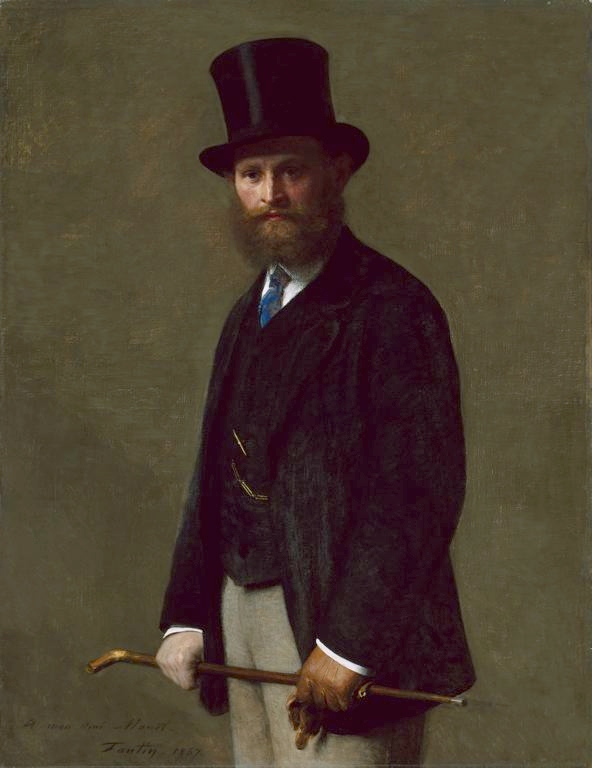
“Pourtrait d’Édouard Manet,” by Henri Fantin-Latour (1867), Art Institute of Chicago
Over the months I read and listened to this book I felt that I got to know Morisot, her friend Édouard Manet (1832–1883), her sister Edma Morisot (1839–1921), her husband Eugène Manet (1833–1892), and her daughter Julie Manet (1878–1966). Early while reading this I went, as I often do, to the Internet to look at the paintings described and learn more about these people I was meeting on every page. It struck me that many of the children of these Impressionists lived well into the twentieth century, Julie died in 1966. I’ve been drawn to the Impressionists for how tangible their art is, as I’ve written here before in my early childhood in the 1990s the decades a century before, notably the Columbian Exposition of 1893, felt recent and quite tangible to me. That sense remains even as we now move toward the end of this first quarter of the twenty-first century, and so Morisot, Manet, and Monet feel more contemporary to me than perhaps they aught to. That their art began to be acquired for American museum collections in the first decades of the twentieth century makes them feel to me more contemporaneous with the 1893 World’s Fair, the Theodore Roosevelt Administration (1901–1909), or the earliest stirrings of silent film before World War I than with the American Civil War which erupted when these artists were first exhibiting their works. That their children lived into my grandparents’ and parents’ lives leaves people like Morisot who died nearly 130 years ago feeling like they were just here yesterday.
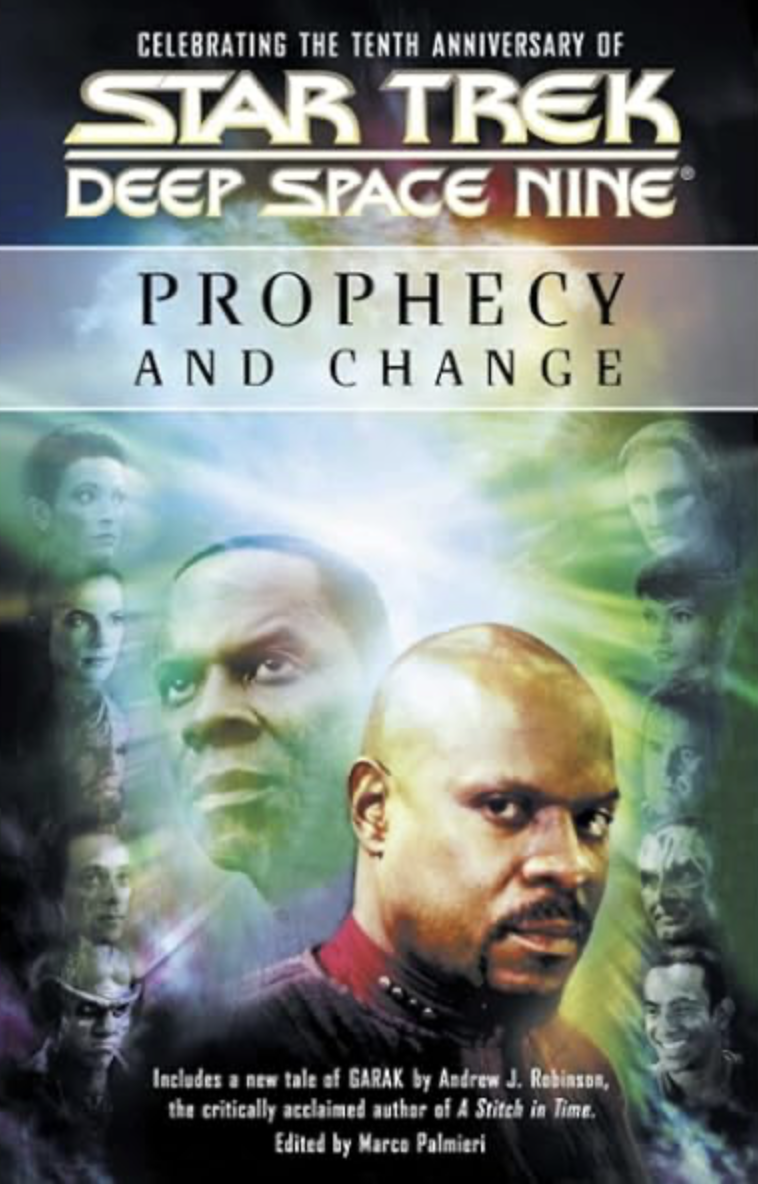
I think the setting of Paris also helps with this. The French capital has changed in some ways, for one the Métro was built after Morisot died, though after I finished reading Smee’s book on Sunday night it struck me looking at some of the addresses mentioned in the latter chapters of the book that she would have seen the Eiffel Tower rise over the Champs-du-Mars from her various homes just across the Seine in Passy. Again, these are all symbols of the Belle-Époque that marked the transition from the nineteenth to the twentieth centuries, and yet these are people whose lives began during the July Monarchy of Louis Philippe in the 1830s and 1840s, a decade which also saw the death of the Marquis de Lafayette (1757–1834) and some of the last great figures of the American and French Revolutions of the 1770s and 1780s. Do you see how time can seem to pinch when considering it on a personal level? Paris is a city that has changed in some ways yet in others it would still be recognizable to someone from the 1880s or 1890s. One of my favorite short stories that I’ve ever read is Andrew Robinson’s contribution to the Star Trek: Deep Space Nine anthology series Prophecy and Change, a story titled “The Calling” in which Robinson’s character from the TV show, Elim Garak, is sent by his planet’s government to seek assistance from the United Federation of Planets whose capital in the late twenty-fourth century is Paris, one of the great cities of Earth. Garak remarks that unlike most other Earth cities Paris feels ancient, and that the locals like to keep their particular sense of Frenchness in spite of all the interplanetary mingling going on at this point over 350 years from now.
Again, despite all the advances in technology from Robinson’s description of Paris in the late 2400s it sounds like it would still be recognizable to someone like me who knows it from the 2010s and 2020s or perhaps even to Morisot and Manet who knew it in the 1860s through the 1890s. That’s a bold claim that may be without much merit, but I’ll make it here because it speaks to something intensely Parisian, a city more modern in many respects than many of our great cities here in the United States with a constantly evolving transportation network, good healthcare, and some of the best educational institutions on the planet, yet still true to itself in its age. When I finished Robinson’s story, I was so moved that I considered trying to contact the author to tell him as much, though I haven’t built up the courage to do so yet. That’s something I’ve begun to do with fellow historians, at these conferences over the last three weeks I would often tell people whose books I’d read how much I enjoyed them. It’s something I hope people will say to me when I publish my own works later this decade.
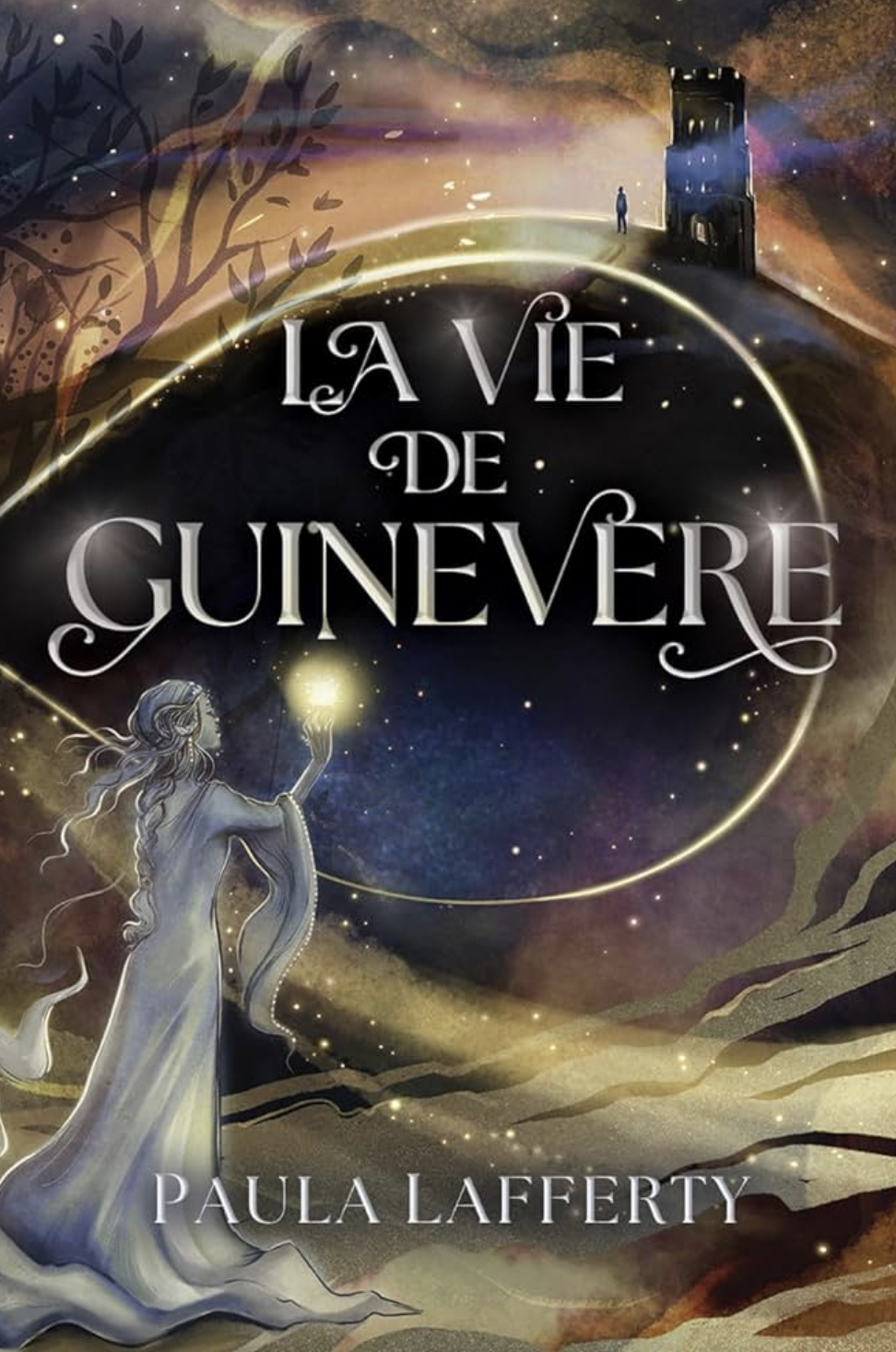
If any book that I’ve recently read speaks to this sense of timelessness yet also is populated by such profoundly vibrant characters it’s Paula Lafferty’s new fantasy novel La Vie de Guinevere in which a woman named Vera living in early twenty-first century Glastonbury in the southwest of England discovers she’s a time-traveling Queen Guinevere and is brought back to the seventh century to fulfill her obligations as queen. I’ve known Paula for over a decade now, she’s one of the pastors of my Mom’s church, and I count her among my good friends, so I’ve been excited to hear progress of this book over the last few years when we’ve met for meals and crossed paths. I read this book during my trip to Toronto over Halloween weekend and finished it on the 6th of November in Houston and again this is one where I quickly began to feel familiar with the characters and where I looked forward to visiting with them again. Paula’s way of breathing life into them made them feel contemporary in a way that most stories set in the Early Middle Ages don’t. Glastonbury is a great setting for good portions of this story; it’s another one of these timeless places, one that I’ve yet to visit, yet it speaks to an element of maturity in the English countryside that seems foreign to our young society here in the American Midwest.
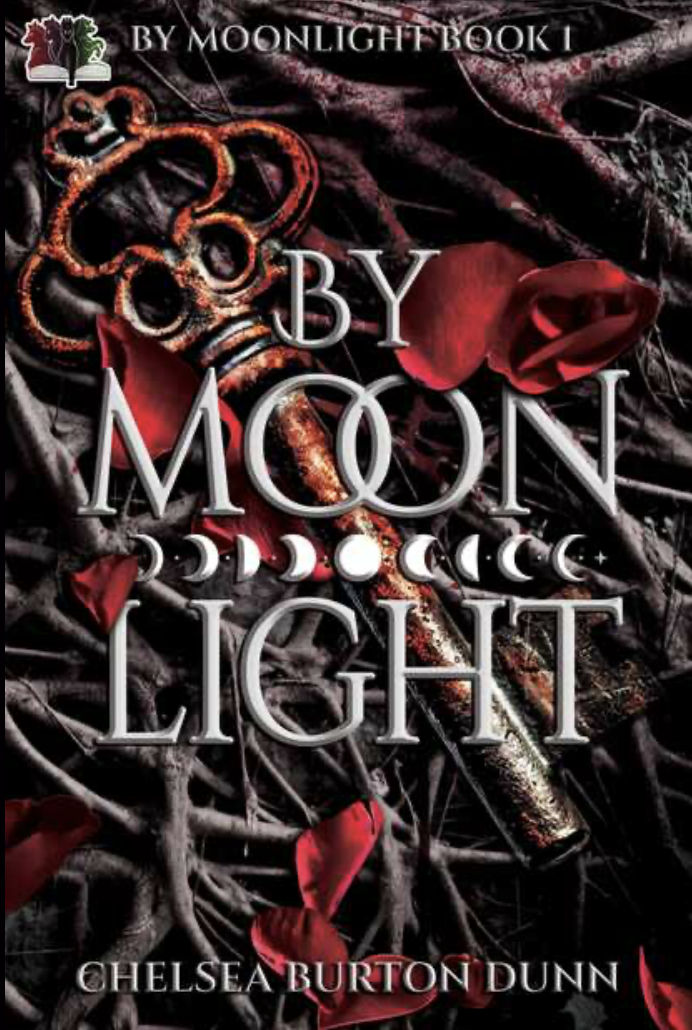
And yet, there is a degree of that agedness that you can find in my cousin Chelsea Burton Dunn’s series of books By Moonlight telling the story of a Kansas City woman named Vee. These books are set here in town, many of the main characters live in my neighborhood, yet things are not quite as they seem for most of the Brooksiders in question are werewolves. I read the first book over the course of one evening, during which time I met Vee and Shane, the werewolf pack leader, and his family. Knowing Chelsea I was able to recognize the story, its setting, and characters quickly and began to feel a sense of comfort around them. These were just more people I was meeting, albeit on paper only. Now when I drive or walk down the street where the werewolves are said to live in these books, I find my mind thinking of them. In this instance, having the story take place so close to home makes it easier for me to find joy in reading it. These are the furthest sorts of stories from my usual fare, especially from the history, anthropology, and zoology works I read for my studies, yet there’s still a place for them and their characters to flourish in the imagination.
I have a tendency of getting close to finishing a book and then setting it aside for a while and leaving it unfinished. I think this goes back to my sense as an only child that the characters in the books I read often feel far more familiar by the time I’m finished with the story, and so I don’t want to see them leave my regular daily life where I spend a good hour or so each day visiting with them and learning more about their lives and experiences. It’s silly in some cases, yet it’s truly a factor in my reading. I remember doing this reading Judith Herrin’s Byzantium in 2016 and 2017, building up a several month gap near the end of the book in part because I didn’t want the story to end. That may also be why my greatest attempt at fiction, my stories about Erasmus Plumwood, remain unfinished. That and that I’ve been translating Thevet’s Singularitez and writing my dissertation.
There is a special joy in reading that is lost in other media. The stories are projected from the page into our imaginations whence they come to life for us to see in our mind’s eye. I love watching television shows and seeing films, in fact I’m eager to go see Robert Zemeckis’s new film Here and Ridley Scott’s Gladiator II, yet reading is much more personal and intimate. It’s a story acted out on the perfect sized stage, a stage that can project just to the individual or to a group if the book is read aloud. At the moment both of the Morisot paintings at the Nelson-Atkins are off view, one is in Nice for a Morisot retrospective exhibit, yet I still chose to wander the Impressionist galleries of the museum this Monday to see the light and color and life which Morisot and her friends envisioned in the last decades of the nineteenth century and the first decades of the twentieth century. Their lives continue to recede into the past, like Eurydice’s eternal fall from Orpheus’s outstretched arms into the dark of Hades, yet for me there’s still a string tethering the Impressionists and me and all the generations in between. That’s a string I will leave bound as long as possible even as time pulls us further apart. It’s a string I will rejuvenate by going to see their paintings and reading more about their lives even as the distance between us continues to grow.
This week on the Wednesday Blog, how we present ourselves to the world around us and in the mirror to our own reflections.
—
Click here to support the Wednesday Blog: https://www.patreon.com/sthosdkane
This Monday saw the twenty-second anniversary of the attacks on September 11th, 2001. I decided I’d talk about that day and the days and years that followed with my 8th grade U.S. History students as it most closely dealt with their own curriculum more than with anyone else who I’m teaching right now. I told them that to me 9/11 was the true beginning of the 21st century, rather than Millennium Night the year before. That’s because so much of this century has been defined for me by its violence, its chaos, and its terror. This compares to what I remember of the late 1990s as a time of peace, optimism, and wonder from my own childish eyes at the time. I saw the world as a little boy, not noticing most of the troubles or worries of the world, just gazing in awe and wonder at what was before me in the moment.
My early childhood wasn’t a time of blissful ignorance akin to the early moments in the story of Siddhartha Gautama, later known as the Buddha, who knew no suffering in his princely palace until his curiosity led him out onto the street and into the real world for the first time. I knew bad things happened, and that there were people misled into evil. I had seen the effects of death and had an idea of what it was, but none of these essences of our reality set themselves into that visceral sensation of knowing until after that sunny Tuesday morning when the world changed all around me, and I and my classmates in our third grade room on the upper floor of St. Patrick’s School in Kansas City, Kansas were unaware of it all, the great tempest brewing around us on that cloudless day.
Over the last few weeks on my drives to and from my new day job at another parochial school on the Kansas side of the border I’ve been listening to a new audiobook of Andrew Robinson’s A Stitch in Time, a novel following the life of Star Trek: Deep Space Nine‘s beloved Cardassian spy-turned-simple tailor Elim Garak. The audiobook is narrated by Robinson, who played Garak throughout DS9‘s original 1993-1999 run, much to the delight of fans of the show such as myself. I of course had already read A Stitch in Time, and its anthologized sequel the story “The Calling” which was published in 2003 in the delightful collection Prophecy and Change. Let me briefly digress from this week’s topic to say that as much as I loved reading and now listening to A Stitch in Time, Robinson’s “The Calling” remains for me the greatest sequel I have yet read for how beautifully it captures a sensation of peace and resolution coming to a people as maligned by their own poor decisions as the Cardassians.
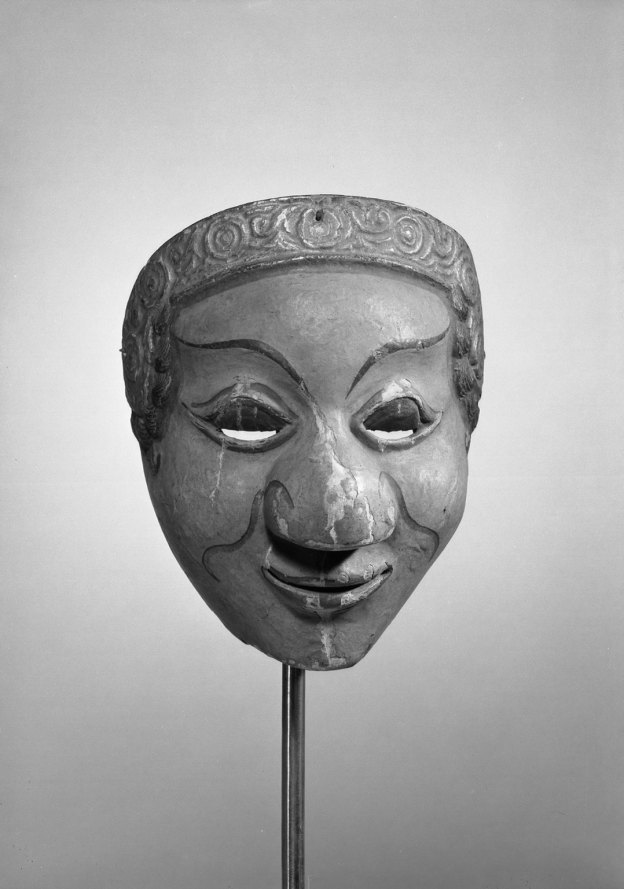
Many moments stuck out to me from A Stitch in Time, yet the pinnacle of these was Garak’s realization that everyone around him, himself included, regularly wears masks to hide their true intentions and weaknesses. These masks might be physical, like an ancient theatre mask or the famed half mask worn by Gaston Leroux’s Phantom of the Opera, but more often they are built in the wearer’s personality and projection to those around them. So, when I was trying to find a conclusion to my recollections about 9/11 this Monday, I thought of Garak and the masks. I told them that everyone wears them, everyone has something they highlight for all to see, and that beneath that mask of power, popularity, ferocity, clownery, or even awkwardness lies another person. That person may be self-conscious or afraid of showing their true face, or they may have just grown used to wearing that mask from a time when they were unsure how to face the world around them. Still, behind every emotion we express there lies another human being who like all of us was once born naked, exposed, powerless, and most importantly innocent of both good and evil.
To me, 9/11 was a moment of great tragedy for what we chose to do in its aftermath. The United States was quick to act in launching the largest manhunt in human history to capture and kill the leader of Al-Qaeda, Osama Bin Laden, and in the process to ensure that countries like Afghanistan under the Taliban would no longer be safe havens for terrorists. The enemy soon shifted, once a role filled by the Nazis and later by the Soviets, a role that had shifted without focus for some time now began to sharpen in relief towards terrorists, but not any old terrorist, only Muslim terrorists were the true enemy. The rage of America fed a deep Islamophobia which still burns bright within this country. Yet as that rage was noticed for its power it was quickly monetized and commercialized, utilized by those wishing for quick victories against their political rivals at home at the expense of compromise and civil discourse. The longest legacy of 9/11 was a new political era in American history driven by fear and hatred of the other, whether foreign or domestic.
The masks that Bin Laden and all those who use terror and fear to achieve their aims may seem powerful in the moment yet quickly crack under pressure from demands for justification. They do not seek to ensure passage to some blissful afterlife like the death masks or sarcophagi of the Egyptian mummies, but instead seek to do the greatest amount of harm to those in the way for the short term gains of greater terror among one’s enemies and greater publicity for one’s cause. To fight these masks, we adopted our own versions of them, donned visages painted red in our own rage, and forgot what each other’s faces beneath those masks looked like.
Beneath each mask lies another person, who fears their own weaknesses and searches often in vain for their strengths within the great dark forests of our fears. It is often hard for me to focus on all the things I’ve accomplished in my thirty years amid all those memories of embarrassment and pain, and this new job working with young people just learning how to fit into their own skin has helped me tremendously to be comfortable in my own as an adult and a sometimes leader. I tried to impart my deepest held belief on all of this in my last point about this week’s somber anniversary before moving onto Monday’s lessons; that we should never celebrate the death of those who have done evil things, for as evil as that person’s choices may have been they were still just another person behind a mask. Perhaps, that mask had become their face, engrained seething onto their skin until they could not remember the face beneath, until they could not see the child they once were, the innocence they once embodied. Theirs is a mask which they could still lower, a false vision of strength they could let go of, if only they didn’t fear the warm sunlight touching their face for the first time in so very long.
I first started watching Star Trek a month before the first waves of the pandemic hit the U.S. early in 2020. I knew a fair bit about the characters of the different series and some of the overarching stories, so when Star Trek: Picard was released in February 2020 I figured I wanted to see what it was all about. Thus began the next two years of my life in terms of TV viewing. Since then, I’ve gone all in and seen the entirety of the first two seasons of Picard, with a third coming in February 2023, as well as all seven seasons of The Next Generation, Deep Space Nine, and Voyager, all four seasons of Enterprise, and what’s so far been released of Lower Decks, and Strange New Worlds. I’m now watching the original series, Star Trek starring William Shatner, Leonard Nimoy, and DeForest Kelly that aired between September 1966 and June 1969 on NBC.
Like with the other Trek series, I’ve found the characters relatable and enjoyable to watch. I’ve also found some of the futuristic settings and technologies depicted on the show inspirational to my own imagination as a storyteller. Yet I’ll freely admit I find this series harder to get excited about compared to the later Trek series released in the ’80s,’90s, and 2000s, perhaps because this original Star Trek sought to depict the future of the late 23rd century as the 1960s dreamed it might be, whereas the later series looked to the late 24th century as the ’80s, ’90s, and 2000s aspired it to be. Being a child of the ’90s and 2000s, that post-Cold War worldview fits my own far more closely than the background surrounding the Original Series during my parents’ childhood in the ’60s.
Still, when I do get into an episode of the first of these shows, I often find I do like the stories. They’re in the same spirit as other mid-century sci-fi shows that I’ve always admired like The Twilight Zone or the older William Hartnell era Doctor Who serials. What’s more, the vibrant colors used to light the sets of Star Trekalways catch my eye in a way that keeps me focused on the action of the story.
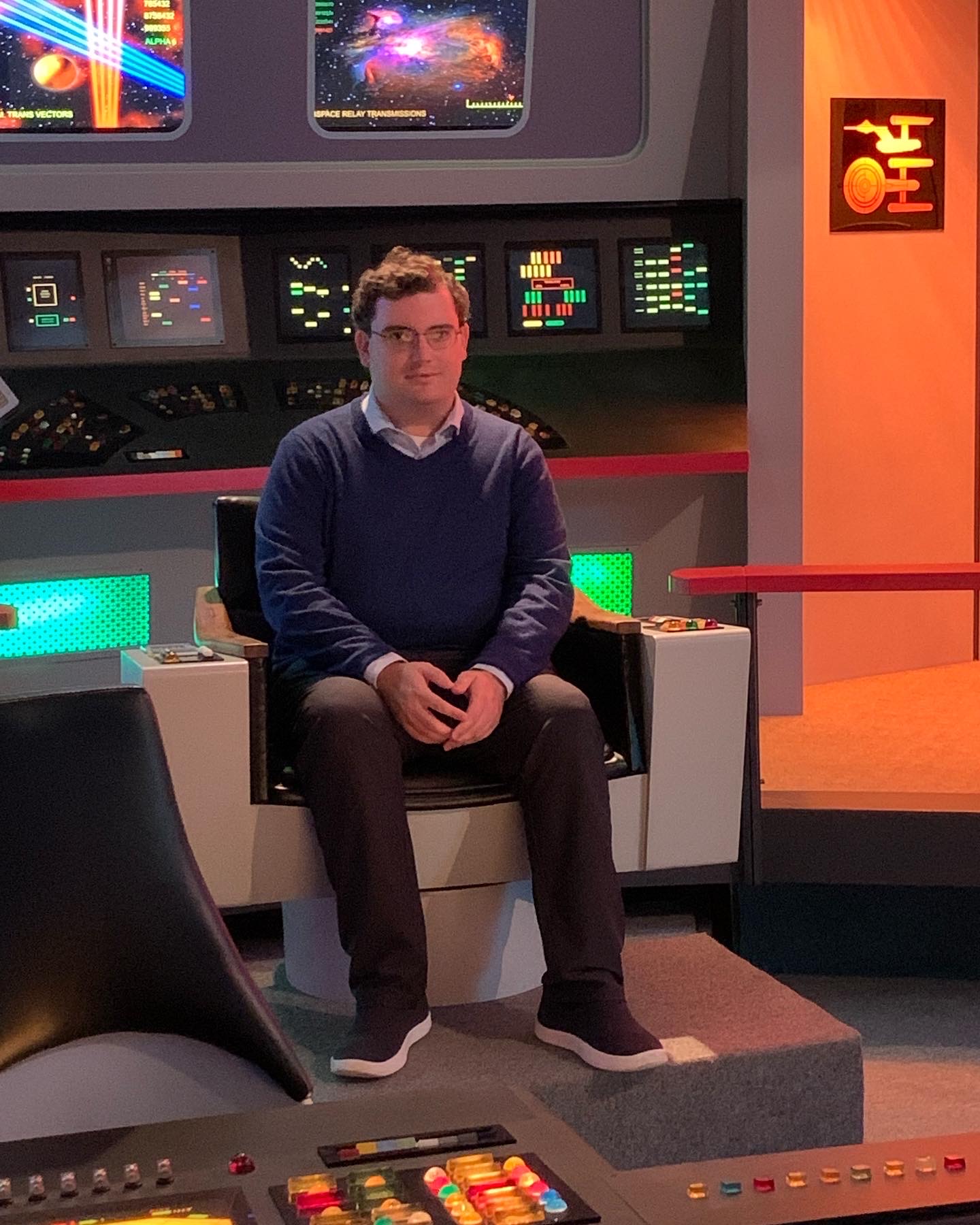
So, a few months ago when I learned there was a recreation of the sets of the Starship Enterprise in a building in Ticonderoga, New York, I knew I had to pay a visit. I arranged things with my good friend Alex Brisson, and we made a weekend trip out of it, visiting the Star Trek: The Original Series Set Tour around noon on Saturday, 17 September. The sets were built by a local guy named James Cawley, who interned on the production of Star Trek: The Next Generation at Paramount. Over the intervening years, the team in Ticonderoga have built with meticulous detail the sets of that original Enterprise as they appeared on the soundstages at Desilu Studios in the late ’60s. In many ways, the tour is both an opportunity for fans to experience walking on board the Enterprise as much as it is for film and TV buffs like myself to see what a TV set from the ’60s would have looked like.
When we walked on the bridge and saw all the stations set out in their circle, the captain’s chair in the center of the room, most of the people in our tour were hushed, a sense of respect among us. I got a chance to sit in the chair, as did everyone there, and I’ll admit the picture of me sitting there looks a fair bit deer-in-headlights as I couldn’t decide what to focus on with so much around me to see. For me, the original Trek isn’t necessarily the show that I prefer the most, that’d have to be Deep Space Nine with Next Generation and Voyager close behind it, but it spoke to a common thread in my life over the past two years as I’ve continued with my own work and studies while in the evenings taking an hour or two to watch another story set a few centuries down the line.
I think the thing that has kept me so interested in Star Trek is how aspirational it is. Unlike so many other futuristic films and shows out there, in the stories told here humanity has figured out how to get out of our cycles of violence and greed and work with the best parts of our nature to achieve the closest we could ever come to returning to Paradise here in our own mortal lives. They are stories that say, “no matter how bad things may be now, no matter how much the pandemic and all the other troubles that came out of it have become, there’s always hope.”
I’ve always been one to trust in the fundamental goodness of humanity, it’s an idea that really does have some deep roots in my Catholic faith, as well as in my lived experiences. I’ve been fortunate to live the life I’ve led so far, in the places I’ve lived and with the people I’ve known, family and friends who I’ve loved. The seeds of a better future are laid in that fertile soil of hope. Had I grown up in the midst of the wars that my country waged over the last 20 years in Afghanistan and Iraq or in a country with less opportunities for success than my own, my worldview would likely be quite different. Yet if we are going to ever get out of this mire we’ve been in for so long, our adolescence as a species as Carl Sagan put it in his novel Contact, then we’ve got to let our hope for a better tomorrow guide us just as much as our cynicism and bad memories of past wrongs guide us now.
In the future that Star Trek depicts humanity finally begins to overcome our faults in the last half of the current century when first contact between humans and an alien species, in this case Vulcans, occurs. Our technology, and their helping hand (however hesitant it may be) moves humanity up from an age of nation states and superpowers battling each other for supremacy and resources on Earth and into a new age where humanity is one small island in the great ocean of Space, learning to live amid our galactic neighbors, and finally contributing to the creation of a Federation of Planets in the mid 22nd century that brings about a new Golden Age of sorts not just to us on Earth but to many other worlds floating in this cosmic sea.
It’s fiction, I’m well aware of that. It’s a collection of stories dreamed up by writers and showrunners over the past six decades that could very well remain stories in our cultural memory. But maybe there is some room for our future to be more peaceful, more prosperous, and more equitable than our present is or our past ever has been. In the decades since Star Trek first premiered in 1966 so many technologies inspired by the shows have become realities from tablets to personal communicators to now virtual reality taking the place of the holodecks and holosuites of the Next Generation, Deep Space Nine, and Voyager. I’ve been drawn to these stories because they came at just the right time for me. I began watching Voyager in the long dark winter of 2021 when I was preparing for my Comprehensive Exams. That winter, being so far from home and so isolated by the continuing pandemic, I found the story of a lone ship lost 70,000 light years from home to resound with my own situation. These are stories that laud curiosity and teamwork, and while just stories with the odd bizarre plot or weekly new alien with different nose ridges, they offer us a vision of what our world could be like.
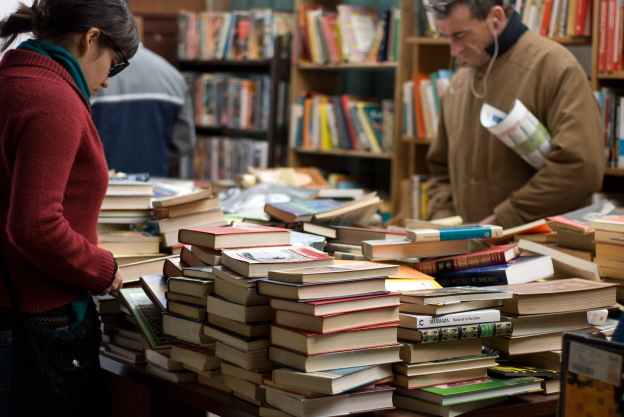
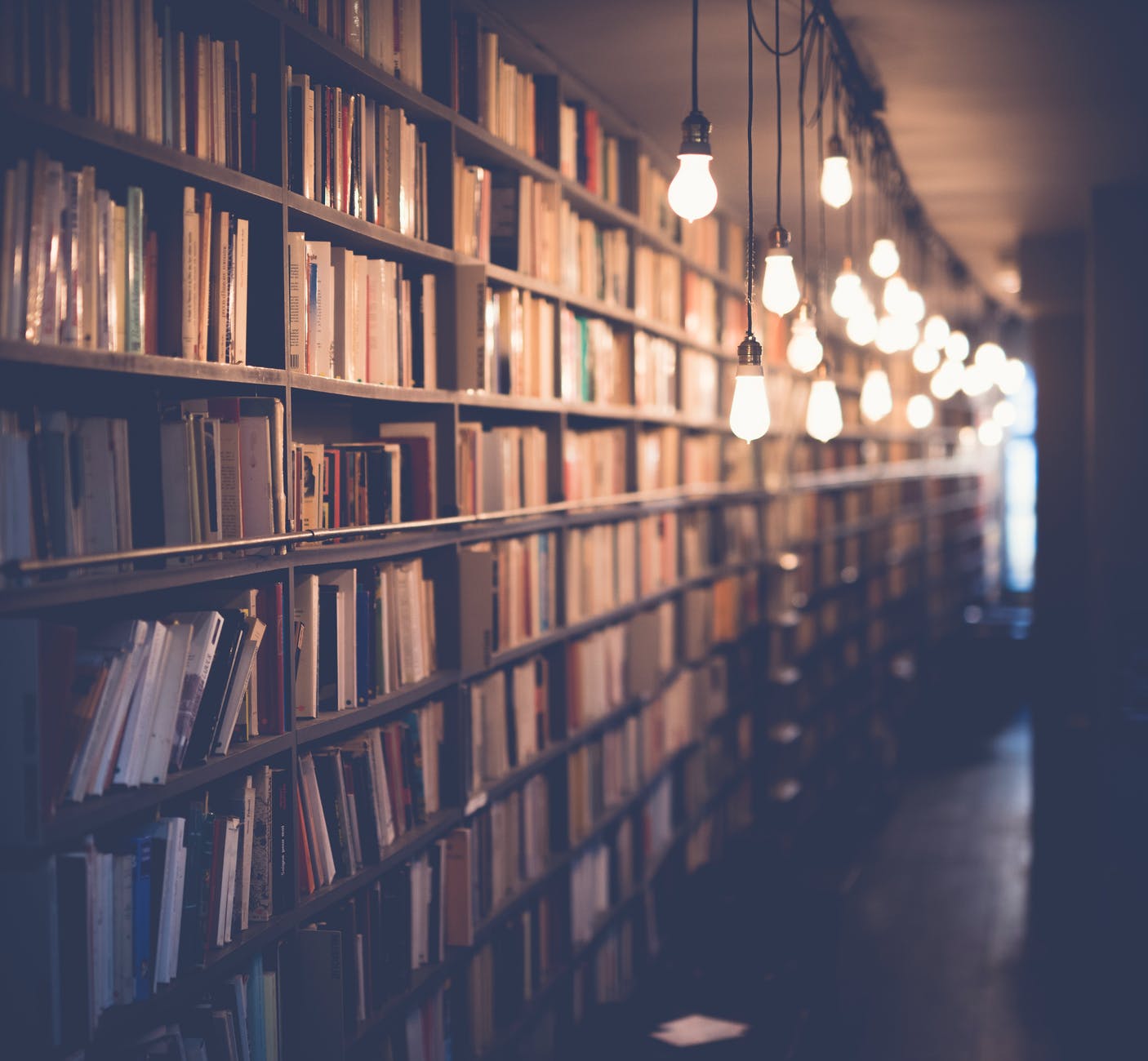
There’s a Thomas Jefferson quote that has stuck with me since the first time I saw it in the room at the Library of Congress that houses his first donation to that institution: “I cannot live without books.” It’s something I think of from time to time, looking around the office here in my apartment at the tall bookshelves lined with volumes covering topics from astronomy to ancient literature in Latin and Greek to Catholic theology to history, politics, and fiction. I collect books, largely to read but also because I love the potential that books hold; all the stories they have waiting to be revealed page by page.
Over the last few years, I’ve found myself more and more gravitating towards electronic books on Kindle, Google Play, and all the academic e-book hosting sites that I use for my research and teaching. E-books are just easier to carry. I can have an entire library right there on my phone for me to choose from when I’m having dinner alone in a restaurant here in Binghamton or when I’m tired of listening to podcasts or reading magazines on a long flight. E-books also make stories more accessible. There’s a now rare novel written by the actor Andrew Robinson about his character Elim Garak from Star Trek: Deep Space Nine called A Stitch in Time that I often see people complaining about how hard to find it is in paperback. Yet I was able to download it in just a few minutes on Google Play and read it cover to cover in a few days.
Kindle now even has a feature where if you have the book on their app and the recording of it on Audible you can listen to some segments of it when you’re driving and then your location in the e-book will update with your progress in the audiobook. I haven’t used it yet, there’s a biography I’m listening to now about the explorer and scientist Alexander von Humboldt (1769–1859) that I could probably also be reading on the Kindle app on my phone when I have a free minute during office hours or at dinner, but I’m also enjoying just listening to it while driving around the hills here in Broome County, New York.
As an author, at least with the three books I’ve self-published to date (all available on Amazon) I usually prefer people buy the paperback versions because I’ll get more in royalties out of those than out of the e-book copies. Still, as a reader I admit I would often choose the e-book on a given day over the paperback solely for the convenience.
One thought that keeps coming to mind for me returns me to my own childhood and those wonderful mysterious days spent in the small library that my parents collected in our house in Wheaton when I was little. That same library came with us down to Kansas City and consumed our then-unfinished basement. At one point we had probably around 10,000 books in that collection of all sorts and stripes. Today, though I also picture not only my younger self but my own future children, if I’m so lucky, and ask “if I choose to go with e-books over physical ones, will my children have the same experiences I had pulling the odd book from the shelf because it looks interesting and flipping through it?” Those experiences of lounging around just flipping through books as a young child was instrumental in making me who I am today. There are so many stories that I read that way. Even now I sometimes like going into a library just to wander and see what I’ll find.
On a recent visit to the Bartle Library at my university I had a specific book in mind that I was looking for, Gerald of Wales’s 1188 book the Topography of Ireland, which has been useful for my dissertation. Yet after I found it, I noticed another book next to it that seemed intriguing. It was bound in a blue cover, and called the Annals of Connacht, the westernmost of the four ancient provinces of Ireland, my ancestors’ home province. I pulled it off the shelf and flipped it open, quickly figuring out how to navigate its pages. Soon then, I looked up first my ancestors’ old parish, Burrishoole in County Mayo, and secondly, I looked up my own family name, Ó Catháin, to see what was in there. Both Burrishoole and Ó Catháin had entries, the former was less insightful to me than the latter, for it turned out there was a guy with my exact name who lived in Connacht in the 1520s, another Seán mac Tomás Ó Catháin. Maybe he was an ancestor of mine, it’s possible even though there are big gaps in the records during the height of the colonial period.
I could have stumbled upon that same collection of annals online and have done just that many a time with old books such as the Annals of Connacht, yet it doesn’t have quite the same feeling of accomplishment as finding that book in the flesh, holding it in my hands. I’ve joked that I deal with my primal desire as a human to hunt in two ways: firstly I hunt for food in the grocery store, and secondly I hunt for books in the library. Yeah, I know, it’s pretty corny. And while hunting for books in a library surely wouldn’t compare to hunting for a living animal in a forest, matching your wits against its own, I can say that hunting for books online can be more frustrating than hunting for books in person. When on foot in a library all you really need to worry about is that the library’s catalog system is accurate, when online you also have to figure out how to communicate with the various computer systems that are making your e-book hunt possible.
Earlier this year when I was searching for import records and ships logs from the French port of Rouen between 1500 and 1567 for my research I found myself dealing with a third layer of complexity: a computer system that can’t actually read the original 500-year old handwritten documents, meaning you just have to hope that whoever imported the document into the system typed enough information into the computer that you can find what you’re looking for. On that one count: the easier legibility of e-books over printed ones, the easier transmission of their stories and information, and the fact that we can now share knowledge around the globe as fast as our data streams will carry that information gives me good reason to prefer e-books. But still, I want my future kids, if I’m so lucky, to have that experience of pulling books from my shelves and wandering through them, discovering that same love of reading that I’ve had all these years.
The voice of Thomas Jefferson was provided by Michael Ashcraft, voice actor extraordinaire. You can learn more about his work by visiting his website here.
On Sunday morning, 31 July, I awoke to my first sights and sounds of the Emerald Coast. This particular stretch of Florida’s Gulf Coast along Santa Rosa Island and Choctawhatchee Bay is famous for its rich green waters and white sandy beaches. The sight of the bay out my window was one of the first reminders of where I was, that I was not in fact back home in Kansas City nor in that modern hotel room in Nashville. No, I was now in the Gulf Coast, the southern seaboard, of the United States.
I spent the better part of the first day on our balcony attending to a series of morning Zoom calls, before heading out to the beach around lunchtime. In preparation for the beach, I replaced my usual slip-on shoes and black socks for a pair of brown leather sandals that I bought for a day-long float trip down the upper reaches of the Colorado River back in the Summer of 2018. Still, I retained my usual khaki trousers and summer golf shirt, lest I move entirely out of the realm of comfort.
I quickly found that I had arrived at the beach well after much of the seashore fun had passed. The majority of my relatives had had their fun in the ocean waters that morning and were now returning to their rooms to beat the worst of the afternoon sun. So went most of that week in Destin. I found myself caught up in my own over-thinking more than in enjoying the moment, and never did go for that swim in the ocean that everyone kept talking about. The complexity of the idea left me hesitant and wandering that far from a place where I could dry off and change back into my normal clothes without potentially expanding the reach of the ocean or its sandy shores even further was my limit.
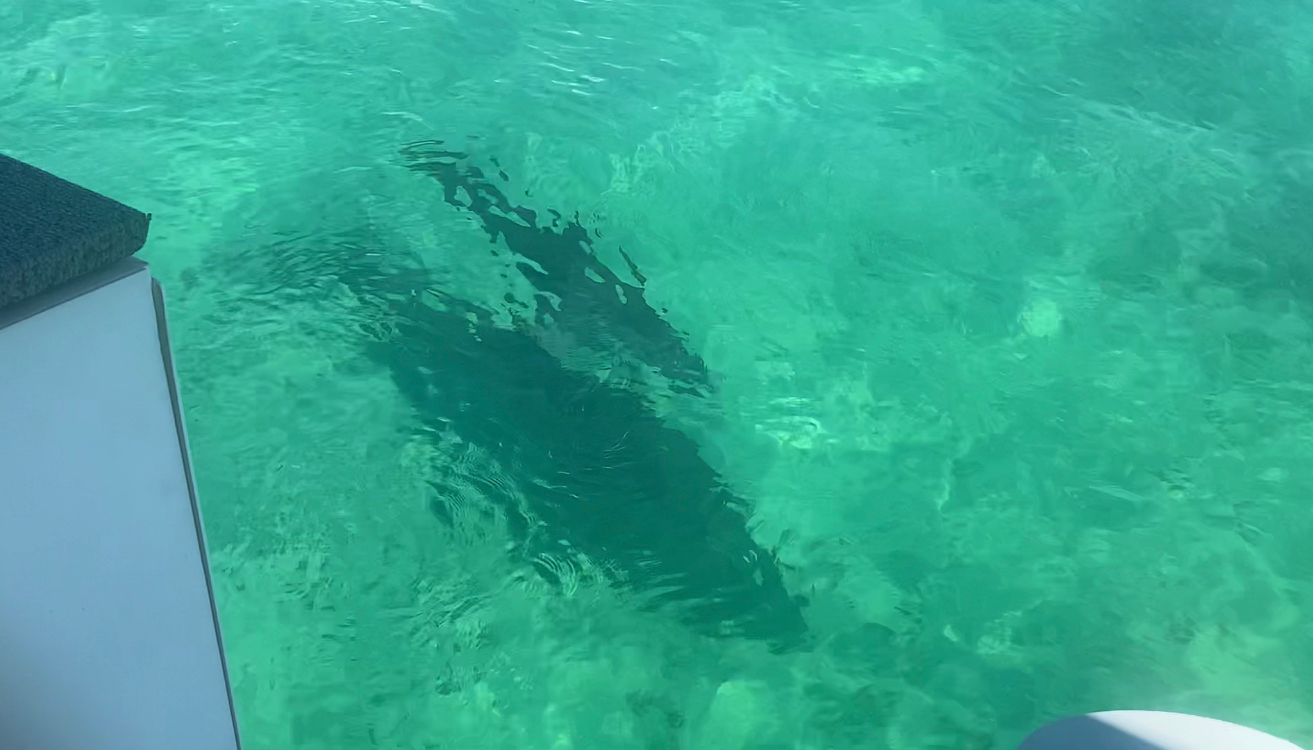
A dolphin cow and her calf swam up next to our boat.
On Monday I boarded one of two pontoon boats that carried the 24 of us from my family who made the trip to the seaside and traveled from Destin Harbor out to an apparently famous local haunt called Crab Island. I imagined it would be a large rock tethered to the ocean floor that would be just big enough to be a curiosity for all the tourists flocking to the emerald waters there and was pleasantly surprised to find that Crab Island was actually a shallow part of the bay which allowed for people to walk with ease through the water without much risk of drowning. As with my thoughts on Sunday, I did not join in the aquatics and remained firmly on the boat, but I still enjoyed the time out on the water.
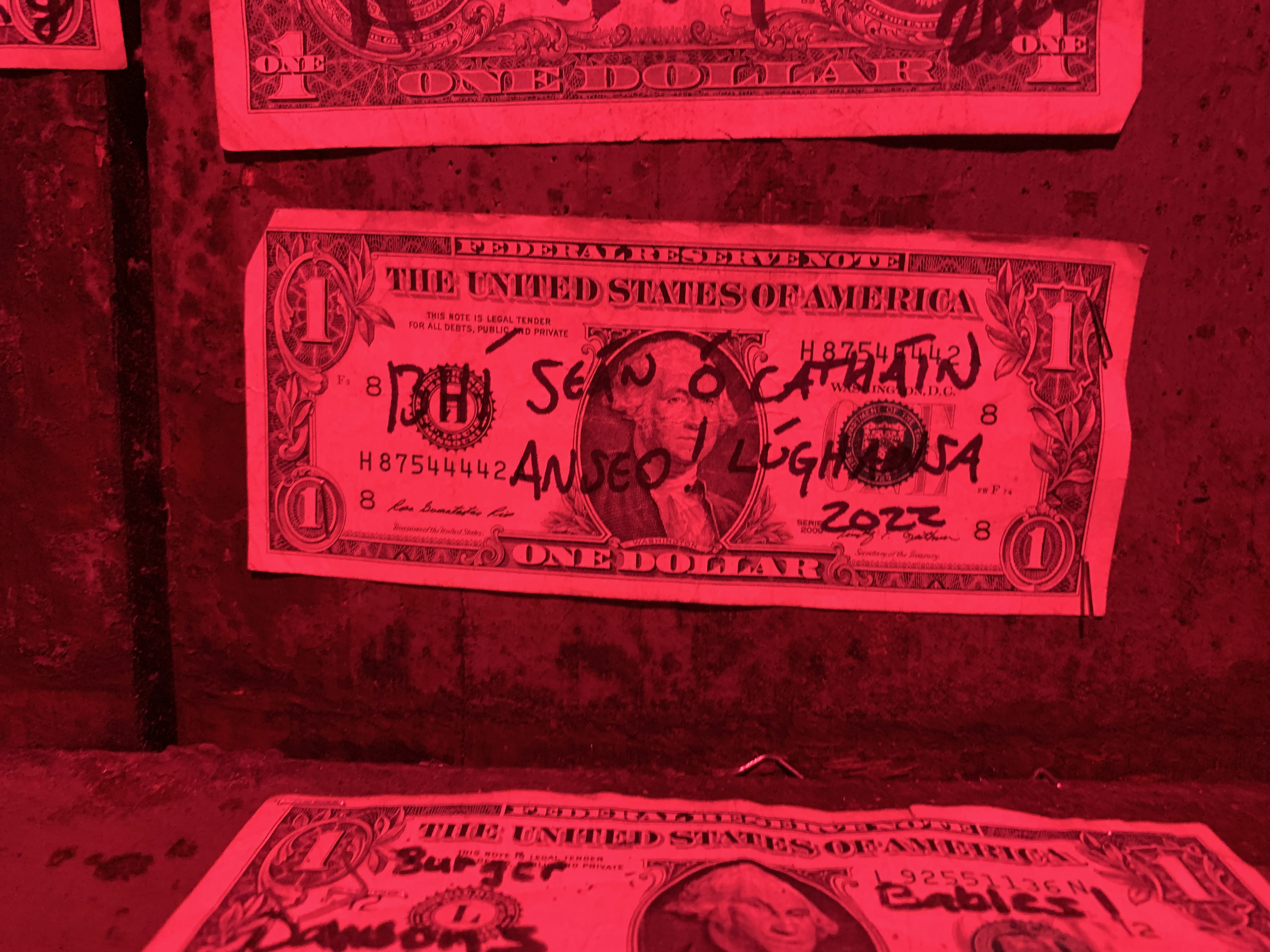
That evening several from our group went to a local pub in the area called McGuire’s that reportedly has some of the best steaks in the country. I considered it but ended up trying their bangers and mash, which were so wonderfully memorable. While I was there, I participated in an unusual custom local just to that establishment of signing dollar bills and stapling them to the walls of the pub. In my own case, my dollar bill was signed “Bhí Seán Ó Catháin anseo, 1 Lúnasa 2022.” After the fact I kicked myself realizing I forgot a key part of the verb, which should have been written “Bhí Seán Ó Catháin anseo é, 1 Lúnasa 2022.” Still, should you be in the area and want to see it, my dollar bill is likely there stapled onto the lid of a very large barrel (I thought of it as a hobbit door) in the room behind the gift shop.
My dollar bill at McGuire’s Pub in Destin, FL.
On Tuesday I got to experience the power of the thunderstorms that build up on the Gulf of Mexico. Most of Tuesday the skies remained cloudy and gray, with various stages of rain from sprinkles to showers falling down on the barrier island that we were staying on. The island in question is the easternmost reaches of Santa Rosa Island, a long and skinny barrier island stretching from Pensacola Harbor in the west to Destin Harbor in the east. Yet as a great many cases in this country’s long history longstanding naming conventions couldn’t be allowed to get in the way of a good marketing opportunity, and in 1950 at the urging of a local developer the eastern 1/3rd of Santa Rosa Island was transferred from Santa Rosa County to Okaloosa County and renamed Okaloosa Island, the name you can buy on keychains, t-shirts, and tag on your Instagram stories when you visit.
We stayed in a beach resort on Okaloosa Island called Destin West. The resort is split between a bayside horseshoe and a beachside block. Our condo in the middle of that bayside horseshoe was a 7th floor penthouse with a neat rooftop balcony that provided marvelous sunrise and sunset views over both the Gulf of Mexico and Choctawhatchee Bay. What’s more, I was delighted by the visions of the night sky that flickered into view each night from that rooftop. On Sunday night my parents and I ventured up onto our rooftop and spent a good hour gazing up at the stars. The sky was first illuminated by the pinpoint of light that is Arcturus, roughly 36.7 light years distant from Earth. Thereafter we gazed up, me laying in a sun-bathing chair, as more and more stars greeted us as the light of our Sun faded further below the western horizon. My Dad and I saw an even better view of the night sky a few hours later when we wandered down to the beach to try and get some wave recordings for this podcast, seeing then the band of the Milky Way arc over our heads in all its nebular glory.
I’m sad to report the wave recordings came out as static. I guess I needed a better microphone.
The other great highlight from the week in Destin was all the time I got to spend with my family: parents, cousins, aunts, uncles, grandparents, and the young children of my cousins. Many of you are listening or reading this week, and I hope this makes my appreciation for all of you very clear. On Tuesday night, I went out on the town with some of my cousins, going towards Destin’s Harborwalk where we enjoyed some of the local music, some good food and drink, and for several of my kin a nice jump off a perfectly good tower. A few days later I returned with more relatives, this time parents and kids included, and got to rediscover that Harborwalk all over again in the daytime.
One of the more fascinating experiences that I had while on the Emerald Coast was visiting first the Native American mound located in downtown Fort Walton Beach, and secondly a sea turtle conservation center in Navarre Beach. The mound was likely built around 850 CE by a people identified archeologically as the Pensacola Culture (fl. 1100–1700). The mound builders in Fort Walton Beach were among a wider culture of mound builders extending throughout the interior of North America called the Mississippian Culture who dominated the Mississippi Basin from around 800 to 1600. Among the most famous Mississippian mounds is Cahokia, located just across the Mississippi from St. Louis in Illinois, which remains one of the top archeological sites I still want to visit. The Mississippians mysteriously disappeared just before the arrival of the Europeans in North America without much certainty as to why. I for one would love to learn more about them.
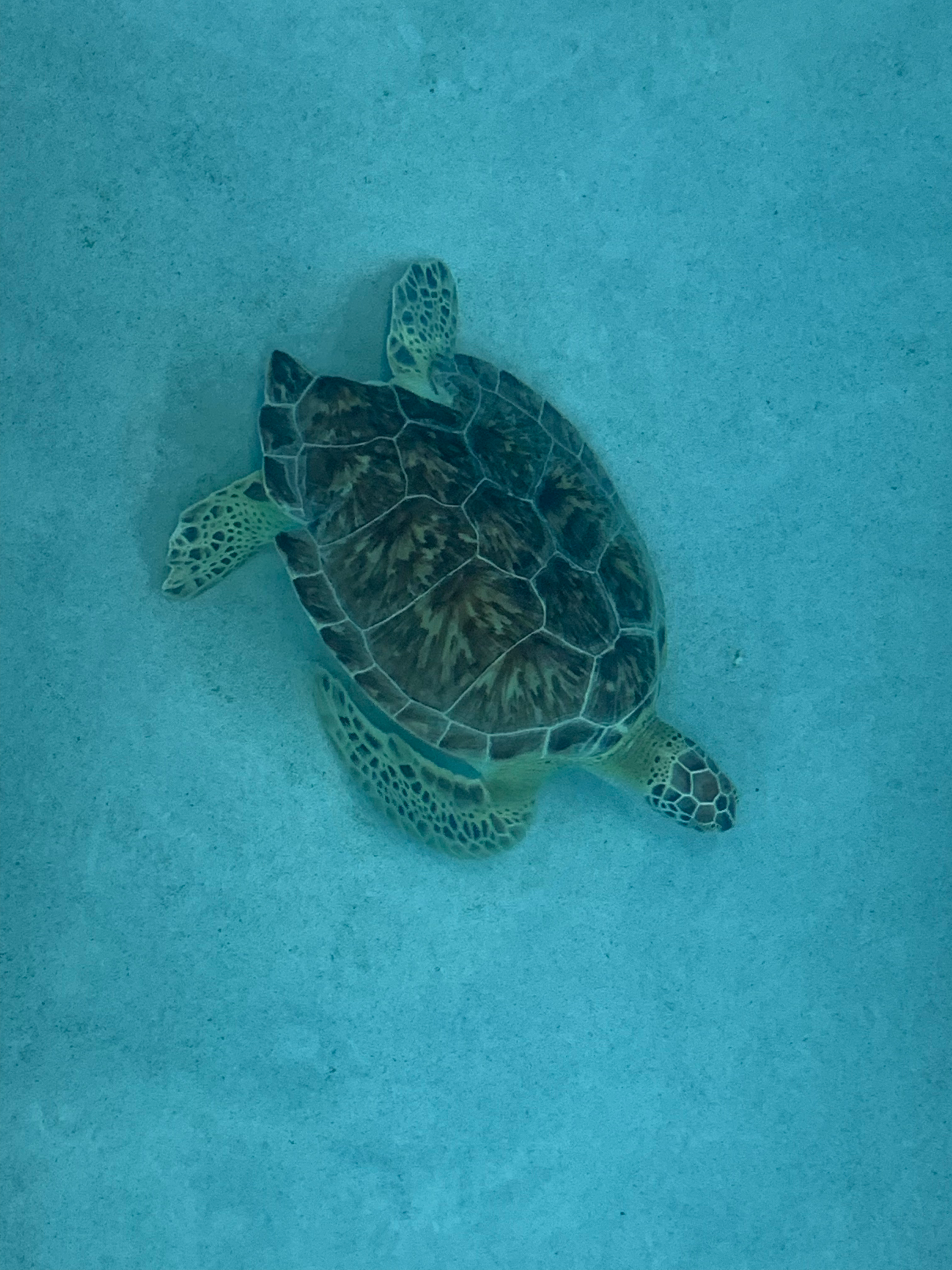
The Navarre Beach Sea Turtle Conservation Center has a lot in common with many a local science center that I’ve visited, including Broome County, NY’s Kopernik Observatory. It’s staffed by locals who clearly are not only dedicated to the center’s mission but are also themselves keeping the lights on, and it seems to be a focal point of a local advocacy message within the community. The Gulf Coast is home to a wide range of animals and plants, among which are several species of sea turtles. We got to see one green sea turtle named Sweet Pea who lives in the pool located inside the Conservation Center. Sweet Pea was found in Gulf Shores, Alabama with fishing wire stuck far down her throat and wrapped all around her body. In the veterinarians’ efforts to save her they ended up having to amputate one of her front legs, and she’s also missing a piece of her shell, but now she lives a happy life in her pool. Sea turtles are increasingly threatened by human activities along the coast, including fishing, littering, and the use of white flashlights on beaches at night which keep the sea turtles from laying their eggs in the sand out of fright. This is one area where sea turtle conservation and astronomy intersect, as in both cases red flashlights are far better to use than white or blue ones, as red is a cooler color and less blinding to the eyes of either a human or, clearly, a sea turtle.
Sweet Pea the Green Sea Turtle.
Over the last few days of my time in Destin I got to know the roads leading out of that resort town quite well, volunteering to drive a parade of relations to the local airport for their own flights home. On Friday morning, 5 August, I made my own departure from Destin, driving north toward Interstate 10 which I took east. I first stopped in Tallahassee, the state capital, with the sole intention of seeing the Florida State Capitol and then returning to the highway to finish my drive southeast to Orlando. As it turned out, I ended up getting lunch at a local Whataburger, refueling, and making a very brief stop at the State Capitol to photograph it, resulting in an hour delay in Tallahassee. This pushed my arrival in Orlando back from late afternoon to early evening, yet that was only the first delay.
One of the things I noticed foremost about driving on Florida’s highways is how aggressive the drivers in the Sunshine State are. In the Midwest if the speed limit is 70 mph the traffic might flow at around 75-79 mph, yet here with a similar 70 mph speed limit the traffic was staying steady if forceful at a grander 85 mph. I quickly caught on and kept up with the traffic, finding I was getting cut off and being honked at less by the locals and tourists alike, and after a few hours of driving I merged off I-10 and I-75 and onto Florida’s Turnpike, a tollway which runs northwest to southeast across Central Florida and then down the Atlantic coast until terminating near Miami. I was excited to see what this turnpike would be like, as every state tends to like to give their tollways their own particular flair. Massachusetts for one has grand signs arching over their turnpike at every service plaza, and Illinois––the state of my birth––used to have a network of toll oases that were glass bridges over the tollways, most of which are now gone, though they’ve kept the very large circular oasis building on I-88 in DeKalb. Florida’s Turnpike proved to be about as overstated as I expected, with its grand service areas that were advertised nearly once every mile.
I wasn’t planning at stopping at any of them but ended up pulling over at the first one I came across because of a warning sign I saw almost as soon as I’d merged onto the turnpike: “All lanes blocked at US-27 due to wreck, find alternate route.” I checked my map and confirmed that US-27 was between where I was and Orlando. So, I turned to my car’s navigation system and found an alternate route that would take me off the turnpike before the wreck and back on again just after it. “Great!” I said, pulling back onto the highway. It was only a half an hour later when I was pulling off the turnpike and onto my alternate route that I began to realize how frustrating this would be, as that alternate route took me from a 70 mph highway onto a series of rambling backroads that led to the northernmost suburbs of Orlando where farm traffic mixed with the Mercedes and Volvos going to and from the new neighborhoods and resorts that were being built in those farm and swamp lands.
Finally, finally after another hour of meandering through the backroads of Central Florida I returned to the turnpike well past the wreck that had shut down “Florida’s Main Street” and into one of Central Florida’s famous summer thunderstorms. Now, I’m from Tornado Alley so I know a thing or two about thunderstorms, but I can swear to you now that these Florida thunderstorms are nothing like the ones that build up off the eastern face of the Rockies and rain down on the Great Plains. Oh no, these are tropical downpours that build up as the cold Atlantic air meets the warm Gulf air over Central Florida, itself a barely-above-sea-level peninsula and proceeds to dump all the water the heavens can muster onto anyone below. It reminded me of what the Ferengi on Star Trek: Deep Space Nine say about the rains on their home planet Ferenginar, “No, it never rains, it only pours!” As a matter of fact, the hyper-profit hungry Ferengi may well be a good model for understanding Florida, or what I saw of Florida, a state that has a noticeable government bureaucracy (just look at all the tollways around Orlando) but maintains a strong “Survival of the Fittest” attitude about life. I even argued on multiple occasions during my time in the state that they ought to change their state motto to that: “Florida, the Sunshine State. Survival of the Fittest.” The remainder of my time in Florida was marked by the threatening clouds of its immense thunderstorms.
I stayed in the tourist area south of downtown Orlando near International Drive with the idea that if I was close to a couple major highways, I’d be able to get to my two main destinations on that part of the Longest Commute easier. Still, I was overjoyed to discover that I was effectively staying in a part of town that could be called Chicago South, for no sooner had I gotten there than I realized there was a new Portillo’s location just a few minutes’ drive from my hotel. For those of you who aren’t aware, Portillo’s is a chain of Chicago restaurants serving local favorites from the city of my birth like Chicago hot dogs, Italian beef sandwiches, Maxwell St. Polish Sausages, Italian Sausages, as well as burgers, salads, and Mrs. Portillo’s famous chocolate cake. And yeah, I may have eaten there a few times while I was in the area, seeing as I haven’t gotten back to Chicago since 2020 yet.
On Saturday, 6 August I decided to go into Orlando and see what there was to see in a city famous for its theme parks that wasn’t actually in a theme park. I was kind of interested to go to Disney World again, 25 years after my last visit at the age of 4, in large part because there was a rumor (I could never confirm it) that they have a toco toucan (Ramphastos toco), which is the one that’s at the center of the action in Chapters 5 and 6 of my dissertation. Yet with all that said it turns out that the Orlando theme parks are far too expensive to visit on a TA stipend, especially when you’re just going as an individual and not with a significant other or a group. So, instead I went to visit my two usual haunts in a new city: the local science museum and the local art museum.
A vertical farming demonstration
The Orlando Science Center is located in a large round building on the edge of a city park that was built in the 1990s. It houses a lot of wonderful science exhibits aimed at introducing children to the main topics of the STEM fields, and it’s clear the children of Orlando get a lot out of that museum, which is wonderful. The one hall that I spent a fair bit of time in, the one hall that was the closest to what I’ve come to expect in a science museum, was the dinosaur hall, where a series of casts of famous fossils were found, including a cast of Stan the T. Rex. That said, I was out of the Orlando Science Center in just over 30 minutes, having seen pretty much the entire place. Thankfully, my ASTC membership got me in there for free.
From the Science Center I decided to walk across the park to the Orlando Museum of Art, a pretty building set into the far edge of the park from the Science Center. I paid my admission fee and began to stroll around their limited galleries, finding one on Ancient American art especially fascinating, but the rest of it, a collection of contemporary art from around Florida, was not really my style. I do love some types of contemporary art, especially contemporary architecture and the smooth lines that evoke it in paintings and sculpture, but I’m not as fond of the imperfections that seemed to be glorified in the art on display in that museum. It’s just not my taste. A bit let down by that experience, on the walk back to the car I searched on my phone for another museum I remembered seeing when I was researching this trip, and while I thought I found it I instead ended up at the art museum on the beautiful campus of Rollins College, one of the top liberal arts colleges in the South, and somewhere based on what I read and saw of the place I wouldn’t mind teaching at someday, perhaps.
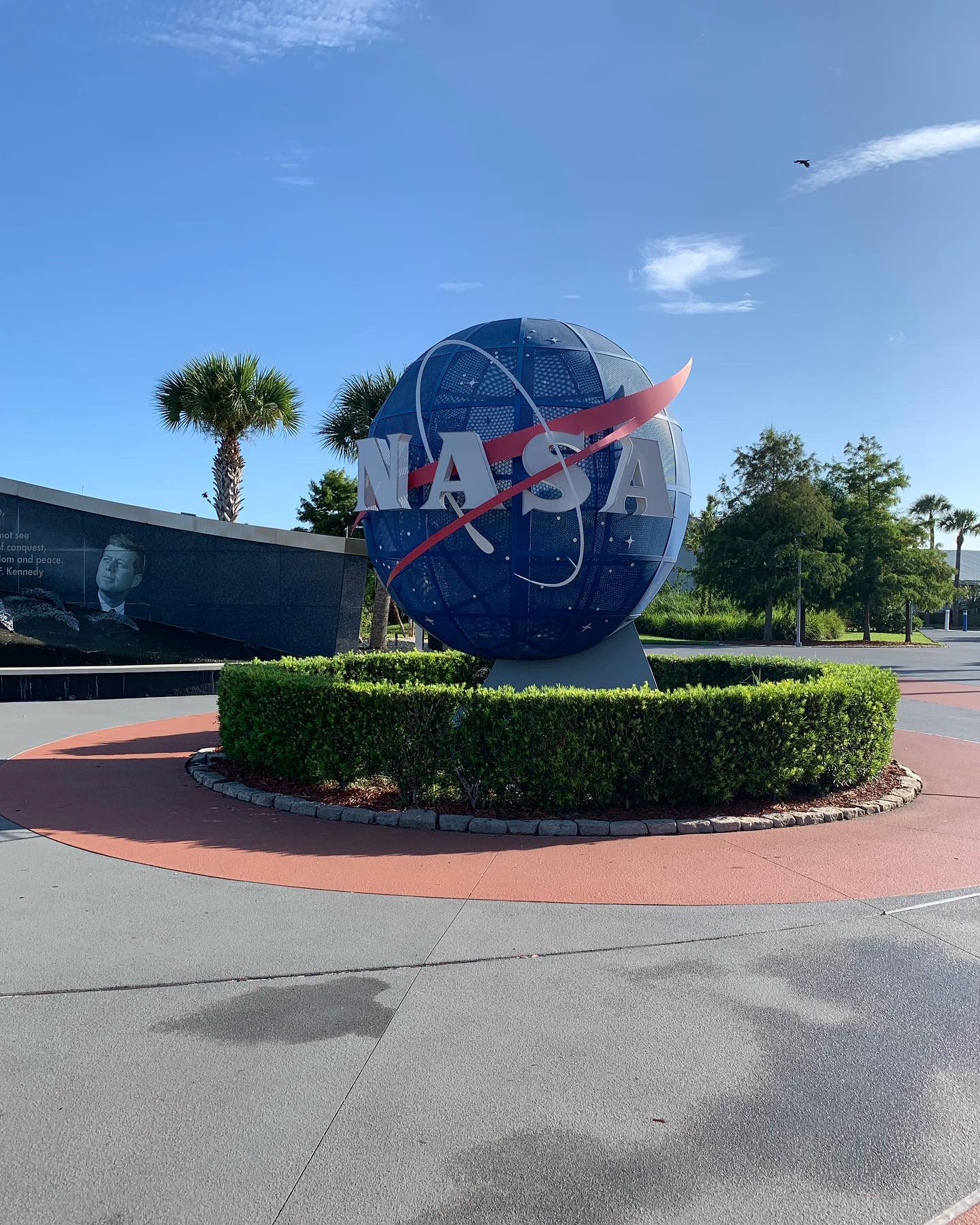
The main reason why I chose to go to Orlando was to use that city as a launching off point for a day trip east to the Kennedy Space Center at Cape Canaveral. Some of my earliest memories are of pictures from the Apollo program and of the space shuttles in books and on TV. Those of you who have read and listened to the Wednesday Blog (thank you!) will know that I’m a space nerd. So, when I heard we were doing a family trip to Florida, I first looked up how far our vacation spot was from the Cape.
I arrived at the Kennedy Space Center’s Visitor Complex at 8:15 am, a full hour and 15 minutes before the gates opened, which meant I was also one of the first in line to go through those gates when they did open at 9:30 am. The opening of the Visitor Complex every day is announced by the playing of the national anthem over the PA system, in a rousing and triumphal manner that proved to be a sign of things to come. I began my tour of the KSC by catching the tour bus to go out to the Apollo-Saturn building a few miles northeast from the main Visitor Complex near the Vehicle Assembly Building, where NASA’s spacecraft are put together and stored before launch) and launchpads 39A and B where both the Apollo missions of 1969–1972 and the Artemis missions of my generation have and will launch from. At the time that I visited, 7 August 2022, Artemis 1 was housed inside the Vehicle Assembly Building awaiting its launch to orbit the Moon. The launch window is scheduled for 29 August at the earliest, a few days after this episode is scheduled to be released. So, fingers crossed that it works!
In the Apollo-Saturn building I got to see a mockup of the Apollo mission control, a Saturn V rocket, and an inspiring half-video, half-staged performance telling the story of Apollo 11’s landing on the Moon in the summer of 1969. I found all the videos that greet you when you enter each building at the KSC to be quite triumphant and grandiose in their tone and music. It’s actually quite fun, though a bit jarring in our current climate of division and fear in this country.
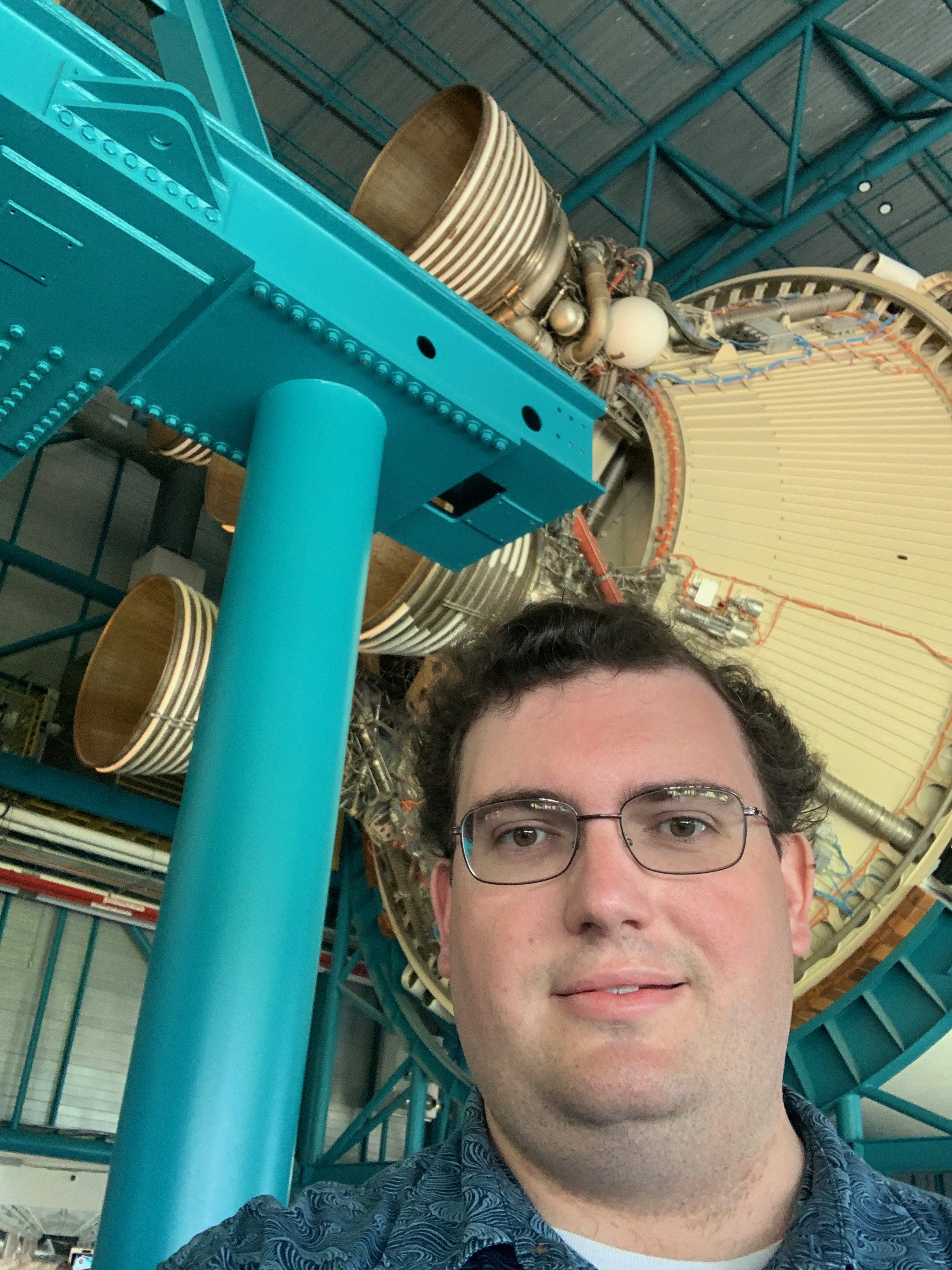
A Saturn V rocket in the Apollo-Saturn Building.
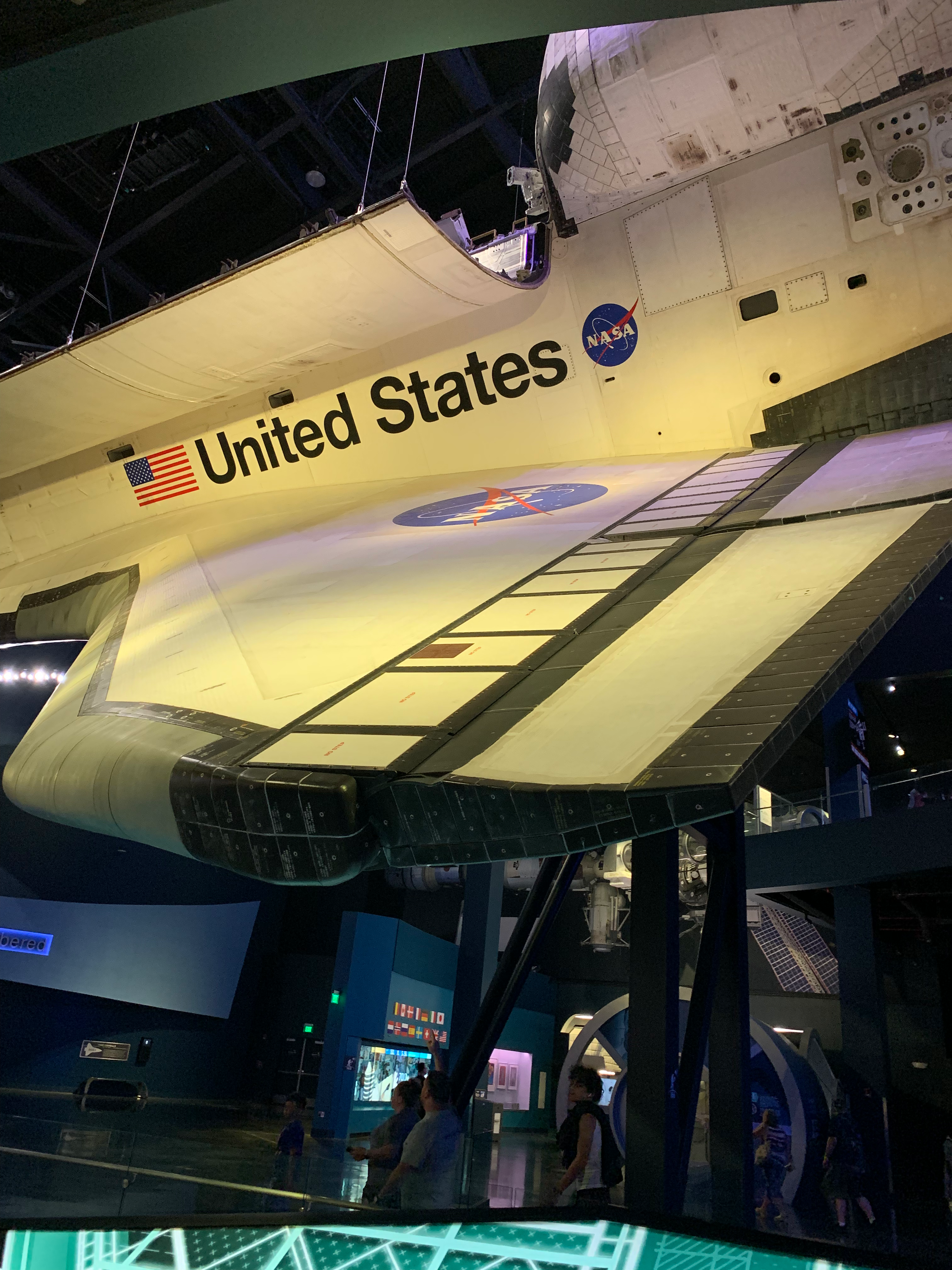
The building I liked the most was the Atlantis building, which houses the Space Shuttle Atlantis and honors the space shuttle and ISS programs all together. As much as Apollo and Sky Lab were the space programs of my parents’ youth, so the Space Shuttle and ISS were the space programs of my youth. It was quite moving for me to finally see a space shuttle up close, and the feelings of bitter sadness that I felt when the shuttles were retired in 2011 returned ever so slightly. I was almost moved to tears seeing the memorials in that building dedicated to the Challenger and Columbia crews who lost their lives in 1981 and 2003 respectively. Many people in my parents’ generation have said that they stopped watching space launches after Challenger broke up upon liftoff, and as for myself I can remember when the news bulletin came in on NPR announcing that Columbia had broken up upon reentry into the atmosphere on that warm Sunday, 1 March 2003.
The Space Shuttle Atlantis
My Dad and I were out in the fields on our farm, doing what I can’t remember, and he kept the radio running in his truck that time. As I heard the news I remember looking up to the south and seeing a jet trail far up in the sky. Now, I know that Columbia broke up over Texas, not Kansas, but in my memory that jet trail was Columbia in its last moments. It’s a memory that will always stick with me.
After a nice lunch in the Cosmic Café, I returned to my touring, visiting the Mars building to see the end of an inspiring video telling us “The first human to walk on Mars is living among us today!” with a NASA employee up on the stage pointing out into the audience saying proudly “and that person could be one of you!” I for one am curious about the idea of going up into Space, maybe someday I’ll do it, but for now I don’t think I’m healthy enough for it. From there I walked over to the new Gateway building, which houses a collection of new and newly proposed spacecraft from NASA’s commercial partners including SpaceX, Boeing, and Lockheed Martin, among others. One example from a company whose name I can’t remember was an expandable space habitat which at its full size is 3-storeys tall and can serve as a home, workplace, and laboratory for the astronauts onboard whether in orbit, in transit, or on the surface of another world.
My final stop at the KSC was in the Heroes building, an exhibit which honors the NASA and allied astronauts who have ventured up into Space over the last 60 years beginning with the Mercury 7. The building culminates with the NASA Astronaut Hall of Fame, at the center of which stands a fine statue of astronaut Alan Shepard, the first American to leave our home planet in 1961.
I left the Kennedy Space Center at 3 pm, a good 6 hours after I first passed through the entry gates, having fully enjoyed my day. The one thing, after leaving and now writing about that experience that I wish I’d done is bought a pack of NASA themed playing cards that were for sale in the gift shop.
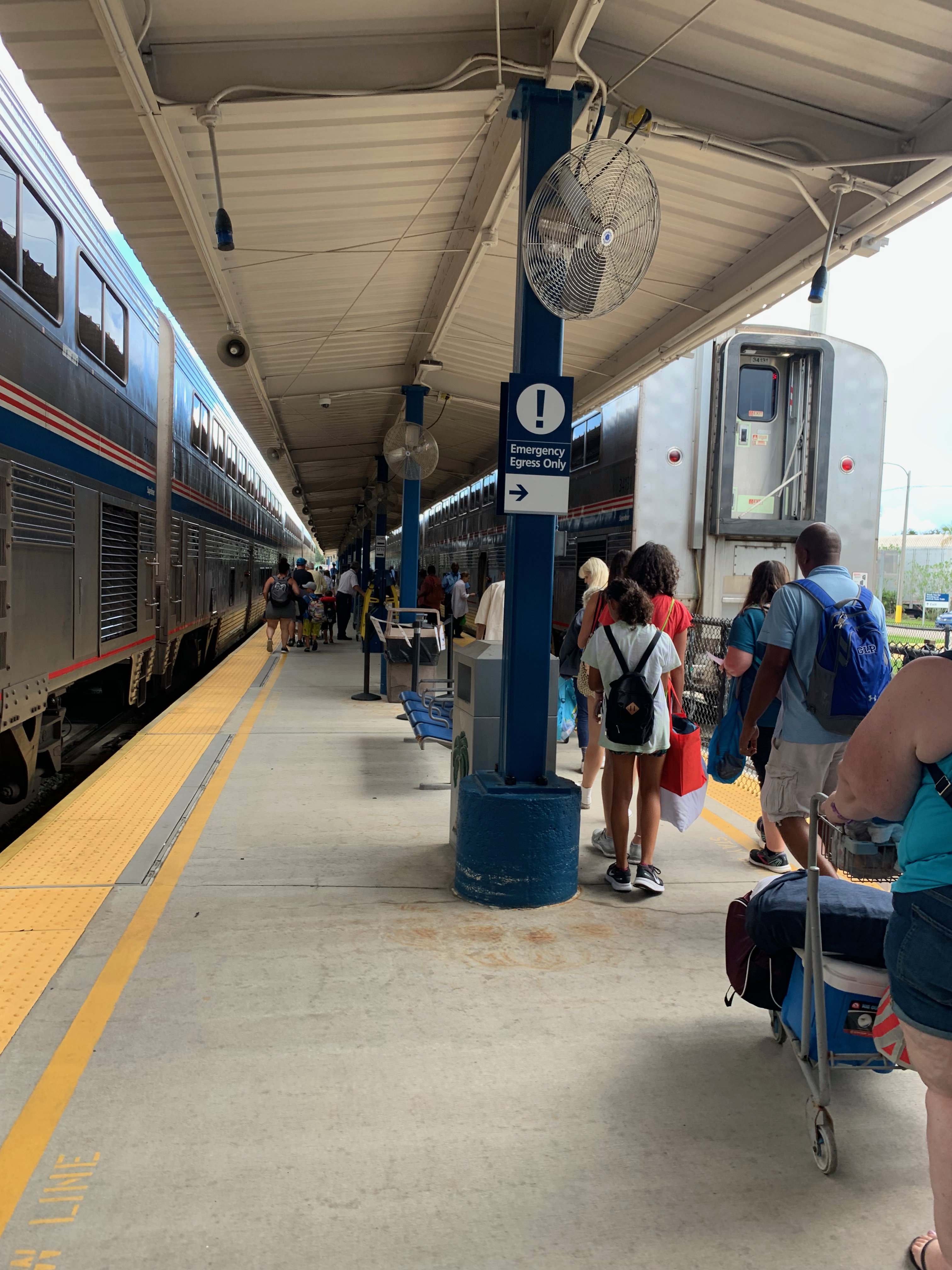
The following morning, I was up at 9 and out of my hotel by 10:45 for one of the most memorable legs of any trip to date. I was leaving Florida not by road but by rails. At 12:30 I had the Mazda Rua loaded onto the car-carriers attached to the rear of the Auto Train and boarded it myself at 15:30, sitting happily in my sleeper compartment, my roomette, when we pulled out of Sanford, Florida at 5 ‘o clock that evening. I enjoyed the complimentary dinner service in the dining car, choosing the Amtrak Signature Flatiron Steak with green beans and a baked potato, along with a starter salad with Newman’s Own Light Italian dressing, a dinner roll, and a glass of Chardonnay. The 3-course meal was finished off with a slice of cheesecake, a sign of where I was headed, back to the Northeast after an overnight stop in the DC area.
I fell asleep on the night of Monday, 8 August somewhere in southern South Carolina to the gentle sound of the rails beneath me, the soft swaying of the Superliner sleeper car an old and comfortable feeling to me, having experienced it a handful of times on the Southwest Chief between Kansas City and Chicago. Sleep came late, with dreams of an old Mozart tune floating in my head. “Bona nox …”





 Wednesday Blog by Seán Thomas Kane