
Tag Archives: Star Trek: Strange New Worlds

Metropolis

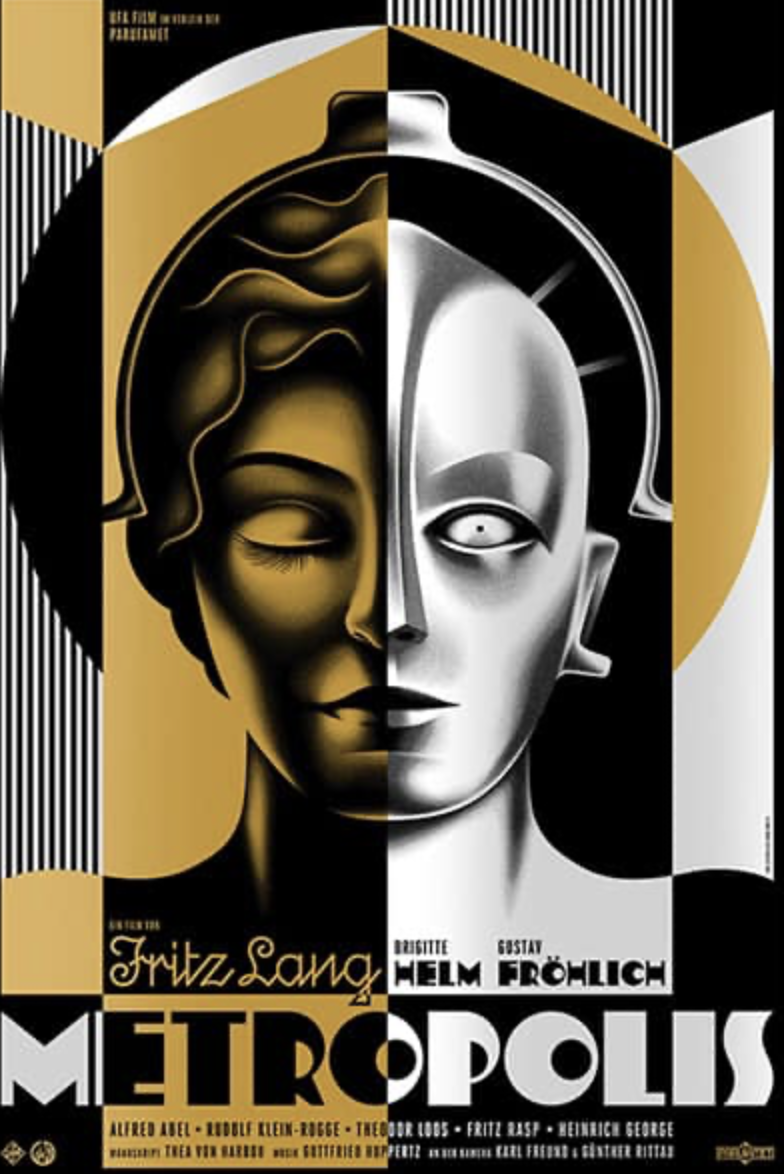
When I returned home to Kansas City about a month ago, I saw an email from the Nelson-Atkins Museum of Art that the Tivoli Cinema, which since 2020 has been housed in the Nelson’s auditorium, would be holding two showings of Fritz Lang’s 1927 silent masterpiece Metropolis. I jumped at the opportunity and immediately bought a ticket for the opportunity to watch this film on a big screen with an audience around me. So, this past Sunday afternoon I showed up for the matinee screening and was even more dazzled by the experience than I’d expected.

I had seen Metropolis once before when it was on Netflix about a decade ago. I remember feeling a bit wary of the film and its story when I first watched it that time. Now I know that watching a movie as monumental as this one on a screen as small as my laptop does a disservice to the whole experience. Metropolis was made to be seen on the big screen with a live orchestra, or at least a live organist, adding a whole extra dimension of music to this already vivid story. In the case of this weekend’s showings, Metropolis was accompanied by a 2010 recording of the original Gottfried Huppertz score performed by Berlin Radio Symphony Orchestra conducted by Frank Strobel. I’ve since played that recording again on iTunes while grading essays this week and have felt just as profoundly moved by it as I was in the theatre on Sunday.

It occurred to me while listening to that album again this week that as much as this score is a film score, listening to it on its own it feels far more like ballet music. In the past I’ve written about how I feel that ballet and silent film share similar characteristics born out of their mutual need for wordless expression to tell their stories. As I listened to Huppertz’s score without seeing the images in front of me I found myself thinking back to each particular scene in Metropolis as I’d seen them the day before. Yet in the moment as I sat in the third row of the Atkins Auditorium watching this spectacle unfold before me, I felt that Metropolis was more operatic than balletic in its very character. These were actors performing at a time when the quantity of film influences were far fewer on their lives thanks to the relatively recent invention of motion pictures, film at that point was only about 40 years old. 

In Metropolis I saw echoes of Wagner and Strauss as well as hints of the future, all the films and television shows that would follow it. There is a scene near the beginning of the film’s first act, the 45-minute prelude, where a shift change of the underground workers occurs that seemed strikingly similar to several scenes from the new Star Wars: Andor series released on Disney+ this Fall. Don’t worry, no spoilers here. There are many elements of Metropolis that certainly have been influential, look no further than the Machine-Man, the poster child of Metropolis that wreaks havoc on the city and nearly destroys it and all who live within it. There perhaps we see the ancestor of Doctor Who‘s cybermen, Star Trek‘s Borg, or Alicia Vikander’s character in Ex Machina.

In the last few days, I read in Variety that there’s a TV series remake of Metropolis in the works for Apple TV+. While I’m normally hesitant about remakes of classic films or shows, the new Star Trek: Strange New Worlds which sees the adventures of the original 23rd century USS Enterprise before it was captained by James T. Kirk, has made the idea more amenable to me, though that’s likely because Strange New Worlds does the whole reboot idea perfectly. I’m most curious to see how Apple TV+’s new Metropolis will depict the city of tomorrow. In 1927 Fritz Lang’s original film used the great art deco skyscrapers of New York built of brick and steel as his model. Will this new series seek to depict the sort of futuristic architecture that I’ve collected on my architecture Pintrest board, filled with gentle curves, evocative colors, and dramatic lines? That remains to be seen.

Metropolis was a gripping film to see, and while long, with some aspects perhaps a bit old fashioned to our tastes, notably the over-the-top heart-gripping that happens throughout that made the crowd around me laugh from time to time, it still has my attention caught even now a few days later. Silent films speak to us in a way that their talking counterparts created after 1927 simply don’t. They tell stories in different ways, adjusting their style to fit the technical limitations of their time. I’ve always been drawn to silent films for this reason, and perhaps I’m drawn to ballet for much the same reason. After all, Chaplin was as much a dancer as he was a slapstick comic. Metropolis is a testament to the time and place in which it was made, Weimar Germany in the 1920s. In Joh Fredersen, the master of Metropolis I see Henry Ford, both in his character and in his physical appearance. I see fears about extremism on all fronts, and a call for unity and dialogue in the face of anger. I wonder what the new Metropolis will be like?
A Trek Among the Stars

I first started watching Star Trek a month before the first waves of the pandemic hit the U.S. early in 2020. I knew a fair bit about the characters of the different series and some of the overarching stories, so when Star Trek: Picard was released in February 2020 I figured I wanted to see what it was all about. Thus began the next two years of my life in terms of TV viewing. Since then, I’ve gone all in and seen the entirety of the first two seasons of Picard, with a third coming in February 2023, as well as all seven seasons of The Next GenerationDeep Space Nine, and Voyager, all four seasons of Enterprise, and what’s so far been released of Lower Decks, and Strange New Worlds. I’m now watching the original series, Star Trek starring William Shatner, Leonard Nimoy, and DeForest Kelly that aired between September 1966 and June 1969 on NBC.

Like with the other Trek series, I’ve found the characters relatable and enjoyable to watch. I’ve also found some of the futuristic settings and technologies depicted on the show inspirational to my own imagination as a storyteller. Yet I’ll freely admit I find this series harder to get excited about compared to the later Trek series released in the ’80s,’90s, and 2000s, perhaps because this original Star Trek sought to depict the future of the late 23rd century as the 1960s dreamed it might be, whereas the later series looked to the late 24th century as the ’80s, ’90s, and 2000s aspired it to be. Being a child of the ’90s and 2000s, that post-Cold War worldview fits my own far more closely than the background surrounding the Original Series during my parents’ childhood in the ’60s.

Still, when I do get into an episode of the first of these shows, I often find I do like the stories. They’re in the same spirit as other mid-century sci-fi shows that I’ve always admired like The Twilight Zone or the older William Hartnell era Doctor Who serials. What’s more, the vibrant colors used to light the sets of Star Trekalways catch my eye in a way that keeps me focused on the action of the story.

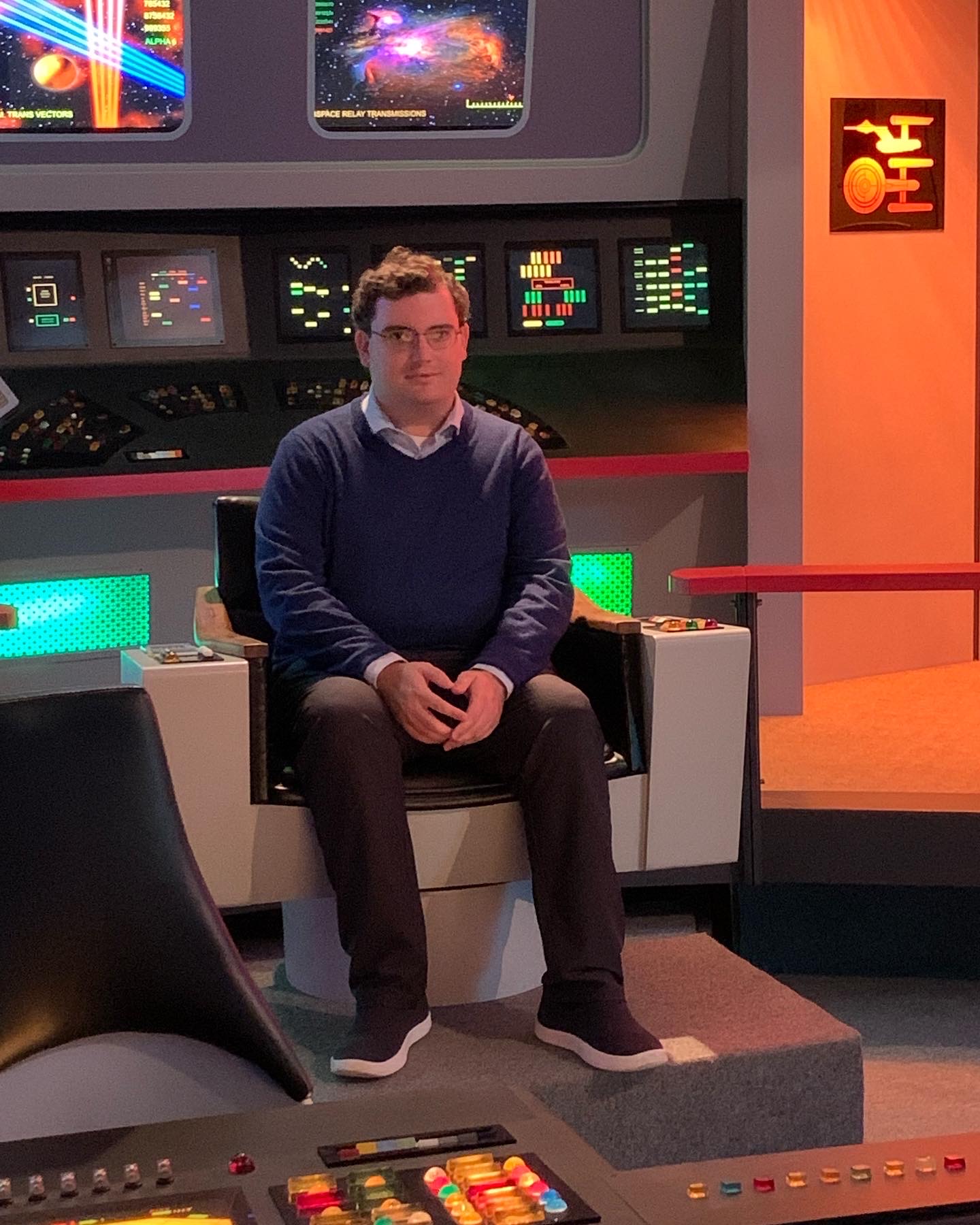
So, a few months ago when I learned there was a recreation of the sets of the Starship Enterprise in a building in Ticonderoga, New York, I knew I had to pay a visit. I arranged things with my good friend Alex Brisson, and we made a weekend trip out of it, visiting the Star Trek: The Original Series Set Tour around noon on Saturday, 17 September. The sets were built by a local guy named James Cawley, who interned on the production of Star Trek: The Next Generation at Paramount. Over the intervening years, the team in Ticonderoga have built with meticulous detail the sets of that original Enterprise as they appeared on the soundstages at Desilu Studios in the late ’60s. In many ways, the tour is both an opportunity for fans to experience walking on board the Enterprise as much as it is for film and TV buffs like myself to see what a TV set from the ’60s would have looked like.

When we walked on the bridge and saw all the stations set out in their circle, the captain’s chair in the center of the room, most of the people in our tour were hushed, a sense of respect among us. I got a chance to sit in the chair, as did everyone there, and I’ll admit the picture of me sitting there looks a fair bit deer-in-headlights as I couldn’t decide what to focus on with so much around me to see. For me, the original Trek isn’t necessarily the show that I prefer the most, that’d have to be Deep Space Nine with Next Generation and Voyager close behind it, but it spoke to a common thread in my life over the past two years as I’ve continued with my own work and studies while in the evenings taking an hour or two to watch another story set a few centuries down the line.

I think the thing that has kept me so interested in Star Trek is how aspirational it is. Unlike so many other futuristic films and shows out there, in the stories told here humanity has figured out how to get out of our cycles of violence and greed and work with the best parts of our nature to achieve the closest we could ever come to returning to Paradise here in our own mortal lives. They are stories that say, “no matter how bad things may be now, no matter how much the pandemic and all the other troubles that came out of it have become, there’s always hope.” 

I’ve always been one to trust in the fundamental goodness of humanity, it’s an idea that really does have some deep roots in my Catholic faith, as well as in my lived experiences. I’ve been fortunate to live the life I’ve led so far, in the places I’ve lived and with the people I’ve known, family and friends who I’ve loved. The seeds of a better future are laid in that fertile soil of hope. Had I grown up in the midst of the wars that my country waged over the last 20 years in Afghanistan and Iraq or in a country with less opportunities for success than my own, my worldview would likely be quite different. Yet if we are going to ever get out of this mire we’ve been in for so long, our adolescence as a species as Carl Sagan put it in his novel Contact, then we’ve got to let our hope for a better tomorrow guide us just as much as our cynicism and bad memories of past wrongs guide us now.

In the future that Star Trek depicts humanity finally begins to overcome our faults in the last half of the current century when first contact between humans and an alien species, in this case Vulcans, occurs. Our technology, and their helping hand (however hesitant it may be) moves humanity up from an age of nation states and superpowers battling each other for supremacy and resources on Earth and into a new age where humanity is one small island in the great ocean of Space, learning to live amid our galactic neighbors, and finally contributing to the creation of a Federation of Planets in the mid 22nd century that brings about a new Golden Age of sorts not just to us on Earth but to many other worlds floating in this cosmic sea.

It’s fiction, I’m well aware of that. It’s a collection of stories dreamed up by writers and showrunners over the past six decades that could very well remain stories in our cultural memory. But maybe there is some room for our future to be more peaceful, more prosperous, and more equitable than our present is or our past ever has been. In the decades since Star Trek first premiered in 1966 so many technologies inspired by the shows have become realities from tablets to personal communicators to now virtual reality taking the place of the holodecks and holosuites of the Next Generation, Deep Space Nine, and Voyager. I’ve been drawn to these stories because they came at just the right time for me. I began watching Voyager in the long dark winter of 2021 when I was preparing for my Comprehensive Exams. That winter, being so far from home and so isolated by the continuing pandemic, I found the story of a lone ship lost 70,000 light years from home to resound with my own situation. These are stories that laud curiosity and teamwork, and while just stories with the odd bizarre plot or weekly new alien with different nose ridges, they offer us a vision of what our world could be like.

Why not give that future a try?