Tag Archives: Surekha Davies

The author on a blue background wearing Apple AirPods.

On Machinery

This week, for the penultimate post of the Wednesday Blog, how machinery needs constant maintenance to keep functioning.—Click here to support the Wednesday Blog: https://www.patreon.com/sthosdkane—Sources:%5B1%5D Surekha Davies, “Walter Raleigh’s headless monsters and annotation as thinking,” in Strange and Wonderous: Notes from a Science Historian, (6 October 2025).[2] “Asking the Computer,” Wednesday Blog 5.26.


This week, for the penultimate post of the Wednesday Blog, how machinery needs constant maintenance to keep functioning.


I am just old enough to remember life before the ubiquity of computers. I had access to our family computer as long as I can remember, and to my grandparents’ computer at their condo when we stayed with them in the Northwest Suburbs of Chicago. Yet even then my computer usage was limited often to idle fascination. I did most of my schoolwork by hand through eighth grade, only switching from writing to typing most of my work when I started high school and was issued a MacBook by my school. I do think that a certain degree of whimsy and humanity has faded from daily life as we’ve so fully adopted our ever newly invented technologies. Those machines can do things that in my early childhood would’ve seemed wonderous. Recently, I thought how without knowing how powerful and far-reaching my computer is as a vehicle for my research and general curiosity, I would be happy, delighted in fact, if my computer could conduct one function, say if it had the ability to look up any street address in the United States as a device connected to the US Postal Service’s database. That alone would delight me. Yet that is the function of not just one application on my computer but merely one of many functions of several such programs I can load on this device, and not only can I look up addresses in the United States but I can look up addresses in any country on this planet.

With the right software downloaded onto this computer I can read any document printed or handwritten in all of human history and leave annotations and highlights without worrying about damaging the original source. Surekha Davies wrote warmly in favor of annotating in her newsletter this week, and I appreciated her take on the matter.[1] In high school, I was a bit of a prude when it came to annotating; I found that summer reading assignment in my freshman and sophomore English classes to be almost repulsive because I see a book as a work of art crafted by its author, editor, and publisher to be a very specific way. To annotate, I argued, was like drawing a curly-cue mustache on the Mona Lisa, a crude act at best. Because of this I process knowledge from books differently. I now often take photos of individual pages and organize them into albums on my computer which I can then consult if I’m writing about a particular book, in much the same fashion that I use when I’m in the archive or special collections room looking at a historical text.

All of these images can now not only be sorted into my computer’s photo library, now stored in the cloud and accessible on my computer and phone alike, but they can also be merged together into one common PDF file, the main file type I use for storing primary and secondary sources for my research. With advances in artificial intelligence, I can now use the common top-level search feature on my computer to look within files for specific characters, words, or phrases to varying levels of accuracy. This is something that was barely getting off the ground when I started working on my doctorate six years ago, and today it makes my job a lot easier; just my file folder containing all of the peer-reviewed articles I’ve used in my research since 2019 contains 349 files and is 887.1 MB in size.

Our computers are merely the latest iterations of machines. The first computer, Charles Babbage’s (1791–1871) counting machine worked in a fairly similar fashion to our own albeit built of mechanical levers and gears where ours have intricate electronics in their hard drives. I, like many others, was introduced to Babbage and his difference engine by seeing the original in the Science Museum in London. This difference engine was a mechanical calculator intended to compute mathematical functions. Blaise Pascal (1623–1662) and Gottfried Wilhelm Leibniz (1646–1716) both developed similar mechanisms in the seventeenth century and still older the Ancient Greek 2nd century BCE Antikythera mechanism can complete some of the same functions. Yet between all of these the basic idea that a computer works in mathematical terms remains the same even today. For all the linguistic foundations of computer code, the functions of any machine burn down to the binary operations of ones and zeros. I wrote last year in this blog about my befuddlement that artificial intelligence has largely been created on verbal linguistic models and was only in 2024 being trained on mathematical ones.[2] Yet even then those mathematical models were understood by the A.I. in English, making their computations fluent only in one specific dialect of the universal language of mathematics making their functionality mostly useless for the vast majority of humanity.

Yet I wonder how true that last statement really is? After all, I a native English speaker with recent roots in Irish learned grammar like many generations of my ancestors through learning to read and write in Latin. English grammar generally made no sense to me in elementary school, it is after all very irregular in a lot of ways, and so it was only after my introduction to a very orderly language, the one for which our Roman alphabet was first adapted, that I began to understand how English works. The ways in which we understand language in a Western European and American context rely on the classical roots of our pedagogy influenced in their own time by medieval scholasticism, Renaissance humanism, and Enlightenment notions of the interconnectedness of the individual and society alike. I do not know how many students today in countries around the globe are learning their mathematics through English in order to compete in one of the largest linguistic job markets of our time. All of this may well be rendered moot by the latest technological leap announced by Apple several weeks ago that their new AirPods will include a live translation feature acting as a sort of Babel Fish or universal translator depending on which science fiction reference you prefer.

Yet those AirPods will break down eventually. They are physical objects, and nothing which exists in physical space is eternal. Shakespeare wrote it well in The Temepst that 

“The solemn temples, the great globe itself,

Yea, all which it inherit, shall dissolve,

And, like this insubstantial pageant faded,

Leave not a rack behind. We are such stuff

As dreams are made on, and our little life

Is rounded with a sleep.” (4.1.170-175)

For our machines to last, they must be maintained, cleaned, given breaks just like the workers who operate them lest they lose all stamina and face exhaustion most grave. Nothing lasts forever, and the more those things are allowed to rest and recuperate the more they are then able to work to their fullest. So much of our literature from the last few centuries has been about fearing the machines and the threat they pose. If we are made in the Image of God then machines, our creation, are made in the image of us. They are the products of human invention and reflect back to us ourselves yet without the emotion that makes us human. Can a machine ever feel emotion? Could HAL-9000 feel fear or sorrow, could Data feel joy or curiosity? And what of the living beings who in our science fiction retrofitted their bodies with machinery in some cases to the extent that they became more machine than human? What emotion could they then feel? One of the most tragic reveals for me in Doctor Who was that the Daleks (the Doctor’s main adversaries) are living beings who felt so afraid and threatened that they decided to encase the most vital parts of their physical bodies in wheelchair tanks, shaped like pepper shakers no less, rendering them resilient adversaries for anyone who crossed them. Yet what remained of the being inside? I urge caution with suggestions of the metaverse or other technological advances that draw us further from our lived experiences and more into the computer. These allow us to communicate yet real human emotion is difficult to express beyond living, breathing, face-to-face interactions.

After a while these machines which have our attention distract us from our lives and render us blind to the world around us. I liked to bring this up when I taught Plato’s allegory of the cave to college freshmen in my Western Civilization class. I conclude the lesson by remarking that in the twenty-first century we don’t need a cave to isolate ourselves from the real world, all we need is a smartphone and a set of headphones and nothing else will exist. I tried to make this humorous, in an admittedly dark fashion, by reminding them to at least keep the headphones on a lighter mode so they can hear their surroundings and to look up from their phone screen when crossing streets lest they find themselves flattened like the proverbial cartoon coyote on the front of a city bus. 

If we focus too much on our machines, we lose ourselves in the mechanism, we forget to care for ourselves and attend to our needs. The human body is the blueprint for all human inventions whether physical ones like the machine or abstract like society itself. As I think further about the problems our society faces, I conclude that at the core there is a deep neglect of the human at the heart of everything. I see this in the way that disasters are reported on in the press: often the financial toll is covered before the human cost, clearly demonstrating that the value of the dollar outweighs the value of the human. In abdicating ourselves to our own abstractions and social ideals we lose the potential to change our course, repair the machinery, or update the software to a better version with new security patches and fixes for glitches old and new. In spite of our immense societal wealth, ever advancing scientific threshold, and technological achievement we still haven’t gotten around to solving hunger, illiteracy, or poverty. In spite of our best intentions our worst instincts keep drawing us into wars that only a few of us want.The Mazda Rua, my car, is getting older and I expect if I keep driving it for a few years or more it’ll eventually need more and more replacement parts until it becomes a Ship of Theseus, yet is not the idea of a machine the same even if its parts are replaced? That idea is the closest I can come to imagining a machine having a soul as natural things like us have. The Mazda Rua remained the Mazda Rua even after its brakes were replaced in January and its slow leaking tire was patched in May. Yet as it moves into its second decade, that old friend of mine continues to work in spite of the long drives and all the adventures I’ve put it through. Our machinery is in desperate need of repair, yet a few of us see greater profit from disfunction than they figure they would get if they actually put in the effort, money, and time to fix things. If problems are left unattended to for long periods of time they will eventually lead to mechanical failure. The same is true for the machinery of the body and of the state. Sometimes a good repair is called for, reform to the mechanisms of power which will make the machine work better for its constituent parts. In this moment that need for reform is being met with the advice of a bad mechanic looking more at his bottom line than at the need of the mechanism he’s agreed to repair. Only on this level the consequences of mechanical failure are dire.


[1] Surekha Davies, “Walter Raleigh’s headless monsters and annotation as thinking,” in Strange and Wonderous: Notes from a Science Historian, (6 October 2025).

[2] “Asking the Computer,” Wednesday Blog 5.26.
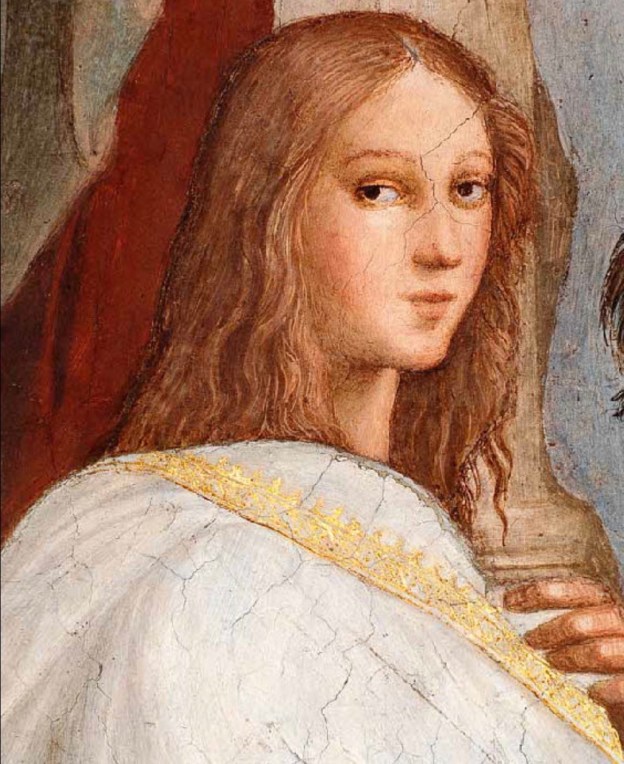

A figure from Raphael's "The School of Athens" variously identified as Francesco Maria della Rovere, Pico della Mirandola, or Hypatia of Alexandria.

On Knowledge

This week, I want to address how we recognize knowledge in comparison to the various fields of inquiry through which we refine our understanding of things.—Click here to support the Wednesday Blog: https://www.patreon.com/sthosdkaneArtRaphael, The School of Athens (1509–1511), Apostolic Palace, Vatican Museums, Vatican City. Public Domain.Sources“On Writing,” Wednesday Blog 6.27.Surekha Davies, Humans: A Monstrous History, (University of California Press, 2025).Marcy Norton, The Tame and the Wild: People and Animals After 1492, (Harvard University Press, 2024), 307.Dead Poets Society, (1989) "What will your verse be?" Video on YouTube.


This week, I want to address how we recognize knowledge in comparison to the various fields of inquiry through which we refine our understanding of things.


Lately my work has been dedicated to a thorough review of the historiography within which I’m grounding my dissertation. I wrote about this two weeks ago in an essay titled “On Writing.”[1] My research is historical, yet it touches on secondary literature which operates within various fields within the discipline of history. These include Renaissance history, and its larger sibling early modern history, the history of cartography, the history of animals, the history of botany, and more broadly the history of early modern science. Methodologically, I owe a great deal to two great twentieth-century Francophone anthropologists, Alfred Métraux (1902–1963) and Claude Lévi-Strauss (1908–2009). While Métraux and Lévi-Strauss aren’t considered directly in the historiographic section of the new introduction that I’m writing for my dissertation, which is limited to sources published since the millennium, they nevertheless stand tall in the background of my history.

Today we often talk within academia about a desire for interdisciplinarity in our work and our research. We’ve found ourselves too narrowed by our ever shrinking fields and seek greener common pastures for grazing as our intellectual and pastoral ancestors alike once knew. In my case, this interdisciplinarity lies more in my efforts to incorporate historical zoology into my work, a methodology which seeks to use zoological methodology and theory to explain historical animals. I have friends who study many things. Among them is one whose passion for history, classics, and mathematics has come together to craft a dissertation which seeks to demonstrate the intersections between those three to better understand the great transitions in human inquiry. Another seeks to follow the medical connections across oceans between disparate regions in the Americas and Europe that nevertheless existed even if they seem remarkable today. Still more, I have a friend who applies basic economic need to explain a complex diplomatic situation that once existed between the Venetian Republic and the Ottoman Empire in the Adriatic Sea. All of these historians of whom I write are applying a degree of interdisciplinarity to their work that reflects their own disparate interests and curiosities. In early modern history we talk about curiosities as objects which were collected from disparate and exotic lands into cabinets to display the erudite collector’s prestige and wealth. I say our curiosity is something to be collected by those worthy archives, libraries, museums, or universities that will employ us in the near future and for us to feed with new ideas and avenues of investigation that we will never be bored with life.

In all of these things, there is an underlying genre of knowledge which I am addressing. I’ve written thus far about history alone, yet it is the same for the anthropologists, astronomers, planetary scientists, and physicists who I know. Likewise for the literature scholars and the linguists. Our fields of inquiry all grow on the same planet that comprises of our collected knowledge. In English, this word knowledge is somewhat nebulous. To me, it says that we know things broad or specific. In London, for instance, the Knowledge is the series of tests which new cabbies must complete in order to learn every street within a certain radius of Charing Cross. The Latin translation of this word, scientia, makes things even more complicated as that is the root of the English word science. Thus, when we refer to Renaissance science, there is always a caveat in the following sentence explaining that “this is not science as we know it but a sort of protoscience.” I was advised, similarly, after a particularly poorly received presentation at a workshop at the Museum of Natural Sciences in Brussels in October 2023 that I shouldn’t refer to “sixteenth-century conservation” because no such concept existed at the time; instead, it would be better to discuss a “genealogy of conservation.” This sense that modern terms, in use since the Enlightenment of the eighteenth century, ought not to be pulled further back into the past I think loses some of the provenance of those terms and how the Enlightenment philosophes first came across them. 

I find it telling that the Ancient Greek translation of knowledge, γνῶσις (gnôsis), is a word with which I’m more familiar from theology and the concept of Gnosticism whereas scientia reminds me of philosophy and the other fields of inquiry which grew from that particular branch of the tree of human curiosity. One might even say that philosophy and theology are a pair, siblings perhaps? They seek to understand similar things: on the one hand an inquiry into thought, and ideally wisdom, and on the other a search for the nature of the Divine, which at least in my Catholicism we can know because we are made in the Image of God. The division here between the Ancient Greek term being affiliated with faith and the Latin one with reason I think speaks to the Latin roots of my own education in Catholic schools and at a Jesuit university, where I learned about Plato and Aristotle, yet I recognized Aristotle’s Historia animalium (History of Animals) by its Latin name by which it was generally known in Western Europe for centuries before the rise of vernacular scholarship rather than by its Greek original Τῶν περὶ τὰ ζα ἰστοριῶν (Ton peri ta zoia historion). Note that the English translation of this title, History of Animals reflects better the Latin cognate of ἰστοριῶν rather than the better English translation of that Greek word, Inquiry.

Added onto these classical etymologies, in my first semester Historiography class at Binghamton University I was introduced to the German translation of scientiaγνῶσις, and knowledge. Wissenschaft struck me immediately because I saw the German cognate for the English word wizard in its prefix, and because I knew that the -schaft suffix tends to translate into English as -ship. Thus, my rough Anglicization of Wissenschaft renders Wizardship, which is rather nifty. Yet this word Wissenschaft instead was seen in the nineteenth century as a general word which could be translated into English as science. This is important for us historians trained in the United States because our own historiographic tradition, that is our national school of historians traces our roots back to German universities in the early and middle decades of the nineteenth century. I remember long sessions of my historiography class at UMKC discussing the works of Leopold von Ranke (1795–1886), the father of research-based history. I felt a sense that this concept of Wissenschaft seemed relatable, and as it turned out that was because Irish has a similar concept. 

Whereas in English we tack on the suffix -ology onto any word to make it the study of that word, in Irish you add the suffix -ocht. So, geology is geolaíocht and biology is bitheolaíocht. Yet note with the second example that the suffix is not just -ocht but an entire word, eolaíocht. This is the Irish word for science, added onto the end of bitheolaíocht to demonstrate that this word refers to the study of bith- a prefix combining form of the word beatha, meaning life. So, biology then is the science of life itself. Powerful stuff. I appreciate that Irish linguists and scholars have sought overall to preserve our language’s own consistency with its scientific terminology. It means that these fields of study, these areas of knowledge, can exist purely within the purview of the Irish language without any extra need to recognize that their prefixes or suffixes come from Latin, Greek, or English. There are some exceptions of course: take zó-eolaíocht, the Irish word for zoology, which effectively adopts the Greek word ζῷον perhaps through the English zoo into Irish. Would it not have been just as easy for whoever devised this hyphenated word to instead write ainmhíeolaíocht, translated into English as the science of animals? Here though I see more influence from English because this language adopts as much as it can from other languages out of prestige and a desire for translingual communicability. As an English speaker, I find scholarly works often easier to read because we share common etymologies for our words relating to knowledge. English’s sciencegeology, biology, and zoology are French’s sciencegéologie,biologie, and zoologie. In English, we drop any pretense of Englishness to clothe ourselves in a common mantle familiar to colleagues from related cultures around the globe. In academia this is to our mutual benefit, after all so much of our work is international. I’m regularly on webinars and Zoom calls with colleagues in Europe for instance. I believe this is the lingering spirit of the old scholarly preference for Latin as a lingua franca which at least to me seems close enough in the past that it’s tangible yet realistically it’s surely been a very long time since any serious scholarly work beyond classics was published in Latin for the benefit of a broad translingual readership?

I for one admire the Irish word eolaíocht and its root eolas, which translates into English as knowledge, that is an awareness of things because eolaíocht represents a universal concept while retaining its own native nature. So often in my research I am discussing the early assimilation of indigenous cosmovisions, to borrow a Spanish word put to good use by Surekha Davies in her latest book, into the nascent global world centered on Europe.[2] I see how these cosmic conceptions faded until they were rendered in Gothic or Latin letters on the voluminous pages of encyclopedic Renaissance general and natural histories which remain among the most often cited primary sources for these indigenous cultures who Marcy Norton argued in her 2024 book The Tame and the Wild: People and Animals After 1492 had their own classical past made remote from their colonial present by European contact, conquest, and colonization.[3] Seeing these indigenous perspectives fade into their categorized and classified statuses within the cosmos defined by Europe’s natural philosophers I feel fortunate that my own diaspora (which was also colonized) has retained this element of our individual perspective. I first came across the -ocht suffix in the word poblacht, the Irish word for republic. A famous story from the birth of the Irish Free State during the Anglo-Irish Treaty negotiations in 1921 tells of British Prime Minister David Lloyd-George, a Welsh speaker, remarking to Michael Collins, an Irish speaker, that their choice of a republic was unusual because none of the Celtic languages naturally have a word for republic. That word evokes its Roman roots in the ancient Res publica Romana, the Roman Republic, whose northward expansion across the Alps led to the gradual death of the Continental Celtic languages, whose speakers’ descendants today are largely the Western Romance speakers of French, Romansh, Occitan, Catalan, Spanish, Galician, and Portuguese, among others. Romance languages are noted for their common descent from Latin, whence they all derive variations on the Latin word scientia; English gets science through Old French. “How are you going to name your new government in the Irish language?” Lloyd-George asked. Collins replied something along the lines of “a kingdom is called a ríocht, so this government of the people (pobal) will be called a poblacht. Thus, the Republic of Ireland is named in Irish Poblacht na hÉireann. Naturally, this word pobal derives from the Latin populus, so the shadow of Rome hovers even over unconquered Hibernia. Yet that is another topic for a different essay.

Let me conclude with a comment on the difference between knowledge and wisdom, as I see it. The former is far more tangible. We can know things through learning embodied best in living and in reading. I know for instance to look both ways before crossing a street because plenty of people in the last 140 years have been hit by cars, buses, and trucks, and you can never be too careful. Likewise, I know everything I do about the things I study through reading what others have written about these topics. It’s my job then to say what I will. In Whitman’s words made immortal by our recitation, the answer to the eternal question, “that the powerful play goes on, and you may contribute a verse.” That’s history, people! Reading the powerful play of what others have written and summoning up the courage to take the podium and have your say. I first heard this particular poem, as did many in my generation, recited by Robin Williams in the 1989 film Dead Poets Society. Knowledge is the recitation of these facts we’ve learned. Wisdom is understanding how these facts fit together and speak to our common humanity. What makes us human? I believe it’s as much what we know as what we remain ignorant of. Our ignorance isn’t always a curse, rather it’s another foggy field we’ve yet to inquire about, a place where someone’s curiosity will surely thrive someday. It is another evocation of eolas still to come in our long human story. How wonderous is that?


[1] “On Writing,” Wednesday Blog 6.27.

[2] Surekha Davies, Humans: A Monstrous History(University of California Press, 2025).

[3] Marcy Norton, The Tame and the Wild: People and Animals After 1492, (Harvard University Press, 2024), 307.


On Sources

This week, the fourth in several scribblings about my research: borrowing from Oscar Wilde, the importance of being earnest with one’s sources.—Click here to support the Wednesday Blog: https://www.patreon.com/sthosdkane—Sources:Ologies Podcast: https://www.alieward.com/ologies"Metropolis," Wednesday Blog 3.20: https://wednesdayblog.org/2023/01/11/metropolis/.Marie V. Alessandro, "The Workers of Metropolis" in Cinema at UMass Boston, (6 November 2020), https://blogs.umb.edu/cinemastudies/2020/11/06/workers-of-metropolis/Surekha Davies, “Here be black holes: Like sea monsters on premodern maps, deep-space images are science’s fanciful means to chart the edges of the known world,” Aeon (13 July 2020), https://aeon.co/essays/how-black-holes-are-like-sea-monsters-at-the-edge-of-our-vision.Chicago Manual of Style, 18th Ed., Notes-Bibliography System Quick Guide, https://www.chicagomanualofstyle.org/tools_citationguide/citation-guide-1.html.Jacob Burckhardt, The Civilization of the Renaissance in Italy, trans. S.G.C. Middlemore, (London, 1878): https://www.gutenberg.org/ebooks/2074.


This week, the fourth in several scribblings about my research: borrowing from Oscar Wilde, the importance of being earnest with one’s sources.


Over the weekend when I was chatting with some friends in my parish choir about the rallies and political protests ongoing in our city and around this country, I made a joke that I went about making my own protest sign, something I’ve been slower to do. I said the sign fit my temperament and was useful for a wide range of protests. This sign, conceived for the sake of a joke, reads “I am rather miffed.” One of my friends retorted that she expected any protest sign of mine would include citations. I laughed and retold one of my favorite stories from my History Master’s program when I wrote a footnote that traced the historiography of a particular concept back through at least four generations of the scholarship to the early nineteenth century; I described this particular citation as a footnote within a footnote within a footnote within a footnote, much to the bemusement of my friends.

This got me thinking more about citations, something I often tend to think about anyway with my work. I do honestly love writing footnotes, it’s one of the more technical aspects of my work that gives me a great sense of pride at accomplishing manually, that is to say without the help of any extra software built to keep track of citations. One of our professors at UMKC introduced my cohort to Zotero, for example, and I flatly refused to consider using it saying, “I memorized the basic formulae in the Chicago Manual of Style in my undergraduate, I don’t need a computer to help me with this.” That’s been my take on this kind of software since. I see the benefit of it, yet I don’t feel the need to adopt it in my own work. I’ve seen so many student essays that copied & pasted text into their footnotes where something went wrong with the formatting that I’d rather just type the text out character by character. There’s something delightfully personal about taking this slower approach because it means I’ve considered every character in the document, and by and large I can avoid typos and errors as a result.

The format of my citations will vary slightly depending on the publication. A proper peer-reviewed article or book chapter will get the full treatment, sort of like the top of the line all-inclusive package they offer at a high price at my local car wash. In contrast, my book reviews rarely include citations beyond those to the book being reviewed, and in that instance, they are mere in-text citations with the page number listed alone. That could be seen as the quick and cheap package at my car wash. Here on the Wednesday Blog, I endeavor to include hyperlinks in all of my citations and in the text of the blog where I first reference a given source. I’ve begun to see more hyperlinks included in peer-reviewed journals as I suspect the vast majority of us who read Isis or Renaissance Quarterly do so on their computers as I do, and thus can click on those links, rather than reading the journal in print when it’s mailed out with each issue. I make an effort to include any citations in the text description box on each of the Wednesday Blog podcast episodes as well, for the benefit of listeners who access this publication through any of the podcast platforms where it is found. I’ve seen the likes of Ologies do this as well, in fact I was inspired by Alie Ward’s thorough efforts at citing her sources on Ologies to do the same on the Wednesday Blog. In my case, it was a question of whether I needed to have the same rigor in this publication as I do in my scholarly writing. I concluded that it was not only needed but that it would be something that could set my work apart from my peers.

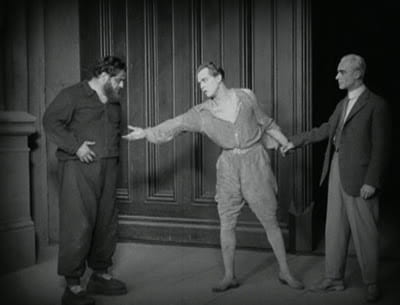
My footnotes are the hard workers of my writing, the double-checked cross-references that populate the bottom of my work yet add such vitality to it all the same. Without the footnotes the rest of the essay would lack the depth of meaning that they provide. They root my sentences in a rich soil of past scholarship which can enlighten even the densest lineage. Yet the footnotes require clarity in the text which they elaborate. For them to work I need to ensure that my own text makes sense and is readable, something which often needs a bit more thought after the first draft. I think of the relationship between the text and footnotes in a manner similar to the stratified society in Fritz Lang’s 1927 science fiction masterpiece Metropolis; the footnotes are the hands to the text’s head, the evocation of thought that elaborates on the essay’s thesis.[1] Yet without the footnotes’ deeper connection to the human experience the world above soaring high into the heavens with the foolhardiness of the biblical Babel would awaken to find its words meaningless.

“The Mediator Between the Head and the Hands Must Be the Heart.” Photo source (and a good blog on the workers of Metropolis).

Citations are a form of cross-referencing that was engrained into me from even my elementary school years. I remember seeing footnotes in some of my favorite childhood books, in particular in Watership Down and I believe in The Lord of the Rings trilogy. I wanted to use them on my stories from as early as elementary school but didn’t have a proper need for them until I was an undergraduate writing essays that needed full and clear sources for their work. It’s funny to me now because I do often read peer-reviewed articles that don’t have the same rigorous citation systems in place as the one that I committed myself to over a decade ago now. My rule is that if I make a fact-based claim then I cite it, regardless of how important it is to the argument. I know from my own experience scouring academic databases for secondary sources on André Thevet (1516–1590) and his contemporaries that even the smallest off-hand mention of the man in a source that may have very little to do with him could nonetheless lead me to another source that has a great deal more to offer the Thevet scholar. It made me laugh earlier this week reading one such book that made a fairly large claim about its subject without providing sources for all of the historical figures mentioned in a given sentence, just the ones the author clearly thought were more important.

The way I think of citations resembles how Surekha Davies, one of the leading experts in the field of Renaissance monster studies, described the category of the diagram in a 2020 essay for Aeon. Like Davies’s diagrams, citations “are devised by interpretative communities made up of readers, makers, and practitioners. Each interpretative community has its own distinct pictorial language.”[2] In this context, that language is the style guide for citations in use. Access to the information contained in my citations is eased by using an accepted and standard style, in this case the notes-bibliography system set by the Chicago Manual of Style, which just published its 18th edition last NovemberThere lies the rub of this: citations embed a strong sense of subjective importance in their nature. I try to cite anything and everything that goes into my work, while others will only cite those things which they deem to be the most valuable to their reader. I’ve always looked toward a wider readership, maybe hoping to catch the eye of my colleagues, graduate students, and the odd bookshop aisle walker alike who happens to see my work on the shelf. My more liberal use of footnotes reflects this preference for a wider readership; I try to have enough information in my citations to go around for anyone who may be curious about the connections between my work and its peers and ancestors. I understand the argument that older secondary literature often has less to contribute to contemporary conversations, my dissertation committee for instance asked me to write a new historiography document that only focused on the literature that I’ve used which was published since the millennium. Yet in the twin magnetic poles between which lies my field, Renaissance Studies and the History of Natural History, my historiography begins in the former with Jacob Burckhardt’s 1860 The Civilization of the Renaissance in Italy and in the latter with the likes of Linnaeus adapting new understandings of the natural world from the sixteenth and seventeenth-century perceptions of it which include Thevet’s own cosmography. This is to say that my historiographic timeline begins far earlier than many, and I have to take the full scale as well as the particular scope of it into account.

The earnestness with which I approach my sources is reflected in the quality of my work. I’ve long heard words of warning about particular institutions as places that promote competition between graduate students and between faculty in order to keep the flow of a high level of research and writing. I for one initially heard this and felt a sense of trepidation, why not if I couldn’t keep up with the best of my colleagues. And yet, when I’m in the flow of my writing, things are magnificent. I wrote the first draft of an article of mine that’ll be coming out in the December special issue of Terrae Incognitae in the period of about a week last summer; it uses sources that I’m very familiar with, in fact an expert on, and it makes an argument I’d been thinking about for some time when I sat down to write it. That article’s gone through several rounds of revision since, yet from the beginning one area that needed minimal rewriting were my citations. Today I have another paper I plan on writing in the next few weeks that I initially conceived of in a proposal to another journal special issue, yet I decided to go ahead and write anyway; after all, if that first journal rejects my proposal, I can always send the finished manuscript to somewhere else.

The rub of all of this is that by getting my citations down early, I’ve started my work in a strong place that’s only grown stronger and more resolute with each essay that I write.


[1] S.T. Kane, “Metropolis,” in Wednesday Blog 3.20, (11 January 2023).

[2] Surekha Davies, “Here be black holes: Like sea monsters on premodern maps, deep-space images are science’s fanciful means to chart the edges of the known world,” Aeon (13 July 2020), https://aeon.co/essays/how-black-holes-are-like-sea-monsters-at-the-edge-of-our-vision.


On Vanity

This week, I reflect on the role of love in balancing between self-praise and community in a discussion of vanity.—Click here to support the Wednesday Blog: https://www.patreon.com/sthosdkane


This week, I reflect on the role of love in balancing between self-praise and community in a discussion of vanity.


Today, in Rome the College of Cardinals will convene for the new conclave to elect our next Pope. By the time you read this we may have already seen white smoke rise from the chimney and met our new pontiff by his papal name on the balcony of St. Peter’s. Or more likely when you read this the cardinals will be amid one volley or another of voting rounds and deliberating their right course of action. Since the death of Pope Francis, I’ve felt rebuffed by the electoral speculation over who will be the next pope; by and large I’ve avoided reading any of these articles or watching any of these analyses. On the one hand, in my lifetime these lists of papabili have often been wrong. Francis was an unexpected choice. Yet on the other hand I see a sense of vanity in all this speculation which seeks the political power of the Papacy while ignoring its pastoral nature. I’ve long heard that the eventual choice of Pope is supposed to be directed by the Holy Spirit, whispering perhaps into the ears of the men in red like God did to Elijah in the cave. In my own experience, I’ve seen this most in the realization that the best path for me to take often is the strangest or most winding in character.

It takes a great deal of humility to take that particularly uncertain way in life, to not know where you’re going to end up. You have to learn to trust in yourself and in the people around you to make that path work. I’ve learned to expect things to break, and nothing that I try to work, and to figure out how to move forward in spite of what I’d dreamed and hoped for. I try to learn from my experience even when it is painful or heart wrenching to see dreams vanish and new realities, perhaps less glowing than what I hoped for, take their place. Still, the best way in my experience is to be patient and let things grow naturally around you and within you. The initial instinct isn’t always accurate, yet it should not be discounted either. There are days when the useless is best just to let your mind rest and decide where to go next. The late Renaissance French humanist essayist Michel de Montaigne (he actually wrote “I am no philosopher”) wrote in his essay “Of Vanity” of the men of his own time when France was wracked by forty years of civil war, “a time when it is so common to do evil, it is practically praiseworthy to do what is merely useless.”[1] I am often focused on resolving questions by finding immediate solutions, even if they are smaller steps leading to a greater whole. Yet in recent weeks I’ve found those solutions aren’t always needed or warranted, for they can sift the complexities of a problem so far down that the problem itself slips through the strainer and remains unresolved.

I recognize a degree of vanity here; I figure I have a strong mind and being reasonably well educated that I can attend to any problem and find a logical solution. Yet logic cannot account for humanity in all our chaos and charm. The character and nature of humanity is to spy ourselves in the glass and be marveled by it. We can be so caught in imagining our own glories and our own defeats that we miss the lived moments in between when we are surviving the daily fare and writing even the smallest of verses which will contribute to the song of our lives. I’ve learned to accept that my wishes for things are not always going to happen, and that as much as I warm my soul with dreams of wonders to come those dreams will only be realized by living with the people around me, learning about them, trying to understand them, supporting them, and appreciating them for who they are. Why enforce my own persuasions on you when I could appreciate you, dear Reader, for your own self and your cosmovision? This is a word I only recently learned, I saw it first in Surekha Davies’s new book Humans: A Monstrous History. It seems to originate in Spanish as a way of expressing the way in which reality is subjectively understood through our sensory perceptions. Descartes’s famous maxim for knowledge, “I think, therefore I am” means in this sense that we know what we know because we can perceive it. The cosmos in all its wonder is familiar to us through our sight, hearing, smell, and touch. I would much rather wait to hear your song and listen to it harmonize with mine than pull your voice into my own melody against its own nature.

Montaigne admired those in his generation who kept up the good nature of humanity, its customs, laws, and mores in spite of the world around them losing so much of that common purpose. In quoting Cicero, “not by the calculation of your income, but by your manner of living and your culture, is your wealth really to be reckoned,” the essayist speaks the greater value of a good life enriched by a passion for community and a charitable outlook on our pursuits.[2] While I’m a practicing Catholic, ever striving to be more faithful in my life, I firmly believe with my whole being that the state should be secular, the better to reflect the totality of the people from whom government derives its power. I would be vain to demand that the state reflect my Catholicism at the detriment of all my neighbors, even my fellow Catholics, whose faith is personal and distinct from my own. A good person recognizes this and seeks communion through mutual respect and appreciation. The most central tenant of my faith is that God is love, άγάπηφιλίαand ἕρως alike in the original Greek, and the greatest expression of this love is in our liberty to make our own lives, our free will. If we are meant to live in this image then surely we ought to lower our pride and our vanity and hail the liberty of those around us to live their own lives and make their own choices?

For much of my life I’ve had a hard time taking criticism. I’m better at it today, yet it still is a something I know I will always need to work on. I’m no longer in a state of mind where I feel that I need to justify my actions or choices to everyone. On the inverse side, several years ago I finally caught myself trying to deflect praise with a witty quip that deflated some of the experience. This is something that I’d been doing for a long time perhaps to not inflate my ego too far. I went through my phase of wanting to be important, wanting to be a leader, and to be at the front of things and today when I am in that position in so many organizations, I’ve found that it’s much more fun to be a part of a team working together to achieve our common ends. Together these twin forces pull me toward a humility that I hope keeps me grounded, in which I’ve allowed myself to experience my successes while embracing the troubles that occurred in the course of those victories.

In my academic career I’ve published to date one public-facing article about my historical zoology research into the three-toed sloth and an encyclopedia entry titled “Amerindians in Brazil” for the volume South America: From European Contact to Independence which was published earlier this year. In both instances, I’ve since found things that I got wrong. It was a bit of a shock at first to realize this. In the case of the encyclopedia entry, I made a rather large error in misgendering a god, the Tupi deity Maire-Monan who I interpreted as feminine following the lead of the sixteenth-century Portuguese authorities, only to realize while I was writing a book chapter last summer about magic in Shakespeare’s play The Tempest the error I’d made. As such, the correction to the encyclopedia entry appears in the footnotes of that forthcoming chapter. Likewise, in the editing stage of a forthcoming article of mine, my first peer-reviewed article to be published, I was presented with conclusive evidence that my prior conclusions that the three-toed sloth found in my sources cannot be definitively identified as a southern maned sloth (Bradypus crinitus) as I’d written in that article “The ‘Sufficiently Strange’ Sloth” for EPOCH Magazine’s June 2024 issue but is in fact more likely either a northern maned sloth (B. torquatus) or a brown-throated sloth (B. variegatus). That prior assertion in favor of the southern maned sloth stands corrected now not only in my forthcoming article “A Sloth in the First French Colony in the Americas” but also in the latest draft of Chapter 3 of my dissertation.

A few years ago, I would have still had significant trouble accepting these critiques out of a strong sense of embarrassment at making such a mistake. In the case of the sloth’s historical zoology, I thought I read all there was to read about the different three-toed sloth species which live in the Brazilian Atlantic Forest, yet I was proven wrong by a generous reviewer who even offered a bibliography of where I could look to find more reliable information. Were, I always fixated on the looking glass of my successes I would surely miss the flaws that pronounce my humanity and not see the ample room for growth. I know that I’m not perfect, in fact I revel in the fact. And while my faith exists, I challenge anyone who claims to know definitive things about matters of belief whether they can really know the mind of God, a concept which as I wrote previously in my blog post from 12 March titled “The Divine Essence,” that divinity extends in scale far beyond human comprehension.

These last few years I’ve long felt a sense of disconnect between the two poles of my life. On the one hand in Binghamton, I felt a sense of professional accomplishment, I was at a good university conducting research and teaching, and a part of an academic community, however disparate that community was in practice. Yet I missed my family, I missed the Midwest, my home cities of Chicago and Kansas City became longed for isles of the blessed far to the west on the flatlands beyond the Appalachians. I longed to be active in my parish and to offer my talents to my brother Hibernians in elected office. I missed the regularity of the live music in Kansas City, the greater presence of the Kansas City Symphony in this city than anything I could find in Binghamton. Yet when I left Binghamton at a moment when I know I needed to leave, I found that I gave up more than I necessarily wanted. I lost that sense of professional accomplishment and surrounded myself by friends from beyond the academy who appreciate what I do but don’t necessarily understand the nuances of it. In the last few months, I’ve found something of that professional community through the learned societies that I’m a part of and at academic conferences where once again those two poles seem linked by a common axis. That axis is essential to a good life because it provides the balance which allows the individual to truly live to their fullest potential as a part of a wider community. I’ve known true solitude, a mantra of mine in recent weeks has been the simple Irish phrase, “Is mé i m’aonar,” or “I am alone.” It’s a plaintive call of sorts, yet it’s also a moment to learn from, that as much as I’m used to this existence that I want to grow out of it. Montaigne wrote in “Of Vanity” that “it is pitiful to be in a place where everything you see involves and concerns you.”[3] This is the solitary life, a life where about you all things revolve, and what’s worst about it is that it can be lived in community. Alone together was a phrase I read time and again during the recent pandemic. Yet even then with our need to stay apart we found ways to be together. I spent much of the pandemic years here in Kansas City rather than in Binghamton and still felt far more closely attuned to my professional community and the friends who populate it. 

In these past few weeks, I’ve been happiest when I’ve had that connection with my family and friends, when I’m with other people and experiencing their lives, their passions, their perceptions of our shared world. I put faith in the currency of human connection and community because that is the most valuable coinage I’ve yet seen. All the gold and silver that humanity has ever mined cannot compare with the value of community and the humility it brings out in all of us. I have many highly accomplished, brilliant friends, and I’m delighted to count myself among them. There is some vanity in these friendships, after all we approach each other with our own experiences and stories to share, highlighting the things we’ve done, yet in a good relationship we do so to elevate our friends and encourage them to seek greater things for themselves. I feel fortunate to have met these friends, and to be able to put my talents to use serving our common cause.This week then as the cardinals vote in Rome, I hope they will look not just to their own personal interests, theological bent, or political persuasion. I pray they will listen for that suggestion that seems just strange enough that it could be right, and that they chose a Pope to lead our Church who will continue to build bridges that may close the divides erected for millennia between ourselves and so many of our fellows. I hope for a pope who will be a friend to all, a good diplomat who can unite disparate peoples together into one common cause. May his humility guide him to be the pope we need now in the second quarter of the twenty-first century, and when he is elected may we rise to the occasion to better ourselves.


[1] Michel de Montaigne, The Complete Essays of Montaigne, trans. Donald M. Frame, (Stanford University Press, 1965), 3.9., p. 722.

[2] Montaigne, Essays 3.9., p. 724.

[3] Montaigne, Essays 3.9., pp. 725–26.