Tag Archives: Theology

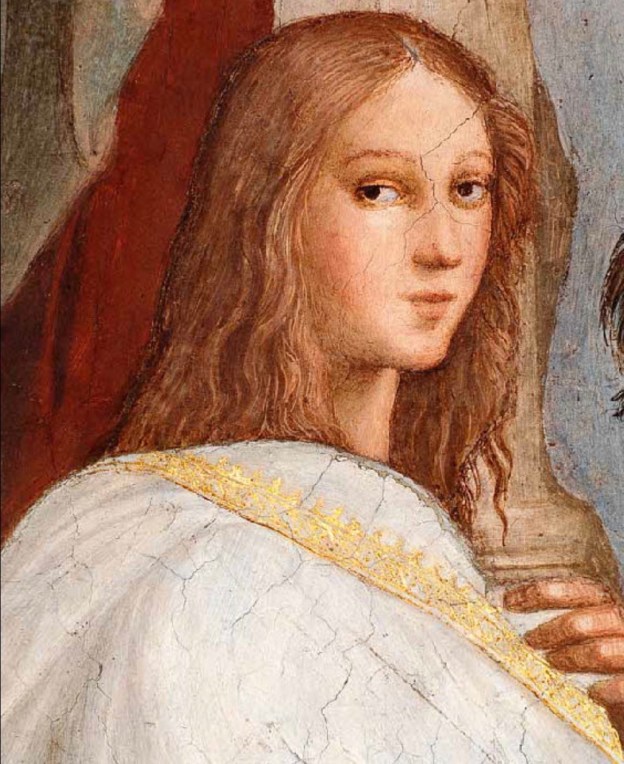
A figure from Raphael's "The School of Athens" variously identified as Francesco Maria della Rovere, Pico della Mirandola, or Hypatia of Alexandria.

On Knowledge

This week, I want to address how we recognize knowledge in comparison to the various fields of inquiry through which we refine our understanding of things.—Click here to support the Wednesday Blog: https://www.patreon.com/sthosdkaneArtRaphael, The School of Athens (1509–1511), Apostolic Palace, Vatican Museums, Vatican City. Public Domain.Sources“On Writing,” Wednesday Blog 6.27.Surekha Davies, Humans: A Monstrous History, (University of California Press, 2025).Marcy Norton, The Tame and the Wild: People and Animals After 1492, (Harvard University Press, 2024), 307.Dead Poets Society, (1989) "What will your verse be?" Video on YouTube.


This week, I want to address how we recognize knowledge in comparison to the various fields of inquiry through which we refine our understanding of things.


Lately my work has been dedicated to a thorough review of the historiography within which I’m grounding my dissertation. I wrote about this two weeks ago in an essay titled “On Writing.”[1] My research is historical, yet it touches on secondary literature which operates within various fields within the discipline of history. These include Renaissance history, and its larger sibling early modern history, the history of cartography, the history of animals, the history of botany, and more broadly the history of early modern science. Methodologically, I owe a great deal to two great twentieth-century Francophone anthropologists, Alfred Métraux (1902–1963) and Claude Lévi-Strauss (1908–2009). While Métraux and Lévi-Strauss aren’t considered directly in the historiographic section of the new introduction that I’m writing for my dissertation, which is limited to sources published since the millennium, they nevertheless stand tall in the background of my history.

Today we often talk within academia about a desire for interdisciplinarity in our work and our research. We’ve found ourselves too narrowed by our ever shrinking fields and seek greener common pastures for grazing as our intellectual and pastoral ancestors alike once knew. In my case, this interdisciplinarity lies more in my efforts to incorporate historical zoology into my work, a methodology which seeks to use zoological methodology and theory to explain historical animals. I have friends who study many things. Among them is one whose passion for history, classics, and mathematics has come together to craft a dissertation which seeks to demonstrate the intersections between those three to better understand the great transitions in human inquiry. Another seeks to follow the medical connections across oceans between disparate regions in the Americas and Europe that nevertheless existed even if they seem remarkable today. Still more, I have a friend who applies basic economic need to explain a complex diplomatic situation that once existed between the Venetian Republic and the Ottoman Empire in the Adriatic Sea. All of these historians of whom I write are applying a degree of interdisciplinarity to their work that reflects their own disparate interests and curiosities. In early modern history we talk about curiosities as objects which were collected from disparate and exotic lands into cabinets to display the erudite collector’s prestige and wealth. I say our curiosity is something to be collected by those worthy archives, libraries, museums, or universities that will employ us in the near future and for us to feed with new ideas and avenues of investigation that we will never be bored with life.

In all of these things, there is an underlying genre of knowledge which I am addressing. I’ve written thus far about history alone, yet it is the same for the anthropologists, astronomers, planetary scientists, and physicists who I know. Likewise for the literature scholars and the linguists. Our fields of inquiry all grow on the same planet that comprises of our collected knowledge. In English, this word knowledge is somewhat nebulous. To me, it says that we know things broad or specific. In London, for instance, the Knowledge is the series of tests which new cabbies must complete in order to learn every street within a certain radius of Charing Cross. The Latin translation of this word, scientia, makes things even more complicated as that is the root of the English word science. Thus, when we refer to Renaissance science, there is always a caveat in the following sentence explaining that “this is not science as we know it but a sort of protoscience.” I was advised, similarly, after a particularly poorly received presentation at a workshop at the Museum of Natural Sciences in Brussels in October 2023 that I shouldn’t refer to “sixteenth-century conservation” because no such concept existed at the time; instead, it would be better to discuss a “genealogy of conservation.” This sense that modern terms, in use since the Enlightenment of the eighteenth century, ought not to be pulled further back into the past I think loses some of the provenance of those terms and how the Enlightenment philosophes first came across them. 

I find it telling that the Ancient Greek translation of knowledge, γνῶσις (gnôsis), is a word with which I’m more familiar from theology and the concept of Gnosticism whereas scientia reminds me of philosophy and the other fields of inquiry which grew from that particular branch of the tree of human curiosity. One might even say that philosophy and theology are a pair, siblings perhaps? They seek to understand similar things: on the one hand an inquiry into thought, and ideally wisdom, and on the other a search for the nature of the Divine, which at least in my Catholicism we can know because we are made in the Image of God. The division here between the Ancient Greek term being affiliated with faith and the Latin one with reason I think speaks to the Latin roots of my own education in Catholic schools and at a Jesuit university, where I learned about Plato and Aristotle, yet I recognized Aristotle’s Historia animalium (History of Animals) by its Latin name by which it was generally known in Western Europe for centuries before the rise of vernacular scholarship rather than by its Greek original Τῶν περὶ τὰ ζα ἰστοριῶν (Ton peri ta zoia historion). Note that the English translation of this title, History of Animals reflects better the Latin cognate of ἰστοριῶν rather than the better English translation of that Greek word, Inquiry.

Added onto these classical etymologies, in my first semester Historiography class at Binghamton University I was introduced to the German translation of scientiaγνῶσις, and knowledge. Wissenschaft struck me immediately because I saw the German cognate for the English word wizard in its prefix, and because I knew that the -schaft suffix tends to translate into English as -ship. Thus, my rough Anglicization of Wissenschaft renders Wizardship, which is rather nifty. Yet this word Wissenschaft instead was seen in the nineteenth century as a general word which could be translated into English as science. This is important for us historians trained in the United States because our own historiographic tradition, that is our national school of historians traces our roots back to German universities in the early and middle decades of the nineteenth century. I remember long sessions of my historiography class at UMKC discussing the works of Leopold von Ranke (1795–1886), the father of research-based history. I felt a sense that this concept of Wissenschaft seemed relatable, and as it turned out that was because Irish has a similar concept. 

Whereas in English we tack on the suffix -ology onto any word to make it the study of that word, in Irish you add the suffix -ocht. So, geology is geolaíocht and biology is bitheolaíocht. Yet note with the second example that the suffix is not just -ocht but an entire word, eolaíocht. This is the Irish word for science, added onto the end of bitheolaíocht to demonstrate that this word refers to the study of bith- a prefix combining form of the word beatha, meaning life. So, biology then is the science of life itself. Powerful stuff. I appreciate that Irish linguists and scholars have sought overall to preserve our language’s own consistency with its scientific terminology. It means that these fields of study, these areas of knowledge, can exist purely within the purview of the Irish language without any extra need to recognize that their prefixes or suffixes come from Latin, Greek, or English. There are some exceptions of course: take zó-eolaíocht, the Irish word for zoology, which effectively adopts the Greek word ζῷον perhaps through the English zoo into Irish. Would it not have been just as easy for whoever devised this hyphenated word to instead write ainmhíeolaíocht, translated into English as the science of animals? Here though I see more influence from English because this language adopts as much as it can from other languages out of prestige and a desire for translingual communicability. As an English speaker, I find scholarly works often easier to read because we share common etymologies for our words relating to knowledge. English’s sciencegeology, biology, and zoology are French’s sciencegéologie,biologie, and zoologie. In English, we drop any pretense of Englishness to clothe ourselves in a common mantle familiar to colleagues from related cultures around the globe. In academia this is to our mutual benefit, after all so much of our work is international. I’m regularly on webinars and Zoom calls with colleagues in Europe for instance. I believe this is the lingering spirit of the old scholarly preference for Latin as a lingua franca which at least to me seems close enough in the past that it’s tangible yet realistically it’s surely been a very long time since any serious scholarly work beyond classics was published in Latin for the benefit of a broad translingual readership?

I for one admire the Irish word eolaíocht and its root eolas, which translates into English as knowledge, that is an awareness of things because eolaíocht represents a universal concept while retaining its own native nature. So often in my research I am discussing the early assimilation of indigenous cosmovisions, to borrow a Spanish word put to good use by Surekha Davies in her latest book, into the nascent global world centered on Europe.[2] I see how these cosmic conceptions faded until they were rendered in Gothic or Latin letters on the voluminous pages of encyclopedic Renaissance general and natural histories which remain among the most often cited primary sources for these indigenous cultures who Marcy Norton argued in her 2024 book The Tame and the Wild: People and Animals After 1492 had their own classical past made remote from their colonial present by European contact, conquest, and colonization.[3] Seeing these indigenous perspectives fade into their categorized and classified statuses within the cosmos defined by Europe’s natural philosophers I feel fortunate that my own diaspora (which was also colonized) has retained this element of our individual perspective. I first came across the -ocht suffix in the word poblacht, the Irish word for republic. A famous story from the birth of the Irish Free State during the Anglo-Irish Treaty negotiations in 1921 tells of British Prime Minister David Lloyd-George, a Welsh speaker, remarking to Michael Collins, an Irish speaker, that their choice of a republic was unusual because none of the Celtic languages naturally have a word for republic. That word evokes its Roman roots in the ancient Res publica Romana, the Roman Republic, whose northward expansion across the Alps led to the gradual death of the Continental Celtic languages, whose speakers’ descendants today are largely the Western Romance speakers of French, Romansh, Occitan, Catalan, Spanish, Galician, and Portuguese, among others. Romance languages are noted for their common descent from Latin, whence they all derive variations on the Latin word scientia; English gets science through Old French. “How are you going to name your new government in the Irish language?” Lloyd-George asked. Collins replied something along the lines of “a kingdom is called a ríocht, so this government of the people (pobal) will be called a poblacht. Thus, the Republic of Ireland is named in Irish Poblacht na hÉireann. Naturally, this word pobal derives from the Latin populus, so the shadow of Rome hovers even over unconquered Hibernia. Yet that is another topic for a different essay.

Let me conclude with a comment on the difference between knowledge and wisdom, as I see it. The former is far more tangible. We can know things through learning embodied best in living and in reading. I know for instance to look both ways before crossing a street because plenty of people in the last 140 years have been hit by cars, buses, and trucks, and you can never be too careful. Likewise, I know everything I do about the things I study through reading what others have written about these topics. It’s my job then to say what I will. In Whitman’s words made immortal by our recitation, the answer to the eternal question, “that the powerful play goes on, and you may contribute a verse.” That’s history, people! Reading the powerful play of what others have written and summoning up the courage to take the podium and have your say. I first heard this particular poem, as did many in my generation, recited by Robin Williams in the 1989 film Dead Poets Society. Knowledge is the recitation of these facts we’ve learned. Wisdom is understanding how these facts fit together and speak to our common humanity. What makes us human? I believe it’s as much what we know as what we remain ignorant of. Our ignorance isn’t always a curse, rather it’s another foggy field we’ve yet to inquire about, a place where someone’s curiosity will surely thrive someday. It is another evocation of eolas still to come in our long human story. How wonderous is that?


[1] “On Writing,” Wednesday Blog 6.27.

[2] Surekha Davies, Humans: A Monstrous History(University of California Press, 2025).

[3] Marcy Norton, The Tame and the Wild: People and Animals After 1492, (Harvard University Press, 2024), 307.
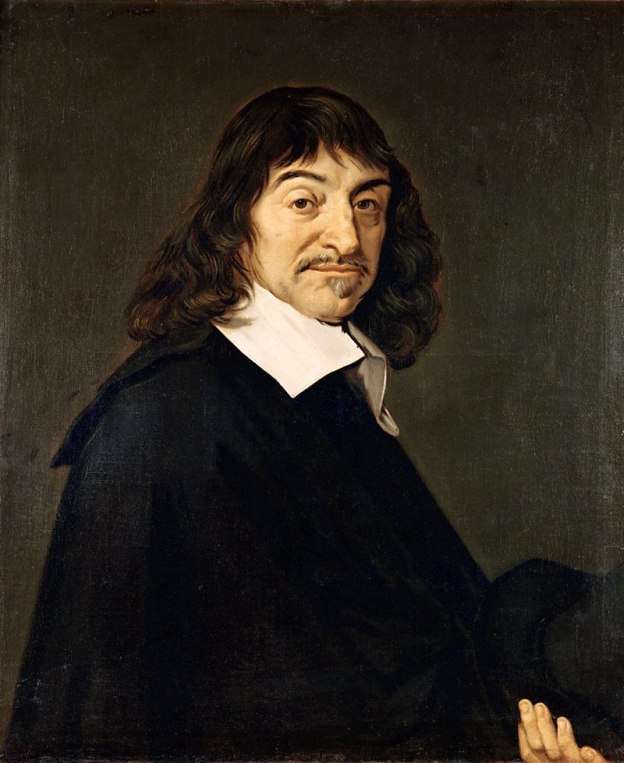

Three Ologies

This week, talking through three terms I’ve historically had trouble understanding: epistemology, ontology, and teleology.—Click here to support the Wednesday Blog: https://www.patreon.com/sthosdkane


This week, talking through three terms I’ve historically had trouble understanding.


A major turning point in my life came at the end of 2014 when I decided to drop my philosophy major to a minor and not take the final class that I needed to complete that major. The class in question was Continental Philosophy, and it remains one of those decisions that I regret because it closed some doors for me in the long run even while it seemed like a reasonable decision in the short term. A year later, now working on my master’s degree in International Relations and Democratic Politics at the University of Westminster, I was reminded daily that I really should’ve just taken that last class because so much of what we were studying was based in continental philosophy.

I initially pursued a triple major in History, Philosophy, and Theology and a double minor in French and Music at Rockhurst University. I was quite proud of the fact that up to that point in my seven completed semesters at Rockhurst that I’d been able to juggle those three majors and the two minors while still having an active and fulfilling social life on campus. I went into Rockhurst with several vague ideas of what I might want to do with these degrees when I was finished; notably I remember both considering doing a Ph.D., likely in History, and possibly going from Rockhurst either into the Jesuit novitiate or into a diocesan Catholic seminary to become a priest. The first four years of Catholic seminary is comprised of that philosophy bachelor’s degree, so it felt like a good idea to undertake that at Rockhurst and keep the door open.

Now ten years after I would’ve finished my undergraduate with that philosophy degree, I realize that even as I continued to consider holy orders that I may well have properly begun to close that door in my early twenties, not feeling that the priesthood was the right fit for me in spite of what many people have said. Even then, most of the other professions that I’ve considered have been shrinking in one way or another in my lifetime. It feels here as in so many other aspects of my life that I was born at a high point in our society’s capacity to consider the arts, humanities, and even the sciences and that as I’ve gotten older that capacity has diminished time and again. Even while I continue to be frustrated to remain in these wilderness years, I nevertheless continue to learn and to grow in my understanding of what is possible for me to do in my career.

In the last seven years I’ve reasserted myself as a historian first and foremost, settling into the Renaissance as my period of study in late 2017 and gradually shifting from considering the history of Englishwomen’s education to the history of translation to now the history of natural history. Yet all of these disciplines lie under the common umbrella of intellectual history. My manner of writing the history I craft tends to speak toward French notions of mentality and perception, while the economics I still occasionally encounter in my work speak to Max Weber’s notions of capitalism as a broader Cross-Channel enterprise including Brittany and Normandy alongside England, Picardy, Flanders, and the Dutch Republic. I’m beginning to try out a new method of writing history that draws on the natural sciences to better understand the animals and other natural things described by my Renaissance cosmographers and natural historians.

Amid all of this, three words continue to appear, three words which I have often had trouble remembering their meaning. These three are epistemology, ontology, and teleology. In spite of my training in Ancient Greek, I still have trouble keeping these three apart. They represent three central tenants of philosophy which help make sense of how we understand things. It may not sound like the strongest topic for a riveting podcast episode, but for those of you listening bear with me.

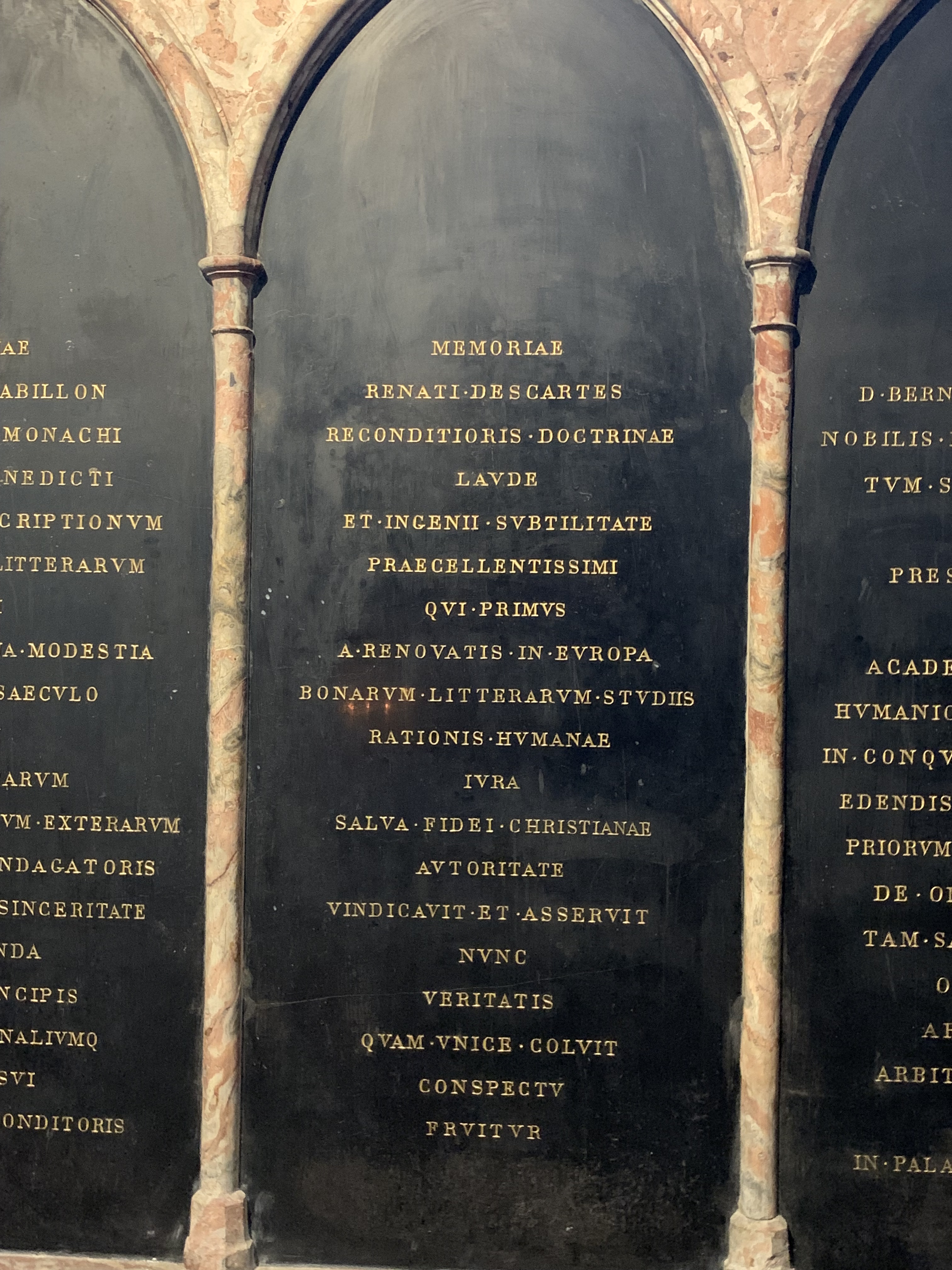
Descartes’s tomb, photo by the author.

Epistemology is the theory of knowledge. It distinguishes things which are justified from mere opinions. This theory of knowledge considers propositions about facts, practices which form knowledge, and familiarity with an object thus allowing the subject to know it. This word episteme in Greek (ἐπιστήμη) translates into English as both knowledge and science. Science itself is a word which at its core refers to knowledge, for the root Latin verb sciō means “to know.” We know for instance that we exist because we can recognize our existence, in Descartes’s famous words “I think, therefore I am.” I made a point of visiting Descartes’s tomb in the Abbey Church of St. Germain-des-Prés when I was in Paris in October 2023 because so much of my own philosophy is Cartesian in its origins. I reject the principle that we could be living in a simulation on the grounds that based on what we can know and perceive we are not inclined to accept such a suggestion.

The second of these words is ontology, a branch of metaphysics dealing with the nature of being. This word derives from the present participle of the Greek to-be verb εἰμί. I stand by my assertion that the life we are living is real because we can recognize it in large part because the best explanation that I’ve found for the course our history has taken is reliant on us having the freedom to decide the courses of our own lives. This free will explains how a society can seem to take steps backward even while the chaos those retreats cause is to the society’s detriment. The method which I am developing in my research to understand the nature of historical animals using modern scientific research is ontological in character. I can test if this method will work by applying it to particular individual animals who appear in the historical record and determining their true character by a process of eliminating candidate species until the animal’s own species is determined. In this search for the nature of these animals I hope to prove that the historical past, before the development of the scientific method in the seventeenth century, is valuable to the natural sciences as a means of understanding the longer-term nature of other animals during the period in which human influence upon nature was growing toward the Anthropocene which we find ourselves in today.

I like to think of ontology in the linguistic context of how the copular to be verb appears in our literature. Think, for instance, of how God is identified in the Bible. In the story of the burning bush, the Divine is referred to as “I Am that I Am,” or rather the purest expression of existence. For this reason, when I was an undergraduate in my theology major, I began to refer to God as the Divine Essence owing to the root of essence in the Latin copular verb. English recognizes a far wider set of states of being than does Irish. Where in English I might say “I am sad,” in Irish I would say “sadness is upon me,” or “Tá brón orm.”

The third of these words is teleology. This is the explanation of phenomena in terms of their purpose rather than the manner of their invention. Τέλος (telos) is the Greek word for an end, an aim, or a goal. The purpose of something’s existence then is at focus here. I do question this idea that we have a specific purpose in life, perhaps because mine has not gone quite how I expected. In my Catholicism, the most teleological concept we retain is the idea of a vocation either to holy orders, marriage, or to the single life. The teleology at play here speaks to some sense of destiny which I feel stands in opposition to our free will. Perhaps there is some purpose to life, at its initial conception in the first moments that matter began to form in the void that became our Universe, yet I do not believe that I can perceive any intended influence beyond the flick of the first domino at the Big Bang. We may not even be sure that the Big Bang was the beginning of everything, after all there had to be energy to build up to cause such a tremendous explosion in the first place. In a theological view I would point to the Incarnation of Jesus as an example of telos in our history, I am a Catholic after all. My lingering question is where should that theological teleology interact with the other ways of knowing?

I’ve written here before about my view that belief and knowledge are two distinct yet interrelated things. One must believe in one’s senses to know, yet there are things in which one can believe without knowing which one cannot know without believing. The prime example of this is God; “I believe in One God,” it’s something I say every week at Mass in the Creed, “Credo in unum Deum,” in the Latin original of our Roman Missal. Yet God alone is a tremendous challenge to know because God is both paradoxical and far greater than the extent of my knowledge. For this reason, we had the Incarnation, as we recite in the Creed:

“I believe in one Lord Jesus Christ,

The Only Begotten Son of God,

Born of the Father before all ages.”

For God to be knowable God needed to come down to our human level in the person of Jesus, God the Son. This was Jesus’s telos, to be known, to be heard, and as we believe restore faith in God and cleanse humanity of original sin. Here there is a collision of belief and knowledge, where something clearly happened about 2,000 years ago because a new profusion of faith occurred, beginning in Judaea and spreading around the Mediterranean World in the Roman Empire and beyond to become Christianity. That new religion adapted to fit the cultures it encountered, so as to be more acceptable to its new converts. Today that collision continues in the Eucharist, the most sacred of all seven sacraments, in which we Catholics alongside our Orthodox brothers and sisters believe that God becomes flesh again in the sacramental bread and wine. Can we know that it happens? Not by any scientific measure, yet something does happen. That something is perceptible through belief, and it is the Great Mystery of the Faith that has kept me in the Catholic Church in spite of the ecclesiastical politics and divisions of our time.

My Irish Gaelic ancestors understood Christianity in their own way, aspects of which survive into the present day. That collision of belief and knowledge looks to some lingering folk belief, or superstition if you will, that I’ve inherited of particular days in the calendar when the worlds of the living and the dead could collide. We see this most pronounced in the old Gaelic calendar on Samhain, which developed through Catholicism into Halloween, the Day of the Dead, and All Souls’ Day around the beginning of November. I see All Saints’ Day fitting into this as well, after all the Saints are our honored dead all the same. Likewise, Bealtaine, the celebration of the coming of Summer at the beginning of May is also the Catholic celebration of the Crowning of Mary, something I attended at Rockhurst on several occasions.

What in all of this can I actually know? I know the stories that have survived from before St. Patrick and the coming of Christianity to my ancestors 15 centuries ago, even if those stories are Christianized in some way or another. I know this just as much as I know that Jesus existed in the first century CE because there are effects of these stories in the lives and histories that are remembered down the generations. If these stories have any teleology, it’s to teach us lessons about life that our ancestors learned so that we might not have to face the same trouble all over again. The folly of humanity is that we are resistant to having a clear purpose or end to our aims. Through our free will we know that there are always many options to choose between.I don’t know if I made the right choice in dropping that philosophy major at the last moment. In many respects, it was a poor decision. I learned from that experience and many others in my early life to stick with things until their conclusion. This learning is something that has been tested to grow beyond mere opinion through belief into something that is verifiable. When I look at my prospects in my doctoral program, I always decide to stick with it because I don’t yet know what my prospects will be like once I’ve earned it, something that I do know having 2 master’s degrees and a bachelor’s degree to my name. I have gained a great deal of epistemic experience through all these memories that have informed the nature of my character. Yet where they lead I cannot say, for the purpose of my life is something I continue to decide day by day.


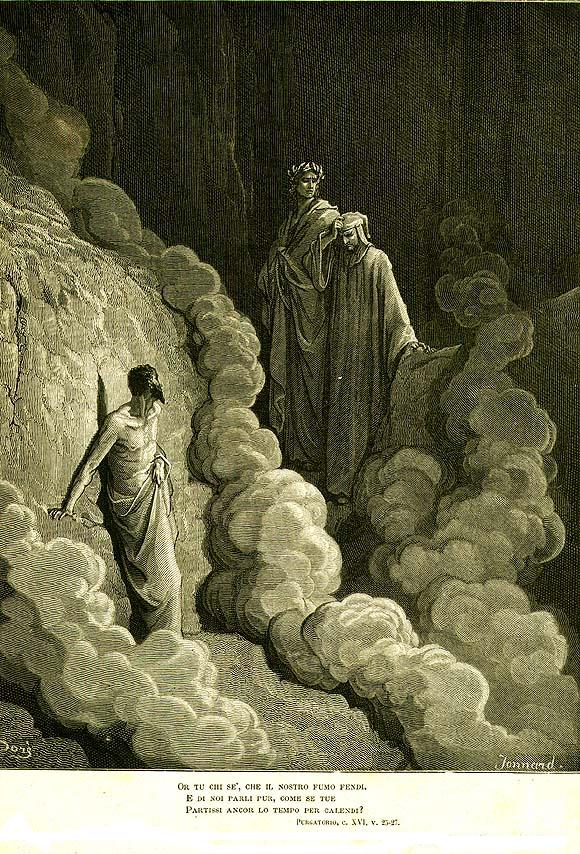
Dante and Virgil meet Marco Lombardo, envisioned by Gustave Doré.

Purgatorio

Last week, I wrote my thoughts on the first cantica of Dante’s Divine Comedy. This week then, the second part, the Purgatorio. All quotations from the Divine Comedy come from Robin Kirkpatrick’s English translation published in the 2012 Penguin edition. — Click here to support the Wednesday Blog: https://www.patreon.com/sthosdkane


Last week, I wrote my thoughts on the first cantica of Dante’s Divine Comedy. This week then, the second part, the Purgatorio.


The sentiment of purgatory isn’t a good one, it’s a place where you don’t want to end up yet often find yourself stuck for longer periods of time. I often have dreams about needing to get somewhere or to do something or find something and getting stuck in an eternal loop of steps along the way and never actually reaching that goal. There are many different ways I could interpret those dreams of mine, yet in this instance I think they may be my subconscious imagination of purgatory. 

Dante’s Purgatorio is an early depiction of this concept, though Jacques Le Goff (1924–2014), the French annaliste medieval historian wrote in the second appendix to his book The Birth of Purgatory that “the noun purgatorium was added to the vocabulary alongside the adjective purgatories.” In the next paragraph, Le Goff dated this addition to the decade between 1170 and 1180.[1] The concept itself is affirmed by the Catholic Church as doctrine today based on an interpretation of three verses from Chapter 12 of the Second Book of Maccabees, in which the author described how Judas Maccabaeus (d. 160 BCE) “exhorted the people to keep themselves free from sin, for they had seen with their own eyes what had happened because of the sin of those who had fallen.”[2] The footnote there in the New American Bible acknowledges that this passage “is the earliest statement of the doctrine that prayers and sacrifices for the dead are efficacious” and that “this belief is similar to, but not quite the same as, the Catholic doctrine of purgatory.” Dante’s depiction of purgatory fits well into this model, though he does write often of souls asking him to pray for them, as prayers for those in purgatory will speed their cleansing that they may enter Paradise again.

In this light, Dante’s purgatory is optimistic and hopeful. Sure, he encounters people who continue to suffer as they did in life from their own actions. In Canto 12, an angel proclaims to the poet and Virgil his guide, using Robin Kirkpatrick’s translation, “O human nature! You are born to fly! / Why fail and fall at, merely, puffs of wind?”[3] The cleansing path that the souls in this realm take requires tremendous effort and faith both in one’s abilities to surmount that path, and the reward for those efforts. Dante remarks later in Canto 12, “How different from the thoroughfares of Hell / are those through which we passed. For here with songs / we enter, there with fierce lamentations.”[4] The dead who walk the paths of purgatory then are working toward something, they know that they will learn in their paths the way into Paradise, it just may take a while.

The Purgatorio is remarkable for how it contrasts with the far more popular Inferno. Again, Dante stops and talks to everyone, and again nearly everyone he encounters is an Italian like him, someone with whom he can relate. He finds his fellow Tuscans among the crowds and makes his own birth well known by speaking Tuscan along his way. In several instances the souls he meets remark on the fact that he must be a Tuscan by his way of speaking, even if they themselves are Lombards, Latins, or from elsewhere. 

I found it fascinating to see him encounter the ruling elite of Europe, the kings and popes who work off their sins. In one instance he sees Henry III of England (r. 1216–1272), one of my favorite medieval English kings, who had a pretty unfortunate and quite long reign. Dante places him among several other failed rulers, including Rudolf I of Germany (r. 1273–1291), Ottokar II of Bohemia (r. 1253–1278), Philip III of France (r. 1270–1285), Henry the Fat of Navarre (r. 1270–1274), Charles I of Naples (r. 1266–1285), and Peter III of Aragon (r. 1276–1285).[5] In Canto 20, Dante meets Hugh Capet (r. 987–996) who succeeded the last of the Carolingians as King of the Franks and founded the great medieval French royal dynasty which still exists as the Royal Family of Spain today. Capet sees his old life as something distant from himself: 

“I was, down there, called Hugh Capet once.

From me were born those Louis and Philippes

by whom in these new days our France is ruled.

I was from Paris, and a butcher’s son.

And when the line of ancient kings died out ––

All gone, save only one who wears a monk’ dark cowl ––

I found my hands were tight around the reins

That govern in that realm, and so empowered

In making that new gain, with friends so full,

that, to the widowed crown my son’s own head

received advancement. And from him began

our lineage of consecrated bones.”[6]

In this world which he devised, Dante created tangible settings where the soul is cleansed after its life and before its final entry into Paradise. Dante himself climbed high until by the time he reached Canto 15, the suffering and toil of purgatory cleansed his own soul, so that in place of any other emotion “caritas burns brighter.”[7] The distinction in Latin between caritas and amor is something that I remember being discussed at length in my undergraduate theology classes at Rockhurst. These Latin terms are in turn translations of the Greek originals ἀγάπη and ερως, which I’ve come to understand as a distinction between charity and romance. The higher Dante and the penitents climbed up Mount Purgatory, the purer their souls became so that the affection they felt for their fellows and for all things was less a love that desired something of each other rather than a love that wished only to exist in communion with each other. In my fraternal order, the Ancient Order of Hibernians (AOH), our motto of “Friendship, Unity, and Christian Charity” speaks to this vision of love as charitable, unifying, and amicable. Purgatory was intended to replace fear and “penitential tears” with charitable love:

            “If love, though, seeking for the utmost sphere,

            should ever wrench your longings to the skies,

            such fears would have no place within your breast.

            For, there, the more we can speak of ‘ours’,

            the more each one possesses of the good.

            and, in that cloister, caritas burns brighter.”[8]

In purgatory, the penitents seek to cleanse themselves, and to cleanse the world in time as well. In Canto 16, the medieval Italian courtier Marco Lombardo remarked to Dante that societal corruption stems from the government:

            “So — as you may well see — bad government

            is why the world is so malignant now.

            It’s not that nature is corrupt in you.”[9]

The hopes then of the penitent are that not only will they enter the Gates of Paradise but that all those who they left behind on the Earth will also join them and God among the heavenly spheres in their own time. Marco Lombardo remarked to Dante that “of better nature and of greater power / you are free subjects. And you have a mind / that planets cannot rule and stars concern.” In this, Marco reminds Dante that the key to Paradise is accepting one’s responsibility for one’s actions and life and being honest and free about one’s mistakes. Dante experiences this at the end of the Purgatorio, when he at last arrived in the Garden of Eden, located at the top of Mount Purgatory. There, he encounters his beloved Beatrice, the love of his life who sent the poet Virgil from the first circle of Hell (Limbo) to guide Dante to this point where he will at last be reunited with her.

Yet when Beatrice sees Dante standing there in the garden, she admonishes him for his sins and faults when she was alive and afterwards. She challenges him to be better, and to give up the last of his fear and worry, he had not come to her in the usual way after his own death. Beatrice challenged Dante, silencing him with sharp words that he did not expect of her:

            “Respond to me. Your wretched memories

            Have not been struck through yet by Lethe’s stream.”[10]

To advance further, and to be with his beloved again, Dante needed to forgo his feelings of fear and worry, remorse and sorrow, and instead embrace the moment in which he was living, standing there in her sight and hearing her voice.

            “And yet –– so you may bear the proper shame

            your error brings and, hearing, once again,

            the siren call you may show greater strength ––

            put to one side the seed that nurtures tears.”[11]

Beatrice is the first one in the entire Purgatorio who calls Dante by his name, the first to properly recognize him for who he is, more than just the wandering Tuscan poet or the Italian. I’ve often thought about how I would reveal characters’ names in my stories. I like to slowly peel away the layers of fog surrounding a narrative and let the audience discover the characters’ names in a more natural fashion. In a story I’ve begun to write, a sort of cleansing purgatory for the main character, his name is not uttered until after he has passed through these great circles of repentance in his own wandering way home.The Purgatorio concludes in a very mystical fashion, heralding the beginning of the Paradiso that follows. The symbols of the heavens abound, as Dante leaves fatherly Virgil behind to return to his own circle and follows instead his muse Beatrice toward the highest heights anyone in this cosmos can hope to achieve. That then, is where we will continue next week.


[1] Jacques Le Goff, The Birth of Purgatory, (Chicago: University of Chicago Press, 1984), 362.

[2] 2 Macabees 12:42–45 (NAB).

[3] Dante, Purgatorio 12.95–96.

[4] Dante, Purgatorio 12.112–114.

[5] Dante, Purgatorio 7.

[6] Dante, Purgatorio 20.49–60.

[7] Dante, Purgatorio 15.57.

[8] Dante, Purgatorio 15.52–57.

[9] Dante, Purgatorio 16.103-105.

[10] Dante, Purgatorio 31.11–12.

[11] Dante, Purgatorio 31.43–46.


All quotations from the Divine Comedy come from Robin Kirkpatrick’s English translation published in the 2012 Penguin edition.