
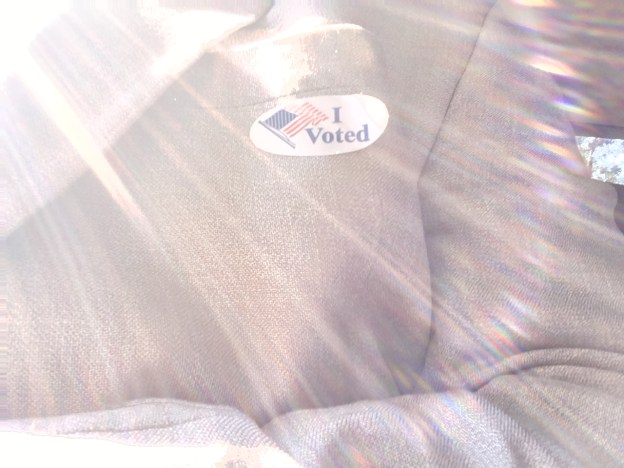

On Democracy – Wednesday Blog by Seán Thomas Kane
This week, for my birthday I want to write to you about my belief in all of us and how democracy remains our best hope.
One of those great efforts with which human history is concerned is the question of what our original nature was at our beginning and if and how we have changed that nature. The French anthropologist Claude Lévi-Strauss’s notion of the primitive as “closer to humanity’s origins” and living in a state without the societal and technological innovations “that obscure their nature” evokes this original nature, what in Christianity is called our original sin, or biologically our evolved state as a particular form of bipedal mammals among other lifeforms.[1] The seeming natural state of human societies until very recently has been toward forms of monarchy and aristocracy, the Tory Party in Britain today still refers to itself as the natural party of government because they descend through many generations from the old Cavaliers who supported Charles I and the aristocrats in the Parliaments of the Stuart and Georgian centuries who opposed the liberal reforms of the Whigs. Here in the United States, our own whiggish political tradition sees its modern manifestation in the old establishment wing of the Republican Party, also known as the Grand Old Party or G.O.P., whose founders in the 1850s included former Northern members of the Whig Party once led by our own aristocrats, men like Henry Clay and John Quincy Adams in the early republic.
Yet those same men stood for something beyond just preserving their own aristocratic power within their own society. These American Whigs and their Republican and Democratic successors aspired to a high ideal of human nature that entrusted power in the hands of the many rather than in those of a few or the one. Dr. Heather Cox Richardson recently wrote in her Letters from an American about how the Secessionists who dragged this country into our Civil War in 1860 and 1861 were trying to assert their own aristocratic vision of the republic that would benefit the few at the disregard of most and the expense of the many. As James J. Sheehan reminded us in his essay in the December 2024 issue of Commonweal, Tocqueville wrote that the chief difference between the source of power in an aristocracy or a monarchy, or their corrupted forms oligarchy and a tyranny, and the source of power in a democracy is that “despotism may govern without faith, but liberty cannot.”[2] The despots rely less on our trust in their rule, and in many of the cases we see today they sew discontent in government, the economy, and for all of us with each other in order to assert their authority and keep hold of power.
Democracy is a far harder thing to keep, as Dr. Franklin knew well. The inclusion of more and more people complicates any organization, yet it also allows that organization to better reflect all involved. Democracy requires the efforts of all of us to survive; if left unwatered and unnourished by each generation it will wither and die like any other flower or fruit on the vine. Throughout my life, I’ve looked to heroes in our history from Lincoln, Mandela, Óscar Romero, Popes Francis and St. John XXIII, to people closer to my own life. What all of them have in common is a desire to improve the lot of humanity, and in the case of Lincoln and Mandela to promote democracy in their homelands. When I look ahead and worry about what might be coming in these next four years, I often wonder if I would be safer, happier, healthier, and living a more fulfilled life elsewhere in another country where I can leave the troubles of my own behind. Yet I remember these heroes, MacDonagh and MacBride, and Connolly and Pearse, my great-grandfathers who fought in the two World Wars, the dreamers and optimists who organized and marched non-violently for civil rights here in America and in Ireland too, and looking again at our own day I pause. This is our time to make life better for our successors while we live to overcome the long winter of fear before us. If I left now, could I look those heroes of mine in the eye when my time ends?
I believe in democracy because it is the best form of government we’ve yet imagined. I believe in representative government because I would rather have a say in my neighborhood, my city, my county, my state, and my country than not. I believe in democracy because I believe in humanity and that all of us can make something better if only we believed in ourselves and in each other. I believe that before that original sin there was original grace, original goodness; that before the first frown there was the first smile; that before the first thoughts of lust there were thoughts of love. I believe in democracy because I need to believe that I will have a future, that all the things which I’ve done in these last 31 years are building up to something which will, in Bill Nye’s words, “change the world,” no matter how small that change may be. To do any of this, to see any of this goodness in our hearts, to believe in ourselves again we need to be willing first to acknowledge our faults and second to forgive ourselves and put in the effort to make our lives better. For all our technology and our ever increasingly complicated ways of life, we are still the same humans as our ancestors living in Lévi-Strauss’s primitive manner. We retain the same bodies and souls. Because of this, we can build a future for our posterity in a spirit of grace, compassion, and optimism that would make the heroes of old proud.
[1] Claude Lévi-Strauss, From Montaigne to Montaigne, trans. Robert Bononno, (Minneapolis: University of Minnesota Press, 2019), 25.
[2] James J. Sheehan, “Democracy and Its Discontents,” Commonweal, December 2024, 13.
 Wednesday Blog by Seán Thomas Kane