Tag Archives: Time

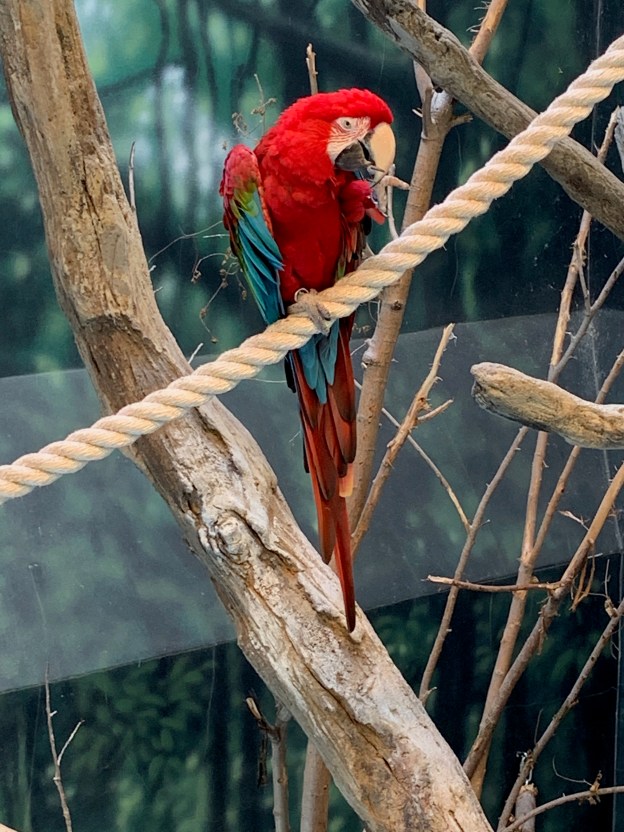
A macaw

On Skepticism

This week, I express my dismay at how fast time seems to be moving for me of late and how it reflects the existence of various sources of knowledge in our world.—Click here to support the Wednesday Blog: https://www.patreon.com/sthosdkane—Sources:%5B1%5D Ada Palmer, Inventing the Renaissance: The Myth of a Golden Age, (University of Chicago Press, 2025), 603.[2] If this word epistemology leaves you confused, have no fear, for my own benefit as well I wrote a blog post explaining this word alongside two of its compatriots. “Three Ologies,” Wednesday Blog 6.6 (podcast 5.6).


This week, I express my dismay at how fast time seems to be moving for me of late and how it reflects the existence of various sources of knowledge in our world.


I first noticed the passage of time on my tenth birthday, that is to say I remember remarking on how from that day on for the rest of my life, I would no longer be counting my years in single digits. I remember distinctly the feeling of surprise at this, a sense that I could never go back to my earliest years. That was especially poignant for me as those first six years lived in the Chicago suburbs held a nostalgic glow in my memory then as they do now. In those early years I felt that time moved slowly; I remember once as a kid I fretted over a 3 minute cooking timer, worrying that I would be unable to stand there and watch the flame over which I was cooking eggs for a full 3 minutes. Today that sounds silly, yet I believe it is vital to remember how I felt all those years ago lest I lose my empathy with my past self or anyone else I may encounter with similar concerns over things I see as minute.

Soon after my tenth birthday, I found a new method of getting through things that I found tedious or even odious to endure. I realized that if I tricked myself into enjoying the moment that the tedium would pass by quicker than if I wallowed in my annoyance and misery. Perhaps there was a degree of pessimism in this realization: that the good moments don’t seem to last as long as the bad ones in my recollection of things, or that it’s in fact easier to remember the bad more than the good. This is something I’ve been struggling with lately, that when I find my thoughts sinking to these depths of my greatest uncertainty and grief that I need to remind myself of all the good in my life. Time seems to move faster today than it did before. The days fly by more than linger, and there’s always something new or old that I need to do. I’ve long thrived on work, a trait I inherited from my parents. Often my happiest days are those spent dedicated to a specific task; those days are made happy by my sense of accomplishment once the task has progressed or even is done. I’ve learned to accept that good things won’t often be finished in a day. I’ll push myself instead to do as much as I feel I can do in the span of a day and see where that leaves me when I go to bed at night. With the new introduction to my dissertation this meant that it took me 9 days to write all 105 pages of it. This is one of those times where I feel that I’m on a roll and in my writer’s paradise when I can write and write and write and not run out of ideas to commit to paper.

Yet I worry about that quicker passage of time because I feel that there are less things that I’m able to do in a given day than I would like. I sacrifice rest sometimes in order to see a project to completion, or I choose to try and find a balance between my work and the rest of my life only to see one side, or another overwhelm its counterpart leaving me feeling unfulfilled when I retire for the night. I do worry that the time I’m afforded is limited, and that I’m not going to do everything I want to undertake. There are plenty of things I want to write, so much I want to say, yet so little time in a given day to say it. I’m still young, just a few weeks over halfway to my 33rd birthday. I have this lingering feeling that there’s so much that I want to do with the life I have and an indeterminate amount of time with which to do those things. Am I content with what I’ve done with my life so far? Yes. Is there so much more I want to do? Absolutely.

I suspect this shock at time moving faster is my own realization of my mortality. Everything has a beginning and an end, the mystery lies in not knowing either terminus directly. How many of us can remember our own birth? I certainly can’t. By the same token we can’t necessarily interview the dead after they’ve shuffled off this mortal coil because, in the words of Dr. McCoy, they’re dead. Thus, we remain doubters of our own mortality, our limits. I often hear older friends talk about how the young feel invincible and immortal and make mistakes which reinforce that sentiment of invincibility all while, if they’re particularly bold or just unlucky, asserting their mortality with a sudden abandon. Our doubts are aimed at established sources of knowledge, authorities to whom we feel no particular duty to abide even if we begrudgingly accept their precepts out of bare necessity. I see enough people every day ignore pedestrian crossing lights even though they are there on the city’s authority to protect us pedestrians when crossing the streets that we’ve abdicated to vehicles. It usually leaves me at least frustrated at the ignorance of the driver, at most even angry when I’ve gotten close to being hit by such an ignoramus.

Skepticism is a significant marker in Renaissance studies as a transitional element from the classically inspired scholarship of the fifteenth and sixteenth centuries into the empirical knowledge-making that traditionally we’ve said was emblematic of the Scientific Revolution. I have many colleagues who are working now on disproving the existence of that Scientific Revolution; I admire that cause and yearn to read what they’re writing even though one of my stock courses to teach is called “the Scientific Revolution: 1500-1800.” Ada Palmer calls Michel de Montaigne, in some ways the inspiration for my Wednesday Blog, “the avatar of this moment” when skepticism became a driving force in Renaissance thought.[1] I argue in my dissertation that the American experience drove the course of skeptical thought in the Renaissance; all the things which André Thevet called singular in the Americas represented a dramatic break from classical standards of knowledge which required a new epistemology to explain them.[2] The key here is that we should never be complacent that our current knowledge is all there is to know, after all a well-lived life is a life spent learning. I’m skeptical about many things and have a drive to continue learning, to continue exploring. Curiosity hasn’t killed this cat yet.[3]I find then that my time is best spent in pursuit of this knowledge, and as much as one can learn alone in the solitude of their study reading and thinking quietly to oneself like a monk, it is far better to learn in communion with others. Since the pandemic began, I’ve grown particularly fond of Zoom lectures, webinars, and workshops as much for the expertise on show as for the community they build. Even if we only communicate through these digital media I still look forward to seeing these people, to experiencing that one part of life with them. We learn so that we might have richer experiences of our own lives, so that we might find comfort in our knowledge, so that we might, in Bill Nye’s words, “change the world.” In the time that I have afforded to me I want to learn more than anything else, to learn about the people around me, about our common heritage, about what our future may hold, and about myself. If I can do that, then when I am “no more, cease to be, expired and gone to meet my maker, become a stiff, bereft of life and resting in peace” I’ll be content in my leave-taking. Hopefully unlike the dead parrot they won’t nail me to my perch like Bentham’s auto-icon which greets knowledge-seekers in the South Cloisters of University College London, though that could be a rather humorous way to go.


[1] Ada Palmer, Inventing the Renaissance: The Myth of a Golden Age, (University of Chicago Press, 2025), 603.

[2] If this word epistemology leaves you confused, have no fear, for my own benefit as well I wrote a blog post explaining this word alongside two of its compatriots. “Three Ologies,” Wednesday Blog 6.6.

[3] Meow.
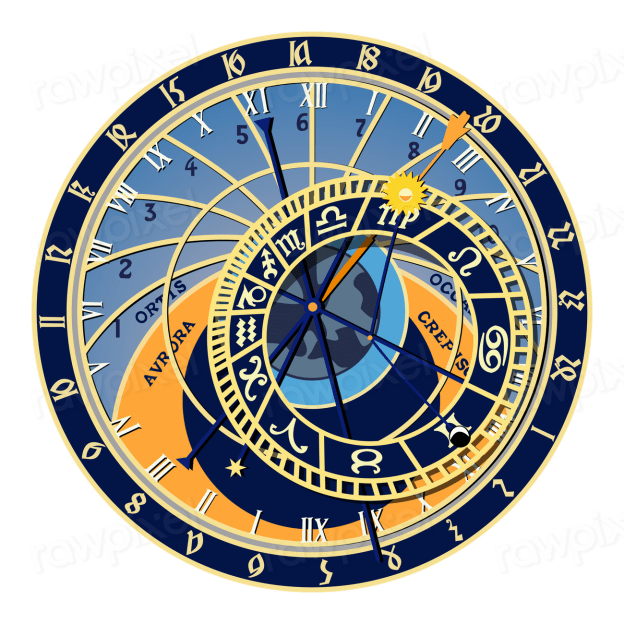

Tempus Fugit!

This week some words on time management. — Click here to support the Wednesday Blog: https://www.patreon.com/sthosdkane

This week some words on time management.


In school we don’t just teach our subject matter, in my case history, and in some instances, geography and French, Latin, and Irish, we also teach valuable life skills. One of the skills which I am still learning how to do is the skill of balancing my time. It occurred to me several weeks ago that when I returned to Kansas City December 2022, I was looking forward to having a quiet domestic life here in my adopted home city, enjoying the arts of the city, enjoying the good food of the city, spending time with my family and my friends, going to mass on Sundays at my parish church on a regular basis, and living what to me seems like an ordinary life. In the process of trying to make that ordinary life work I’ve taken on many jobs.

This has resulted in my schedule filling up dramatically. I am fortunate to be able to work in fields that I excel in. And I know that I couldn’t do more things with my writing, with my teaching, with my service in the arts, I just need to find the way to balance all of my responsibilities, all of my passions, and all of my joys. Time management is a beautiful thing when you figure it out. I’m most of the way there; there’s still that I could be working on. I might have three or four, or maybe five things on my to-do list on a given day, but find myself finishing maybe two or three of those things because the days are short. It makes me wonder if I’m perhaps noticing for the first time in my life that I don’t want to work as much in the winter when we have such short daylight hours. When I was studying for my comprehensive exams, I used to work a good 12 hours a day often times going back to my desk after an evening of dinner and TV and resuming work until one or 2 o’clock in the morning. I realized that this was not good for me, and so have since endeavored to avoid that practice. Yet, this avoidance has resulted in me, working less overall, and getting less done. And in spite of that avoidance and ideally the extra quiet time to focus on other things, I find myself still not getting a full night sleep, because I can’t turn my mind off, and quiet my thoughts while I’m trying to rest. 

This is what happened on Monday night of this week, when I found myself lying awake in bed until 4 o’clock in the morning thinking through my life since I returned home to Kansas City. I’ve done some pretty decent work today considering my sleep deprived state, yet I certainly could’ve done better. And it strikes me as fascinating how my ability to get things done can be limited by my fatigue, yet also enhanced by the adrenaline and drive to achieve my goals.

I don’t particularly want to be a self-help writer, I hope that most things which may appear in that genre could be discerned by the individual reader on their own. I am perhaps too stubborn and prideful to read in that genre, yet here I am writing something which could fit into it. Sleep is a good thing. Rest is a wonderful thing. Here in the United States, we have a tendency to work far too much and not give ourselves enough time to rest and relax. I often feel that I can’t relax when I still have things to get done, which is why I started to create to-do lists. Naturally, since I accepted a position which took up almost all of my time in the Fall, I dropped the habit of making to do list, which is perhaps a part of my frustrations today.

Recently, when I was building a lesson for one of my jobs about the history of home rule and Republicanism in Ireland, I reread Robert Emmett, famous 1803 speech from the dock, in which Emmett says That his epitaph will remain unwritten while Ireland remains unfree. There’s a sense of incompletion that I appreciate in this document because I feel that I will not really rest until the work that I am endeavoring to complete today is done. The goalposts are in sight for all these things which I am doing, so there’s chance for rest on the horizon as well. I am a very goals oriented person. Overall, I even have a stack of fun reading material which I have left there for myself to pick up and there are books which I will only begin. Once I finished other ones I’m currently reading. I worry, of course with my torturous speed of fun reading that I may very well not get to those fun books that are further down on the list until the point at which time I’m no longer interested in reading them. 

So perhaps this speaks to that truism that we ourselves are often the cause of our worst foibles and faults, I think that’s fair in my case. Even now, as I dictate this weeks blog, I attempts to do more than one thing at once, to fill my time as best I can. This is a time that I would normally spend listening to podcasts and music, letting myself enjoy the sonic experience. Yet here at 6:30 in the evening on Tuesday, I find I don’t have a podcast written a blog post not paired for this week’s publication, something which I had really hoped I would have ready by now.

That might very well be a good sign of my life and times today. Even after, decisions and conclusions were reached which freed up my time and made me feel more fulfilled, I am still struggling and struggling evermore to do all of the things that I want to do in this time that I have. Tempus fugit!


Standard Time

This week on the Wednesday Blog, I argue that we should stick to Standard Time — Click here to support the Wednesday Blog: https://www.patreon.com/sthosdkane

This week on the Wednesday Blog, I argue that we should stick to Standard Time.


I missed the switch to Daylight Savings Time this year as I was in Puerto Rico that weekend which doesn’t do the time change, meaning we went from being 2 hours ahead of home to just 1 on the night of our return journey. So, my usual annoyance at the transition to Daylight Savings Time, and the hour lost in the process, wasn’t as severe. Yet as we return to Standard Time after a long summer I have some thoughts about why we ought to stay where we are now.

It baffles me that “Standard Time” lasts only 5 months, though it doesn’t feel that long, while Daylight Savings Time, or Summer Time as they call it in Europe, lasts during 9 separate months from mid March through early November. Daylight Savings has effectively overrun the calendar, leading to the calls in March for us to permanently adopt DST as our new standard, year-round, time.

I had no major complaints with this proposal earlier this year, though I figured that Standard Time is probably closer to the natural solar time than Daylight Savings which fiddles with the clock like a crafty accountant. All that changed when I began to leave home before dawn for this new teaching job, and I found myself barely seeing the morning sun on most days. As we returned to Standard Time this week I’ve felt far happier leaving home in the early dawn hearing the birds whistling away in the trees, welcoming the new dawn as they do.

I may not feel quite as euphoric as Edvard Grieg’s “Morning Mood” from his Peer Gynt suite would evoke, yet I am much happier seeing that Sun high in the sky above me as I begin my day. So, let’s make Standard Time the default and eliminate Daylight Savings, as those two time changes each year cause such a bother.

I find that our cities have long been built to be seen more at night amid the glow of streetlights than during the daytime. We gain more evenings under their sway, more evenings too away from the city lights to gaze up at the stars high above us. I’m fine with the Sun setting so early in the evening. I’ve lived in cities where it sets far earlier than it does Kansas City in winter, and there’s something about that which evokes a sort of seasonal sense of nostalgia in me, a memory of Christmas and all the other midwinter holidays to come.

Standard Time is as close to our original local solar time as we’ll be able to get. Not that long ago, each city and town had its own time based on its own local noon. I’d rather have our clocks tick closer to that local noon than not. Consider this my vote.


Ash Wednesday

Today is Ash Wednesday, the start of Lent. Some thoughts about that. Click here to support the Wednesday Blog: https://www.patreon.com/sthosdkane

In past years when I’ve written columns and devotionals around this time of year recognizing the beginning of Lent, they’ve been on some levels joking (I once referred to this season as the past tense of to lend) while on others they’ve been overly serious and solemn. There’s certainly room for both angles. This year, I feel a little less strongly moved by the whole experience, yes, I know we’re approaching a time of great meaning and purpose, yet in my mind that’s overwhelmed by the onset of what hopefully will be better Spring weather this week. 

As I’ve gotten older, I’ve found that the passing of the seasons impresses me differently than it used to. When I was first learning the names of the months and seasons in school, I noticed the changes quite profoundly. The first of each month was a moment of regard. Today though, month by month passes as one after another in a parade ever blending with its compatriots into one great cyclical mass of the year. I notice today more so the changing of the weather than I do the months or even the seasons. I notice the waves of warm air coming out of the southwest fighting against the cold air pushing down from the northwest. I notice now how each passing rain and snow leads either towards the warmth of summer or the cold of winter. For me the year is far more a day-by-day affair now than anything else.

So, where does that leave the liturgical year, the cycles around which my faith orbits? Honestly, I’m not sure. Perhaps because I had the opportunity to attend Catholic schools for much of my life the Catholic feast days and holidays stood out to me more at one time than they do now. The highest holy days, the Easter Triduum, Christmas, and of course the Irish feast days of Saints Patrick, Brigid, and Columcille stand out the most for me today, days when I can imagine my present moment lining up neatly with memories of my past and of the generations who came before me.

If Ash Wednesday has any potency for me today it’s in its reminder that we’re all mortal, and yes, at some point our lives are going to end. It’s a reminder of our limits, in body if possibly not in mind. I’ll go to Mass and get the ashes on my forehead as I’ve done for as long as I can remember, and yes, I’ll do the Catholic fasting (one large meal with two small meals, no meat), and I’ll likely be a bit grumpy about the whole affair. Ash Wednesday is a reminder of our lives on this Pale Blue Dot, to blend Carl Sagan’s humanism with Catholic theology. We’re all a part of this our home planet, forever tied to it, no matter how far we and our descendants might travel from its surface.A holy day like Ash Wednesday is a reminder of our worldliness, and how that world which we cherish and which we have helped build is as fragile, as mortal as we are. The ashes of the palm branches from last year’s Palm Sunday are from this same world that we are. It’s an honesty that can’t be beat or diluted, we are who we are. That’s what I’ve got this week.

The Fog of Time

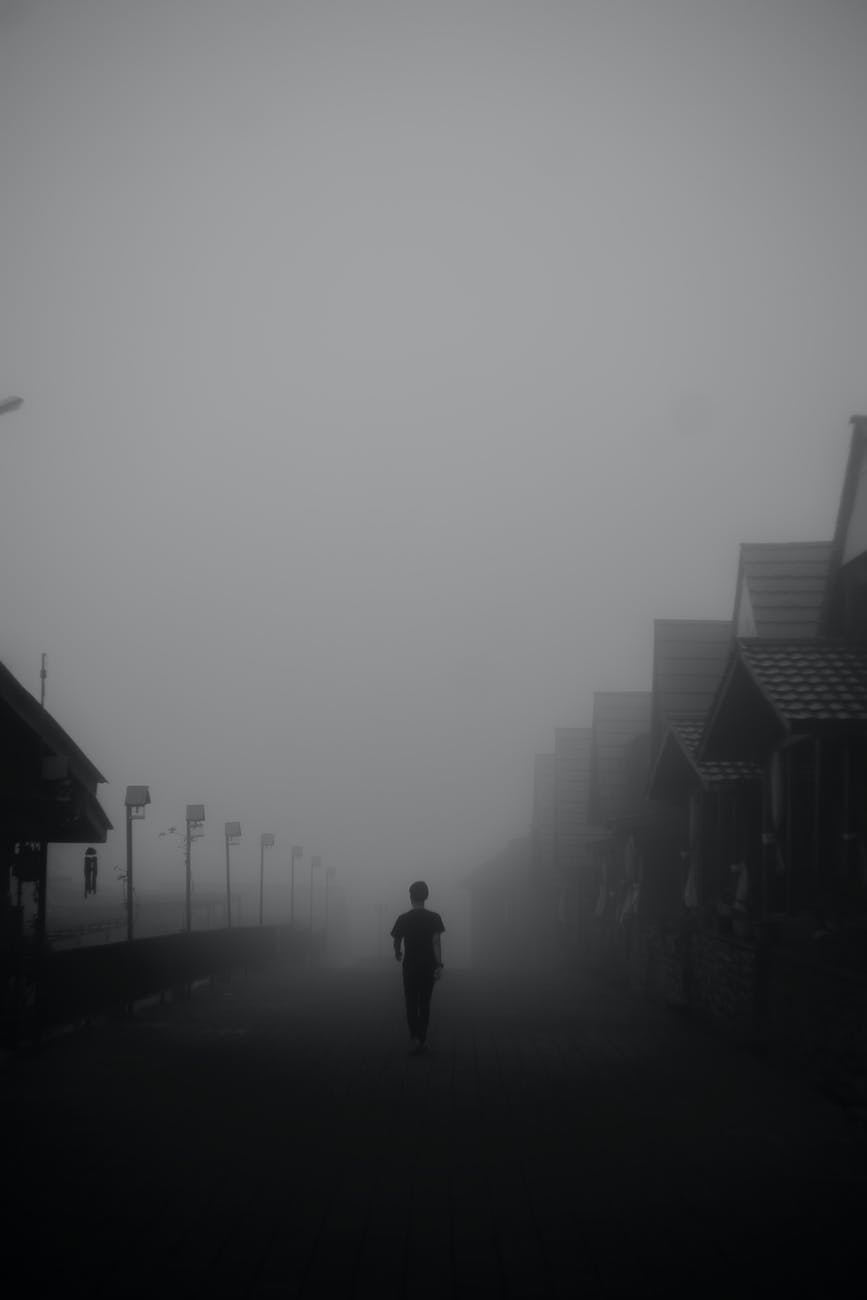
Photo by wsdidin on Pexels.com
This week, some thoughts inspired by the Jerome Bixby written 2007 science fiction film The Man from Earth. The Man from Earth website The Man from Earth trailer

When I was an undergrad, I watched a lot of really neat films and TV shows. It was something that sticks out to me from those years as distinct, something that I’ve continued and recreated from time to time as my mood allows it. In the Fall of 2013 I saw a movie on Netflix that peeked my curiosity called The Man from Earth that I’d never really forgotten. It’s not really an action-packed story in the modern sense, no rather it’s 90 minutes of dialogue, discussion, good old fashioned storytelling about a professor who is leaving his job, home, and friends after 10 years. The reason: because he’s learned over the 14,000 years of his life that that’s a good policy to do every decade or so. Yep, John Oldman, the Man from Earth himself, is a Cro-Magnon.

For some of you hearing or reading this the plot of The Man from Earth will be all too familiar to you. It became something of a quiet hit among certain crowds. One reviewer called it “intellectual sci-fi” even. While I was home over one of my recent breaks from working on my dissertation I bought an HD copy of it on YouTube figuring I’d like to re-watch this particular classic of my early 20s again. It took me a few months but on Monday night this week while I was keeping an eye on my students’ term papers streaming in before the 11:59 pm deadline I sat down and watched The Man from Earth all over again.

What stands out to me the most about my memories of watching this film for the first time nine years ago is how it unsettled me a bit, as it did the expert characters on the screen. The very idea seems counter to all that experience has taught us. “People die!” as the goddess Persephone cries to Orpheus in another film I purchased on YouTube. Yet somehow in the logic of The Man from Earth the title character, Dr. John Oldman had been able to live for 140 centuries and still after all that time appear to be only around 35.

This time I came away from my second viewing of The Man from Earth thinking less about the literal story and more about the ideas it proposes. For one thing I found myself thinking of the perspective that such a man would have of nature and reality. My own perspective is fundamentally framed by my upbringing, it’s conditioned by the powerful forces of my Catholic faith, my Irish American traditions, my personal ethics, and by my upbringing learning about Creation as both an Act of God and scientifically the product of a Big Bang and billions and billions of years of evolution. 

On the other hand, John Oldman––the fourteen thousand year old Cro-Magnon––reflects and recognizes a different sort of perspective, one born out of the entirety of human experience, one where the world began as what was knowable from the furthest reaches of the light from the nearest campfire inside a cave. For him, the Big Bang and all the creation stories we’ve been telling ourselves could well have happened after his first memories, his first inklings of reality and existence. To him those were all things that were learned over time, and their existence only became tangible once they were learned. If you think about it no one really knows things before they begin to have that first spark of an idea that those things could be possible. Today, I believe that anything is possible. That belief is grounded in my faith in an omnipotent and omniscient Divinity, yet it’s also equally held up by the course of human intellectual history, of how we keep finding out more and more things are real, and by extension at the edge of our knowledge that more and more things are possible. How wonderous is that?!

On Sunday evening, in honor of Yuri’s Night, an annual celebration held around 12 April to commemorate Yuri Gagarin’s first spaceflight, the first time a human left our home planet, I decided to watch a space-themed film. Last year I was lucky enough to join the global livestream party and hear all sorts of neat panelists talk about the past, present, and future of Space exploration. This year though that wasn’t an option, so I improvised and put on the 1982 classic The Right Stuff. For those of you who aren’t familiar with it, this is a film celebrating the Mercury 7 astronauts, the first Americans to leave the Earth and among them the first humans to orbit our planet. The Right Stuff begins with Chuck Yeager’s triumphant 1947 flight that proved the sound barrier (Mach 1) could be broken. Before he flew his Bell X-1 faster than the speed of sound no one was entirely sure it could be done. It pushed the edge of our knowledge out of a pure hope that supersonic travel could be possible.

Maybe then on a human scale we should think of our place in the history of the Cosmos less as a story beginning with the Big Bang, which as scientific as it is does bear some resemblance in how its story is told to the other great Creation stories out there, and more with that first human spark that signaled to our conscious thoughts that we exist. Maybe the beginning of the human story ought to be around a campfire in a cave somewhere, or maybe this leaves room for multiple human stories, each threads that broke off from one another until as it is in our present time there are 7.9 billion such threads living, all vibrant and emotional and passionate each in their own way.

When I think back to my beginnings, to what I can ascertain as my first definite memory that I can remember, that first moment when I could recognize my own internal narrative that keeps me going even now, I think of a day trip my parents and I took when I was around 3 or so from our home in the Chicago suburbs to the farm where my Mom’s grandfather grew up in Sheffield, Illinois. I remember sitting in the back seat, on the passenger side watching out the window as we drove by new suburbs, new neighborhoods were being built as we drove west. For me so much that I consider etiological, that I consider as origin-stories to my own, whether they be Genesis or the Big Bang or the many stories keeping my ancestors’ memories alive even when the people involved are long dead, all of those come after that moment in my own memory. So, to my own individual, my own personal recollection of history, of reality, of the Cosmos in all its wonder, all of that comes after that one moment that I can remember from 27 years ago.

What does this mean for how we understand our place in nature? I think if it changes anything, it ought to follow another line of wisdom from The Man from Earth, that the species that lived in balance with nature tended to be the ones who survived. Maybe we need to balance ourselves with our worlds. What I mean to say is maybe we should allow room for our own individual views of things while acknowledging there’s a greater truth to be found in the collective knowledge and wisdom of humanity. There is an inherent fog surrounding our understanding of time, after all we can only ever really see what’s happening right in front of us at any given moment. We can remember with growing haziness what happened in the past, and we can yearn for possible futures that are equally fuzzy in our imaginations today.

This time around I was delighted to see that a sequel was made called The Man from Earth: Holocene back in 2018. It stars the same actor, David Lee Smith, as John Oldman. I think I might watch it tomorrow, and who knows maybe you’ll hear more from me about this story next week. For now, keep imagining because that’s what allows for the improbable to become the possible.

The Man from Earth (2007) trailer

Welcome to the 2020s

This morning, while looking through my YouTube feed during breakfast I came across an upload of the Air France swing ad from early in 2015. I remember seeing this ad fairly frequently in ’15 and ’16 when I was in Europe, the tune in particular that was used for that ad is something that I remember hearing on a regular basis for about a year or so. Today though, listening to it again it felt like watching something from another time.

One thing as a historian that often seems to get debated in my field is chronology, how we define specific periods of time as distinct from others. The basic way to do this is by years––decades, centuries, and millennia––but those designations often feel artificial when discussing social or cultural phenomena that seem to fit one century but creep into another. Because of this, there’s been a trend in academic historiography (the history of writing history) of referring to “the long x century” in order to compensate for that complication. This is something which I’ll admit really annoys me, I suppose because it feels overused. I personally try to avoid it, often writing in a close focus more about generations than decades or centuries. Yet watching that Air France ad from 2015, before Brexit and Trumpism, before COVID, the idea that we are in a new decade feels very natural to me.

Generally, I’d say major moments in our history are what force us into a new decade or a new century. In the past I’ve argued that in some ways humanity as a whole didn’t begin to really live in the 20th century until World War I forced our forbearers to rethink their world. Likewise, I’ve often thought that the 21st century began not on New Year’s Day 2000 but on 9/11. The 21st century has been marked by generational wars in Afghanistan and Iraq, the consequences of which we will be dealing with for generations to come, and by a new sort of fear of what dangers lie in wait.

The 2020s began with COVID, with that boogeyman that has left humanity battered and bruised, and that has left at least 2.6 million people dead globally. Our sensibilities from the 2010s, a strange combination of the optimism of a world recovering from the Recession mingled with the reactionary fear and anger that fueled a rise in divisive nationalistic politics in many countries remain, but feel somewhat out of place in our current time. We are left with some lasting images of those two sensibilities, yet reshaped in the image of our new time. The 2020s offer us a renewed sense of urgency and uncertainty. COVID has shown us that we are unprepared for a global catastrophe, our window to slow the effects of climate change is closing, and ideas that seemed untouchable and resolute a decade ago, like the doors of the US Capitol, have been broken down.

We have an uncertain future ahead of us, and like any new decade, we can choose how we will move ahead. That Air France ad and all the emotions I feel when seeing it, the nostalgia for what were for me the good times of 2015 and 2016, are now in the past. Looking at it again, it feels to me like something very truly from another decade, from another time, familiar and recent, but distinct from today. The 2020s are an unknown future for us, they could turn out to be a wonderful time in human history, or the troubles and trials of recent years brought into extreme focus with the pandemic could set the tune for the next few years to come.

Welcome to the 2020s!

Odysseus in Ithaca

Kansas City – Let me begin with a brief confession: today was the first time I had gone to Mass since my first Sunday in London exactly 2 months ago! What’s even worse about it is that I’m writing this in my blog even before heading to the confessional to admit my failure at keeping the Sabbath to my parish priest. So, today seemed like a good day to break the drought. Happy Assumption Day!

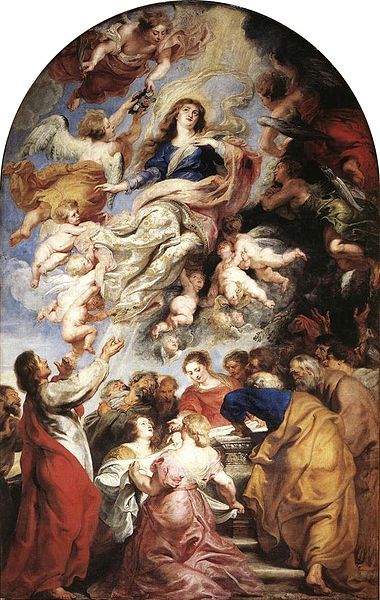
Assumption of Mary - Reubens.

Happy Assumption Day!

Assumption Day is one of those odd holy days of obligation that usually doesn’t fall on a Sunday. For my non-Catholic readership, a holy day of obligation is a day when all Catholics are required to attend Mass. The big ones are Christmas, Easter, the Triduum (Holy Thursday, Good Friday, Easter Vigil/Sunday), Pentecost Sunday, Corpus Christi, Palm Sunday, Ash Wednesday, and Annunciation Sunday. Then there are the Marian feasts. Assumption Day (15 August) is the feast which marks the event when the Blessed Virgin Mary was assumed, that is carried up into Heaven following the Ascension of Christ. The other big Marian feast is Immaculate Conception Day, which marks Mary’s being immaculately conceived (that is conceived without sin), which falls in early December.

The reason why Assumption Day is so memorable for me is that it also falls in the middle of a sort of temporal anomaly, not in the Doctor Who or even in the physical sense, but rather in the sense of timekeeping. See, I don’t follow the seasons as they are set down based upon the Equinoxes and Solstices. Rather, I use the older Gaelic calendar, which has the aforementioned solar events placed as the middle of the seasons. So, Winter begins on All Saint’s Day (1 November), Spring on St Bridgid’s Day (1 February), Summer on Bealtaine, May Day, (1 May). However, Autumn is the problem maker. The problem arises when one looks at the traditional Gaelic start of Autumn: Lúnasa (1 August). However, this doesn’t work very well with the social calendar, which in the Anglosphere usually has Autumn beginning with the start of the academic year, which falls usually around the start of September, Labour Day Weekend here in the States. So, to mend this problem in my calendar-keeping, I decided instead of observing the start of Autumn quite early on Lúnasa, or rather late on Labour Day, I’d observe it in the middle: Assumption Day (15 August.) So, Happy Autumn!

All this being said, the coming of Autumn means the coming of another academic year. This, for me, 18th annual instalment of the start of a new school year, comes at quite an interesting time in my life. I’ve had some troubles adjusting to living here in the States again after spending those three weeks living in London. I found it hard to get the will power to leave the house on Sunday mornings and drive the short way up to my parish church for Mass. On top of that, I also find myself quite irked by the politics of this country, and of the Church in this country, after experiencing the British political system firsthand. Let’s face it, I don’t get the reasoning behind all these people screaming and shouting about how they don’t want affordable health care, as our good President has enacted, or how they’re wanting to shut down the government by blocking every possible legislative measure that is proposed by the White House or the Democrats. I mean, seriously people, grow up! It reminds me of a pair of little kids playing in a sandbox, one of the two refusing to give the other the pail and shovel with which to build a sandcastle. It’s bloody infantile!

So, when Assumption Day came around, I found myself resolved to get out of the house and go back to Rockhurst to attend the Noon Mass, as a way to end the streak of skipping, and to give myself a fresh start with the new season. In a way, it was like Odysseus returning to Ithaca. I was leaving all the suitors, all of the emotions, that had kept me away for two months behind, and faced my community once again. True, it was an odd thing seeing these people after having travelled halfway around the world, but there I was.

However, I returned with more experience, more maturity. On the 14th, I had an interview on Skype with one of the Global Ambassador coordinators at ISA, the company who I went over to England with. By the end of that 20 minute conversation, I was one of those very Global Ambassadors working as an intern for ISA! This is a job that I am looking forward to, and one which I know I will love doing.

So then, the proper return to Ithaca will take place on Saturday. To all of my Rockhurst readership, I look forward to seeing you guys soon! The packing has begun, and the great migration up Rockhill Road shall soon commence!