
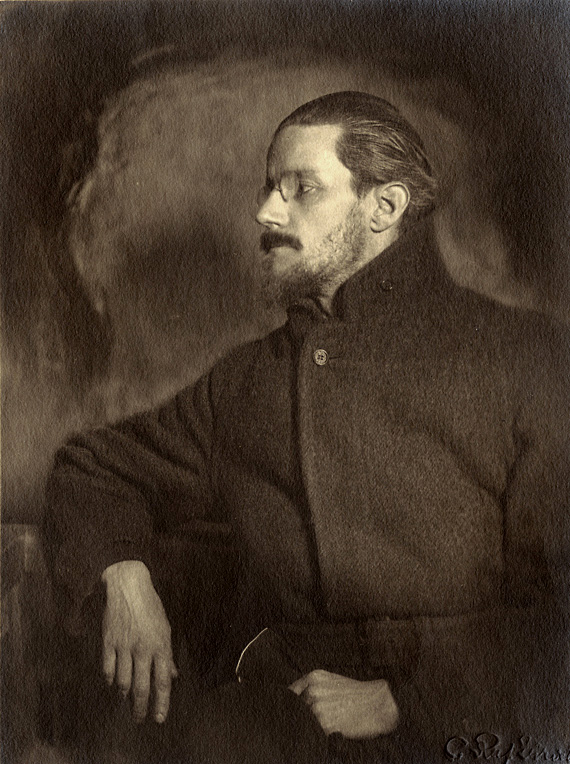

How Reading James Joyce Helped Prepare me for my Doctorate – Wednesday Blog by Seán Thomas Kane
Last Friday was the annual commemoration of Bloomsday. 16 June 1904 was the date when all of the action in James Joyce’s 1922 episodic novel Ulysses takes place. Bloomsday is named for the main character, the sometimes hapless Leopold Bloom who fits perfectly into the wider scope of Irish main characters who may want things to go one way but often find their life taking ever weirder and sometimes darker turns. It reminds me of An Béal Bocht.
I’ll fully admit, I’ve never read Ulysses through the entire way before. I’ve seen the stage adaptation that they used to put on that the Irish Center of Kansas City a handful of times and have participated here and there in the day-long reading of Ulysses at the same cultural center, but to date I’ve never actually sat down and tried to read this work from cover to cover. For one thing, Ulysses evades expectations of literary formalities and standards. For another, a fair bit of the text really only makes sense when read aloud. And finally, because of several scenes it was banned here in the United States for a while, a nod to the puritan roots of our American culture.
So, on Friday I went over to Rainy Day Books, the finest local bookstore I’ve stepped foot in, located just across the border in Fairway, Kansas, to buy a copy of Ulysses for myself. My goal on Friday was to record an Instagram reel of me reading my favorite passage from the novel, a scene with an ever increasingly ridiculous list of foreign dignitaries attending the Ascot Gold Cup, which took place on the same day as the story at large. Yet, the eccentricity of Ulysses befuddled me enough that I ended up choosing a different passage from Part II’s Episode 12, “Cyclops” in which an ancient hero wearing a leather belt adorned with the portraits of a series of Irish heroes is described. Again, this series of Irish heroes steadily becomes more ridiculous as it goes on. As a matter of fact, I’ll read this passage for you now:
Joyce’s Ulysses makes far more sense when read aloud than if read silently, a style of reading that was pioneered in the 5th century CE by none other than St. Augustine of Hippo no less. It’s a far older style of literature that way, something which gives it an air of antiquity that I for one appreciate a great deal. This is also something that I find regular among my primary sources for my dissertation, books which were written for a very different audience who lived 450 years ago in France. In my case, I often find reading those aloud gives me the greatest clarity of what they’re actually trying to say. My translation of André Thevet’s 1557 book The Singularities of France Antarctique is one such book that is best read in full voice, and I have a feeling when I go through and edit my translation that I’ll have to soften some of the eccentricities of my initial interpretation of Thevet’s text, or at least that’s what I’ve been finding as I incorporate it into my dissertation.I find Joyce’s writing daunting, a proper challenge, yet still something that is immensely relatable to my own way of thinking about writing. I love his fluid use of adjectives to describe his characters, they bring even the most marginal of figures to life in a way that echoes down the last century to the present moment. Now, 119 years after Leopold Bloom’s eventful day in Dublin, and 101 years after Joyce’s first edition was published in one volume under the title of Ulysses, there’s a connection to that story which continues to live on for me.
 Wednesday Blog by Seán Thomas Kane