Tag Archives: University of Westminster

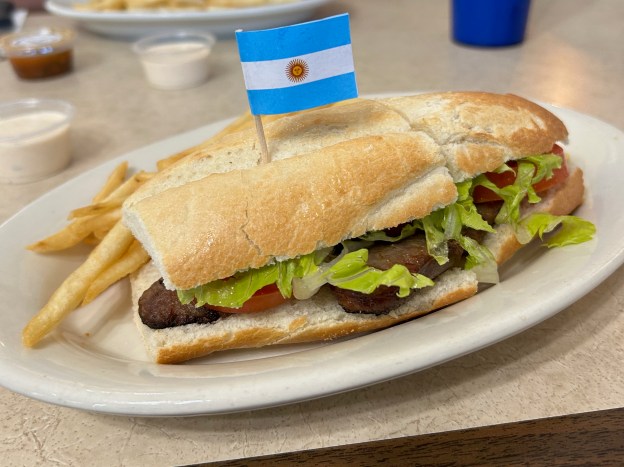
A choripán sandwich from Los Hornos Argentinian Flavors in Kansas City, Missouri photographed by the author just before it was eaten by the same.

On Language Acquisition

On Language Acquisition Wednesday Blog by Seán Thomas Kane

This week, how living in a culture is required to speak a language in depth.—Click here to support the Wednesday Blog: https://www.patreon.com/sthosdkane—Sources: [1] “A Letter from San Juan,” Wednesday Blog 3.29.[2] “The North American Tour,” Wednesday Blog 5.34.


This week, how living in a culture is required to speak a language in depth.


The languages which I speak are directly responsible for the ways my life has turned, its winding path a result of the words I use and the ideas they represent. Language is the voice of culture; it evokes the rich harmony of thought that comes from seeing things from certain points of view. At the University of Westminster, I was regularly in classes where there were maybe 10 or 20 languages spoken between each of the students, if not more. English remained our common language and the language of instruction, yet how many of us must have been switching between English and their own native language as they thought about the readings and topics in political philosophy and science which we discussed on a given day? Even then, my English is not the same as the King’s English, nor is it the same as the English I heard spoken when I drove through Alabama in July 2022. Language then reflects our individual circumstances of experience. Knowledge is gained through experience first and foremost, whether that experience be theoretical through books or practical through lived experience. I make this distinction because I often feel that when I’m reading a particularly well written book that I can actually imagine the characters as real people who I might meet in my life. The best TV shows and films are like that, their casts that we see regularly begin to seem like old friends who we look forward to visiting again and again.

Language acquisition is a lot like this for me. Today, I speak three languages: English, Irish, and French, and I can read Latin, Italian, Catalan, Spanish, and Portuguese and some Ancient Greek. I break my languages down into these two categories by their utility in my life. The handful which I can read are those which I’ve worked with in my historical capacity. I’ve spoken Italian and Spanish from time to time, yet those moments of elocution are few and far between. The same could be said for my German, though it’s now been five years since I last spoke that language in Munich, and at time of writing I can’t say that I’d be much use in remembering it today. This is even more true for my Mandarin, a language which I studied for a semester in between my two master’s degrees out of pure curiosity. I can remember the pronouns, a couple of verbs, and a noun or two but that’s about it. All this to say that I may know something about German and Mandarin yet it’s little more than a foundation for the future when I might be faced with a desire or need to learn the language properly.

I’ve been thinking lately that of any of these I need to work most on my Spanish, the most useful of these languages for me to speak here in the United States. I can understand Spanish fine yet speaking it remains a challenge. On Sunday evening after my shift I decided to reopen the Spanish course on the app Busuu––one which I used for Spanish before my March 2023 trip to the Renaissance Society of America’s annual meeting in San Juan, Puerto Rico––and try it out again.[1] That time I got through the A1 level before life got in the way, and I gave it up feeling frustrated with the process. I did not resume any online Spanish courses before my trip to Mexico last November for the History of Science Society meeting in Mérida, instead choosing the less preparatory method of winging it.[2] That worked with fits and spurts, my best Spanish conversations were in taxis with locals, though I was mostly thinking about how I would say things in French and then Hispanifying them based on my minimal knowledge of Spanish grammar. On Sunday, after I retired for the evening from my Spanish lessons on the app I realized what it was I missed so much in these apps: the human connection. Busuu prides itself on its crowd-sourced learning method; throughout the course learners are asked to submit spoken or written answers to the computer’s prompts which learners of other languages who speak the target language then correct. I like this system overall, and it does give this sense of community, yet I feel that it could go further.

After English, the second language I learned was Irish, my ancestral language. I started studying the Irish language when I was fourteen and have been focused on it to varying degrees for the last eighteen years. It really took until 2022 for me to connect with the language though, in spite of the fitful starts and stops because in that year I began to build a community around the Irish language. First on Zoom through Gaelchultúr, an Irish language school in Dublin, I met other speakers from across North America and beyond who like me were descendants of Irish immigrants old and new. I looked forward to seeing some of the same people term after term. Yet after returning to Kansas City, I began to look locally for Irish classes and came across the community that my friend Erin Hartnett has built at the Kansas City Irish Center. Through Erin I’ve met some really good friends and from our mutual appreciation for our ancestral language we’ve found a lot more in common from mutual histories to mutual appreciations for rugby. Without this community I would speak Irish but not terribly well. Now, not only do I speak Irish daily, but I also write in Irish every day. It has truly surpassed French as my second language, something I’m proud of yet not too concerned about when it comes to my Francophonic abilities.

French exists in a different sort of place for me than Irish. It’s not an ancestral language with deep family ties. Rather, it’s a language that I gravitated toward out of a fascination with French culture and history. I may have written here in the Wednesday Blog before that my first exposure to French came at sunset on a Sunday in February 2001 when my Mom put a “Learn French” cassette tape into the tape player in our family car when we were driving through the hills of northwestern Illinois toward Dubuque, Iowa. She and I were preparing for a trip to London and Paris that summer, the first European trip that I could remember, and she wanted to put in the effort for us to have some French before we arrived on the Eurostar from Waterloo Station at Paris-Gare du Nord. I didn’t like Paris much on that first visit, I found the language barrier to be too great for me to really feel a sense of connection with the place. On my next visit to France in March 2016 with three years of undergraduate French under my belt I found that I not only got the place more, but I appreciated the nuances of French culture more than I had as a child.

I owe a great deal to my undergraduate French professors M. Kathleen Madigan and Claudine Evans. It’s through their classes that I gravitated toward my career studying the French Renaissance. When I get asked why I chose to study the French I keep it simple and say it was a matter of pure convenience: I already spoke French, so I wouldn’t need to learn a new language (Spanish or Portuguese) to read my primary sources. That’s how I ended up studying André Thevet (1516–1590). I chose him because he happened to write about a sloth and for me the idea of being a sloth historian made me laugh. It’s as simple as that. I loved studying French in college, and even more teaching it with the online Beginner French course I built for the Barstow School in 2023 and 2024. I found that going through the same textbook I used a decade before I was not only teaching the students who in the future would go through my course, I was also renewing my own French education and learning things that I’d missed on my first go around. This is a critical point in language acquisition: few people are going to get a language on their first try, it’ll take multiple goes to understand what’s being said and to make oneself heard as well. It took me three tries to get Irish down, and the same is the case for Latin. Failure in the moment is merely a setback which can, and ought to be overcome in future endeavors. After all, remember that if we’re paying attention to our lives we’ll learn from our experiences.

I grew to really embrace a lot about the Francophonie to the point of paying Sling TV for access to TV5 Monde, France’s global TV channel which now broadcasts several different channels. I personally enjoy TV5 Monde Style, which tends to broadcast documentaries and cooking shows, though I don’t watch it as much as I might like. I read a lot of French books for my research, after all I work with source material that has largely only been written about in French and to a lesser extent in Portuguese. I am able to do what I do with those sources because I can read them and the secondary literature about them in French. All this made it all the easier for me to go to France and Belgium in the last several years and be able to switch from English to French as soon as I walked off the plane. I found when I was flying back to the United States in June 2024 after spending about a week speaking mostly French in Paris that I was consistently responding with the quick phrases “please, thank you, you’re welcome,” and the like bilingually with the French followed by the English as I’d heard so many people do in shops and the museums during that visit. It took me a while to get past doing this and just say things in English again after I returned.This then is why I think I’ve had so much trouble with learning Spanish. It’s the first language that I’ve given a big effort to learning outside of a classroom on my own. At least in the classroom you have fellow students around you to practice with. When you’re on your own you’re on your own, a wise-sounding craic which is to say that when alone you have no one else to talk with. I have friends here in Kansas City who speak Spanish, and I know all I have to do is ask, yet it’s finding the free time to sit down with them and work on it that I need to figure out. To truly gain a footing in a language one needs to immerse oneself in the culture. Apps and online learning will only take you so far. A classroom learner will blend into their own classroom idiolect of the language in that particular space where it exists in their life. Only if they move beyond classroom and begin to converse and live with people in places where that language is spoken will they begin to speak it in a manner which is more recognizable to native speakers.


[1] “A Letter from San Juan,” Wednesday Blog 3.29.

[2] “The North American Tour,” Wednesday Blog 5.34.

Human Goodness

This week I'm considering the fundamental question of whether we are inherently good or bad. Click here to support the Wednesday Blog: https://wednesdayblog.org/patreon.com/sthosdkane

Eight years ago, when I was a masters student in International Relations & Democratic Politics at the University of Westminster in London a question was posed in one of my first semester classes by the professor who asked “are we inherently good or bad?“ I raised my hand among the few in the room who argued that we are inherently good. That, at heart, we have evolved to trust one another, and to be kind, not only to our own tribe, our own community, but of those outsiders to whom we are in some way connected, as we are with our pets, or in human terms as we are with peoples from around the globe whom we come to meet on a personal level.

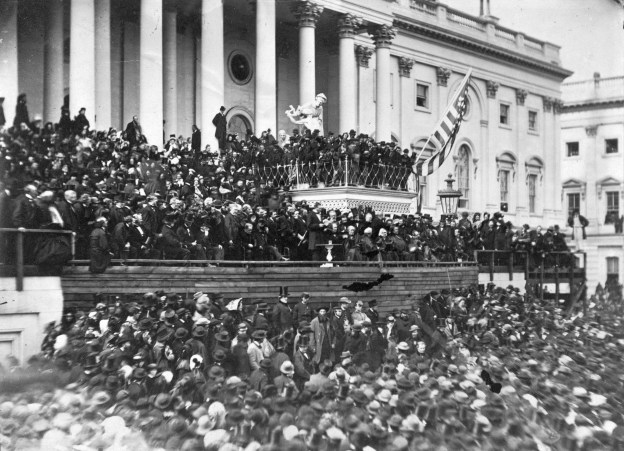
It occurs to me when thinking about some of the great and good figures in recent human history, and even going back several centuries, if not several millennia, that a great many of those figures were killed, their lives ended in acts of evil, in moments of malice. When President Lincoln gave his second inaugural address in March 1865, and called for us to “bind up the nations wounds” and to progress forward with the now immortal words that I have surely used on many occasions here on the Wednesday Blog

“With malice toward none, with charity for all, with firmness in the right as God gives us to see the right, let us strive on to finish the work we are in, to bind up the nation’s wounds, to care for him who shall have borne the battle and for his widow and his orphan, to do all which may achieve and cherish a just and lasting peace among ourselves and with all nations.” 

Yet there on the balcony above Mr. Lincoln in the famous photograph of his second inaugural address that depicts not only the president, but the crowd as well, one can just discern the face of John Wilkes Booth, the man who would assassinate Mr. Lincoln a little over a month later on Good Friday. Clearly then, Mr. Lincoln’s, message of reconciliation & reconstruction, not only of the nation’s infrastructure but also for the government to be more just, put pressure upon the nation’s heart to recognize that when we say all men are created equal that we mean everybody. Clearly that message didn’t resonate with his assassin. So where was the inherent goodness in John Wilkes Booth?

I think if we are to describe some innate human goodness to all of us, then we ought to recognize that it exists deep within us. We are like the strata that make up Earth’s geology, each layer representing a different age, era, or epoch in the long history of our planet in our own lives; our experiences with each passing moment add layers one atop the other, until as Aristotle wrote 23 centuries ago, we become truly wise through our lived experiences. So, our innate goodness must exist be deep within. I’m reminded of the line at the heart of the Return of the Jedi, the third film of the original Star Wars trilogy, in which Luke Skywalker tells everyone around him that he knows there’s still good in Darth Vader, despite all the evil that the fallen Jedi had committed. C.S. Lewis remarked in the final book of his Narnia series, that the eldest of the children who are the central characters in the Chronicles of Narnia, Susan, did not return to Narnia for the last battle, because she no longer believed in Narnia, for she had grown up and “put away childish things” to quote Saint Paul. Yet the best of us, or so our great allegories seem to tell us, have never really forgotten that childlike innocence, though some have never really been able to experience it, after all not everyone has the same happy childhood.

I believe that at the end of the day, the best way that we can truly find our goodness, our kind nature, is in the simple fact that at some point along the way we all want to be loved, and I would imagine for the most of us we all want to love others. I often wonder in the vein of Machiavelli‘s Prince if I do things out of a desire purely to love others, or out of a desire to make myself feel good, or out of a desire for others to love me? And which of these three is perhaps lesser than the others or is there a lesser and a greater, or are these three perhaps all equals? Is it okay to be selfish it for the right cause? I don’t know. 

There certainly should be limits to vanity, I for one am not terribly fond of taking selfies, nor do I really care for watching videos of other people watching videos. Still, as many of the self-help people will say some degree of self-love is a good thing, and to paraphrase the old saying that appeared carved in the mantle above the great doorway at the ancient Library of Alexandria, “know thyself,” one should be able to love oneself before one truly begins to appreciate the people around them and by extension world in which they live. So perhaps it ultimately comes down to one’s environment if we live in a world where you’re taught that negative news and emotions and violence ought to be glorified then that’s the kind of stuff we are going to do. However, if we look at the world as a place full of beauty and wonder, and if we find a way to appreciate the great variety of humanity and nature at large and the incomprehensibility of the Cosmos, then I think we can truly begin to define ourselves by our inherent goodness again. What a wonder it is to be a part of our human family.

Doctoral Study

Photo by Ricardo Esquivel on Pexels.com

I was 27 when I arrived here in Binghamton at the start of August 2019. I made a big move out here, with immense help from my parents, and set up shop in a good-sized one bedroom apartment that’s remained my sanctuary in this part of the country ever since. I’d wanted to continue my education up to the PhD since my high school days, and it’s a plan I’ve stuck with through thick and thin. After a false start in my first attempt to apply to PhD programs in 2016, which led to two wonderful years working on a second master’s in History at the University of Missouri-Kansas City (UMKC), I applied again, now far better positioned for a PhD program and ended up here through the good graces and friendly insight of several people to whom I’m quite grateful.

Arriving in Binghamton though I found the place very cold and quite lonely. In recent months I’ve begun to think more and more about getting rid of some of my social media accounts only to then remember that Facebook, Instagram, and Twitter were some of my greatest lines of communication with friends and family back home in Kansas City and elsewhere around the globe throughout these last three years. That first semester was tough, very tough, and while the second semester seemed to get off to a good start it was marked by the sudden arrival of the Coronavirus Pandemic and the end of my expectations for these years in Binghamton. 

I spent about half of 2020 and 2021 at home in Kansas City, surrounded by family and finding more and more things to love about my adopted hometown with each passing day. When I was in Binghamton it was to work, in Fall 2020 to complete my coursework and in Spring 2021 to prepare for my Comprehensive Exam and Dissertation Prospectus defense. I still did a good deal of the prospectus work at home rather than here, though the memories of those snowy early months of 2021 reading for the comps here at this desk where I am now always come to mind when I’m in this room.

As the Pandemic began to lessen in Fall 2021 and into the start of this year, I found myself in Binghamton at a more regular pace. There was something nice about that, sure I wanted to be home with my family, but I also felt like I was getting a part of the college experience of going away for a few years to study that was reminiscent of the year I spent working on my first MA at the University of Westminster in London. I started to venture further afield in the Northeast again, traveling to Boston, New York, Philadelphia, Baltimore, and Washington again. When I first decided to come here one of the things, I decided was I’d take the opportunity of being in the Northeast to see as much of this region as possible.

2022 saw another transition, I wasn’t in one of the newer cohorts in my department anymore. Now, in Fall 2022 I’m one of the senior graduate students. It’s a weird thing to consider, seeing as it felt like 2020 and 2021 evaded the usual social life of the history graduate students here, thanks to the ongoing pandemic. I also began to look more seriously at my future, applying for jobs in cities across this country, and even looking again at some professorships, something I doubted for a while would be an option for me. If there’s anything about life that I’ve learned over the past three years spent here, it’s that you always need to have things beyond your work to look forward to. Whether that be a long walk in the woods on the weekends or a day trip to somewhere nearby, or even the latest episode of your favorite show in the evenings. Doing this job without having a life beyond it is draining. 

For me the best times here in Binghamton were in Fall 2021 and Spring 2022 when I truly began to feel like I had a place here that I’d made my own. I was confident in my work, happy with how my TA duties were going, and really enjoying my free time as I began to spend my Friday evenings up at the Kopernik Observatory and Sundays at the Newman House, the Catholic chapel just off campus. I was constantly reading for fun as well, something I’d lost in 2020, even falling behind with the monthly issues of my favorite magazines National Geographic and Smithsonian. There were many weeknights I’d spend out having dinner alone reading natural history, science fiction, anthropology, and astronomy books. 

It’s interesting looking back on myself from six years ago when I was in London, the months that summer when I decided I wanted to get back into history after a year studying political science. My motivations were to earn a job working at one of the great museums I’d spent countless hours in during that year in the British capital. While I studied for my MA in International Relations and Democratic Politics, I was still spending my free time looking at Greek and Roman statuary and wandering the halls of Hampton Court or watching the hours of history documentaries on BBC 4 in the evenings. And now that I’m back in History as much as I do appreciate and love what I do, I find my free time taken up by science documentaries and books.

It’s important if you do want to get your PhD in the humanities and social sciences to figure out why it is you want to do this before you start. Have a plan in mind, have a big research question in mind, and focus your attentions onto that question. My own story has many twists and turns from an interest in my early 20s in democratic politics to a brief dalliance with late republican Roman history before settling into the world of English Catholics during the Reformation. I ended up where I am today because of another series of events that led me to moving from the English Reformation to the French Reformation, and from studying education to natural history. So, here I am, a historian of the development of the natural history of Brazil between 1550 and 1590, specifically focusing on three-toed sloths. In a way there are echoes of all the work I’ve done to date in what I’m doing now, thus as particular as this topic is it makes sense in the course of my life as a scholar.

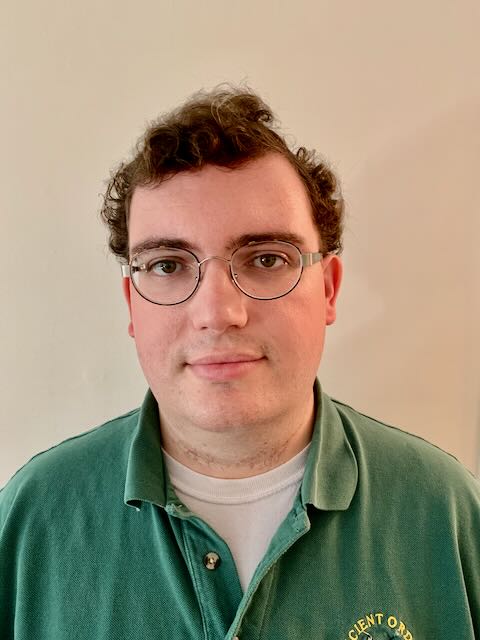
A month from now will be my 30th birthday, a weird thing to write let alone say aloud. My twenties have been a time of exploration of both the world around me and of myself. When I look at my photo on my Binghamton ID card, the best way to describe my appearance would be grumpy yet optimistic. Just as I was a decade ago, a sophomore in college, so now I am today, looking ahead to the next decade with excited anticipation of what it’ll bring, and hopeful that all the work I’ve done in this decade will find its reward in the next.

Me upon arrival in Binghamton, August 2019.

Scotland Votes No in Independence Referendum

Edinburgh – With nearly all of the results from the 18 September referendum on independence having been announced, Scotland’s status as a member of the United Kingdom is secured. In an election with turnout at well over 80%, the No campaign won Thursday’s referendum by 10 points with a 55%-45% victory. In regards to individual vote numbers, No had 1,914,187 votes whilst Yes had 1,539,920.

While Thursday’s referendum did not result in Scottish independence, the results undoubtedly will result in further political change throughout the United Kingdom. The major No parties, the Conservatives, Labour, and Liberal Democrats all promised further devolution to Scotland, a promise which Scottish First Minister Alex Salmond, MSP stated must be met.

All sides hailed the high voter turnout numbers throughout Scotland, with over 80% of the population casting ballots in the referendum. In particular, the voter turnout rate in Stirling, which voted no, was an incredibly high 90%.

The vote was settled by 06.00 BST (00.00 CDT, 15.00 AEST) with the returns in Fife, whose 139,788 votes against independence put the No campaign over the edge and into victory early Friday morning local time.

Much of the discussion in the hour since the Fife announcement has involved further devolution not only for Scotland, but also for Wales, England, and Northern Ireland, even with talk of a Federal system being established in the United Kingdom in the future.

Trading began in the City of London earlier than normal on Friday, with financial reactions being seen largely in the currency markets, with the pound sterling rising to 1.65 USD (1.28 EUR, 1.84 AUD). The BBC reported that the American markets are also expected to open higher than normal on Friday as a result of the no vote.

British Prime Minister David Cameron spoke from Downing Street at 07.06 on Friday (01.06 CDT, 16.06 AEST), saying, “Like millions of others, I am delighted” with the referendum’s results. “We now have a great opportunity to change how the British people are governed,” the PM continued. He made it clear to note that those commitments proposed by the three pro-Union parties will be taken up by a commission to be led by Lord Kelvin.

“I have long believed that a crucial part missing from this discussion is England.” Cameron went on to announce his support for plans to be drawn up that could lead to a future devolved English legislative body, which would have similar powers to the Scottish Parliament and Welsh Assembly.

No matter the result, Scotland, and the United Kingdom are changed forever. Thursday’s historic vote will undoubtedly be remembered for centuries to come as a major milestone in the constitutional history of the United Kingdom.

Learning in London – A Living, Urban Classroom

Image

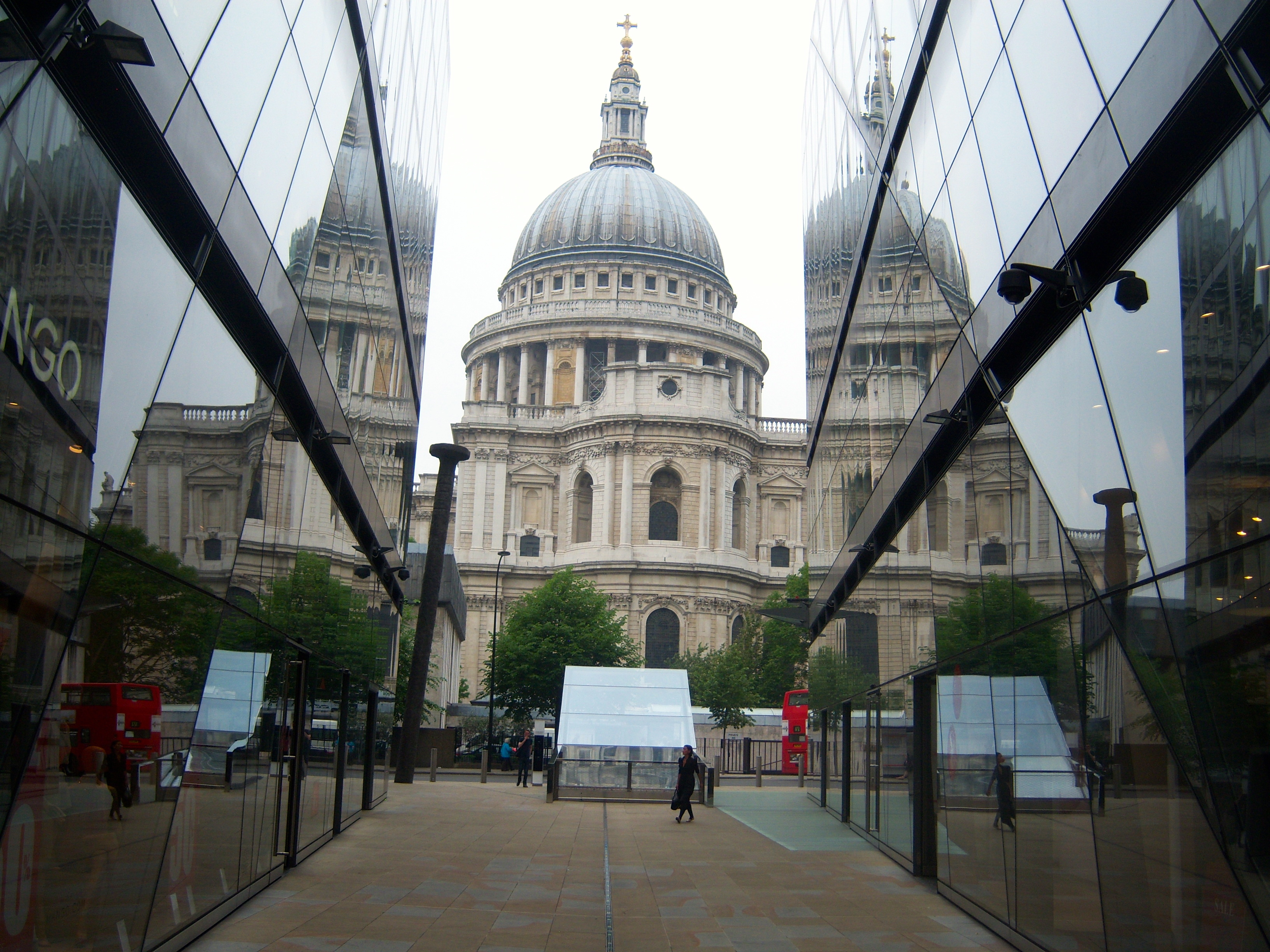
St Paul’s reflected by the face of One New Change.

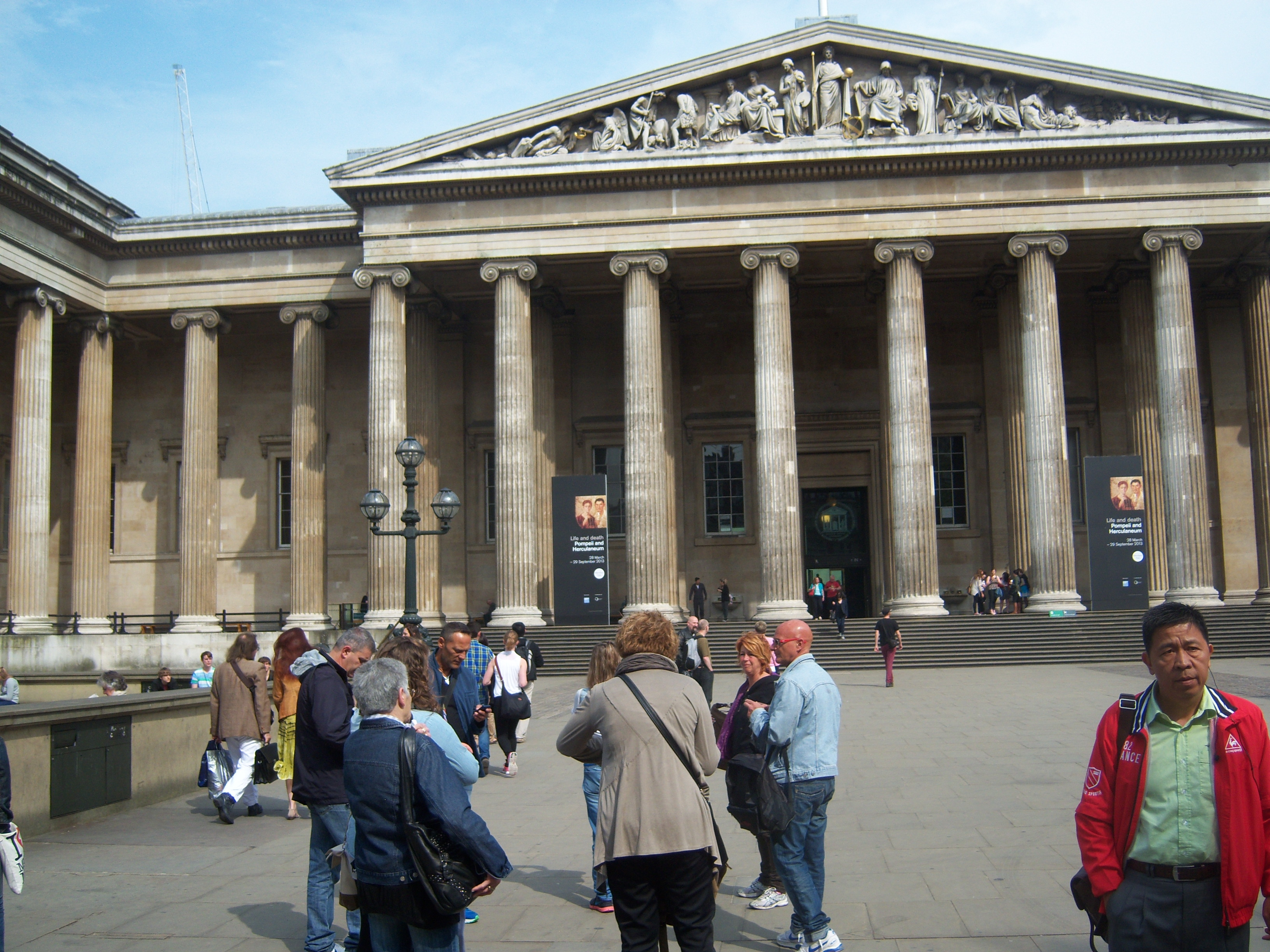
Shoreditch, London – If I ever wanted to study history, there are few cities in the world that are greater places to do so than here. Not only is my class studying the history of London in London, but we’re doing it by going around and actually seeing the history and how the present is presenting and re-presenting it through museums, galleries, plaques, and monuments. So far, this is the best way I’ve found to learn the history of a place, because it cuts out the Prof. Binns effect to use a Harry Potter reference, in that the class can just be a boring list of names, dates, and battles. Not that I’ve actually had such a class thus far in my academic career, of course. However, the class I’m in right now is by far at the extreme opposite end of the spectrum from such a Binns class. After all, how many history classes have you taken where your classroom for the day is the British Museum, or where your main project is to find something in the history of London that could be better represented or needs to be told in the first place.

Image

“…how many history classes have you taken where your classroom for the day is the British Museum…”

My paper and presentation is going to be on how the linguistic history of London could be better represented in the Museum of London. In particular, I’m going to be looking at how the languages and cultures of the past, whether Celtic, Roman, Saxon, Norman, Medieval, Tudor, or the more recent generations, impacted the landscape and life of London today. You can see the impact greatly in toponymy. For example, in London one can find a tremendous amount of Anglo-Saxon street and borough names, such as Aldgate, Cheapside, and Smithfield.

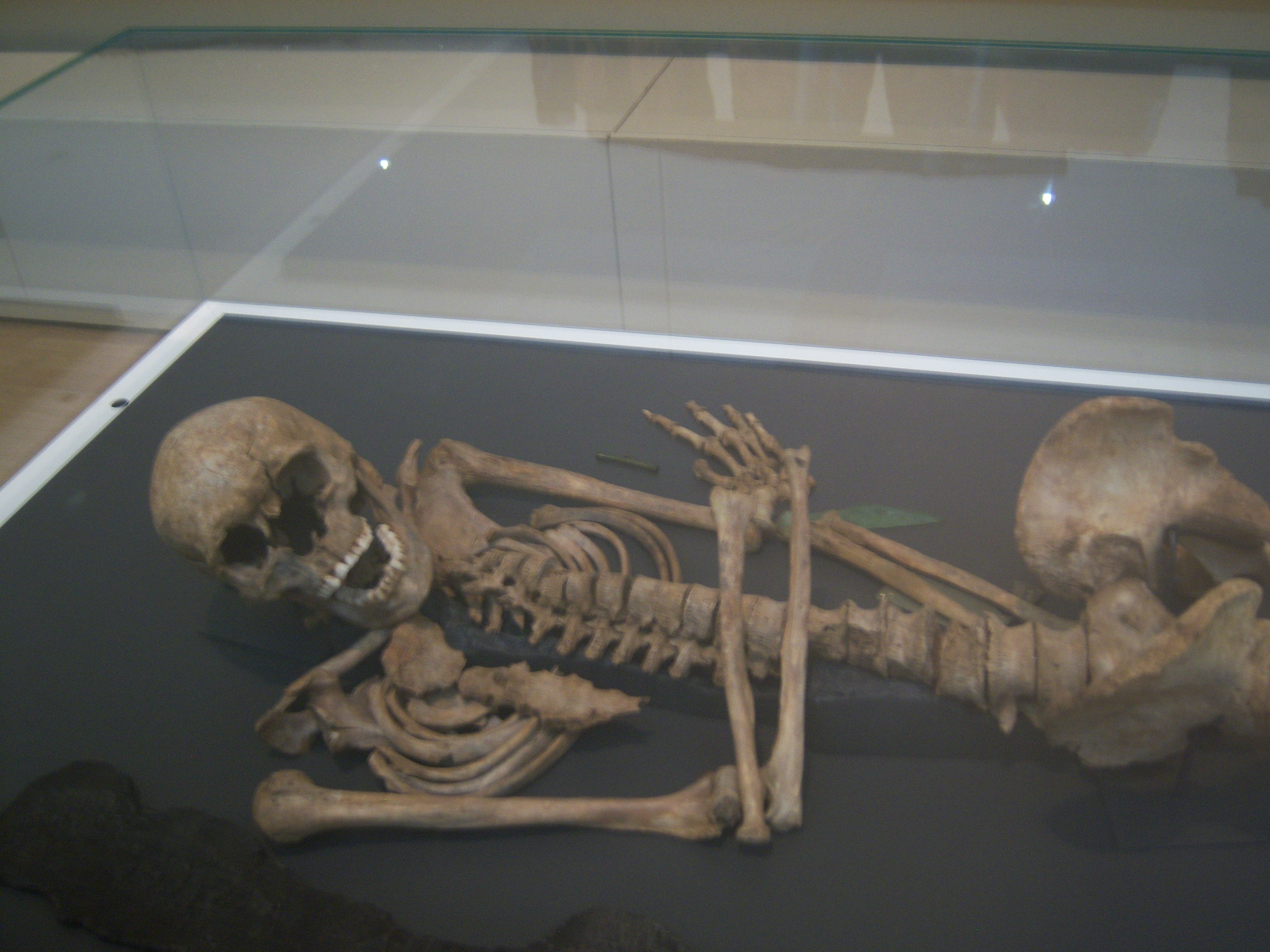
My first full day of class was at the British Museum. We spent the day wandering through it, first looking at how the museum told the story of humanity, and then in particular how it told the story of Britain. There were somethings in the museum that I found really interesting and exciting, particularly in the British sections, such as the Barnack Burial, which is a skeleton of a man who died between 2330 BC and 2310 BC. (Source: British Museum). The crazy thing about it is that when I thought about it, I realised that because he was a pre-Roman Briton (the ancestors more so of the modern Welsh than English), this skeleton is probably one of my ancestors. That realisation made the experience more personal, and much cooler for me.

Image

“…this skeleton is probably one of my ancestors.”

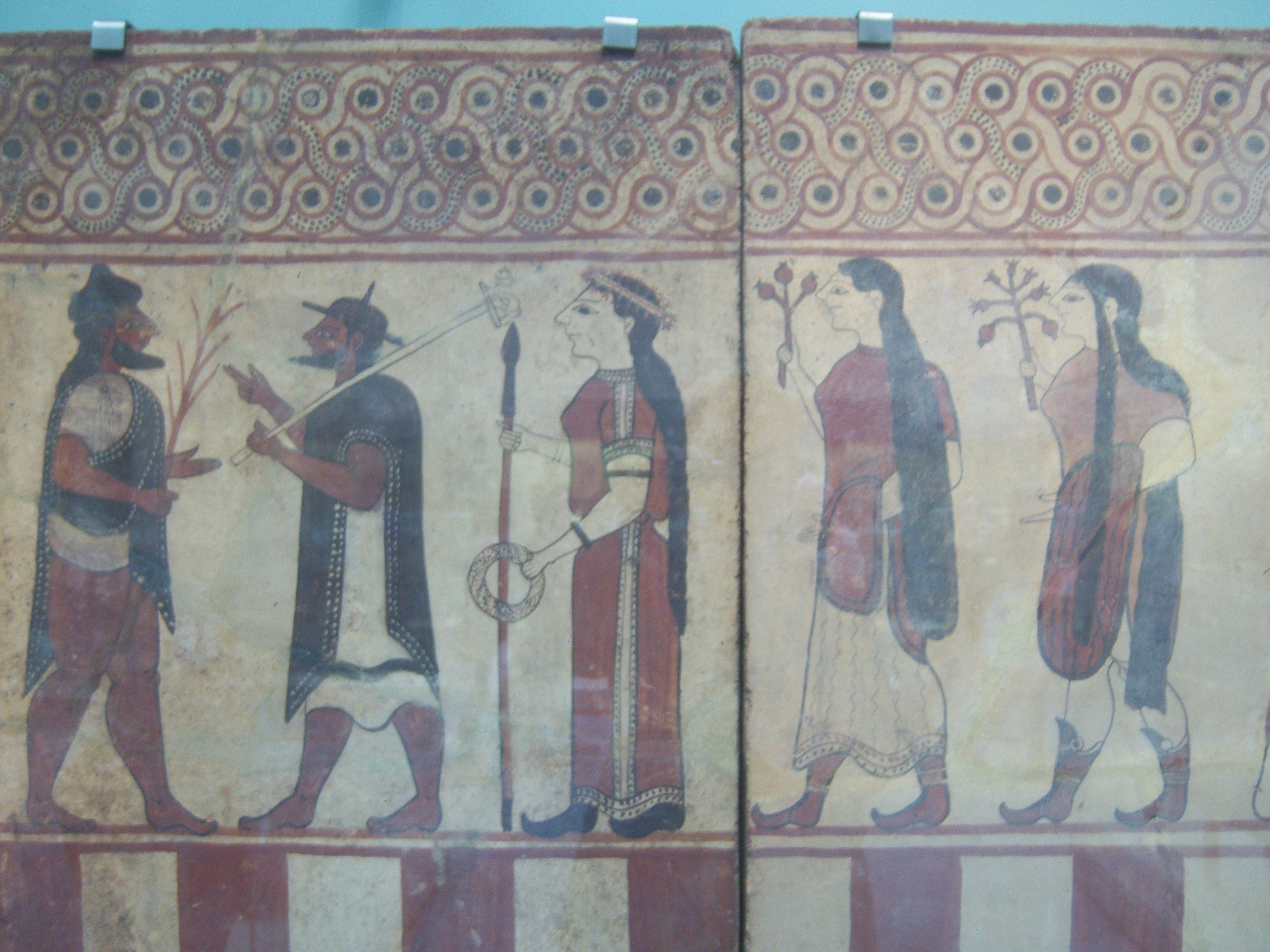
One area that I am most interested in, as can be seen by my mention of the aforementioned skeletal man, is in the peoples who came before the great civilisations and empires of Antiquity. Two such peoples are the Etruscans of Italy and the Minoans of Crete. The British Museum has a collection of Etruscan artefacts, which were a delight to see, as I don’t get to see much save Rome in Kansas City. Among them was a wall painting showing your normal Etruscans from the height of their civilisation. A lot of these ancient things are so eerie because I think about how when they were first made, that culture was probably not unlike our own in that it seemed stable, and ready to continue on into the future. But, they are no longer around, just as one day we will most probably not be around as well.

Image

“…that culture was probably not unlike our own…”

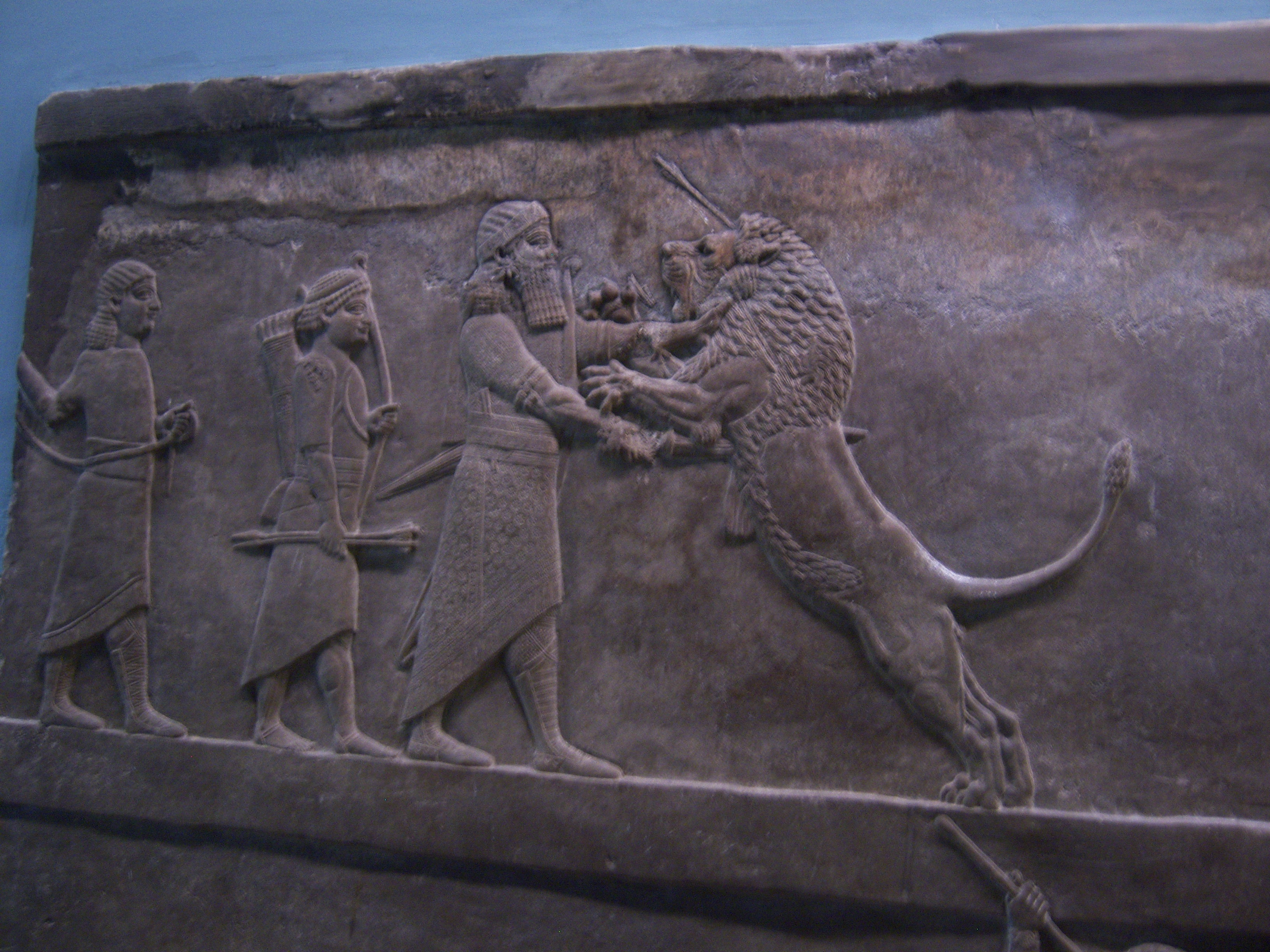
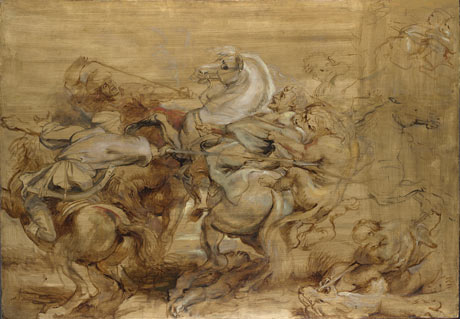
Another interesting thing that caught my eye was the Assyrian collection. Being a lover of Gilgamesh, I had to take a look at this section of the museum, which was as it should be: astounding. Again in the artefacts that we leave behind, the future can learn more about lost civilisations and cultures. So too, in things such as a wall carving of an Assyrian king wrestling and stabbing a lion, we are shown a particular image of their society, and the power of their kings, that could or could not be unlike our own. I had a good laugh later in the day when at the National Portrait Gallery, I came across a Reubens depiction of a Lion Hunt.

Image

An Assyrian King stabs a lion whilst throttling it.

Image

Peter Paul Rubens, A Lion Hunt, about 1614-15.

The thing to keep in mind is that despite the passage of time, the changing of language and culture from one to another, we always remain human. Just as a king in the 16th Century BC may have a fascination with hunting lions, to show his own power and prowess, so too a 17th Century painter would use that same image to depict the greatness of his subject. After all, what is the symbol of English Football than the 3 Lions of England? This is one of the great things about history that I love so much, that we learn so much about ourselves and our culture when we study others. In London, one can see this more so than perhaps in other cities. Here in the courtyard of the London Guildhall, one can see architecture from every period in the City’s 2000 year history from the Roman amphitheatre under one’s feet to the late 20th century buildings on of the Guildhall’s West Wing. This is truly a great place to study history, one of, if not the greatest there is. I am looking forward to next week’s class, as we continue on our walks through London, learning about the past, and how the present depicts it, while keeping a watchful eye on how the future may depict us when we too become the past.

Travelling about London

Shoreditch, London – The first day of class has come and gone. It was rather a fun and exciting day, both at university and out and about in town. If I hadn’t been too sure of my knowledge and understanding of the Underground before this morning, I certainly am as I write this at 20.00 in the evening.

London Underground symbol

“Once one gets the system down, travelling in London is not to bad at all compared to other big cities.”

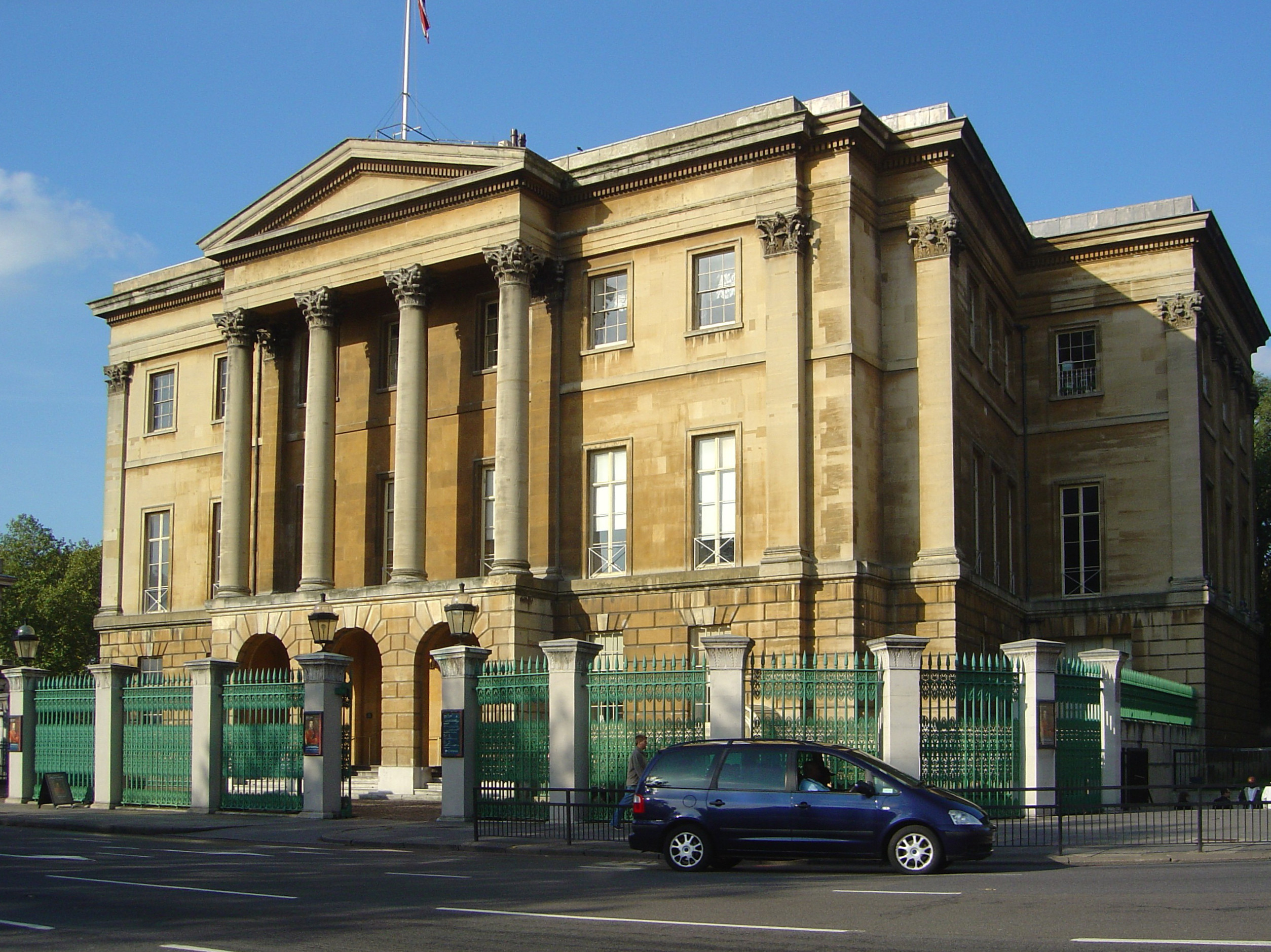
Once one gets the system down, travelling in London is not to bad at all compared to other big cities. After class got out today I decided to head over to Apsley House, the home of le vainqueur de Waterloo, the 1st Duke of Wellington. To get there from my home station, I had to make one transfer between trains, which wasn’t too terribly bad. The problem came in the fact that I left the dorm at 15.30 and Apsley House was scheduled to close at 17.00, so considering that rush hour was just beginning to wake from its meridical slumber, I knew that I needed to get there a bit faster than normally I would have. So, by walking down escalators on the left (rather than standing on the right as is custom here), and standing on trains near the doors, being the first one to jump off when said portals opened at my transfer and destination (Hyde Park Gate), I was able to make it to Apsley House at 16.20, a good 40 minutes prior to closing time. Unfortunately however, I entered the courtyard and found the sign that read “CLOSED” standing on the steps leading to the front door.

Apsley House, courtesy of the Wikimedia Commons.

Apsley House

In my annoyance I decided to walk around for a bit, after all I was in Knightsbridge, which is one of the nicest neighbourhoods in London. As I walked along I chanced to see a few things I probably wouldn’t have seen had I just gone back to the Hyde Park tube and returned home. Among these were the Libyan and Kuwaiti embassies, the latter of which had a rather large flag in front of it. I would have stopped by to see if I could pick up a couple Kuwaiti dinar, which last I looked was the highest valued currency globally at present. But because of the obviously heavily armed guards in front of the embassy (one was standing talking to the other who was driving a G-Wiz [cute, I know]) I chose to pass onwards and get back onto the tube at Knightsbridge. Now here’s the kicker, where no doubt my Mom will be saying, “Seán, you shouldn’t have…”: I didn’t actually know which tube line ran through Knightsbridge station, I just knew it was a tube station and that I could get home somehow someway. As a matter of fact I didn’t even know which lines went through there until I got onto the platform level (I intentionally left my tube map in my pocket), just as a bit of an adventure. Needless to say, I got onto the only line there, the Piccadilly line, and took that back towards the university, figuring that I might run into some friends if I did that. Though I didn’t run into any other ISA students, I did get an opportunity to try and blend in with the business-folk going home from a day’s work in the City (the CBD). It worked rather well, except for two businessmen who were giving me funny looks because my suit wasn’t black like all the rest of the businesspeople on the train, which granted I’m not a businessman, I’m a historian in training and a filmmaker, so I can wear some colours other than black, blue, and white (all of which I was wearing in one way or another, mind you.)

The G-Wiz (Reva-i outside of the UK)

“(one was standing talking to the other who was driving a G-Wiz [cute, I know])”

I got off at my home station at about 18.00 and made my way over to our local Argos (a UK electronics store). At first the place threw me for a loop. When I walked in all I saw was a big empty space in a small shop. I soon realised that I had to go over to the far left and look in their catalog, write down the number of the item I wanted to buy (a desk fan as there’s no air circulation in my room & no AC either), then take my little slip of paper to the counter and have the clerk type it into the system and take my money. Then I went and waited by a counter on the far right side of the shop, and not unlike Portillo’s, for all you Chicagolanders out there, I waited for my number to be called. After getting the fan, I went home, set it up, and enjoyed a nice cool breeze in the room.

However, I would have to say the two most amusing sights I have seen since coming to London were both involving transport. On the tube last night on the way back from Westminster a health & safety sign on one train had been graffitied so it read, “OBSTRUCTING THE DOORS CAN BE DANGEROUS”. The second was on the way to the university this morning we came upon a G-Wiz that was parallel parked on the side of a street but perpendicular to the rest of the cars, as in it was backed into the spot in question. This is why small cars are the best!

So, to the point of this article (seeing as I titled it “Travelling about London”), what is the best way to get about Central London? In my opinion, if you want cheap and fast, take the tube. Sure, you don’t get to see sights on the way (as you’re below ground), but you do get a good opportunity to blend in with the locals & will reach your destination quicker than if on a bus or in a cab. In regards to buses, they still confound me tremendously. I’m avoiding them for now. As for cabs, the licensed ones are good, but pricey for just one person. So, I’m probably taking the tube home from the opera or theatre for example. Of course, if you’re just staying in one part of town, walking’s a fine way to get about, after all it’s what the locals do. But, on no condition, as I have heard time and again, and seen from afar, never attempt to drive in London if you’re not a local. If you think Chicago traffic’s a pain try coming here at rush hour. Let’s just say the British don’t have the concept of jaywalking, so if there’s a wide enough gap in traffic people just cross the street. O, and also just don’t make eye contact and don’t apologise for going past people on the pavement (sidewalk) or in the tube’s escalators and pedestrian tunnels in stations, just keep moving forward. And for no reason at all stop and look at your map in the open, just keep moving and find a café or sign.

So, with that, I’m signing off for the night. Tá.

Settling down in London

Shoreditch, London – After 6 and a half hours in the air (8 and a half hours on the plane thanks to a great JFK traffic jam), I at long last made it to London-Heathrow yesterday morning (15 June) at 8.00. The flight was quite interesting, and didn’t have much trouble after we got off the ground. About two hours into the flight, for whatever reason I had the urge to lift the window shade just a bit. This “sudden urge” turned out to be quite rewarding, as I got an exquisite photo of the sun just beginning to rise over eastern Greenland.

Sunrise over Greenland, 15 Meith/Jun/Juin 2013 at 3.00 UTC.

“This “sudden urge” turned out to be quite rewarding…”

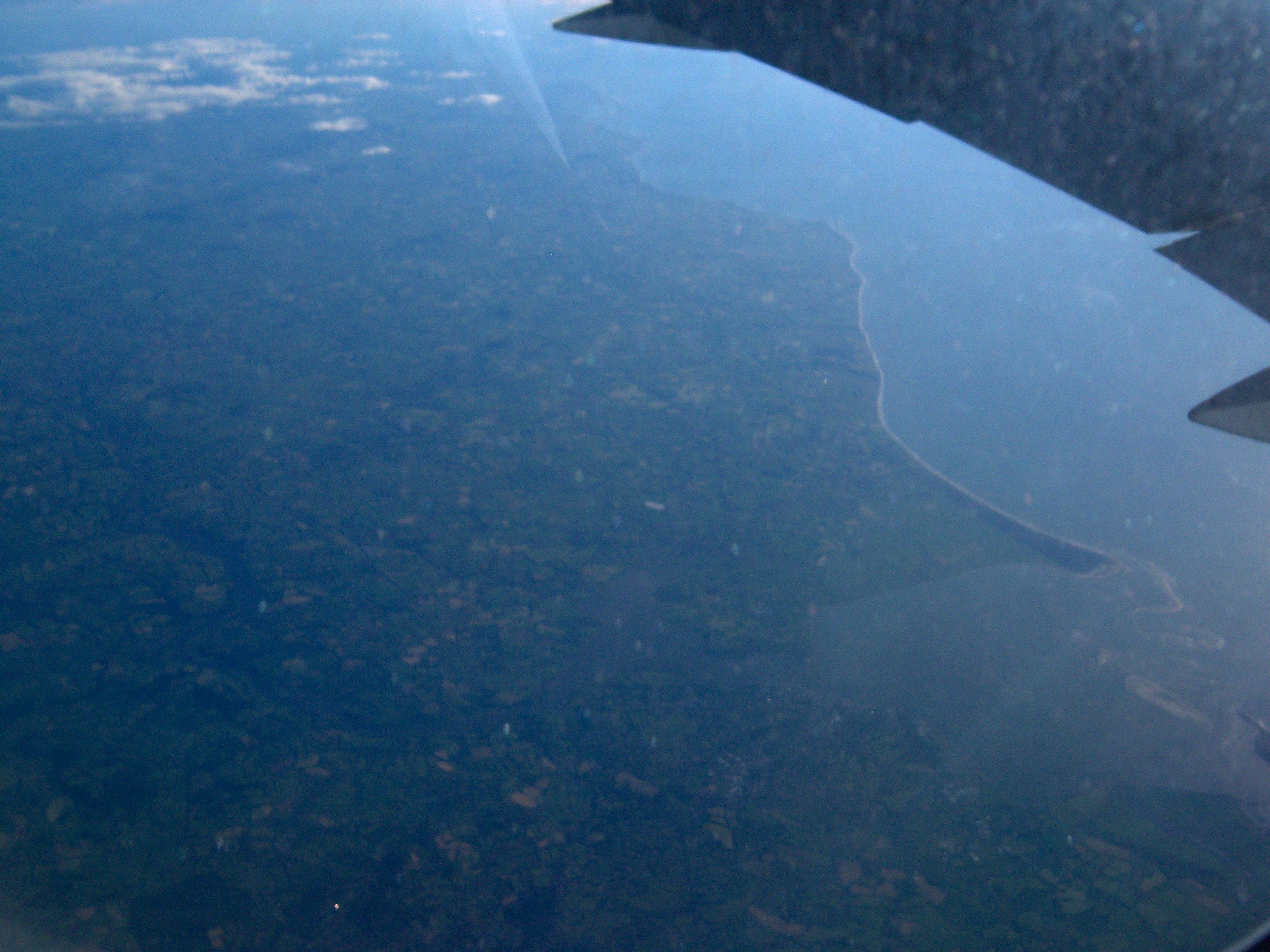
The Irish coast in Co Wexford from the air

The Irish coast in Co Wexford from the air.

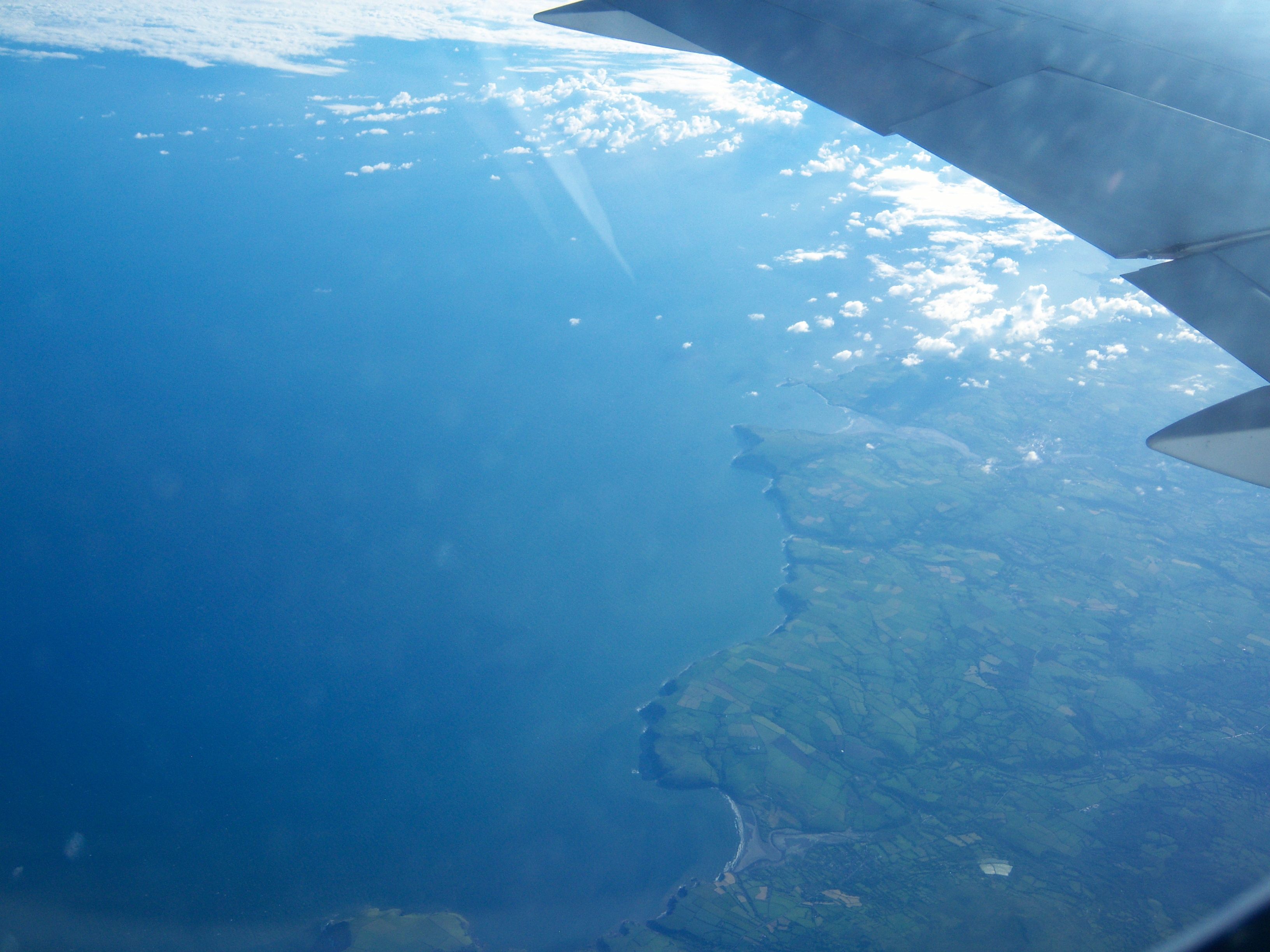
The Welsh coast near St David's from the air.

The Welsh coast near St David’s from the air.

A couple hours later we began to fly over an tír na mo aithreacha (the land of my fathers), Éire (Ireland). We flew in a straight line from about Ennis to Wexford, and then crossed the Irish Sea to another country of which I have heritage, Cymru (Wales). Over Wales, we flew from about St David’s in the west to the mouth of the Severn in the East.

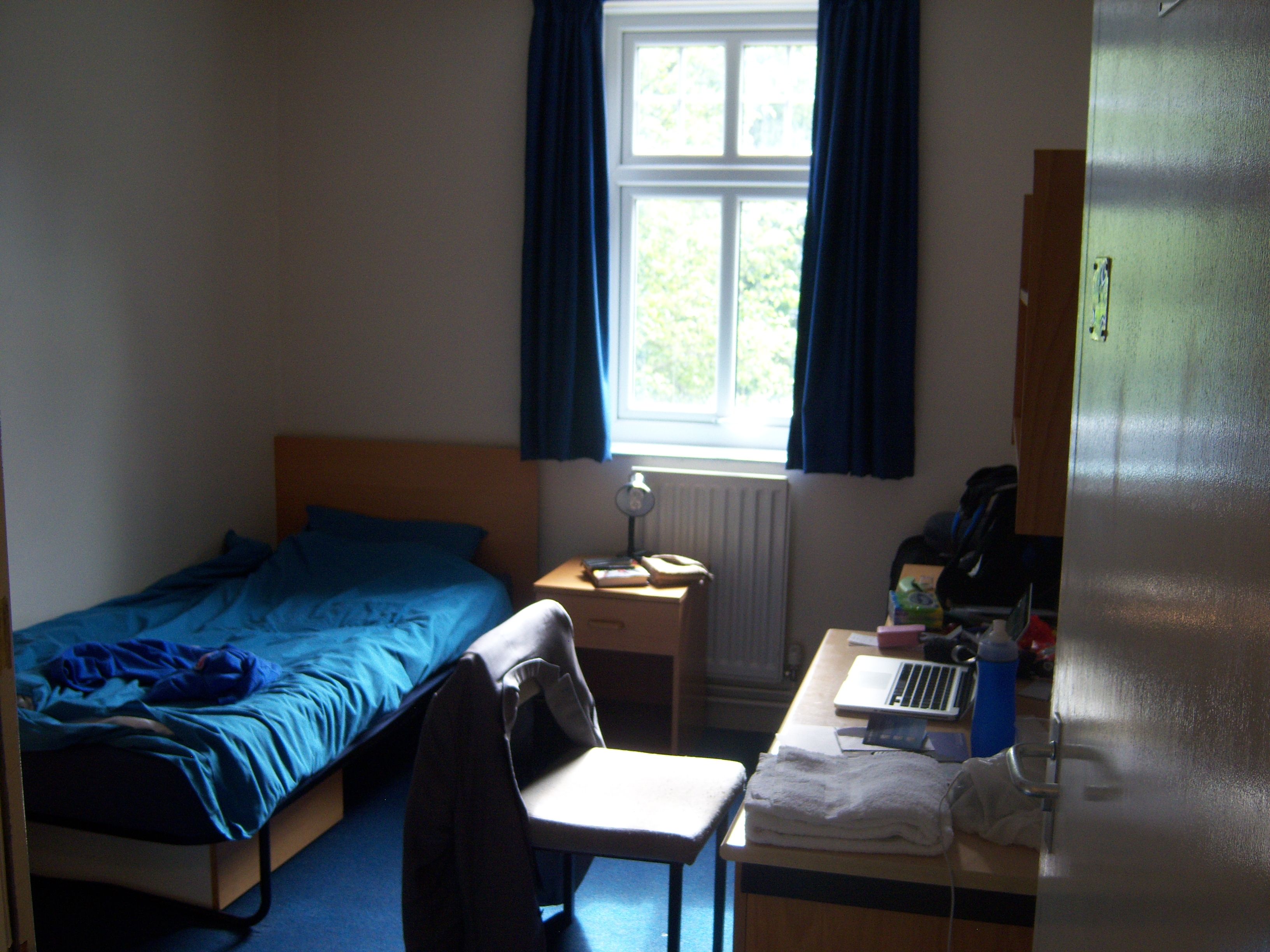
I landed in London, as aforementioned, at 8.00 in the morning and made it through customs by about 9.00. There at Heathrow’s arrivals meeting place, I met up with the ISA London office, and ended up staying there in the arrivals area until 12.00 Noon when we as a group at long last left for our housing. It took us a good hour to drive across London to our building. My room is quite nice actually. It’s a bit on the small side, but is quite comfortable and cozy. The one complaint that I have at present is the lack of air movement, which will soon be redeemed by a fan, which hopefully I’ll be buying at Argos soon. My room is one of six that are grouped together in a flat, which is on the first floor (ground floor in US English) of the building. There are three other people living here with me, two of which are with ISA, and the third with another programme. We share a kitchen, and the third person and I share a toilet (bathroom).

Dorm Room at University of Westminster

“…but is quite comfortable and cozy.”

As I was originally typing this into WordPress last night at about 20.00, I began to feel a bit drowsy. However I was determined to continue with my typing and complete the article before bed. But alas, my computer, being the wise soul that she is (she as in how ships are called she or her) decided to go to sleep as well and stop working properly. So, I too retired for the night. I first woke up around 22.00, thinking that it was the next day already, forgetting in my exhaustion that the Sun stays out here until about 22.30 during the Summer months.

I woke up the next morning at my 7.30 alarm quite refreshed and free from the shackles of sleepiness. After showering (they use two handles, one for hot and one for cold water, thus it was hard to figure out the balance) and eating a light breakfast of a NutriGrain bar, I made my way up to my new parish church, St Monica’s in Hoxton. The Parish is an Augustinian one, and their Mass was quite nice. They had a few songs, without the need of a cantor, and chanted all of the prayers. There were a couple differences, like the priest asking God to “pencil out our sins” rather than forgive them, one which I found quite charming, but otherwise it was much the same as most of the Masses that I’ve attended back in the States or in Ireland. However, I had to leave early and miss the talk on the parish fundraiser as I was due back at the hall of residence for the group meeting for orientation.

For orientation we took the tube to Oxford Circus, which is the closest stop to the University of Westminster’s Regent Street Campus. However, just about 3 blocks south and 1 block west of the University was our true destination for that moment, the ISA London offices on Great Portland Street. The ISA staff have been truly welcoming of all of us on this trip, and one gent from the office, Tom, even took a good hour out of his day yesterday to help a fellow student, Jon from the great state of Wisconsin, (home to Michael Feldman (of NPR fame) and one of my favourite burger places, Culver’s) and I in getting UK mobile phones. We were able to find very cheap phones at the Phone Warehouse for £4.95 for the phone and £10.00 for the plan with O2.

After orientation, Jon and I took a bit of an adventure and made our way down Oxford Street. I told him about a store where he could probably be able to get a much needed electrical adaptor, and we headed in what I thought was the right direction. Turned out I was a bit off in my geography, and we ended up going the wrong way by a couple blocks. So, after turning around and heading back west, we eventually found the store I was telling him about, Selfridge’s. Now, I wouldn’t have even heard of the retail giant had it not been for PBS broadcasting the ITV minseries about Selfridge’s founder, Harry Gordon Selfridge, on the Masterpiece series. We made our way into the store, and soon found ourselves in electronics, where Jon got his adaptor, and I met a very friendly and interesting clerk, who just so happens to be planning a North American vacation, which includes a drive from DC to Toronto. I wished him luck, and we continued onwards and upwards (literally in that sense as the electronics department is in the cellar) to the foodhall, which is on the ground floor. We ate at this nice sort of cafeteria style eatery, simply named Eat, where we both got the store’s signature beef sandwich, which was basically roast beef on bread of your choice, with whatever sort of mustard you wanted on top. Now, I’m not a mustard lover, and when ordering I thought by asking me if I wanted, “American, English, or French” they were talking about cheese. So, thinking English meant a nice cheddar, I spoke thus, and to my horror found mustard squirted onto my nice beef sandwich. I ended up eating the beef that didn’t have the mustard on it, and only the bottom slice of bread, as it also was naked in a sense.

We returned to the ISA office by way of it’s neighbour, the BBC Broadcasting House, and sat around until a tour bus came for the group. We took a nice tour of the major sites of London: Buckingham Palace, Westminster, and the City, and returned to our building forthwith afterwards.

I must say one of the most interesting parts of my day has been what has just happened prior to me sitting down to write this, grocery shopping in the UK. It’s just that bit different from shopping in Kansas City that I just had to mention it. See, I was surprised at just how little meat there was for sale on the shelves. Now of course, this was a smaller local grocer (a branch of Sainsbury’s to be exact), and so they wouldn’t have quite as much as a larger place, but it did surprise me. I ended up spending about £13 on food for the next couple of days, buying bread and preservatives for sandwiches, some pasta and a tomato basil sauce for dinner sometime (keeping with the Pasta & Prayer tradition), and other stuff as well.

So far this has been quite the exciting and interesting beginning to my time in London, and it certainly makes me look forward with anticipation at what is to come. So, for now, tá.