This week on the Wednesday Blog, I have a bone to pick with the weather.
—
Click here to support the Wednesday Blog: https://www.patreon.com/sthosdkane
This week on the Wednesday Blog, I have a bone to pick with the weather.
I wouldn’t be a good Midwesterner, nor even a good human being, if I didn’t always have the weather as a fall back conversation topic. There’s always something going on out there to comment on. This week I’m befuddled by the sudden shifting of the moment from a prolonged summertime heat that lasted throughout September to a sudden crisp Fall chill which made the date, now in the second week of this month, all the clearer to me.
My own human surprise at the sudden change of weather might best be described with a mechanical being, in this case the idea that Star Trek‘s android Lieutenant Commander Data had a functioning internal chronometer that kept him accurate to the nanosecond. Yet that chronometer could be turned off if he wanted, though before that was suggested to him, Data hadn’t ever considered the possibility. I’ve had my odd week where I’ve lost track of time, whether due to sickness or exhaustion. So, to come to this week and be caught unaware that the warm days of Summer are truly behind us when they seemed interminable in Kansas City struck me harder to believe than I expected.
In my current situation this means that I’m closer now to Thanksgiving than the start of this Fall Semester when I began my new and current job teaching middle schoolers. It also means that the late Fall deadlines that I have for written submissions are indeed closer than they may have initially appeared. We passed by the usual markers of the changing of the seasons, and I recognized them as I watched them go by; yet I think because I haven’t spent a full year in Kansas City since 2019 I found myself unassuming when the hot days continued even as the Sun began to set sooner over the Great Plains to our west, venturing ever as it does each day towards the Rockies, Deserts, and Pacific beyond.
On Monday, my photo app reminded me that 4 years ago this week I made my first trip home after the big move east to Binghamton, and in the pictures featuring my beloved and dearly missed dog Noel in my arms I’m wearing the same sort of woolen sweater I’d usually don when indoors throughout the Winter. So, even in that moment when my seasonal expectations were still attuned to Kansas City’s climate, by now I’d be far colder than I am today.
It’s curious considering that I was told to expect earlier winters when I was in Binghamton, yet even there I only began to don my winter coat by about the first week of October. It seems reasonable to assume then that all of this is due to changes in our climate, a topic I’ve written about a great deal in this blog of late. What strikes me the most about 2023 has been the stability of our climate over most of the past four months. My suspicion long term is that the extreme heat we experienced in the late Summer, which drove my students indoors for recess for a week, and the extreme cold we felt around Christmas last year will become our new normal. I hope then, that we can adjust properly to this new normal, both in our energy use and in our ways of living throughout the changing seasons. I grew up knowing Winter to be long, cold, and snowy, Spring to be stormy, Summer to be long, hot, and dry, and Fall to be of crisp with occasional storms. Now though, the frosts of Winter “come pale, meager, and cold” to quote Henry Purcell’s The Fairie Queen, for far longer in a mirror to the lengthening Summer heat. Should I be fortunate enough to have children, my lived wisdom of the seasons may prove useless to them in their own brave new world. Certainly, the moderation which brought my ancestors to this middle bit of the North American continent is fast fading from view.
My seasonal confusion is in part born out of how fast my life is moving at this moment, juggling three jobs and trying to maintain my research all at the same time. Still, as I feel the crisp air filter in while writing this, I am eager to see another Fall arrive like all the others I’ve known.
One of my favorite YouTubers is J.J. McCullough, a Vancouver-based political columnist for The Washington Post who creates videos discussing topics of culture, politics, and society here in North America. In the summer he made a video discussing the topic of cultural homogenization, of how all cities here in the US and Canada tend to have a fair number of similar things going on. It’s a thesis that I agree with, though with some hesitancy.
I for one am happy with this idea that you can go to any major city in these two countries today and generally feel rather familiar with your surroundings. It’s why I’ll often prefer to stay in chain hotels over smaller super-local B&Bs or even use Air BnB or VRBO when I’m traveling. I like the fact that I know what to expect in a hotel room from the generic furniture to having the same soaps and shampoos to having the same set up with the TVs. When I travel, I’m not traveling to spend my time in a hotel, rather I want that consistency as somewhere I can return to and feel familiar in after a day of going around a city that I may not know quite as well.
Likewise, on the long drives I’ve done four times a year for the past 3 years between Kansas City and Upstate New York, I’ve often mentioned along the way that I feel at home in the suburbs of the various cities I tend to stop in. In particular, my usual overnight hotel in Columbus felt quite familiar, in part thanks to its modern décor and highly suburban surroundings, far more so than Binghamton, NY where I’ve been working on my PhD. This has led me to often remark that leaving Columbus is like leaving the familiarity I’ve come to know and appreciate in the urban Midwest as I head into the Appalachians of New York.
The biggest difference here that I’ve noticed between Binghamton and the other American cities I’ve lived and worked in––Chicago & Kansas City––is that Bing has had a rougher recent economic history than either of the two. While Chicago was able to survive the decline of older industries in the Great Lakes Region, aka the Rust Belt, through its sheer size and the diversity of its economy, and while Kansas City has had a renaissance of its own in the last twenty years to the point that it is today a thriving, growing metropolis with ever increasing opportunities, Binghamton has never really had the size or the economic diversity to stay as strong throughout the bad last few decades of outsourcing jobs and closing down old factories in some of these older towns and cities in the Northeast. There are some hints of this continental North American culture here in Binghamton and in Broome County more broadly, just look at the national chains that line Vestal Parkway, but in its current state I argue that this city has far more in common with the other old industrial centers of the Northeast, particularly in New York and Pennsylvania that have seen their main industries move away within the last 40 years than it does with the broader North American culture.
Still, there are moments when I’ll be driving around suburban Broome County where I’ll find myself remarking how similar the houses are to some of the older Cook County suburbs of Chicago, albeit built in a valley surrounded by what the US Geological Survey calls “small mountains.” I myself am a child of the western DuPage County suburbs of Chicago, and after moving grew up on the far western edge of Kansas City, Kansas, whose older neighborhoods to the east are equally similar in their character and in the age of the buildings to some places here in Binghamton, Johnson City, and Endicott.
In seeing those similarities I’m seeing the broad cultural trends of a century ago. Just as today there are particular architectural styles that are in fashion across this continent, from the renovation of old urban industrial buildings into lofts to the big glass buildings that mark the styles of the later 2000s and into the 2010s, a time when after the worst of the Great Recession had passed, I do think in retrospect we’ll say was a time of optimism, however short it ended up being.
In the media I consume, I’ve often found it interesting that I’ll prefer to watch the national evening news broadcasts over the local news. In my own case I’m a PBS Newshour guy, and there’s something about watching that broadcast that I know millions of other people around the U.S. are also watching, and that it’s coming from a studio in in the Virginia suburbs of D.C. (a place I know very well), that makes me feel like I’m a part of a wider community. The same goes for watching Jeopardy! every weeknight. It’s a show that I know a big number of people watch from all living generations, and it’s 30 minutes a day when I can feel like I’ve got something in common with all of them. I don’t otherwise watch much popular TV, and when I do watch shows that’ll catch the headlines like the recently released Lord of the Rings: The Rings of Power, I often have to ignore those same headlines and subreddits for how negative they often become. In those moments, that hour a week, I want to enjoy the story and not be caught up in what other people might think about it.
Our world is built on mass-production in every sense of the word. We wouldn’t be able to sustain the lifestyles we lead, nor our current population, without industrialization. So, while I will go on a limb and try out the local cuisine when I’m traveling, whether that’s crab cakes in Maryland or the breakfast burritos in Austin, I still like to see what my usual staples are like in a given place. I’ll freely admit to preferring to get a burger or pizza or chicken when I’m doing overnight stops in cities in part because after a day of traveling, I don’t want to be as adventurous, yet also because I can use that baseline, that control, to see how they do the same sorts of meals in a given restaurant in one city and compare it to all the others I’ve tried that in. In some cases, like at Mr. Bartley’s Burger Cottage in Cambridge, Massachusetts it was a wonderful choice, in others like at many of the places I’ve ordered burgers at higher altitude in the Rockies, it’s been a poor choice seeing as I’m less of a fan of well-done beef.
Yet with all this mass-production it strikes me as funny that we often have our very particular ways of distinguishing ourselves, from monograms to those new Facebook avatars, that are themselves mass-produced. I first started seeing this style of monogram, one large letter surrounded by two smaller letters, when I was in college. They often became near logos for the people who used them, yet those very personal symbols were themselves created from templates and used by millions of other people. I did the same thing with the logo for this podcast, which I chose out of a set of templates as a matter of convenience when I was creating it, my own meager attempts at making a logo had all been rejected by Anchor’s formatting.
When it comes to some of the very local sayings that J.J. mentioned, like the often-heard Kansas Citian remark, “if you don’t like the weather just wait five minutes,” it’s something I’ve also heard in many other cities. When I moved to London, I found that our North American customs surrounding weather & seasons made a lot more sense there. The dates when we demarcate our seasons, Winter & Summer starting at the solstices, Spring & Fall at the Equinoxes, makes sense in Europe. It doesn’t make sense here in North America where the weather fluctuates dramatically within a given day. Even now, I’m wearing short sleeves on a 66ºF (19ºC) day in Upstate New York and watching the leaves now past their Fall peak begin to be blown off the trees by the impending winter air. Last week, by comparison, I was wearing thick wool sweaters, wool socks, with a coat, hat, and gloves when outside. Our weather makes a lot more sense when you think of it continentally, after all no one place is entirely separated from everywhere else in North America when it comes to the weather. The snow that strikes the Dakotas one day could well fall in the Mid-Atlantic States a day or two later.
I love Kansas City, and Chicago, the two cities I consider to be my hometowns. I love the things they do that are different from other cities, like Chicago’s hot dogs, Italian beef, and deep dish, or Kansas City’s barbecue. They are the two cities where my own experiences, and my family’s American experience has played out, both in their old urban neighborhoods and in the postwar suburban sprawl where I grew up. I appreciate all the things they have in common, things which they share with much the rest of the metropolitan cities of North America. That’s what’s made places like St. Louis, Denver, Columbus, Indianapolis, suburban Maryland & Virginia, and even Toronto feels like a place where I could settle down. I’ve heard Toronto referred to as a cleaner version of Chicago. It’s what’s made the big merging metros of the Northeast––Philly, New York, and Boston––feel less foreign to me than the cities that lie between them and the Midwest.
I’m happy that we have so much in common in this time when we seem so set on dividing ourselves into parties and camps constantly at odds with each other. Our commonalities demonstrate how much we depend on one another.
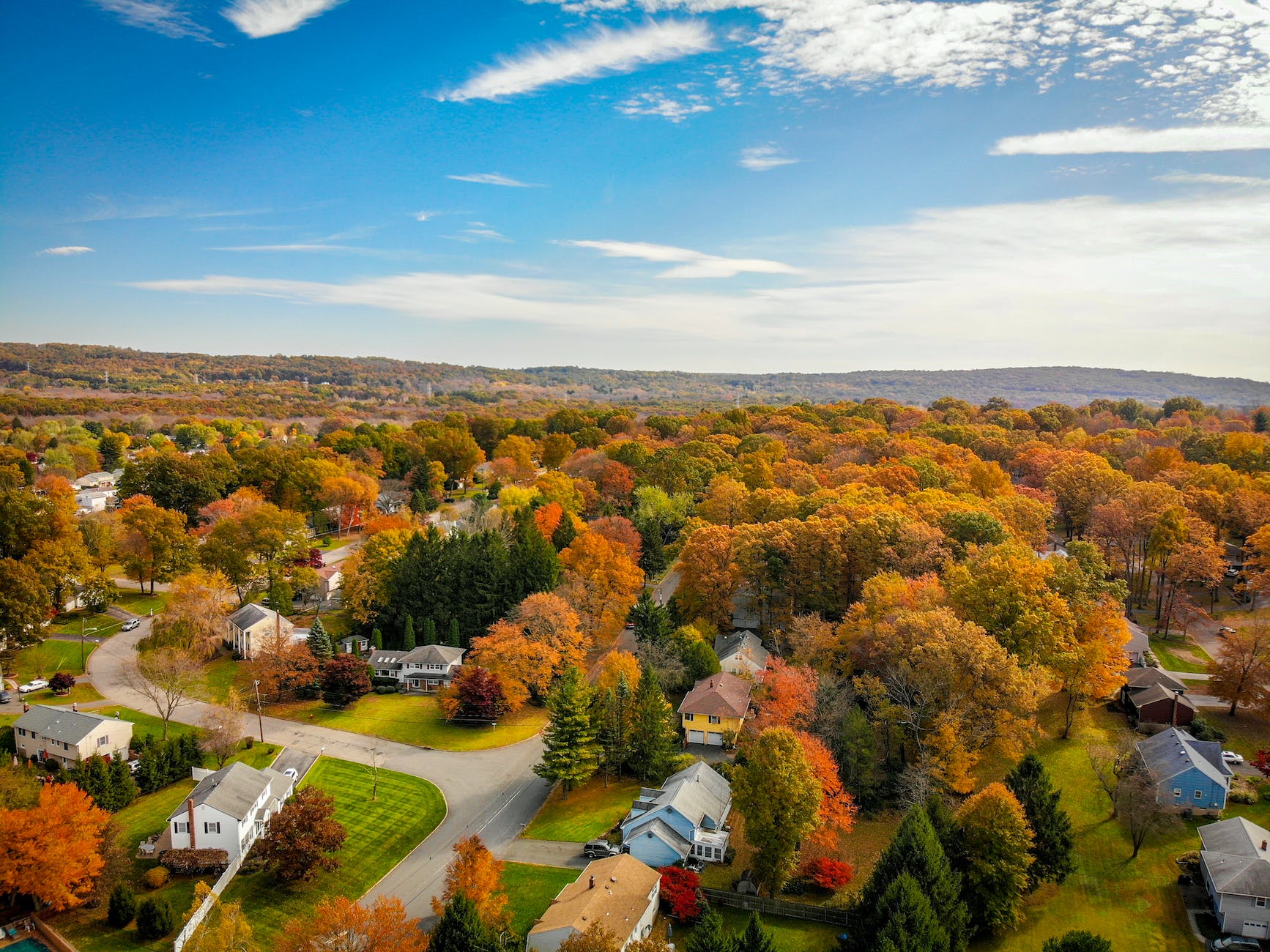
When I returned to Binghamton after a trip home at the beginning of October, I was stunned to see the leaves had changed over that weekend that I was away. The deep green of late summer had been overcome on the trees by the creeping wave of red, gold, and orange that danced down from the highest elevations and into the Susquehanna Valley until the forests surrounding this valley became a sea of radiant color. It’s the first Fall that I’ve spent here where the leaves have changed so early, let alone so fully before winter’s wind inevitably blows in from the north and strips the trees of their leaves for the season.
All my life, I’ve enjoyed the chance to live in circumstances that kept me somewhat removed from the natural world around me. I’ve grown up in air-conditioned houses in the warm months and well-heated houses in the cold months. I’ve been able to escape from Winter’s grasp and travel to warmer places, as in last Fall’s trip to San Diego for the Sixteenth Century Society Conference, which this year is being held in the far less tropical climate of Minneapolis. As such my expectations of how my body would react to different temperatures and circumstances has been transformed by my own upbringing far more secluded from nature.
So, for the couple of weeks every Spring and Fall when my Dad would insist we open the windows in our house and turn off the A/C, I’d find myself in a new form of agony as with the open air flowing through my normally secluded indoor spaces I had no refuge from my seasonal allergies. They honestly felt worse when I was younger than they do today, even though now as I write this, I am feeling their effects well and truly. By living apart from the whims of nature, I was not acclimated to it. All this made my seasonal allergies all the worse.
Often the two biggest weekends on the Kansas City Irish community’s social calendar, St. Patrick’s Day & Irish Fest, are also two weekends when my allergies rise to their worst levels. In part that’s because they fall right at the changing of the seasons, Irish Fest at the end of Summer at the beginning of September and St. Pat’s because it’s right at the end of Winter and beginning of Spring. In the last few years, I’ve learned a great deal from living in an apartment without any built-in air conditioning, and from having to self-medicate when my allergies return, and as such I’d say they’re not as bad as they ever were during my teenage years.
Yet amid all the sniffling and sneezing there is a lesson to be found here. We are foolish to think we can truly divorce ourselves from Nature, from the very complex web of life of which we are an intrinsic part. We need to recognize that our bodies are going to change with the seasons. And in our time where travel is far easier than ever before, where you could be on the far side of the planet in an entirely different environment in a matter of hours, we need to recognize that our bodies will need time to catch up with their new surroundings. I’ve often wondered during my many trips in Britain and Ireland if it’s possible that I as the descendant of immigrants from those two islands might have some built in genetic strength when it comes to the allergens native to those two places? That statement could be entirely false, after all I’m not someone who studies this sort of stuff, but it’s still something I’ve often wondered. The climates in my own hometowns of Chicago and Kansas City are nothing like those of Ireland or Britain, leading me to wonder if my own biological predispositions to certain places hasn’t kept pace with my own family’s migrations from Europe to North America. It remains a question of mine.
Winter’s chill is fast approaching. This morning I pulled out one of my thickest Irish wool sweaters and may even put on a pair of wool socks to keep the chill to a minimum. I could turn up the heater in my apartment from 65ºF where it’s currently set to around 68ºF but putting on extra layers is more cost efficient. Like my Dad has done throughout my life, now as an adult I’m open to the idea of keeping the heater off for as long as possible and opening the windows if the weather suggests it. With our climate changing overall, and often warming, it’s been suggested that by the middle of the century Kansas City’s climate will be more like that of Dallas today. This means perhaps milder winters but far hotter summers. I may be cold now, but I know in 7 to 8 months I’m going to be sweating again as the summer heat returns. And when it does return, I’m sure my body will react in ways that annoy me, like the stomach aches I get when I eat chocolate when it’s either too hot or too humid, a relatively new thing for me in the last few years. We’ve created that new world for ourselves, a world where the old web of life is reworked to fit a warmer planet. It leaves me wondering how my seasonal allergies will change, or will they like the weather in recent years become only more extreme?
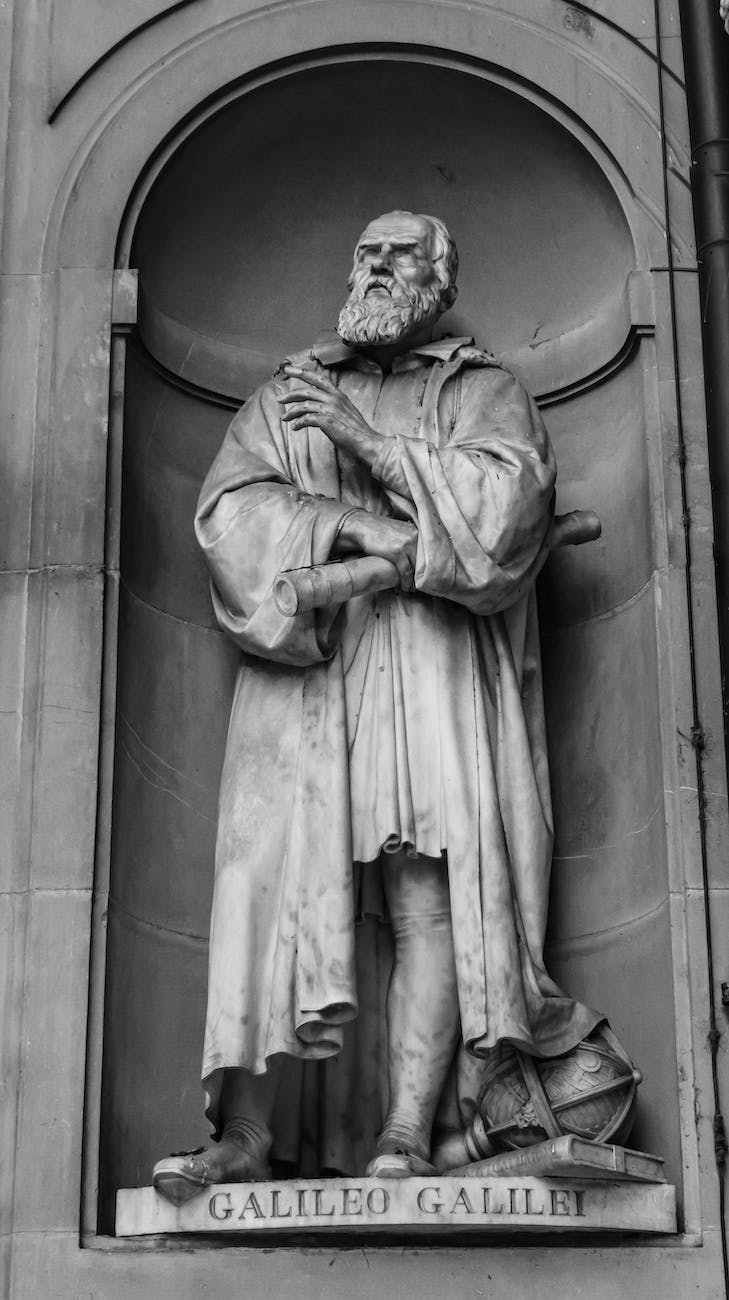
If there are any reasons why I find myself drawn to Galileo, this distant Italian astronomer who lived 400 years ago it’s that we have two things in common: we’re both stubborn and occasionally grumpy. I’ve known the basics of Galileo’s story for most of my life; he was an astronomer who was born in Florence and worked in the Venetian Republic at the University of Padua who was one of the first to use a telescope to look out into the night sky, making him the first to observe the Galilean moons of Jupiter, collectively named today for the man himself. His support of Copernicus’s heliocentric model––that the Earth revolves around the Sun––contributed to his falling out with the Papacy and his eventual arrest and trial by the Roman Inquisition who put him under house arrest for the last few decades of his life.
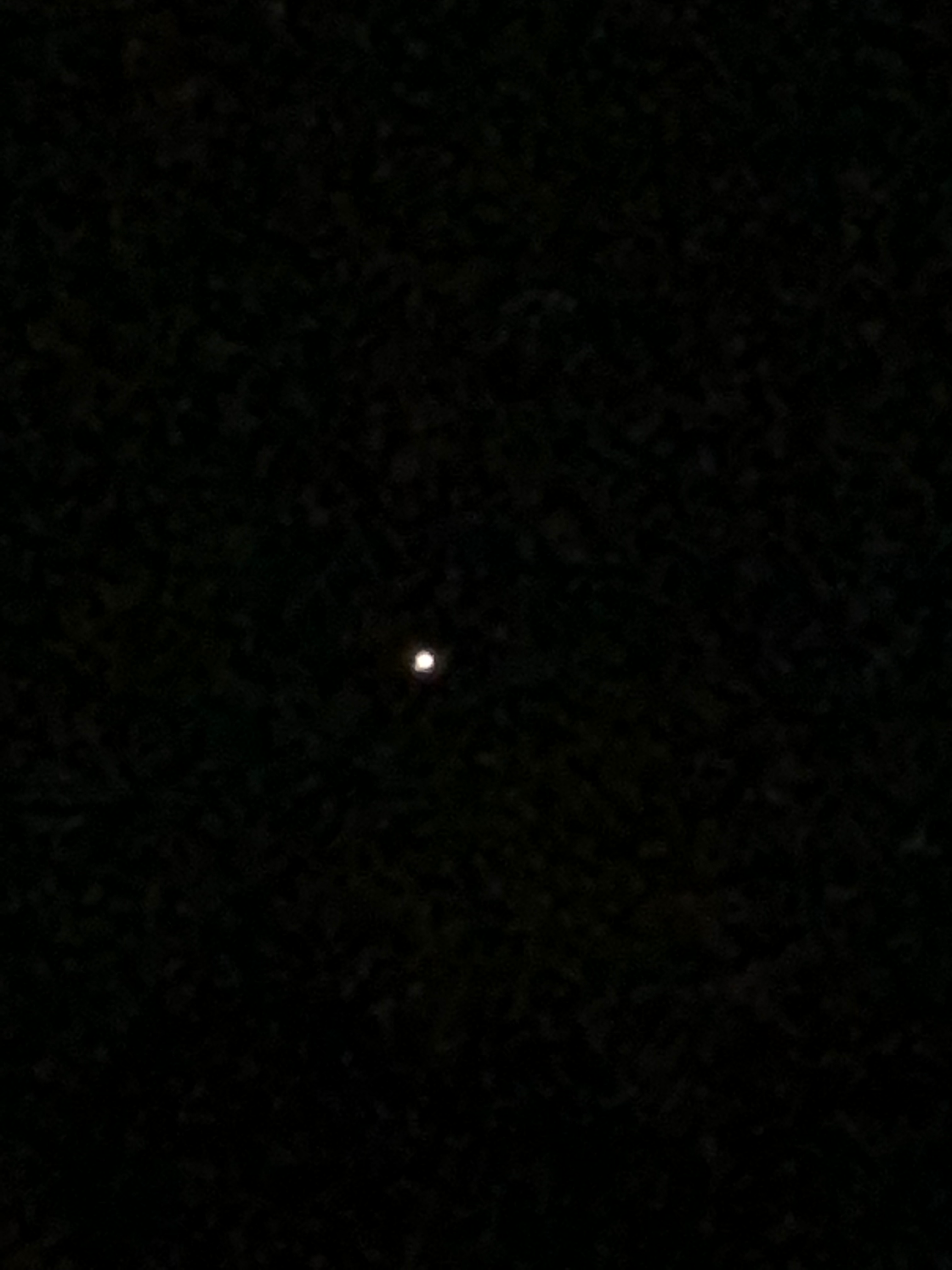
Of course, the real story isn’t quite that simple, after all many of his opponents agreed in principle with what he was arguing, they just didn’t like how he argued it. Still, Galileo’s contributions to science and to human knowledge of our cosmos overall are undeniable. In the last few weeks, I’ve thought about Galileo quite a bit as Jupiter has come the closest to Earth in its orbit for the first time in decades. I got a good look at Jupiter both through a telescope and with my own eyes on Friday night a few weeks ago up at the Kopernik Observatory and even was able to take a better-quality picture of it than I’ve gotten before with my phone.
Jupiter as seen with an iPhone camera on the 4th Friday in September at the Kopernik Observatory in Vestal, NY. Photo: Seán Kane.
I see in Galileo an inspiration of sorts because of the things he did. He was able to prove that the Moon wasn’t perfectly spherical by observing the shadows of the crater walls (what he called mountains) on the lunar surface. Using those shadows, the effects of the lunar geography, Galileo could prove the existence of something he otherwise wouldn’t have been able to see. It’s like how when it rains the best way to actually see the raindrops falling on your head is to look at them with a dark background like a tree or a darker-colored house. Otherwise, the water droplets will blend in with the ambient colors surrounding them. Likewise, we can see the Moon and the planets because it’s the light of our Sun shining on them that is reaching us here. The Moon doesn’t light itself up, nope, nor does the Earth, rather it’s the Sun that naturally does the job.
Here lies an interesting development in this story: the Sun lights up the Earth during the day, but the Earth is now still lit up at night. Only a few generations ago our ancestors figured out how to use electricity to light up our lives and turn the darkness of night into something new entirely. As long as I can remember I’ve been fascinated by this idea, that even at night some places are well lit. I wonder today if our cities might even be built with night in mind, if there’s more artistry in the architecture when the buildings are lit up by electricity rather than by the Sun’s rays? Certainly, we have more control over how our buildings are lit in this context rather than during the daytime. One of my favorite ways to experience a museum is after dark when all the lighting being done has been devised by an exhibit designer trying to control all aspects of how the exhibit is lit through their own lighting patterns. The British Museum does a really awe-inspiring job with lighting the Parthenon Marbles in such a way that their great shadows climb up the walls of their room making them seem even larger-than-life than they already are.
Still, in Galileo’s day before electric lighting they could see more of the night sky. It’s a sign of the world that we live in that it wasn’t until my 28th year that I actually saw the band of the Milky Way up in the night sky. Even in my youth growing up on the farm on the western edge of the Kansas City metro I never saw it. I think seeing the night sky in all its splendor gives us a chance to reconnect with our past before our industrialized modern world, to reconnect with the lights that illuminated our ancestor’s nights and memories. I’ve talked before here about how profound it seemed to me to be able to see light from Vega that had left that star when I was a child, well the same is true for seeing the same moons of Jupiter that Galileo first saw in 1610 from his telescope in Padua.
As winter approaches here in the Northern Hemisphere we’ll get to see a lot more of the night sky. The days are already here when the sun is setting in Binghamton during dinner time. The fall chill is in the air. It amazes me that October is already upon us, after all it feels like we were just in August; but then again, I probably say the same thing a few times every year. When I was little and first learning the names of the months in school, I remember being given worksheets that included pictures for each month to personify that time the better to remember it by. March was shown as a lion, April as a storm cloud, and May as a flower. In the Fall, September was a tree having reached its fullest bloom after the summer heat, and October was a collection of fallen leaves surrounding a Jack-o-Lantern.
I wonder how Galileo would’ve personified those months, or if he even would’ve thought of doing that? The month of my birth, December, is often associated with the beginning of the Holidays, in my tradition of Christmas specifically. Yet it’s also often thought of as the beginning of winter even though the worst of the winter cold and snows don’t come until January. Yet the seasons here in North America are different than those in Europe; in fact, I found that our months and seasons make more sense in Britain than they do in America where the weather changes at a more expected time than its fluctuations here in America allow. In my Midwestern home I’ve experienced Halloweens in the snow and Halloweens in summer conditions. In my year living in London though, admittedly now a heat island, when it got cold in October it stayed cold until March.
How different then is our world from Galileo’s? How much has our industry and development changed the world we live in? And how different will the world be at the end of this century from the world I knew as a child at the end of the last century? These are all questions I’m going to leave you with today.
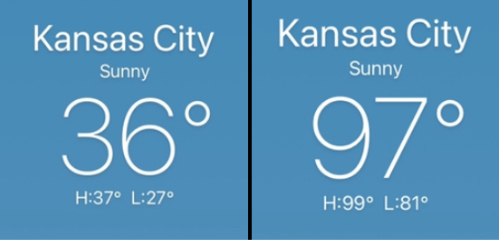
It’s hot again here in Kansas City. At the time of writing the current air temperature is 36ºC (97ºF) with a heat index of 45ºC (113ºF) and a humidity measuring at 55%. Like I said, it’s hot again here in Kansas City. And while August is usually the hottest month of the year here in the Midwest, and while thankfully we aren’t dealing with the horrific wildfires that are burning up the Mountain West and Pacific states, it’s still hot here on the prairies.
The thing about this heat that makes it more unusual to me than our regular summer heat waves is the fact that based on a UN climate report that was published earlier this week this sort of heat is going to be the norm in places like Kansas City in the coming decades, and to be honest we have only ourselves to blame. As warm as it is here it must be even worse further to the south right now in Texas and beyond the Rio Grande in Mexico and Central America. Our summer discomfort bodes even worse for the people who live in places where 35ºC+ temperatures in the summer are the norm because when our weather gets that hot theirs is bound to get even hotter.
It makes me wonder then how will this impact our winters? In the last decade we’ve seen harsher winters with more formidable blizzards and snowfall here in Kansas City than I can remember in my own relatively short lifetime. Will our summers get hotter and our winters cooler? Or will the summer heat mean our temperature cycles won’t fall quite as far as they have? For the record low temperature that I’ve experienced here has been -26ºC (-15ºF), though thankfully I was away in comparably balmy yet snowy Upstate New York when the temperature dropped even lower than -26ºC (-15ºF) this past February during the storms that knocked out power to Texas and by extension most of the Great Plains.
I’m not terribly fond of this sort of heat, and yes there is a difference to dry heat compared to this wet heat (take that pun where you will). When I was on a road trip with my Dad driving across the deserts of the Colorado Plateau in western Colorado and eastern Utah in June I got to experience this same temperature, 36ºC (97ºF) in a very dry climate, and it was actually a pleasant experience. Would I want to live out there in the deserts near Moab and Green River? Probably not. But if a KCUR article today about a local group of triathletes is correct, as KCUR usually tends to be, the human body can adapt rather well to extremes in temperature. I’ve tried to take the opportunity to go out and walk earlier in the mornings when the temperature is still in the high 20s, low 30s C (around 80ºF), which has certainly helped me cope with the few times I’ve needed to go outside during the height of the afternoon when as it happens I’m writing this post.
I guess the best answer I can give now is that we’ll adapt. We’ll adapt both in realizing we have to shift towards renewable energy sources ASAP or risk our very survival as a species, and we’ll adapt to the new climate that we ourselves have created, for better or worse. While it’s been fairly obvious for a while I’d say the new UN Climate Report is rightfully the herald of the Anthropocene, the latest geological epoch in Earth’s history. It’s an epoch when the greatest impact upon the balanced and complex ecosystem of our planet has been transformed and impacted the most by us and our industriousness. We’ve created our bed, now it’s time to sleep in it, and make sure the feathers don’t fly out of the mattress and pollute the entire bedroom floor. That cleanup would be practically impossible.




 Wednesday Blog by Seán Thomas Kane