Tag Archives: William Shakespeare

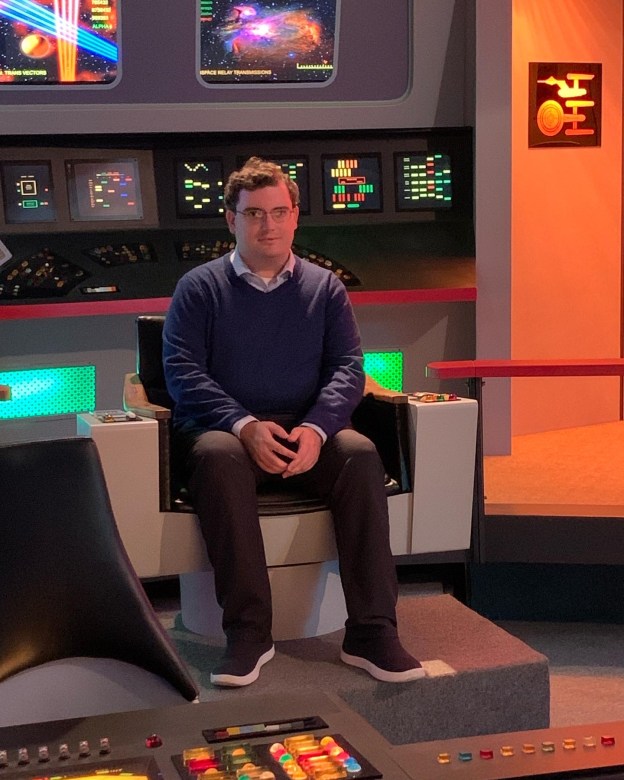
The author on a blue background wearing Apple AirPods.

On Machinery

This week, for the penultimate post of the Wednesday Blog, how machinery needs constant maintenance to keep functioning.—Click here to support the Wednesday Blog: https://www.patreon.com/sthosdkane—Sources:%5B1%5D Surekha Davies, “Walter Raleigh’s headless monsters and annotation as thinking,” in Strange and Wonderous: Notes from a Science Historian, (6 October 2025).[2] “Asking the Computer,” Wednesday Blog 5.26.


This week, for the penultimate post of the Wednesday Blog, how machinery needs constant maintenance to keep functioning.


I am just old enough to remember life before the ubiquity of computers. I had access to our family computer as long as I can remember, and to my grandparents’ computer at their condo when we stayed with them in the Northwest Suburbs of Chicago. Yet even then my computer usage was limited often to idle fascination. I did most of my schoolwork by hand through eighth grade, only switching from writing to typing most of my work when I started high school and was issued a MacBook by my school. I do think that a certain degree of whimsy and humanity has faded from daily life as we’ve so fully adopted our ever newly invented technologies. Those machines can do things that in my early childhood would’ve seemed wonderous. Recently, I thought how without knowing how powerful and far-reaching my computer is as a vehicle for my research and general curiosity, I would be happy, delighted in fact, if my computer could conduct one function, say if it had the ability to look up any street address in the United States as a device connected to the US Postal Service’s database. That alone would delight me. Yet that is the function of not just one application on my computer but merely one of many functions of several such programs I can load on this device, and not only can I look up addresses in the United States but I can look up addresses in any country on this planet.

With the right software downloaded onto this computer I can read any document printed or handwritten in all of human history and leave annotations and highlights without worrying about damaging the original source. Surekha Davies wrote warmly in favor of annotating in her newsletter this week, and I appreciated her take on the matter.[1] In high school, I was a bit of a prude when it came to annotating; I found that summer reading assignment in my freshman and sophomore English classes to be almost repulsive because I see a book as a work of art crafted by its author, editor, and publisher to be a very specific way. To annotate, I argued, was like drawing a curly-cue mustache on the Mona Lisa, a crude act at best. Because of this I process knowledge from books differently. I now often take photos of individual pages and organize them into albums on my computer which I can then consult if I’m writing about a particular book, in much the same fashion that I use when I’m in the archive or special collections room looking at a historical text.

All of these images can now not only be sorted into my computer’s photo library, now stored in the cloud and accessible on my computer and phone alike, but they can also be merged together into one common PDF file, the main file type I use for storing primary and secondary sources for my research. With advances in artificial intelligence, I can now use the common top-level search feature on my computer to look within files for specific characters, words, or phrases to varying levels of accuracy. This is something that was barely getting off the ground when I started working on my doctorate six years ago, and today it makes my job a lot easier; just my file folder containing all of the peer-reviewed articles I’ve used in my research since 2019 contains 349 files and is 887.1 MB in size.

Our computers are merely the latest iterations of machines. The first computer, Charles Babbage’s (1791–1871) counting machine worked in a fairly similar fashion to our own albeit built of mechanical levers and gears where ours have intricate electronics in their hard drives. I, like many others, was introduced to Babbage and his difference engine by seeing the original in the Science Museum in London. This difference engine was a mechanical calculator intended to compute mathematical functions. Blaise Pascal (1623–1662) and Gottfried Wilhelm Leibniz (1646–1716) both developed similar mechanisms in the seventeenth century and still older the Ancient Greek 2nd century BCE Antikythera mechanism can complete some of the same functions. Yet between all of these the basic idea that a computer works in mathematical terms remains the same even today. For all the linguistic foundations of computer code, the functions of any machine burn down to the binary operations of ones and zeros. I wrote last year in this blog about my befuddlement that artificial intelligence has largely been created on verbal linguistic models and was only in 2024 being trained on mathematical ones.[2] Yet even then those mathematical models were understood by the A.I. in English, making their computations fluent only in one specific dialect of the universal language of mathematics making their functionality mostly useless for the vast majority of humanity.

Yet I wonder how true that last statement really is? After all, I a native English speaker with recent roots in Irish learned grammar like many generations of my ancestors through learning to read and write in Latin. English grammar generally made no sense to me in elementary school, it is after all very irregular in a lot of ways, and so it was only after my introduction to a very orderly language, the one for which our Roman alphabet was first adapted, that I began to understand how English works. The ways in which we understand language in a Western European and American context rely on the classical roots of our pedagogy influenced in their own time by medieval scholasticism, Renaissance humanism, and Enlightenment notions of the interconnectedness of the individual and society alike. I do not know how many students today in countries around the globe are learning their mathematics through English in order to compete in one of the largest linguistic job markets of our time. All of this may well be rendered moot by the latest technological leap announced by Apple several weeks ago that their new AirPods will include a live translation feature acting as a sort of Babel Fish or universal translator depending on which science fiction reference you prefer.

Yet those AirPods will break down eventually. They are physical objects, and nothing which exists in physical space is eternal. Shakespeare wrote it well in The Temepst that 

“The solemn temples, the great globe itself,

Yea, all which it inherit, shall dissolve,

And, like this insubstantial pageant faded,

Leave not a rack behind. We are such stuff

As dreams are made on, and our little life

Is rounded with a sleep.” (4.1.170-175)

For our machines to last, they must be maintained, cleaned, given breaks just like the workers who operate them lest they lose all stamina and face exhaustion most grave. Nothing lasts forever, and the more those things are allowed to rest and recuperate the more they are then able to work to their fullest. So much of our literature from the last few centuries has been about fearing the machines and the threat they pose. If we are made in the Image of God then machines, our creation, are made in the image of us. They are the products of human invention and reflect back to us ourselves yet without the emotion that makes us human. Can a machine ever feel emotion? Could HAL-9000 feel fear or sorrow, could Data feel joy or curiosity? And what of the living beings who in our science fiction retrofitted their bodies with machinery in some cases to the extent that they became more machine than human? What emotion could they then feel? One of the most tragic reveals for me in Doctor Who was that the Daleks (the Doctor’s main adversaries) are living beings who felt so afraid and threatened that they decided to encase the most vital parts of their physical bodies in wheelchair tanks, shaped like pepper shakers no less, rendering them resilient adversaries for anyone who crossed them. Yet what remained of the being inside? I urge caution with suggestions of the metaverse or other technological advances that draw us further from our lived experiences and more into the computer. These allow us to communicate yet real human emotion is difficult to express beyond living, breathing, face-to-face interactions.

After a while these machines which have our attention distract us from our lives and render us blind to the world around us. I liked to bring this up when I taught Plato’s allegory of the cave to college freshmen in my Western Civilization class. I conclude the lesson by remarking that in the twenty-first century we don’t need a cave to isolate ourselves from the real world, all we need is a smartphone and a set of headphones and nothing else will exist. I tried to make this humorous, in an admittedly dark fashion, by reminding them to at least keep the headphones on a lighter mode so they can hear their surroundings and to look up from their phone screen when crossing streets lest they find themselves flattened like the proverbial cartoon coyote on the front of a city bus. 

If we focus too much on our machines, we lose ourselves in the mechanism, we forget to care for ourselves and attend to our needs. The human body is the blueprint for all human inventions whether physical ones like the machine or abstract like society itself. As I think further about the problems our society faces, I conclude that at the core there is a deep neglect of the human at the heart of everything. I see this in the way that disasters are reported on in the press: often the financial toll is covered before the human cost, clearly demonstrating that the value of the dollar outweighs the value of the human. In abdicating ourselves to our own abstractions and social ideals we lose the potential to change our course, repair the machinery, or update the software to a better version with new security patches and fixes for glitches old and new. In spite of our immense societal wealth, ever advancing scientific threshold, and technological achievement we still haven’t gotten around to solving hunger, illiteracy, or poverty. In spite of our best intentions our worst instincts keep drawing us into wars that only a few of us want.The Mazda Rua, my car, is getting older and I expect if I keep driving it for a few years or more it’ll eventually need more and more replacement parts until it becomes a Ship of Theseus, yet is not the idea of a machine the same even if its parts are replaced? That idea is the closest I can come to imagining a machine having a soul as natural things like us have. The Mazda Rua remained the Mazda Rua even after its brakes were replaced in January and its slow leaking tire was patched in May. Yet as it moves into its second decade, that old friend of mine continues to work in spite of the long drives and all the adventures I’ve put it through. Our machinery is in desperate need of repair, yet a few of us see greater profit from disfunction than they figure they would get if they actually put in the effort, money, and time to fix things. If problems are left unattended to for long periods of time they will eventually lead to mechanical failure. The same is true for the machinery of the body and of the state. Sometimes a good repair is called for, reform to the mechanisms of power which will make the machine work better for its constituent parts. In this moment that need for reform is being met with the advice of a bad mechanic looking more at his bottom line than at the need of the mechanism he’s agreed to repair. Only on this level the consequences of mechanical failure are dire.


[1] Surekha Davies, “Walter Raleigh’s headless monsters and annotation as thinking,” in Strange and Wonderous: Notes from a Science Historian, (6 October 2025).

[2] “Asking the Computer,” Wednesday Blog 5.26.
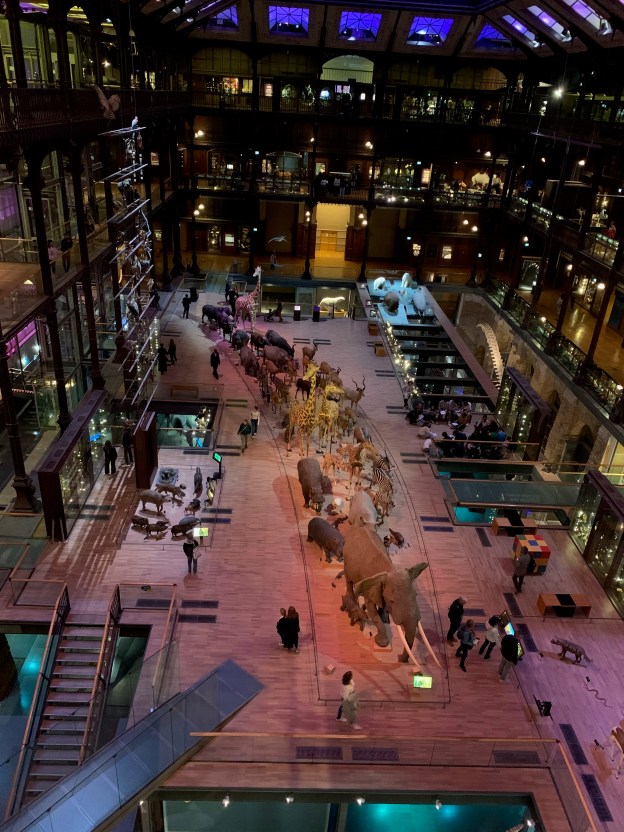

A photograph of the Parade of African Mammals in the Grand Gallery of Evolution at the National Museum of Natural History in Paris taken by the author from the 3rd floor.

On Systems of Knowing

This week, I argue that we must have some degree of artifice to organize our thoughts and recognize the things we see in our world.—Click here to support the Wednesday Blog: https://www.patreon.com/sthosdkane—Sources:%5B1%5D For my recent essays referring to this current historiographic project see “On Sources,” Wednesday Blog 6.22, “On Writing,” Ibid., 6.27, and “On Knowledge,” Ibid., 6.29.[2] Lee Alan Dugatkin, Mr. Jefferson and the Giant Moose, (University of Chicago Press, 2009).[3] Staffan Müller-Wille, “Linnean Lens | Linnaeus’ Lapland Journey Diary (1732),“ moderated by Isabelle Charmantier, virtual lecture, 12 May 2025, by the Linnean Society of London, YouTube, 1:04:18, link here.[4] Jason Roberts, Every Living Thing: The Great and Deadly Race to Know All Life, (Random House, 2024), 45–49.[5] Roberts, 20.[6] Roberts, 115–125.[7] Roberts, 109.[8] André Thevet, Les Singularitez de la France Antarctique, (Antwerp, 1558), 16r–16v. The translation is my own.[9] Roberts, 109.[10] Damião de Góis, Chronica do Felicissimo Rei Dom Emanuel, 4 vols., (Lisbon, 1566–1567).[11] Geraldine Heng, The Invention of Race in the European Middle Ages, (Cambridge University Press, 2018), 190.[12] Roberts, 110.[13] Michael Wintroub, A Savage Mirror: Power, Identity, and Knowledge in Early Modern France, (Stanford University Press, 2006), 42.[14] Roberts, xii.[15] Roberts, 107.[16] Roberts, 96–98.[17] Michael Allin, Zarafa: A Giraffe’s True Story, from Deep in Africa to the Heart of Paris, (Delta, 1998).


This week, I argue that we must have some degree of artifice to organize our thoughts and recognize the things we see in our world.


Near the end of June on a Sunday afternoon visit to the Barnes & Noble location on the Plaza here in Kansas City when we were picking out books to gift to family, I espied a copy of Jason Roberts’s new paperback Every Living Thing: The Great and Deadly Race to Know All Life. In the Plutarchan model it is a twenty-first century Parallel Lives of Carl Linnaeus (1707–1778) and Georges-Louis Leclerc, Comte de Buffon (1707–1788), two of the eighteenth century’s most prolific naturalists. I saved it as fun reading once I thought I’d done enough of my proper historical work. That moment came after I finished writing the first draft of the new introduction to my dissertation, a rather large addition to my doctoral study which is mostly historiographic in nature.[1] I’ve been reading Roberts’s book in my free time and delighting in the vibrant portraits he paints of the two men in question. I am a newer Fellow of the Linnean Society of London, elected in January 2025, and so I arrived to this particular book with a happy perspective on Linnaeus, whose Systema Naturae is cited in my dissertation as the first identification of the three-toed sloth by the genus Bradypus. At the same time, I’ve referenced Buffon’s Histoire Naturelle far more frequently in those moments when I’m following the legacy threads of my own Renaissance naturalists into the Enlightenment. After all, Buffon cited Thevet on several occasions where the savant referred to the same animals which the earlier cosmographer described two centuries before.

In spite of my own Linnean affiliation, and my use of Buffon’s corpus in the earliest stages of my broader historiography, I am still largely unfamiliar with these two men. I first knew of Buffon for his famous comments on his presumption of the diminutive nature of American animals when compared with their Afro-Eurasian counterparts, to which Thomas Jefferson retorted by sending Buffon evidence of an American moose.[2] I also know very little about Linnaeus, most of what I know of the Swede comes from lectures presented at the Linnean Society online including a recent lecture given in May by Staffan Müller-Wille, Professor in the History and Philosophy of the Life Sciences at Cambridge about Linnaeus’s Lapland diary from his northern expedition in 1732.[3] There is a new biography of Linnaeus by Gunnar Broberg titled The Man Who Organized Nature: The Life of Linnaeus which I have an eye on yet haven’t gotten a copy of quite yet. So, reading Roberts’s book is a quick introduction for me to this man who for me is most influential with his method of binominal taxonomy which has appeared time and again here in the Wednesday Blog. Yet this system followed after Linnaeus’s earlier alphabetical system for identifying plants by sexual characteristic. The basic premise here is that if there are 26 letters in the alphabet, we can then use that familiar framework to organize other complicated concepts for easy recognition. Linnaeus used this to categorize plants by their male and female sexual characteristics in his 1730 booklet Praeludia Sponsaliorum Plantarum, or Prelude to the Betrothal of Plants.[4] Therefore, Linnaeus could go around the botanical garden at the University of Uppsala in 1730 and quickly identify a plant as a J plant or a G plant. First reading this I thought of the way that letters are used by the Federal Reserve System to identify specific regional branches. Thus, J represents the Federal Reserve Bank of Kansas City and G the Federal Reserve Bank of Chicago. 

I like the idea behind Linnaeus’s alphabetic system yet having only 26 categories to describe the entire plant kingdom seems doomed to be flawed as it relies on a belief that all the plants that are known to exist are the ones that exist, that there’s nothing new under the Sun to be discovered. Roberts frames this in a biblical context, describing how Olof Celsius (1670–1756), one of Linneaus’s first professors, met the young Linnaeus when he was working on a project called the Hierobotanicum or Priestly Plants which was intended to be a compendium of all 126 plants mentioned in the Old and New Testaments.[5] Why would Linnaeus need more than 26 categories to contain all the plants known to the Ancients and to the Bible? Naturally, the flaws were apparent in this from the start by using a system of knowing which originated in the more arid landscape of the Levant rather than in the cooler and damper climate of Sweden. I’ve noticed this in my own life, how many cultural elements which we practice in the United States, notably the seasons, better fit the natural climate of New England and England proper than they do here in the Midwest with its far more variable conditions depending on the time of year, or even the given hour. Roberts deconstructed Linnaeus’s early efforts near the end of Part I of his book when he described Linnaeus’s first scholarly collision with Buffon after the Frenchman’s appointment by Louis XV to the position of Intendant of the Jardin des Plantes in Paris.[6] In a debate which Roberts calls “the Quarrel of the Universals” Linnaeus argued that species could be recognized from individual type specimens while Buffon countered that this ran the great risk of minimizing the diversity of life and eliminating potential variations in nature.

This got me thinking about systems of knowing, thus I decided to render the title of the original file for this blog post that you’re now reading (or listening to) De Systemarum Scientis in the full Latinate tradition of my own scholarship, or “On Systems of Knowing” in English. Why is it, for instance, that our Roman alphabet begins with A and ends with Z? The first half of that question is easier to answer: the Romans adapted our alphabet from the Greeks who started it off with α alpha, β beta, thus the noun alphabet itself. Yet the Greek alphabet ends with ω omega rather than ζ zeta, so why does ours end with Z? What I’ve heard about this is that the Greek letters that were adopted into the Roman alphabet were tacked onto the end of the line, or at least this is what I remember being taught when I learned to recite the alphabet in French in my undergraduate years. French calls the letter Y y-grec, or the Greek i. Likewise, everyone except for we Americans call the final letter of the Roman alphabet some variation of zed, which is a shortening of the Greek zeta. This better reflects that letter’s original sound in Greek, just as the cursive lowercase z is the lowercase Greek ζ just adopted straight into the Roman alphabet without any major changes.

So, when it comes to the organization of our knowledge there are things that we know in this same alphabetical order or in relation to this alphabetical order. Because the Roman alphabet is written left to right, we know that when it’s used to set up a coordinate system on a printed map that A will always appear to the top left, orientating the way the map should be held. Likewise, a reader can quickly scan through an index in any language written in the Roman alphabet by following along with the order of the letters. How individual languages index objects from that point on differs, but the foundational element remains the same. The Roman alphabet works best for Latin, the language for which it was originally developed, so it tends to be adapted in its phonetic values depending on which language is using it. This is why English uses the letter W to represent a [w] sound while German and in loanwords French uses W to represent a [ˈv] sound. Meanwhile, Irish represents the [w] and [ˈv] sounds with two digraphs, bh and mh that represent both depending on the context. Typically, bh represents [ˈv] while mh represents [w], but it depends on context. The reasoning behind this is that when the Roman alphabet was adapted by Latin speakers to fit Old Irish in the fifth and sixth centuries CE they approximated the phonology of their Latin in rendering the Roman alphabet usable for Irish. So, to these monks the Irish [ˈv] sound in a Gaelic name like Medbh sounded enough like how the letter b was used at the time that they used that letter to approximate this [ˈv] sound. It’s notable to me that in Modern Greek the letter β is today pronounced veta and in the Cyrillic alphabet the letter В represents this same [ˈv] sound while the letter Б represents the [b] sound that we English-speakers associate with the letter B. Cyrillic and its predecessor the Slavonic alphabet were being developed around the same time that the Roman alphabet began to be used for Irish so there must’ve been something going on with the pronunciation of people’s Bs becoming closer to Vs in late antiquity. Thus, the ways in which our alphabets represent specific sounds today reflect the prestige dialects of our two classical languages–Latin and Greek–as they were spoken over a millennium ago.

Consider then how we distinguish technical, scientific, or artistic terminology depending on the prestige language of that field. History has largely become a vernacular field, where we adapt terms that will be more familiar to the non-professional enough to initiate them into what Ada Palmer calls the History Lab. Yet often these terms will have etymologies beyond English itself. Consider the word photograph, or its more common shortened form photo. This word comes purely from Greek, the classical language more associated with science and technology. It blends the Greek φωτο-, the blending form of φῶς (phôs), or light with the suffix –γρᾰ́φος, from the verb γρᾰ́φω meaning to draw, sketch, or write. So, photography at its core is light writing. Neat! The word photography entered English from the French photographie, that etymology referring to the French origins of the art and craft of photography itself in the middle of the 1820s. Yet the linguists who modernized Irish a century ago decided to favor indigenous terminologies, rendering this word grianghraf using the Irish word grian for Sun instead of a variation of φωτο- (light) while adopting the Greek –γρᾰ́φος suffix to center this new Irish conception of the term within the same technological corpus as the English photograph. While consequential to have a particular Irish name for this technology that elevated the Irish use of photography as equal to any other culture’s photography and particular within the Irish language, it still remains rooted in the same western tradition of grounding our names for scientific and technical things in Greek.

Language directly influences how we know things because it is the vehicle by which we recognize those things around us. I know that a photograph is something made by “light writing” therefore I will also recognize that anything else beginning with “photo” also refers to “light” and that anything ending with “graph” refers to some form of record or writing. I come from a culture where light is connected with goodness and dark with ill. Likewise, for me I think of blue and green as happier colors rather than red or orange which are angrier colors. There is safety in light, in the daytime we can see people or things coming toward us easier than in the dark of night. At the Easter Vigil the celebrant lights the Paschal Flame which is then passed around the church so that we all share in the Light of Christ (Lux Christi) returned to the world with the Resurrection. The central question in my dissertation is linguistic: what did André Thevet (1516–1590) mean when he referred to the Americas overall as sauvage? This French word translates into English as both savage and wild, yet I chose to retain the original French to better represent the original concept which encompasses both concepts in English. This word was not necessarily racial in the modern sense, rather Thevet used sauvage to describe people, places, and things which existed beyond civilization. This word itself betrays its original meaning, that is city life. Thevet himself understood the sauvage to be the antonym of this city life. I describe it in the introduction to my dissertation in terms of light and dark, following the cultural connotations already illuminated: the city is the sun whence radiates the light of civilization. The further one goes from that sun, the darker things become and the less civilized they remain. Thevet’s sauvage existed at that furthest extreme in the dark. I imagine the character of Gollum in this sort of darkened existence, deep beneath the Misty Mountains uninterested in light save for the Ring of Power which consumed his day rendering it eternal night. In the literature of Thevet’s time a fine sauvage characterization is Caliban in Shakespeare’s Tempest, wild as the waters which wrecked King Alonso and his men on the island in Act 1 of that play.

Roberts notes how these linguistic attributes influenced Linnaeus’s systemization of humanity in the 1735 second edition of his Systema Naturae. The Swede divided humanity into four subcategories described by color over any other facet.[7] Roberts spends the following five pages questioning Linnaeus’s methodology, asking “why four?” and why these specific colors? There is some historical context for Linnaeus’s choice to refer to Black Africans, even Thevet referred to the varied peoples of Africa as “black” in his Singularitez de la France Antarctique. Thevet hints at a possible environmental cause for blackness, writing that the peoples “of Barbary” who are “the blackest” are “of the same manners and conditions as their region is hotter than others.”[8] Thevet’s understanding of African geography is somewhat uncertain, so his definition of Barbary may not align with the Berbers from whom the Barbary Coast of the Maghreb was named. Still, it hints at an understanding that the hotter, or more torrid, the climate got the darker the skin of the people would become. Roberts notes that the Portuguese were the first to use the “word negro to signify African origin or descent” in the middle of the sixteenth century.[9] This makes sense considering the Portuguese were the first European power to sail down the West African coast in the fifteenth century. That Roberts notes this Portuguese definition of blackness first appears in the middle of the sixteenth century likely refers to Damião de Góis’s (1502–1574) Chronica do Dom Emmanuel I of 1566 to 1567 which is an early source that I’ve consulted for information on the voyages of Vasco da Gama (d. 1524).[10] Geraldine Heng, the leading authority on medieval notions of race, wrote in her 2018 book The Invention of Race in the European Middle Ages that blackness was already well established as an element in religious and secular iconography by the beginning of the First Age of Exploration.[11] Roberts concludes his discussion of this particular racial element of Linnaeus’s great contribution to taxonomy sullenly noting that it’s thanks to Linnaeus that this cultural connotation of blackness with darkness was given scientific credence which continues to support racist ideologies to this day.[12]

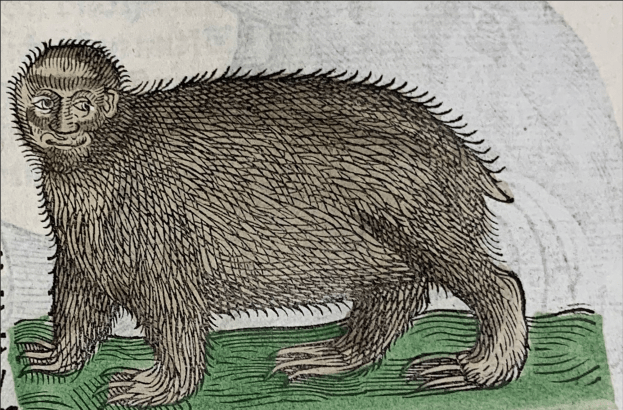
How do we use our own words to describe things to which they are not suited, in turn transforming the nature of those things that they may become part of our own world? My research is most interested in understanding these questions of how those things at the boundaries of knowledge were understood by André Thevet using the tools afforded to him during the French Renaissance of the sixteenth century. Thevet used the word sauvage to do this and create a category of life against which he could measure and proclaim the existence of something civilized closer to home. Michael Wintroub, Professor Emeritus of Rhetoric at Cal-Berkeley, wrote in his 2006 book A Savage Mirror that Thevet’s countrymen sought to “civilize the barbarians” to make up for an insecurity they felt at being called barbarians themselves by Italian intellectuals at the turn of the sixteenth century during the French invasion of Italy under King Charles VIII (r. 1483–1498).[13] As long as there was someone else who the French could look down upon beyond their own cities they felt secure in their own civility. Yet the sauvage exists within a larger framework of singularities, a word which is central to Thevet’s cosmography. Thevet used the word singularity to describe those things which were exotic, wonderous, and immensely collectable in his eye and hopefully in the eyes of potential readers who would buy his books. I see various layers and categories of singularities in Thevet’s cosmography, for instance he only included images of certain animals in his book of the same name, the aforementioned Singularitez of 1557. The sloth and toucan were depicted as well as described, yet the mysterious Ascension Island aponar remained a bird worthy only of a textual description. This suggests that somethings were more singular than others, or more worthy of attention and the money needed to produce these woodcut images than others. These systems of knowing framed around the singularity are the subject about which I intend to write my first academic monograph. Classifying something as singular gives it an appeal which sets it aside from both the civil and the sauvage as belonging to a higher level of category which can include both the urbane and the agrestic.

Jason Roberts describes Buffon and Linnaeus’s mutual missions to make something of themselves and to rise above their provincial origins to the heights of society. I laughed out loud reading Roberts’s introduction to Linnaeus’s character, what felt like an iconoclasm of sorts for this Fellow of the Linnean Society. “Carl Linnaeus was a Swedish doctor with a diploma-mill medical degree and a flair for self-promotion, who trumpeted that ‘nobody has been a greater botanist or zoologist’ while anonymously publishing rave reviews of his own work.”[14] Buffon by contrast took advantage of a golden opportunity to build his own demi-paradise at his manor in the Burgundy countryside until his good reputation as a botanist brought him to royal attention and the appointment as Intendent of Jardin du Roi.[15] The Jardin des Plantes, as Buffon’s charge is today known, is perhaps a better place to conclude than most. Situated in the Fifth Arrondissement across Boulevard de l’Hôpital and Rue Buffon from Gare d’Austerlitz, the Jardin is an urban oasis created for the purpose of crafting systems of knowing. Its original intent was to serve as a medicinal garden existing beyond the purview of the Sorbonne, Paris’s sole licensed teaching medical school in the seventeenth century.[16] I’ve spent several happy hours wandering through the Jardin, home to the Muséum National d’Histoire Naturelle’s Grande Galerie de l’Évolution, the Galerie de Paléontologie et d’Anatomie compare, and the Ménagerie du Jardin des Plantes, which was home to Paris’s first resident giraffe whose story is delightfully told by Michael Allin in his 1998 book Zarafa: A Giraffe’s True Story, from Deep in Africa to the Heart of Paris.[17] While Allin’s heroine Zarafa is not today on display in the Grande Galerie de l’Évolution (she is instead today to be found in the Muséum d’Histoire naturelle de La Rochelle), the taxidermy in the Parade of African Mammals that is the centerpiece of the Grande Galerie represents a system of knowing animal life in itself.An elephant leads the parade followed by hippopotami, zebras, and giraffes with two such camelopards standing erect their long necks rising toward the upper galleries at the center of the procession. Behind them come the horned mammals, rhinoceroses, and at the rear a crouching lion watching its prey. This is a system that Buffon would have appreciated more than Linnaeus, one which represents the nature of individual beings more than species. Each stuffed specimen seems to have its own character, its own personality. They look about as one would expect they would in life. The great artifice of this is the idea of a parade itself, a very human notion indeed, and one that is infrequent enough to be nearly singular in character, a reason for a day out, worth putting in the social calendar of a city, town, or village no matter how large or small. A parade is its own system of knowing.


[1] For my recent essays referring to this current historiographic project see “On Sources,” Wednesday Blog 6.22, “On Writing,” Ibid., 6.27, and “On Knowledge,” Ibid., 6.29.

[2] Lee Alan Dugatkin, Mr. Jefferson and the Giant Moose(University of Chicago Press, 2009).

[3] Staffan Müller-Wille, “Linnean Lens | Linnaeus’ Lapland Journey Diary (1732),“ moderated by Isabelle Charmantier, virtual lecture, 12 May 2025, by the Linnean Society of London, YouTube, 1:04:18, link here.

[4] Jason Roberts, Every Living Thing: The Great and Deadly Race to Know All Life(Random House, 2024), 45–49.

[5] Roberts, 20.

[6] Roberts, 115–125.

[7] Roberts, 109.

[8] André Thevet, Les Singularitez de la France Antarctique(Antwerp, 1558), 16r–16v. The translation is my own.

[9] Roberts, 109.

[10] Damião de Góis, Chronica do Felicissimo Rei Dom Emanuel4 vols., (Lisbon, 1566–1567).

[11] Geraldine Heng, The Invention of Race in the European Middle Ages, (Cambridge University Press, 2018), 190.

[12] Roberts, 110.

[13] Michael Wintroub, A Savage Mirror: Power, Identity, and Knowledge in Early Modern France, (Stanford University Press, 2006), 42.

[14] Roberts, xii.

[15] Roberts, 107.

[16] Roberts, 96–98.

[17] Michael Allin, Zarafa: A Giraffe’s True Story, from Deep in Africa to the Heart of Paris, (Delta, 1998).


On Translation

This week, how I take nuance and particularity into account in my efforts as a translator.—Click here to support the Wednesday Blog: https://www.patreon.com/sthosdkane


This week, how I take nuance and particularity into account in my efforts as a translator.


When I chose to study André Thevet (1516–1590) and the three-toed sloth in August 2019 I did so because I already knew French and the need to learn a new language was less pressing than if I’d chosen to study another source in the history of natural history. I chose Thevet because it was practical, and I chose the sloth because the thought of being a sloth historian made me laugh. From the first day working on Thevet, I found that my understanding of his books was heightened when I took the time to type out my own translations of his text. Thevet wrote in Middle French that is native to the middle decades of the sixteenth century. I arrived at this project very familiar with Early Modern English, the contemporary form of this language to Thevet’s time, as my history master’s thesis delt with sources in that chronological variety of English from Thevet’s generation and the one just before. I’ve never had much trouble understanding the most prolific author of Early Modern English literature, Shakespeare, but I think I’ve had a tolerance for varieties in speech that’s allowed for me to try to think beyond my own millennial Midwestern metropolitan American English and be willing to understand the likes of Shakespeare from a young age.

So, when I began translating passages from Thevet’s Singularitez de la France Antarctique for my own professional use in my dissertation, I decided that as long as I was translating that book I might as well translate it with the intention of sharing Thevet’s words beyond the scholarly analysis and critique which lie at the heart of my work as a historian. This first draft is built around the 1558 French edition published by Christophe Plantin (c. 1520–1589) in Antwerp and contains footnotes drawn from the 1878 French edition by Paul Gaffarel published in Paris, two Brazilian Portuguese translations by Sergio Amado (1978) and Estêvão Pinto (1944, using the 2018 reprint), and the partial 1986 English translation by Arthur Stabler and Roger Schlesinger which contains only Thevet’s North American chapters.

I finished the first draft of this translation in Summer 2023 and am now looking ahead toward the second draft which is the next stage of the project, and I hope the last one before I feel confident in formally writing to the publishing editors whose press sales agents I’ve spoken with about this project at conferences over the last two years. The second draft will consist of two main stages. First, I will cross-reference my translation and the 1558 Antwerp edition on which it is primarily based with the 1557 first and 1558 second editions published in Paris by Maurice de la Porte, two Venetian editions translated into Italian by Giuseppe Horologgi and published by Gabriel Giolito de’ Ferrari (c. 1508–1578) in 1561 and 1584, and the 1568 full English translation by Thomas Hacket published in London by Henry Bynneman. Second, I will seek to make my translation more understandable for a 21st century English-speaking reader while endeavoring to preserve Thevet’s particular mannerisms and voice, a writing style with which I’ve become quite familiar in the last 6 years to the point that I can now confirm at least two French translated manuscripts in the Bibliothèque nationale’s collections in Paris are verifiably written by Thevet. He had a way of writing that’s unmistakable.

These two competing axes create a binary star system around which my translation revolves. On the one hand, I want to be true to the original text, to preserve the author’s voice and something of their spirit which remains in those words. On the other hand, I need to make my efforts readable for my own contemporaries. Thevet and his contemporaries are notorious for long run-on sentences that would make Hemingway shake his head in earnest frustration. Where do I break up a long sentence while preserving its overall integrity? Furthermore, at what point should I decided to remove the bracketed notations of page breaks in the original text? There the 1558 Antwerp edition is most fully evident as its pagination has several quirks that make it stand out from the 1557 & 1558 Paris editions. At this point, Plantin published books with folio numbers rather than page numbers, so the first two pages were in fact folios 1 recto (1r) and 1 verso (1v). These names refer to the custom that scribes traditionally started writing on the back side of the vellum (recto in Latin) and then flipped the skin over once ready to continue writing on the verso, or opposite side. In several instances the folio numbers actually decrease in the book, notably in Thevet’s chapter on the sloth, which makes the footnotes on that core element of my research particularly confusing if you’re paying close enough attention. So, in summation the inclusion of the page breaks with the folio numbers keeps my translation grounded in Plantin’s edition, however that may break up the text in an uncomfortable way for some readers.

Ultimately, I am not the author of this book, merely a herald relaying it on for our time. My voice is there in the handful of introductory chapters I’ve written to go along with this book. These chapters describe Thevet as a reader of travel literature and place his accounts of the Americas beyond what he himself saw in Brazil in the context of their French and Spanish sources. I see my efforts in this as a means of introducing the reader to Thevet, a man who today exists on the furthest margins of the popular imagination of the First Age of Exploration in the English-speaking world. Thevet remains present in academic circles, there were at least four papers presented at this weekend’s annual meeting of the Renaissance Society of America in Boston which discussed Thevet, mine included. I hope this book will be useful to fellow academics and perhaps will entice curious readers to learn more about this man who I’ve spent the last 6 years of my life getting to know.I find myself drawn as much to the effort of a translator as I do to the work of a historian these days. We live in such a fractious time when reasoned debate and earnest discourse is riddled with dangers and seemingly improbable to undertake. I feel as though I’m constantly translating my thoughts and character for others to understand me. It’s why I enjoyed my time in Boston because that city has a large enough Irish American population that when I’d tell my name to a cashier to put on a carry-out order they’d actually spell it in the proper Irish manner; this never happens in Kansas City. That said, I felt that I had to translate my expectations and personal limits to be able to live even for just a few days in a city as expensive as Boston where I was often paying double what I’d normally pay at home in restaurants. In translating I recognize that each of us think in slightly different ways and see the world in which we all live in just as unfamiliar terms to one another. Difference enhances our common humanity and elevates our manner to something greater than ourselves.


The Versatility of Storytelling

The Versatility of Storytelling Wednesday Blog by Seán Thomas Kane

This week, how the same tools can be used to weave a variety of different stories. — Click here to support the Wednesday Blog: https://www.patreon.com/sthosdkane


This week, how the same tools can be used to weave a variety of different stories.


My favorite sorts of stories are the ones where I feel that I’ve gotten to know the characters and can relate to them on a personal level; that these characters are either real people who I’ll never meet or entirely fictional is beside the point. I often remember the stories I was reading, or watching, or listening to more than the experiences from my own life that surrounded new tellings of those stories. This potent relationship is heightened in moments when my own life is dull or foreboding, as in the height of the recent Pandemic when I passed the long days of isolation in my Binghamton apartment or at home in Kansas City watching and reading stories in the Star Trek franchise which I only really began to discover in February and March of 2020.

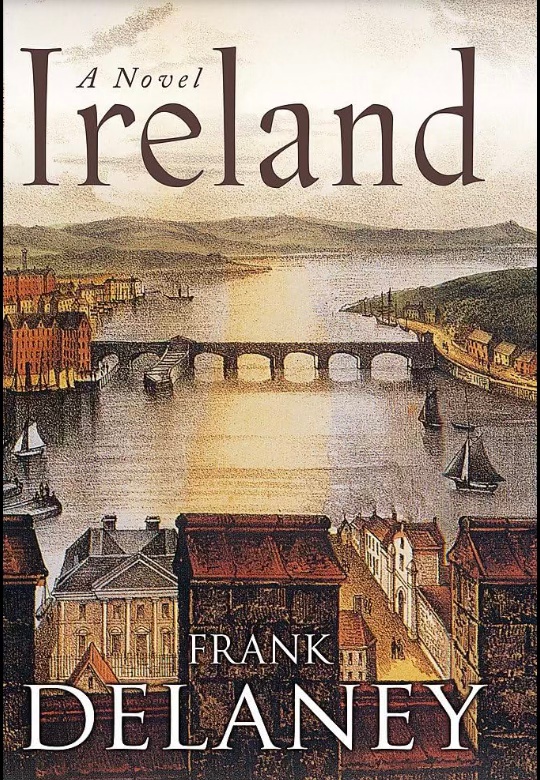
I wanted to be a storyteller from my youth. I read a book by the Irish journalist Frank Delaney called Ireland which followed a young man as he discovered his own passion for storytelling by listening to the seanchaí who often visited his family’s home. I began to write for myself around this time, though my efforts were focused more on poetry and plays at first. A decade ago, I built up the endurance to write a longer-form short story called “Abducted and Abandoned,” and around that time started writing what today is The Wednesday Blog. By the time I was working on my first master’s degree in 2015 and 2016 I’d begun writing a longer work, my book Travels in Time Across Europewhich I self-published in 2017. That one tells the stories I collected from my year living in London, stories of my own adventures traveling from the British capital to other cities across Europe. At the time I imagined that it could become a sort of valuable source for readers seeking to understand the world as it was in that last year before the Brexit referendum and the rise of Trumpism swept across Britain and the United States.

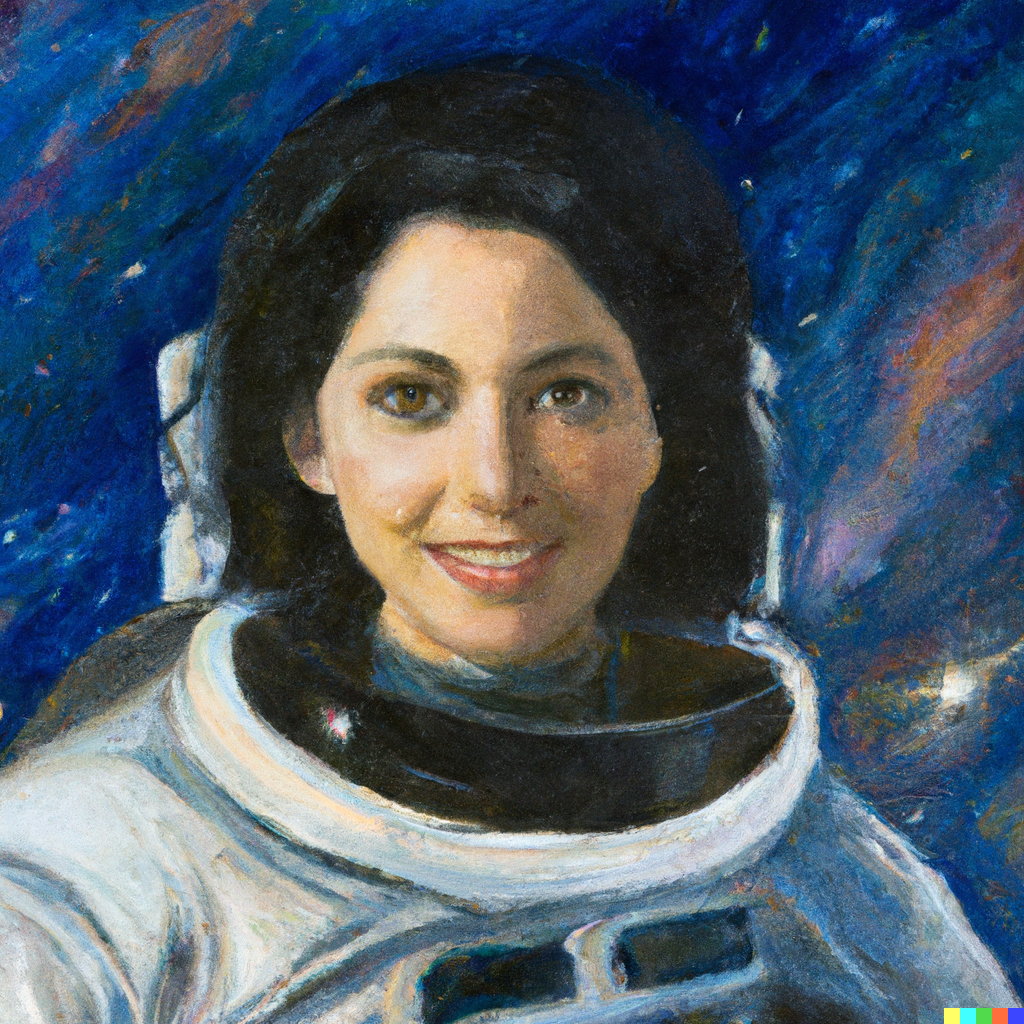
Dr. Olivia Stephens, the main character of “Ghosts in the Wind.”

Like the main character of Delaney’s Ireland, I too went to university to study history, to use my passion for storytelling, and as things came about, I’m now close to earning my doctorate in the field. Today, besides my efforts here with the blog I largely am just writing things related to my research. Alongside my dissertation I currently have one encyclopedia entry soon to be published, a book chapter and a scholarly article submitted for editing and am now writing another article related to my translation of André Thevet’s Singularitez. I still try to write the odd bits of fiction, like “Carruthers Smith’s Museum” which I released two weeks ago, or “Ghosts in the Wind” which I’m quite proud of. Yet I haven’t written anything to be acted in years. That’s striking to me, because my first big scribal efforts were for the stage and screen in my high school years. I do have an idea for a play that I might turn to someday in the next few years, yet even writing that here fills me with a sense of loss because it could well become another project that I’m excited about and have good ideas for yet don’t ever get to.

What I love most about writing for the stage and screen is that there’s a chance I’ll get to hear my words interpreted into lived experiences. Ideas that once only existed in my mind could be seen by many others played out before them and enlivened by the actors who utter those words & all the designers of sets, sound, lighting, props, effects, and music who flesh out that lived experience into something relatable and emotional in its truth. In short, to see my words brought to life in performance is to see a world created from what was once my thoughts, the smallest and most intimate of stages that I alone know.

To this end then, I am awed by the versatility of those storytellers who create these worlds in their performances. My erstwhile dissertation advisor Dr. Richard Mackenney, a man for whom I have the deepest respect and consider a friend, often talked about his own experiences on stage playing characters created by Shakespeare alongside many of the greats of the British theatre. In his lectures I saw a performance like any revival of King Lear or any of the Henrys or Richards that Shakespeare wrote. My own lecturing has taken on this same quality, yes at least in part in flattery, because I saw how he kept the rapt attention of most of the 150 or so students in the lecture hall with his art.

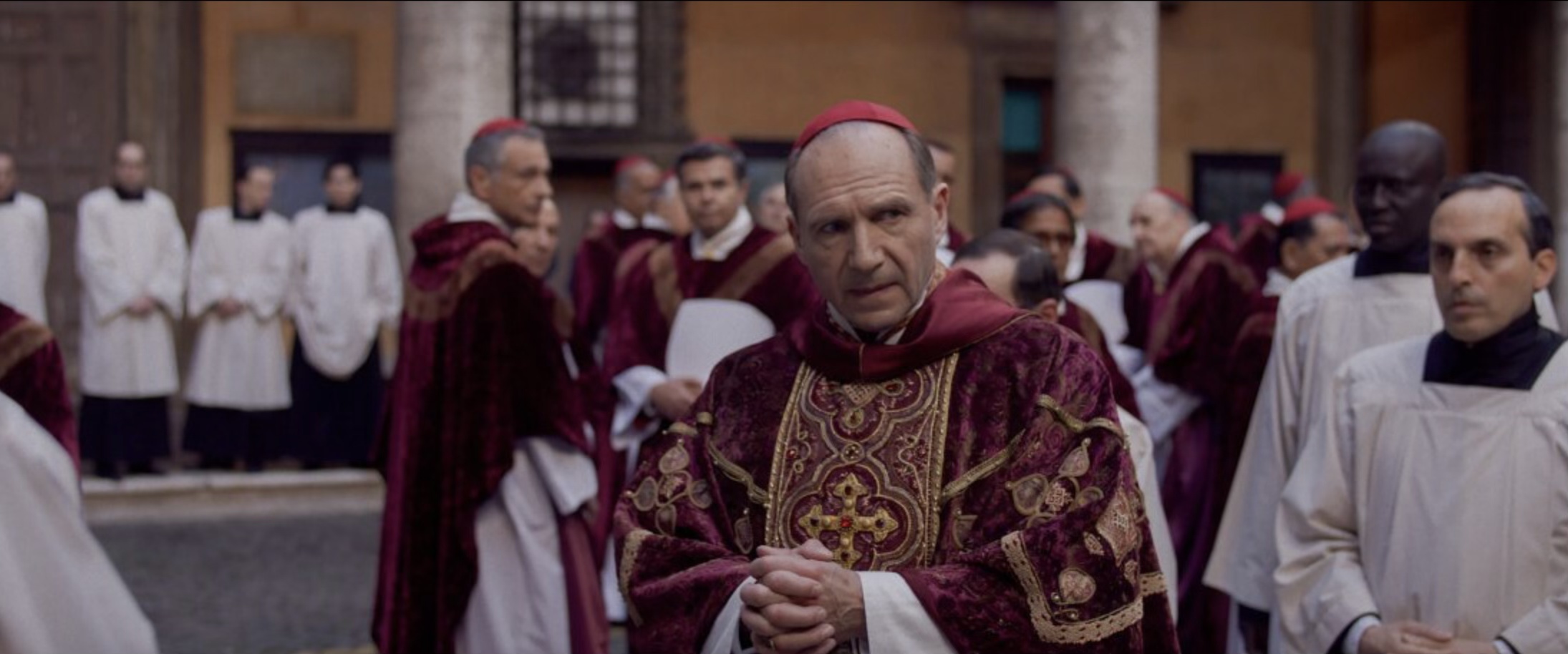
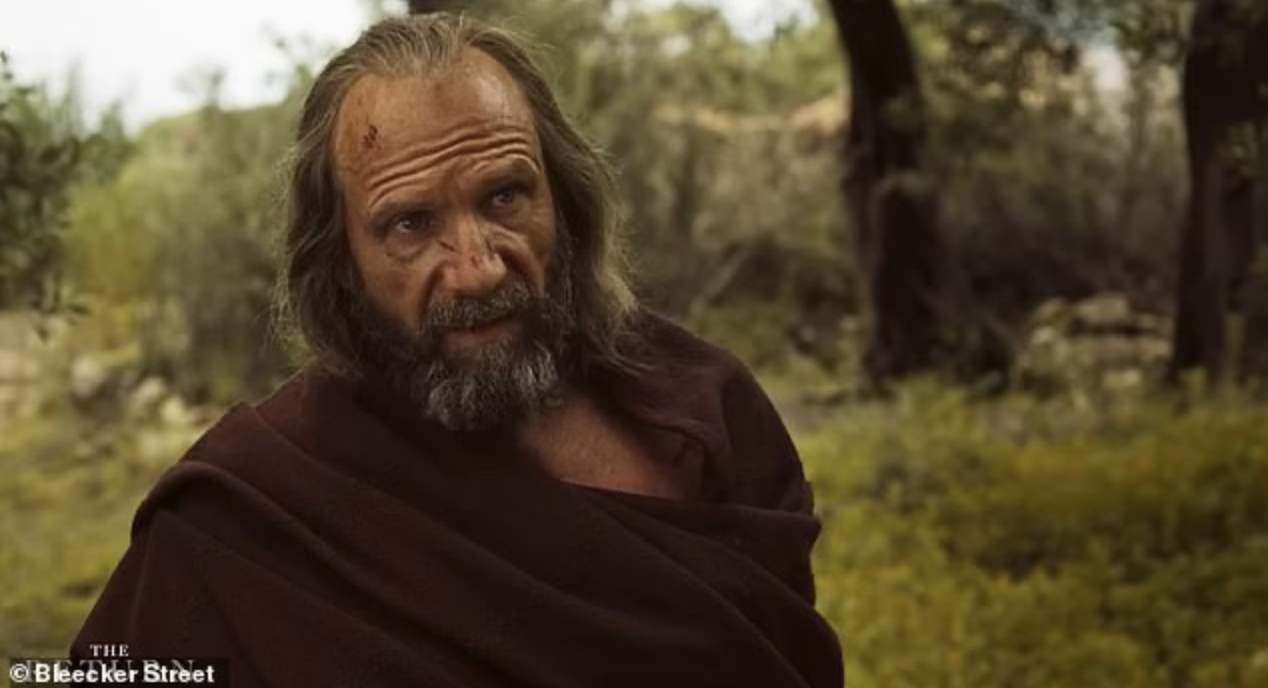
In recent weeks I had the pleasure to see the English actor Ralph Fiennes play two very different yet still akin parts in the films Conclave and The Return. In the former, Fiennes plays Cardinal Thomas Lawrence, the Dean of the College of Cardinals who is tasked with managing a papal conclave on the death of the Pope. In the latter, Fiennes returns to the screen a mere month after he appeared cassocked as an English cardinal this time dressed in rags as Odysseus returned to Ithaca after 20 years away at war against Troy. To see the same man inhabit two characters who on the surface could not be more distinct is a profound testament to the man’s mastery of his art. Both films are pieces of theatre imagined with the realism of a certain type of cinema that is more European than American, with less effects and a minimalist score that has its roots in the French New Wave. In the American context it’s reminiscent of the minimalism that we see in some of the television dramas produced recently for their streaming service by Apple.

I felt that I could instantly relate to Cardinal Lawrence in spite of his high office. The finest leaders I’ve met, whether cardinals and bishops or mayors, senators, and ambassadors are all people first and foremost. They acknowledge the trappings of their offices yet retain the everyman spirit that makes them relatable. I saw this in Cardinal Lawrence more than in many of the other characters who populate the halls of the Vatican in Conclave. That he is an English Catholic cardinal speaks to the post-Reformation moment in which we now live when the old sectarian wars of religion feel behind us and reflects on the Catholic Church in England and Wales that I know from my year living there and going to Mass in London. He speaks for a certain Anglophonic ideal that is democratic yet still upholding of tradition and custom.

Ralph Fiennes as Cardinal Thomas Lawrence and Odysseus, in performances which premiered within a month of each other.

Odysseus in contrast is a man who has seen much and endured much more than I ever hope to. His pain is written across his mostly silent face, and in this role, Fiennes says more with a tortured look than with words. That he only acknowledges his own identity verbally once in the film is telling. This is a man who fears that he won’t be the man that his family have waited for over these twenty long years that he was away. I can merely relate in that I’ve noticed time and again how my home and my city change each time that I’m away. On this most recent return of my own from Mérida on 10 November I was startled in the weeks that followed to see that the last vestiges of the long summer we had in this region at last faded away into a brief Fall before receding into the winter cold far sooner than I expected. Even more dramatic was the city I found on my return from London at the end of August in 2016. Kansas City wasn’t the same place it had been even 8 months before when I flew home for Christmas. There were plenty of stories I’d missed while I was away, one relative who’d been born and who I met for the first time at a far later date than any of her cousins in the youngest generation of my family. In that loss that comes with being far from home I can relate, yet in the pain he suffered and inflicted while he was away at war, I am thankful to lack that experience.

Yet the brilliant versatility of storytelling here expresses itself in Fiennes’s ability to say so much with so little about the war he fought and the trials he faced on his homeward voyage. Odysseus suffered for his efforts, and in his suffering, I see his humanity & feel that I can relate to him. At the end of the film, I felt that I got to know Odysseus for the man he’d become, and that in spite of the Bronze Age setting and the far looser garments, in a film whose costumes are marked by a combination of loincloth & cloak, than anything I would wear, I felt that I could see myself, my own humanity in that moment in time on the island of Ithaca in the second millennium BCE, perhaps the 12th century BCE as the polymath Eratosthenes of Cyrene (276–194 BCE) dated the fall of Troy to 1183 BCE.Where both Conclave and The Return succeed is in placing the lives of their characters in moments and settings which feel real. Odysseus’s Ithaca feels as lived in as Cardinal Lawrence’s Vatican, yet the former seems to be set in a far brighter and younger world with different morals and values than the darker and starker built world which succeeded it in the monumental edifices of the Vatican. Yet both are in my imagination places which I now have visited & seen, and both are places that I would recognize again if I ever returned to them in my memory of those films, or should I ever venture there in my own life to the Vatican or to the Ionian Islands and Peloponnese where the filmmakers created their vision of Ithaca. That stage is as lived in as any seemingly sparser platform that Shakespeare’s Muse might have evoked in Henry V; it is as alive as any other that can be imagined in our art.


How to Know the Unknown

How to Know the Unknown Wednesday Blog by Seán Thomas Kane

This week I want to talk about how we can recognize the existence of unknown things. — Click here to support the Wednesday Blog: https://www.patreon.com/sthosdkane

This week I want to talk about how we can recognize the existence of unknown things.


At the beginning of the month when I was preparing for my copyright post, I looked into an old interest of mine that had always been there, yet wasn’t quite active in the last few years, the effort by an organization called Thank You Walt Disney to restore the building that his first studio, Laugh-O-Gram, occupied at 31st & Forest here in Kansas City called the McConahay Building. To this end, I made a detour by the old building one afternoon on the way back from the central post office at Union Station and saw a good deal of work underway on that block, and after some back and forth I found a book written by some members of that organization called Walt Disney’s Missouri that I requested from the Kansas City Public Library.

I found Disney’s early years in Marceline, Chicago, and Kansas City quite familiar; his passion and drive to create art and tell stories in a new and inventive way using the skills and talents he developed over those early years remind me deeply of many of the ideas and projects I’ve worked on since my high school days. The sky truly is the limit in this mindset. I find the young Walt Disney to be a familiar face, someone who is quite relatable to all of us who have adopted Kansas City as our canvas for the many things we create.

Yet Kansas City is not like many other great American cities, for unlike New York, Los Angeles, or even Chicago we aren’t on a shoreline, we don’t look out onto an endless expanse of water far out to the horizon. Instead, we have the vast sightlines of the prairies and Great Plains extending out from our city in every direction. The astounding sunsets that glowed across the prairies out to the west of our old family farm are some of the great images of my childhood that will forever be burned into my memory.

When I was reading about Disney returning to Marceline, Missouri as an older man, I felt intensely familiar with the setting having grown up in the Midwest; familiar with the vast scale of the prairie that overwhelms me in how small it makes me, and the few built-up edifices of our civilization feel amid the tall grass Prairie. Our interventions only emptied this landscape and rebuilt it anew with the farms & ranches that have largely replaced the native roots. We have changed this landscape to suit ourselves, and yet this landscape remains its own because its fundamental character is too distinct for us to fully comprehend in our vision of a normal inspired by the great woodlands and old colonies of the East Coast and even older cultivated and measured forests and farmland growing around the ancient generational villages and towns of Europe.

My research focuses on the unknown entities that were too far-fetched to be imagined on the edge of the European imagination, particularly animals whose proportions were exaggerated to a degree that set them and the world they inhabited apart from the well-known and measured Mediterranean World at the heart of the European cosmos. This question of how we can begin to describe the unknown has stood out to me for a while and it’s something that both thrills and scares me at the same time. I feel a profound sense of humility thinking of all the things that we don’t know that exist beyond our world, whether they be lifeforms deep in the still largely unexplored oceans or entities deep in the void of Space. Yet I love stopping to think of these things and the endless horizon they represent as it gives me a sense of things still to accomplish.

Imagine, dear reader if you will, what it would be like to witness something you never before knew appear before your own eyes, or even those things which you do know about but only in stories and fables happening in real life. Shakespeare asked his audience to use their imaginations to fill in the breadth and depth of his world. In the prologue of Henry V, the Chorus asks the audience to imagine that the actors on the stage might

“on this unworthy scaffold bring forth 

so great an object. Can this cockpit hold 

the vasty fields of France? Or may we cram

within this wooden O the very casques

that did affright the air at Agincourt?

O pardon, since a crooked figure may

attest in little place a million,

and let us, ciphers to this great account,

on your imaginary forces work.

Suppose within the girdle of these walls

Are now confined two mighty monarchies,

Whose high upreared and abutting fronts         

the perilous narrow ocean parts asunder.”

Henry V, Prologue 11–23

Our imaginations are perhaps our greatest assets, after all we call ourselves Homo sapiens, wise humans. We pride ourselves on our capacity for thought, on our ability to imagine possibilities for ourselves and our posterity. We need the unknown to give us hope that there will be something new to discover tomorrow, for even if that new thing is familiar to others, it will still invoke wonder in us. Hope is what the greatest human endeavors are built upon, the hope that even if a cause seems doomed in the short term that someday it will succeed.

I feel this sense of potential success is central to my nature. I grew up with this hopeful maxim from three sources, my Catholic faith in things inexplicable, my Irish heritage informed by the experiences of generations who hoped for home rule and justice under a colonial government, and more light-heartedly from my lifelong passion for the erstwhile lovable losers, the Chicago Cubs. Robert Emmet perhaps put it best in his speech from the dock that he knew someday his epitaph would be written, someday someone yet unknown to him in 1803 would be able to judge his efforts towards Irish independence. “Let my character and my motives repose in obscurity and peace, till other times and other men can do them justice. Then shall my character be vindicated; then may my epitaph be written.” 

We cannot truly know what our future will hold, though we can predict what variable futures might come to exist. I wonder if a young Walt Disney would have imagined the man he would become, and how his name would be known by what surely is a majority of humanity alive today, 123 years after his birth. All of that was unknown in his childhood, just as all the things that will happen tomorrow and every day after that are still to a certain degree unknown to us today. That might be the closest we come to touch the unknown, to recognize its ambiguous feel, yet while that fine cloth of silk might seem somewhat familiar in its unfamiliarity, we ought to always remember that it extends far enough from our view and beyond all our horizons into infinity. There is, and likely will always be, more unknowns than knowns in the Cosmos.

A historian restores things forgotten from the vast silk threads of the unknown and weaves those fibers back into the great tapestry of human knowledge. I just started reading a book yesterday which does this with the understanding that religion and science have always been at odds when it comes to the age of the Earth. Perhaps I will write about that book, Ivano Del Prete’s On the Edge of Eternity: The Antiquity of the Earth in Medieval & Early Modern Europe in this publication later this year. That, good people, remains well and truly among those strands of the great yet smooth silky unknown sea which lies behind us, beyond our vision as the Greeks understood the future to be. The future is perhaps more unknown to us than the past because we at least have means and methods to uncover the past we’ve long forgotten and left behind, whereas the future remains unwritten and daunting to behold.

Perhaps that is why I chose to become a historian, because I find a comfort in imagining and reading about the past that is absent when I imagine the future. There is some truth there that the future I behold is colored in the same hues as my present, which I know will not be realized as the future will certainly be its own creation, inspired by our current moment yet distinct from it all the same. The characters who grace this “kingdom for a stage” will have taken their last bow by the time many of these events I imagine in the future occur; and at the culmination of the future lies the greatest unknown of all, one about which we tell many stories and ascribe many tenants, all to humanize it and make it more familiar.Our memories keep past ideas, people, places, and things alive in our knowledge. I hope the people at Thank You Walt Disney are successful in restoring the McConahay Building which housed Disney’s Laugh-O-Gram Studio so that the memory of that time when so many creative minds, so many animators, lived in this city is preserved; so that Kansas Citians in the present and unknown future remember that art can be created here, and dreams first imagined here can grow into wonders for all humanity to behold.


Author vs Writer

Today, on Chiefs Parade Day, I thought it'd be interesting to consider the distinctions between an author and a writer. Click here to support the Wednesday Blog: https://www.patreon.com/sthosdkane

Recently I noticed when someone referred to a guy as “the author of x”, in my mind I thought about what it means that they were called “the author” and not “the writer.” This whole question came to me considering that in Irish, I’d introduce myself with “Is staraí agus scríbhneoir mé,” or rather “I’m a historian and a writer,” and the same goes in French « Je suis historien et écrivain, » yet in neither context would I introduce myself at a party as “I’m an author.” Both words have their origins and similar yet separate meanings in every language, and that distinction is worth noting.

Author comes to us from the Latin auctor via Old French autor, it’s a cognate of the modern French auteur. The Irish version of this, údar also comes from the Latin auctor, demonstrating that the core idea of an author may well have spread northwards with the Romans. On the other hand, writer is an inherently English word, a writer is most fundamentally someone who writes. I like words that make their function this clear, words that are built off of the verb that they accomplish. When I’ve thought about trying to emulate Tolkien’s work it’s been less to create my own massive legendarium of fantasy literature and more to devise new ways of understanding the world through constructed languages like his own Quenya and Sindarin. In those thought experiments one of the key principles, I’ve wanted to address is crafting a language where there is a relatively small vocabulary because every word is a stem upon which one adds grammatical endings to make it a noun, adjective, verb, or adverb, or to include prepositional elements to it. This is something you see in older languages like Latin with its declensions and conjugations or in Finnish with its 14 noun cases. So, these simplest of English words like writer that demonstrate what they do as efficiently as possible are among my favorites.

Author too in its Latin origins was a word like writer. An auctor is someone who increases or nourishes their object (augeō in Latin). In classical literature the story comes from the muses, In the Loeb translation Ovid began his Metamorphoses acknowledging “my mind is bent to tell” the stories that will follow, for “ye gods, for you yourselves have wrought the changes, breathe on these my undertakings, and bring down my song in unbroken strains from the world’s very beginning even unto the present time.” (Met. 1.1.1–4) Shakespeare picked up on this in his reading and began Henry V with the chorus uttering the line 

            “O, for a muse of fire that would ascend

            The brightest heaven of invention!” (Henry V, 1.0.1–2.)

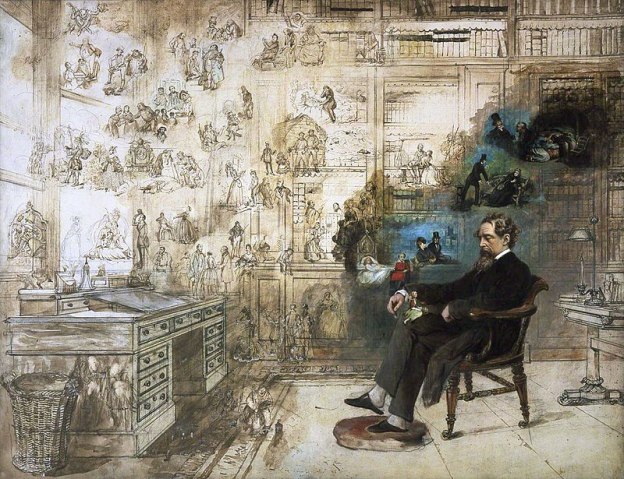
In my mind an author is both someone who has received inspiration for their work and an active participant in the creation of those works. There is a wonderful print of Dickens dreaming at his desk with all his myriad of characters he nourished into existence in his stories floating about him. I sometimes wish that this is the way that I’ll be remembered, as a storyteller who crafted so many lives that while they only exist in my writings therein is encapsulated a little world, an imagined reality all its own. In this act of creation, I am an author, but I am also a writer, for it’s my job to translate these worlds from my imagination onto paper where others can experience these characters’ lives.

A writer is a craftsman busy in their workshop devising new ways of getting information across. They could be writing serious factual information, reports of the events of the modern world, or setting the scene of stories more fantastical than anyone before could’ve imagined. I think of Dr. Franklin in his printing shop as the archetypal writer his sleeves rolled up hard at work, a stark contrast to the image of Dickens asleep in his chair dreaming of his many creations. Yet we rarely have authors without writers anymore, they are of course more often than not the same person, still in older times there were stories that existed without the written word. The Gaelic file tradition which I hope my own stories can be worthy heirs to is one such form of authorship beyond the boundaries of the written word.

So perhaps I don’t like to introduce myself as an author because of the world-building implications of authorship. Day-to-day I am a writer, a craftsman of words, scrawled onto paper, typed into a computer, and printed onto the page. I am an author of some stories, there are characters you’ve met here on the Wednesday Blog like Dr. Noël Felix and Captain Amelia Daedalus from a few weeks ago. I hope to get back into writing more fiction again in the coming months and years, to telling those kinds of stories. Yet perhaps because my authorship is so much more personal than my craftsmanship as a writer, I am left preferring to keep my creations closer to my chest and instead hold my craft out for all the world to see.