
Tag Archives: YouTube

The author pulling a face at the camera.

On Writing

This week, some words about the art, and the craft, of writing.—Click here to support the Wednesday Blog: https://www.patreon.com/sthosdkane—Links in this episode:Patrick Kingsley, Ronen Bergman, and Natan Odenheimer, “How Netanyahu Prolonged the War in Gaza to Stay in Power,” The New York Times Magazine, (11 July 2025).John McWhorter, “It’s Time to Let Go of ‘African American’,” The New York Times, (10 July 2025).Bishop Mark J. Seitz, D.D., “The Living Vein of Compassion’: Immigration & the Catholic Church at this moment,” Commonweal Magazine, (June 2025), 26–32.“On Technology,” The Wednesday Blog 5.2.“Artificial Intelligence,” The Wednesday Blog 4.1.


This week, some words about the art, and the craft, of writing.


In the last week I’ve been hard at work on what I hope is the last great effort toward completing my dissertation and earning my doctorate. Yet unlike so much of that work which currently stands at 102,803 words across 295 U.S. Letter sized pages inclusive of footnotes, front matter, and the rolling credits of my bibliography I am now sat at my desk day in and day out not writing but reading intently and thoroughly books that I’ve read before yet now find the need for a refresher on their arguments as they pertain to the subject of my dissertation: that André Thevet’s use of the French word sauvage, which can be translated into English as either savage or wild, is characteristic of the manner in which the French understood Brazil as the site of its first American colony and the Americas overall within the broader context of French conceptions of civility in the middle decades of the sixteenth century. I know, it’s a long sentence. Those of you listening may want to rewind a few seconds to hear that again. Those of you reading can do what my eyes do so often, darting back and forth between lines.

As I’ve undertaken this last great measure, I’ve dedicated myself almost entirely to completing it, clearing my calendar as much as I see reasonable to finish this job and move on with my life to what I am sure will be better days ahead. Still, I remain committed to exercising, usually 5 km walks around the neighborhood for an hour each morning, and the occasional break for my mind to think about the things I’ve read while I distract myself with something else. That distraction has truly been found on YouTube since I started high school and had a laptop of my own. This week, I was planning on writing a blog post which compared the way that my generation embraced the innovation of school-issued laptops in the classroom and the way that starting next month schools and universities across this country will be introducing artificial intelligence tools to classrooms. I see the benefits, and I see tremendous risks as well, yet I will save that for a lofty second half of this particular essay.

I’ve fairly well trained the YouTube algorithm to show me the sorts of videos that I tend to enjoy most. Opening it now I see a segment from this past weekend’s broadcast of CBS Sunday Morning, several tracks from classical music albums, a clip from the Marx Brothers’ film A Night at the Opera, the source of my favorite Halloween joke, and a variety of comic videos from Conan O’Brien Needs a Friend to old Whose Line is it Anyway clips. Further down are the documentary videos I enjoy from history, language, urbanist, and transportation YouTubers. Yet in the last week or so I’ve been seeing more short videos of a minute or less with clips from Steven Spielberg’s 2012 film Lincoln. I loved this film when I saw it that Thanksgiving at my local cinema. As longtime readers of the Wednesday Blog know, I like to call Mr. Lincoln my patron saint within the American civic religion. As a young boy in Illinois in the ‘90s, he was the hero from our state who saved the Union and led the fight to abolish slavery during the Civil War 130 years before. Now, 30 years later and 160 years out from that most horrific of American wars I decided to watch that film again for the first time in a decade. In fact, I’m writing this just after watching it so some of the inspiration from Mr. Lincoln’s lofty words performed by the great Daniel Day-Lewis might rub off on my writing just enough to make something inspirational this week before I return in the morning to my historiography reading.

Mr. Lincoln knew what every writer has ever known, that putting words to paper preserves them for longer than uttering even the longest string of syllables can last. What I mean to say is they’ll remember what you had to say longer if you write it down. He knew for a fact that the oft quoted and oft mocked maxim that the pen is mightier than the sword is the truth. After all, a sword can take a life, as so many have done down our history and into our deepest past to the proverbial Cain, yet pens give life to ideas that outlive any flesh and bone. I believe writing is the greatest human invention because it is the key to immortality. Through our writing generations from now people will seek to learn more about us in our moment in the long human story. I admit a certain boldness in my thinking about this, after all I’ve seen how the readership and listener numbers for the Wednesday Blog ebb and flow, and I know full well that there’s a good chance no one in the week I publish this will read it. Yet I hold out hope that someday there’ll be some graduate student looking for something to build a career on who might just stumble across my name in a seminar on a sunny afternoon and think “that sounds curious,” only to then find some old book of my essays called The Wednesday Blog and then that student will be reading these words. 

I write because I want to be heard, yet I’ve lived long enough to know that it takes time for people to be willing to listen, that’s fair. I’ve got a growing stack of newspaper articles of the affairs of our time growing while my attention is drawn solely to my dissertation. I want, for instance, to read the work of New York Times reporters Patrick Kingsley, Ronen Bergman, and Natan Odenheimer in a lengthy and thorough piece on how Israeli Prime Minister Netanyahu “prolonged the War in Gaza to stay in power” which was published last Friday.[1] I also want to read John McWhorter’s latest opinion column “It’s Time to Let Go of ‘African American’”; I’m always curious to read about suggestions in the realm of language.[2] Likewise there are sure to be fascinating and thoughtful arguments in the June 2025 issue of Commonweal Magazine, like the article titled “’The Living Vein of Compassion’: Immigration & the Catholic Church at this moment” by Bishop Mark Seitz, DD of the Diocese of El Paso.[3] I’m always curious to read what others are writing because often I’ll get ideas from what I read. There was a good while there at the start of this year when I was combing through the pages of Commonweal looking for short takes and articles which I could respond to with my own expertise here in the Wednesday Blog. By writing we build a conversation that spans geography and time alike. That’s the whole purpose of historiography, it’s more than just a literature review, though that’s often how I describe what I’m doing now to family and friends outside of my profession who may not be familiar with the word historiography or staireagrafaíocht as it is in Irish. 

Historiography is writing about the history that’s already been written. It’s a required core introductory class for every graduate history program that I’m familiar with, I took that class four times between my undergraduate senior seminar (the Great Historians), our introductory Master’s seminar at UMKC (How to History I), and twice at Binghamton in courses titled Historiography and On History. The former at Binghamton was essentially the same as UMKC’s How to History I while the latter was taught by my first doctoral advisor and friend Dr. Richard Mackenney. He challenged us to read the older histories going back to Herodotus and consider what historians in the Middle Ages, Renaissance, Enlightenment, and Nineteenth Century had to say about our profession. Looking at it now, the final paper I wrote for On History was titled “Perspectives from Spain and Italy on the Discovery of the New World, 1492–1550.” I barely remember writing it because it was penned in March and April 2020 as our world collapsed under the awesome weight of the Coronavirus Pandemic. Looking through it, I see how the early stages of the pandemic limited what I could access for source material. For instance, rather than rely on an interlibrary loan copy of an English translation, perhaps even a more recent edition, of Edmundo O’Gorman’s The Invention of America, I instead was left working with the Spanish original that had been digitized at some point in the last couple decades. Likewise, I relied on books I had on hand in my Binghamton apartment, notably the three volumes of Fernand Braudel’s Civilization and Capitalism, in this case in their 1984 English translations. I wrote this paper and then forgot about it amid all the other things that were on my mind that Spring, only to now read it again. So, yes, I can say to the scared and lonely 27 year old who wrote this five years ago that someone did eventually read it after all.

What’s most delightful about reading this paper again is I’m reminded of when I first came across several names of fellow historians who I now know through professional conferences and have confided in for advice on my own career. The ideas first written in the isolation of lockdown have begun to bear fruit in the renewed interactions of my professional life half a decade later. What more will come of those same vines planted in solitude as this decade continues into its second half? Stretching that question further back in my life, I can marvel at the friendships I’ve cultivated with people I met in my first year of high school, now 18 years ago. That year, 2007, we began our education at St. James Academy where many of us were drawn to the promise of each student getting their own MacBook to work on. I wrote here in March 2024 about how having access to that technology changed my life forever.[4] So, in the last week when I read in one of my morning email newsletters from the papers about the soon-to-be introduction of artificial intelligence to classrooms across this country in much the same way that laptops in classrooms were heralded as the new great innovation in my youth I paused for a few moments longer before turning to my daily labor.

I remain committed to the belief that having access to a laptop was a benefit to my education; in many ways it played a significant role in shaping me into the person I am today. I wrote 14 plays on that laptop in my 4 years in high school, and many of my early essays to boot. I learned how to edit videos and audio and still use Apple products today because I was introduced to them at that early age. It helps that the Apple keyboard comes with easy ways to type accented characters like the fada in my name, Seán. Still, on a laptop I was able to write much the same that I had throughout my life to that point. I began learning to type when I was 3 years old and mastered the art in my middle school computer class. When I graduated onto my undergraduate studies though I found I could take notes far better that I could remember by hand than if I typed them. This is crucial to my story: the notes that I took in my Renaissance seminar at UMKC in Fall 2017 were written by hand, in French no less, and so when I was searching for a dissertation topic involving Renaissance natural history in August 2019, I remembered writing something about animals in that black notebook. Would I have remembered it so readily had I typed those notes out? After all, I couldn’t remember the title of that term paper I wrote for On History in April 2020 until I reopened the file just now.

Artificial intelligence is different than giving students access to laptops because unlike our MacBooks in 2007, A.I. can type for the student, not only through dictation but it can suggest a topic, a thesis, a structure, and supporting evidence all in one go. Such a mechanical suggestion is not inherently a suggestion of quality however, and here lies the problem. I’ve read a lot of student essays in the years I’ve been teaching, some good, some bad. Yet almost all of them were written in that student’s own voice. After a while the author’s voice becomes clear; with my current round of historiography reading, I’m delighting in finding that some of these historians who I know write in the same manner that they speak without different registers between the different formats. That authorial voice is more important than the thesis because it at least shows curiosity and the individual personality of the author can shine through the typeface’s uniformity. Artificial intelligence removes the sapiens from we Homo sapiens and leaves our pride in merely being the last survivor of our genus rather than being the ones who were thinkers who sought wisdom. Can an artificial intelligence develop wisdom? Certainly, it can read works of philosophy both illustrious and indescribably dull yet how well can it differentiate between those twin categories to give a fair and reasoned assessment of questions of wisdom?These are some of my concerns with artificial intelligence as it exists today in July 2025. I have equally pressing concerns that we’ve developed this wonderous new tool before addressing how it will impact our lived organic world through its environmental impact. With both of these concerns in mind I’ve chosen to refrain from using A.I. for the foreseeable future, a slight change in tone from the last time I wrote about it in theWednesday Blog on 7 June 2023.[5] I’m a historian first and foremost, yet I suspect based on the results when you search my name on Google or any other search engine that I am better known to the computer as a writer, and in that capacity I don’t want to see my voice as soft as it already is quieted further by the growing cacophony of computer-generated ideas that would make Aristophanes’ chorus of frogs croak. Today, that’s what I have to say.


[1] Patrick Kingsley, Ronen Bergman, and Natan Odenheimer, “How Netanyahu Prolonged the War in Gaza to Stay in Power,” The New York Times Magazine, (11 July 2025).

[2] John McWhorter, “It’s Time to Let Go of ‘African American’,” The New York Times, (10 July 2025).

[3] Bishop Mark J. Seitz, D.D., “The Living Vein of Compassion’: Immigration & the Catholic Church at this moment,” Commonweal Magazine, (June 2025), 26–32.

[4] “On Technology,” The Wednesday Blog 5.2.

[5] “Artificial Intelligence,” The Wednesday Blog 4.1.

Distractions

How distractions can be beneficial or detrimental, from a certain point of view.—Click here to support the Wednesday Blog: https://www.patreon.com/sthosdkaneI recommend you now listen to: On PausesA link to the WBEZ Chicago story referenced in this episode.


How distractions can be beneficial or detrimental, from a certain point of view.


On February 21sta story appeared on the WBEZ Chicago website with reactions to Illinois Governor J.B. Pritzker’s proposal to restrict cellphone use in all public and charter school classrooms. Mine was the first generation of students to have access to cellphones, and from day 1 it was a noticeable distraction for everyone in the room when someone brought their phone to class. Whether looking at the teacher who was trying to do their job in spite of a new topic to chide students over, or to the other students who see that one of their fellows is challenging the classroom’s authority so brazenly, to the student carrying the phone who now had a ready means of ignoring the teacher and missing out on the lesson, phone use is a problem for all.

In all honesty, I’ve been that student from time to time. In some classes it wasn’t a cellphone as much as it was a computer or a tablet that distracted me from the lesson or lecture at hand. In other cases, it was the unavoidable glow of the screen in the row in front of me shopping for shoes or looking at Spring Break trip ideas that drew my attention away from the topic at hand. Looking back, I recognize a noticeable drop in my attention and focus when these technologies began to enter the classroom, just as I notice now how I stopped reading nearly as many books once I discovered YouTube.

The idea of the distraction is often subjective; sure, in the classroom the student is supposed to be paying attention to the instructor, yet beyond that setting what are all the trappings of life but distractions from other facets which to varying degrees we ignore? This isn’t inherently a bad thing. Considering how troubled our times are fast becoming I have made a point of trying to find happy things to look at every day, and in some instances, I send these along to friends who I hope will benefit from smiling at something no matter how inconsequential.

In WBEZ’s report on student reactions to the Governor’s proposal to ban phones from classrooms the reactions were mixed. Some reactions speak to concerns about staying in touch with parents during the school day, especially in case of safety issues. I understand this point, it speaks to the reality that we’ve allowed ourselves to live in an increasingly dangerous society, and to that danger we need resources to mitigate it all while ignoring the underlying problems. We can distract ourselves from addressing gun violence, yet the shootings will continue all the same.

In my own experience the best classroom settings were those where the students either were mature enough to not pull their phones out in class or where they didn’t have their phones with them at all. In a recent substitute teaching job, I found that I was not only competing with student apathy toward following a sub’s instructions but that I also had to compete with students watching all manner of videos on their phones from Netflix and YouTube to TikTok, Instagram, and Snapchat. I simply can’t compete with these bright screens, and as most schools don’t inform their substitutes of any school policies (which allows students to abuse those policies when a sub is in the room), I’m at a tremendous disadvantage in that position.

Today, as I write this blog post I have one conference presentation I need to write and an article submission that I need to revise. The former needs to be done in the next month and the latter by June 1st. In short: I have things I need to be doing right now, yet I can be more flexible with these extended deadlines and keep the Wednesday Blog going for another week. This publication of mine may seem like a sort of distraction to some of my colleagues, yet I feel it is a tremendous opportunity for me to write about topics that I have ideas about which my research doesn’t cover. After I write and record this blog post I will take full advantage of the good weather today (sunny with a high of 65ºF / 18ºC) and go for a long walk this afternoon. After that, I might look at these two projects again. As I said earlier in this paragraph: I have time to wait on both of them.

Returning to the topic at hand: whereas in my teenage years I found it empowering to have a school-issued laptop which I could use in class, today I yearn more for the days before that technology became so accessible to me for the sole reason that I could focus more on the moment at hand. Perhaps the greatest distraction that we’ve created for ourselves is our indefatigable busyness that keeps us moving at full speed whenever we’re awake. We fear boredom because we haven’t allowed ourselves to spend enough time surrounded by the silence that it brings. I wrote about this in October in the context of pauses in the dialogue of the Kate Winslet film Lee. I don’t know if I have any suggestions for systemic change this week, merely advice that each of us ought to look at what we think is most important for our lives and our enrichment. We only have so much time around, so the best thing we can do is to use it wisely.


On Social Media

This week, some thoughts on the divestment of our social media attention and why I choose to use different platforms for different sorts of messages. — Click here to support the Wednesday Blog: https://www.patreon.com/sthosdkane Photo of the author by Hariprasad Ashwene, 2024.


This week, some thoughts on the divestment of our social media attention and why I choose to use different platforms for different sorts of messages.


I’ve been an active social media user since May 2008 when I created my Facebook account at the young age of 15 years old. I remember not being sure what to expect from Facebook when I opened my account, yet my Mom opened her own account at the same time as me and we jumped into it together. I see the big turning point in my time on Facebook as 9 October 2016, the night of the 2nd Presidential Debate that year. Leading up to 2016 I’d gotten a reputation among many friends that was voiced by my London flatmates in 2015 that if they wanted to get an idea of what was going on they’d look at my Facebook to see what news stories I’d posted that day. Yet after that second debate, I noticed a significant drop off of people who were interacting with my posts about the news, and in the years since the overall interaction level hasn’t picked up again since even as I’ve connected with more people on that website.

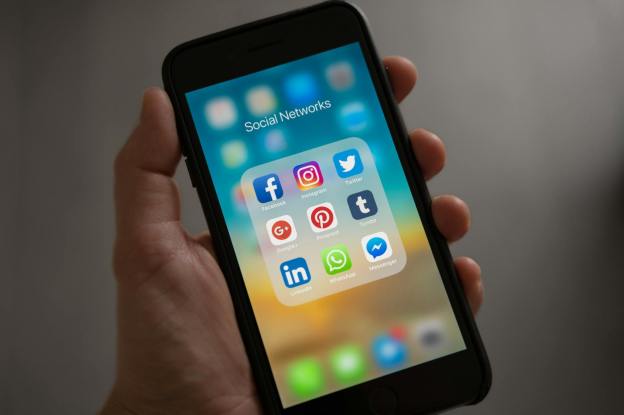
Today I have 10 social media accounts on Facebook, Twitter,[1] Instagram, LinkedIn, Reddit, YouTube, Mastodon, Threads, Snapchat, and BlueSky. I also have 8 professional accounts of a similar vein to social media on Research Gate, Academia.edu, the Knowledge Commons, BE Press, and on the fora hosted by the Linnean Society, History of Science Society, and the American Historical Association. Traditionally, my professional and personal social media activity was shared on the same accounts; I’d post about the Cubs and my research on Twitter, a longtime home of academia online, yet in the past year I’ve begun to rework things a bit. Today, I use BlueSky for my professional social networking within academia. 

Facebook feels like the daily broadsheet of my online presence; it’s my original foray into social media and where I have 17 years of posts up and online. Yet today Instagram is where I am most active socially. There’s been a notable migration of my fellow millennials away from Facebook toward Instagram in the last decade, and whereas readership of my Facebook is restricted to my Facebook friends only I’ve allowed my Instagram profile to remain open to the public. This probably caused me some trouble when I was teaching the middle schoolers in the Fall 2023 semester, and today many of them still regularly view my Instagram stories. What I decided to do was rather than censor myself and limit their access to my Instagram, I would instead take a more curatorial role and be mindful of what I shared on my Instagram stories, making sure it was appropriate and thought-provoking for them. My Snapchat account is the most limited of all my social media accounts: I only accept connection requests from relatives and a very small number of friends there. I still occasionally browse Reddit, especially the Star Trek subreddits, but in the last 6 months I found it was becoming less enjoyable to read and today I only really open that app when I need to do something but am not in the mood to read a book or a magazine. Meanwhile, I’ve only recently begun feeling comfortable posting comments to YouTube videos, I had a handful of very bad experiences doing this in my early years of public comment fora on sites like that of the Kansas City Star and Trip Advisor where I learned quickly that a lot of people take the anonymity of the Internet as permission to be uncivil.[2] As with any place for public comment whether online or in the real world, I try to keep to the principle of only saying something if I feel it’ll contribute to the conversation.

As for the newcomers: like many others I opened a Mastodon account in 2022, and like many others I quickly found Mastodon to be unnecessarily confusing and haven’t opened the app in at least a year. Threads holds some potential in my mind, though like Mastodon I barely use it. I opened my BlueSky account in November 2024 when I was at the History of Science Society conference in Mérida described in Season 4 of the Wednesday Blog, and began connecting with other academics. I decided from Day 1 to cultivate my Blue Sky account as a purely professional account without any hobbies or personal anecdotes. This has limited how much I use the app, though I do use it on occasion.

On the topic of the Wednesday Blog I have an automatic distribution set up with Facebook, LinkedIn, and Threads, and I manually post each week’s blog post on Instagram and Twitter. Because this isn’t necessarily an academic venture I don’t promote this publication on Blue Sky. There’s also a Wednesday Blog Patreon, which you can join for $5 per month!

One of the big conversations of today is whether to close our social media accounts as the corporations who own these sites are increasingly accepting the problems they cause in our society, in the lived world, yet have dropped the mask of caring and continue their play for greater profits bare-faced and defiant in exposing themselves. In the aftermath of the 2024 Presidential Election I saw an immediate flood of false information appear on my Twitter account, which I wouldn’t have noticed if it didn’t appear among the silent notifications that I get daily over that app from the Kansas City office of the National Weather Service, and the handful of academics and other people I follow who are still on Twitter. With the recent announcement by Meta––the owners of Facebook, Instagram, and Threads––that they would cease their work with third-party fact checkers so as not to upset the new President caused a flood of comments about people dropping their profiles on Meta’s social media sites in protest. I haven’t seen as much false information on there yet, thought I expect it will appear.

I for one have considered shutting down most of my social media profiles off and on since 2016, because I understand and generally agree with all my friends and relatives who’ve done just that. Yet while I see a tremendous utility in these social media sites in allowing me to stay in touch with friends and relatives near and far, I see a far better reason to keep these accounts active: I will not be intimidated into silence by their shifting interest in the public good. I often hear the response to the suggestion that we can still have a reasoned debate between people who disagree being that it’s just not possible with how polarized we are today. That polarization is in large part thanks to social media for pushing forward the loudest and most outrageous voices of today just as the yellow journalists of a century ago did the same.

I had many a Facebook argument in my first decade on the platform, and in some cases, they were the primary way that I ended up interacting with people who I knew from school, college, or beyond on the site. I established a simple rule for comments on my profile: I will only delete a comment, “unfriend” someone, or block another account if they intentionally insult myself or someone else who they are communicating with in the comments on my profile. To date I’ve only blocked two other users. I believe we ought to respect differences of opinion when they are based in fact & reason and that as much as social media has been a tool of disinformation so too we can use it to inform and counter the outright lies being spread on these sites.

Social media truly shrank the globe for me and myriad others. Before I began using Facebook in 2008 while I would watch news broadcasts from beyond the U.S., particularly from the BBC on PBS and BBC America, I still was mostly reliant on handwritten and typed letters being sent by air mail to communicate with anyone beyond this country. Now, I keep in regular communication with friends & relatives on every permanently inhabited continent. I’ve been fortunate to stay in touch with some dear friends of mine who I haven’t seen in nearly a decade or more because of how our lives have led us apart; that contact has been sustained and fulfilled through social media.

Let me conclude with a note of data security. I would rather keep all of my social media accounts active because the risk present in someone else or a bot recreating an account in my name is great enough that I don’t want to risk it. I’ve cultivated this garden, and now I don’t want to see it wither. I’d rather use the tools owned by these corporations that actively support forces, ideas, and people who I disagree with in order to circumvent their power over me. I know that their websites aren’t necessary for me to live, even if they’ve grown to become such an ordinary part of my daily life. Yet I continue to use them as an act of self-expression standing for the ideals that I believe in: curiosity, honesty, hope, and optimism.


[1] I still won’t call it X.

[2] I went through a few different words here first.